Complicating Rosie the Riveter

I’ve written books about “ordinary” women caught up in the extraordinary times of World War II, and I’m fascinated by how women’s wartime contributions have been remembered.
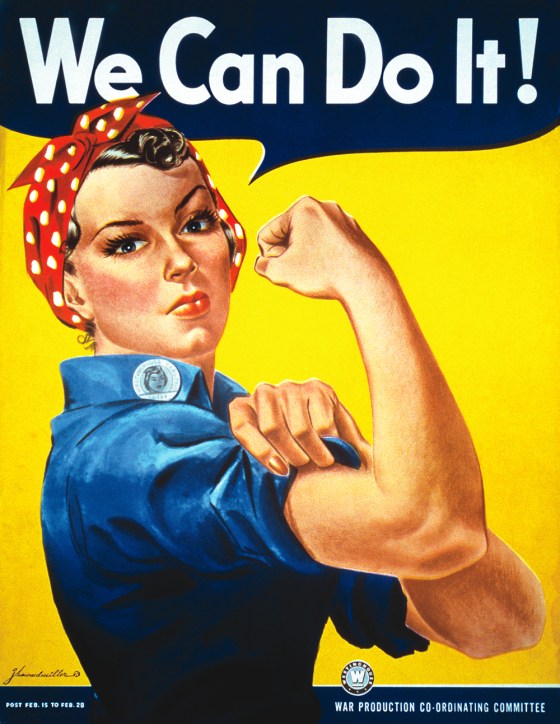
Miller Rosie

Rosie the Riveter is one of the most enduring images of World War II. In this blog post for Oxford University Press, I talk about the reality behind this illustration.

Complicating Rosie the Riveter

Anyone interested in reading more deeply on this topic should take a look at the sources I consulted:

Hegarty, Marilyn. Victory Girls, Khaki-Wackies, and Patriotutes: The Regulation of Female Sexuality during World War II. New York: New York University Press, 2008.

Honey, Maureen. Creating Rosie the Riveter: Class, Gender, and Propaganda During World War II. Amherst: University of Massachusetts Press, 1984.

Kimble, James J. and Lester C. Olson, “Visual Rhetoric Representing Rosie the Riveter: Myth and Misconception in J. Howard Miller’s ‘We Can Do It!’ Poster,” Rhetoric & Public Affairs 9:4 (Winter 2006): 533-569.

Knaff, Donna B. Beyond Rosie the Riveter: Women of World War II in American Popular Graphic Art. Lawrence: The University Press of Kansas, 2012.

McEuen, Melissa. Making War, Making Women: Femininity and Duty on the American Home Front 1941-1945. Athens: University of Georgia Press, 2011.

Meyer, Leisa D. Creating G.I. Jane: Sexuality and Power in the Women’s Army Corps During World War II. New York: Columbia University Press, 1997.

Sharp, Gwen and Lisa Wade, “Secrets of a Feminist Icon,” Contexts.10:2 (2011): 82-83. Accessed online https://lisawadedotcom.files.wordpress.com/2011/02/sharp-wade-2011-secrets-of-a-feminist-icon.pdf
 

How Angels Fared on The Page 99 Test

I was delighted by an invitation to apply The Page 99 Test to Angels of the Underground. The blog, Campaign for the American Reader, contains a lot of interesting posts about a variety of books, so after you read my piece, stay there awhile and look around. You’ll find lots to add to your TBR list.

http://page99test.blogspot.com/

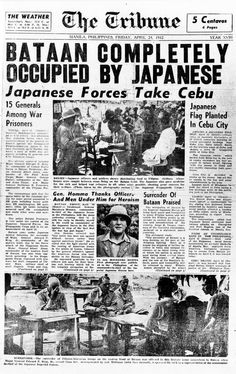
Manila Tribune


It’s Been a Week Since Publication

One week ago today was the official publication date of

Angels copies

After years of researching, writing, and revising, it all finally came together. It’s nice to see the book in its final form, and I’m looking forward to talking to people about it. I’ve already recorded a podcast and tomorrow I’ll be interviewed for a radio program. (Details about that later.) There are a few other things coming up that I’ll reveal as they happen.

In the meantime, I hope everyone is enjoying their holiday season. And remember, angels go well with Christmas trees.


On the Seventh Day of Publication

Christmas is five days away. I can’t help thinking about December 1941 in the Philippines. The Japanese not only bombed the island of Luzon that month, they also started an invasion. As Filipinos and Americans living in and around Manila tried to prepare to celebrate the holiday, they had to face the fact that an enemy occupation was imminent. Read more about it in Angels of the Underground.

tree angels

On the Sixth Day of Publication

What happens after a war ends?

The four women featured in Angels of the Underground had to adjust to peacetime, but it wasn’t easy.

Claire Phillips wanted her wartime exploits to really count for something, so she wrote a memoir and pursued a movie deal–which she got.

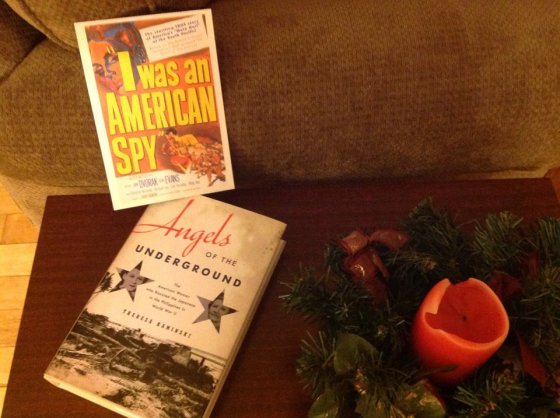
In 1951, Ann Dvorak starred as Claire Phillips in

American Spy