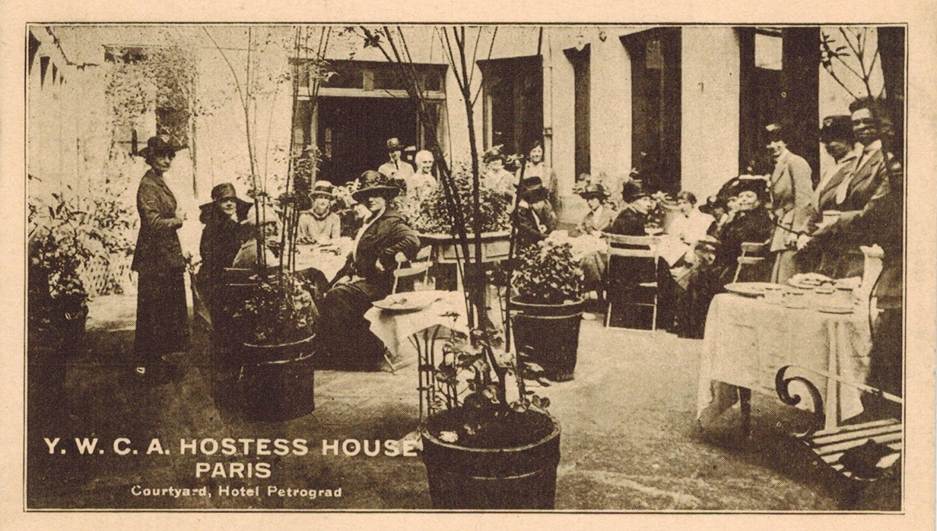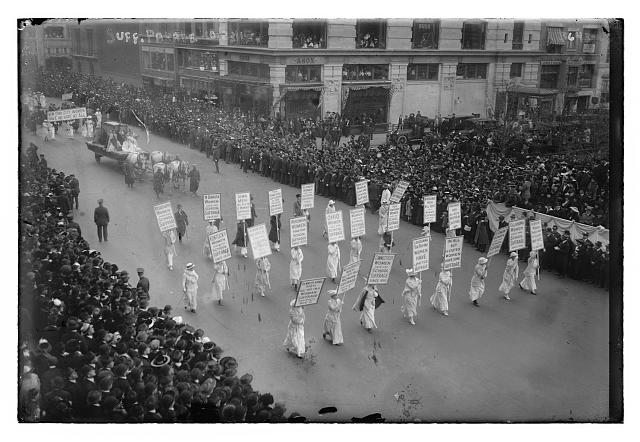
It’s a pretty great story about Jane. I’m still unraveling it and putting it back together after I ran across some new sources that popped up while I was researching something else.
This meant another week of examining documents that described the same event in different ways, so I’m trying to figure out what’s the most plausible. In the end, it will help build a fuller picture of Jane’s early years at The New York Times.
What I’m Reading
Still on True Nature: The Pilgrimage of Peter Matthiessen by Lance Richardson. Also trying to get caught up with (rather ironically) back issues of The New Yorker.
What I’m Watching
Almost finished with The Trial of Christine Keeler, an interesting British political drama set in the 1960s, plus the first three episodes of The Other Bennet Sister (very enjoyable) as well as the third weekly episode of After the Flood, all on BritBox. Finished the German spy thriller, Unfamiliar, on Netflix, which is now perfectly poised for a second season. I also started an Australian drama from the 2010s, A Place to Call Home (Prime). I’m liking it a lot more than I thought I would.
Still enjoying the British Ghosts (Paramount+) and spending way too much time thinking about the characters.
What Else Is Happening
Well, bowling, but an hour later than usual. League season has ended, and the alley has shortened its hours. We had forgotten about that and ended up going for ice cream to pass the time until it opened. That was good enough to make us almost forget how uneven our games were. But one of us rolled a sparrow during the first game. (Not me.)
Now that the bowling alley has gone on summer hours, so will the blog. There will be a new post every other week at least through September.
Happy Mother’s Day to all who are observing.
Have a good couple of weeks. Hope you stop by for the next installment.
This book I’m writing about Jane Grant will be the first full-length one focusing on her. She has turned up in a few other books published by both trade and academic presses, so I was able to consult some secondary sources for part of my research.
The information they contain needs to be verified, and occasionally that process sends me down research rabbit holes. This is what happened with one piece of chronology in my fourth chapter, in which Jane travels overseas with the YMCA in World War I.
The most valuable secondary source has been Susan Henry’s 2012 book, Anonymous in Their Own Names, a scholarly look at three women, including Jane, who pushed for legal changes to ensure that married women, if they chose, could keep their birth names. I always start my secondary source research with academic works.
Henry wrote about Jane’s trip: “In September 1918 she sailed for France. Her first stop was the Stars and Stripes office in Paris where she hoped to visit her friend Woollcott, who had been working there since February and with whom she had been corresponding. But he had left for the front, so she continued on to her duties in Tours.”
Henry took that information from a 1943 letter that Jane wrote to Woollcott’s biographer, Samuel Hopkins Adams. The letter is part of the Jane Grant papers at the University of Oregon and is one of the many documents I read and scanned on my research trip there a few years ago.
So I pulled up the letter and read what Jane wrote:
“In September, 1918, I went to France with the Motion Picture Bureau of the Y.M.C.A. When I arrived in Paris I went at once to the office of the Stars and Stripes in search of Aleck…and learned that I could not see Aleck, although he [a commanding officer she spoke to] would not tell me if Aleck was out of Paris or when he would return. I was mighty young then and mighty lonely and as Aleck was the only person I knew in Paris I made going to the office of the paper a regular stint until I was detailed to Tours.”
Jane’s 1968 memoir, Ross, The New Yorker and Me, contains this recollection: “Once I had hurdled the obstacles of getting to war Aleck resolved to have me detailed to the Entertainment Bureau of the Y. ‘They need singers badly and your dancing will be no hindrance,’ he wrote me at Tours. I was delighted with the prospect and elated when I was summoned to Paris to arrange for transfer to my new duties with the entertainment unit Aleck had assembled. He had met me at the station the evening before.”
I need to fashion a chronology that makes sense. I have to consider that Jane’s letter to Adams was written twenty-five years after her trip to France, which brings the issue of memory into play. Also, in 1943, in the middle of U.S. involvement in World War II, Jane had a lot going on. She was busy with a project for The New Yorker and with duties on the Writers’ War Board. She may have still been processing her feelings over Woollcott’s unexpected death early in the year.
Her memoir came even later. Jane spent over a decade researching, writing, and rewriting that book. But as much as she drew on her journalism training, the memoir wasn’t meant to be objective. She had a specific purpose for writing it. As with her letter to Adams and with Henry’s account of these events, the information in Jane’s memoir must be verified by other sources.
That’s what takes a lot of my time. I usually find some interesting things along the way, and in this case, I have. My goal is to get the information as correct as possible.
I thought once again of historian Jill Lepore’s “Plymouth Rocked: Of Pilgrims, Puritans, and Professors,” which I mentioned last week. (Here again is The New Yorkerarticle, though it may be paywalled.) “History isn’t brain surgery,” she wrote. “Even when it’s done poorly, it’s not fatal. Still, it can knock you down.” I don’t want to do it poorly.
What I’m Reading
I started another big biography of another important man in the book world: True Nature: The Pilgrimage of Peter Matthiessen by Lance Richardson. It’s good but very stuffed with details. It reminds me of how hard it is as a biographer to figure out what to put in and what to leave out.
What I’m Watching
The second weekly episode of After the Flood (BritBox) and over on Netflix, Unfamiliar, a German spy thriller.
Still enjoying the amusing British version of Ghosts (Paramount+).
What Else Is Happening
Another very acceptable bowling this week.
It was a real bird week here at Southfork. Woodpeckers, orioles, and grosbeaks have been spotted at the front feeder. And in the neighborhood, a hawk (probably a Cooper’s hawk) and a few backyard chickens. Lucky chickens—the hawk wasn’t in the same part of the neighborhood.
(an orchard oriole)
Have a good week. Hope you stop by for the next installment.
The chapter that covers Jane Grant’s efforts to get overseas during World War I, that is. I think this version finally works, so I’m calling it done. This version. There will assuredly be another.
For this one, I really had to focus on finding what I think of as the feeling or texture, a kind of “you-are-there” sense of the narrative. I’m an academic writer and these more creative “writerly” aspects are difficult for me to get right when I’m trying to tell a story. I could better utilize the tools of creative writers and journalists. Finding the right balance or blend is key. This week I was reminded how much writers of all kinds have to learn from each other.
Historian and Pulitzer Prize finalist author Megan Kate Nelson posted on BlueSky a few days ago: “Watching and waiting for more historians to write short sentences, short paragraphs, and short chapters.” She’s a very good writer and a very good historian, so her advice is worth considering. Once I’m satisfied with content, I’m going to go after style.
One of Jessica Meyer’s recent posts on her blog, Arms and the Medical Man, reminded me of the tensions that sometimes surface between different types of writers. Meyer is Professor of Social and Cultural History at the University of Leeds, and she researches the intersections of the histories of gender, disability and warfare.
Meyer’s piece, “Picking Up the Threads,” in part considers the differences between academic historians and what she calls “professional historians (that is, those who communicate historical research in order to earn a living).” I’m not crazy about the term “professional historians” to describe nonfiction writers who focus on historical topics, but I get her larger point. Meyer finds it “always slightly disconcerting” to read one of those works “that identifies a methodological approach or source base that I have long been familiar with as a new discovery.”
Academics and nonfiction writers generally have different reading audiences to address, but both could learn valuable skills from each other. Some academics have become very interested in writing for the non-academic reader, and sometimes they are referred to as public scholars. (Historian David M. Perry has just published a book on the topic.)
Meyer’s blog post in turn brought to mind one of my all-time favorite book reviews, “Plymouth Rocked: Of Pilgrims, Puritans, and Professors,” in which Harvard historian Jill Lepore cast a critical eye on Nathaniel Philbrick’s Mayflower: A Story of Courage, Community, and War. (Here is The New Yorkerarticle, though it may be paywalled.) Along the way, she considers who writes history, how and why. Lepore takes Philbrick, who trained as a journalist, to task for his uncritical reading of sources, which to her, resulted in a misleading, distorted history.
She acknowledged, though, that “History isn’t brain surgery. Even when it’s done poorly, it’s not fatal. Still, it can knock you down.” I think about this a lot when I’m working on a book.
And, relatedly, worth a weekly read is Black and White and Read All Over, which carries the marvelous subtitle “Where Scholarship Meets the Public.” The website is hosted by scholars Vaughn Joy and Ben Railton.
What I’m Reading
I didn’t quite finish Gayle Feldman’s Nothing Random: Bennett Cerf and the Publishing House He Built before it was due back at the library. I really enjoyed what I read, though, and the way she presented Cerf as a multi-faceted person.
Not the kind of novel I normally read, but Heartwood by Amity Gaige kept my interest all the way through.
What I’m Watching
Got through all six episodes of Fallen, a Swedish police procedural set in a cold case unit. The first season is on Prime via MHz for a limited time. MHz is also home to the excellent World War II series A French Village, a wrenching examination of occupation and collaboration.
On BritBox there’s been Dark Heart, interesting if disjointed, and the second season of After the Flood, which seems so long after the flood that I can’t really remember much from the first season.
Started the British version of Ghosts (Paramount+), and it’s amusing.
Finished this season of The Forsytes (PBS) and all the available episodes of Animal Control on Netflix.
What Else Is Happening
Very acceptable bowling this week.
(Bowling scene from The Big Lebowski)
Flowers continue to bloom in the gardens here at Southfork, the pear trees are budding, and even the smallest peony bush has shot up. The birds are very active and vocal, and chipmunks and rabbits keep racing through the back forty.
Have a good week. Hope you stop by for the next installment.
I made a bit of progress on revisions, still working through some history of World War I as it pertains to Jane Grant’s experiences. I read up on the 1916 Council of National Defense and the Woman’s Committee it created in April 1917. Once the United States entered the war, the government decided it needed the support of women and tapped into the well-established network of female organizations that had been around for decades.
Then I looked to see what kinds of articles the New York Times published about these developments to better understand the atmosphere at the newspaper where Jane worked. And I started considering how press coverage of the conflict and the existence of the Woman’s Committee (run locally by the upper-class women she covered for the Society Department) influenced the choices she made about what to do during the war.
Writing occupies a significant chunk of time almost every day, yet there are always other things going on, too. I used to think that I would have more time for writing in retirement, but I’ve found more flexibility in my schedule rather than more time. And that’s okay. This past week I met a friend for a leisurely lunch, wrote an endorsement (blurb) for a forthcoming book about the Philippines during World War II, and spent a lot of time getting ready for a weekend with family centering on a baby shower.
What I’m Reading
Gayle Feldman’s Nothing Random: Bennett Cerf and the Publishing House He Built remains absorbing. It’s due back at the library in five days and can’t be renewed, so I’ll have to finish it some other time. It’s a remarkable achievement.
What I’m Watching
Only one episode left to finish this season of The Forsytes (PBS).
Watched the first episode of the new Dan Levy comedy, Big Mistakes, on Netflix. Very unsure about it. The cast is great and I get the premise, but the execution didn’t quite land during that first episode. Still, with Levy, it’s probably worth watching at least one more episode. (I had to try Schitt’s Creek twice before I stuck with it, but that was mostly because of the presence of Chris Elliott.)
Nearing the end of all the available episodes of Animal Control on Netflix.
Finished the Netflix series, Detective Hole and the first season of Helsinki Crimes (PBS). I think we started Helsinki Crimes last week, but I forgot about it. Not that it’s bad, but it’s a pretty routine police procedural. It’s set in Helsinki, though, which gives it a little something special.
During one of the several family gatherings over the weekend, conversation turned to one of our favorite good bad movies: VelociPastor. I don’t know if any synopsis can do it justice.
What Else Is Happening
Slightly better bowling this week. There were gutter balls again during the first game, but the second game had a strike and a few spares. And afterward—ice cream!
The two pear trees and the mulberry tree survived a week of rain and winds, so that bodes well. There are more buds on all. A most welcome sight is the rapid growth of the peony bushes. Peonies are my favorite spring flower, and every year I closely watch their progress.
(not our peony bushes)
Have a good week. Hope you stop by for the next installment.
Lots of things happen during revisions, including moments when you feel like doing a gentle head-bang on the desk because you can’t believe you almost overlooked something. That’s also when you realize this is exactly why revisions are essential.
They were right there in the scans from the archives. Two brief letters from Elisabeth Marbury, one to Jane Grant, one To Whom It May Concern, both from the summer of 1918, both a part of Jane’s quest to get an overseas posting.
Jane volunteered for the Publicity Bureau of the Mayor’s Committee of Women on National Defense (MCWND) sometime in 1918. Marbury, who officially headed the bureau, was a powerhouse in New York City theater circles, so it’s also possible that Jane already knew her or at least had known of her through her job at the New York Times.
Elisabeth “Bessy” Marbury was born in 1856, the daughter of a prominent New York City lawyer. A former debutante, she drew from her family’s wealth and connections to set herself up in business to promote and manage actors and playwrights. Marbury met Elsie de Wolfe, an aspiring actor about ten years her junior, in the 1880s. The couple lived together for forty years while Marbury grew her company, opening offices in Paris, London, Berlin, and Madrid, and de Wolfe launched herself as an interior decorator.
Together they bought a home in Versailles, France, where they spent part of every year until World War I made that impossible. But between 1914 and 1916, Marbury coordinated relief efforts for wounded French soldiers while she was still in the country. Queen Elizabeth of Belgium presented Marbury with a medal in honor of her war service in 1919.
(garden at Villa Trianon, Versailles, France)
Once back in the United States, Marbury worked with at least one other wartime organization in addition to the MCWND. Her business also remained open and thriving. Marbury utilized her theater contacts to put on programs to help fund the war effort. In the summer of 1918, Jane was “conducting the Publicity Bureau” for her on the MCWND and doing such a good job that Marbury both hated to lose her and willingly wrote a letter of recommendation to help her get overseas.
Jane didn’t forget Marbury. During the 1920s, when Jane was involved in two other quite different endeavors, she looped Marbury into those as well, one successfully, the other not. But by then, Jane was practiced in establishing connections with influential people and making good use of them.
What I’m Reading
Gayle Feldman’s Nothing Random: Bennett Cerf and the Publishing House He Built is very absorbing. It’s a huge book, and I admire all the careful research Feldman conducted and her skillful crafting of the narrative.
What I’m Watching
Two very quiet, excellent movies on Prime: Sam and Kate, starring Sissy Spacek and Dustin Hoffman, and The Summer Book, set on a small Finnish island, starring Glenn Close as the grandmother. No murders, nothing blows up. Just relationships.
More episodes of The Forsytes (PBS). Still very unlike the last series and clearly setting up a second season.
Only two episodes left of the Netflix series, Detective Hole.
Finished Mudtown (BritBox). The ending was a bit unexpected, and I still have some questions.
Animal Control (Netflix), an amusing workplace comedy, continues as filler watching.
What Else Is Happening
Voting happened on Tuesday. There were some local races plus the big statewide Supreme Court one that was a decisive liberal victory.
I listened to Megan Kate Nelson’s second appearance on the excellent Drafting the Past podcast, created and hosted by Kate Carpenter. If you like to read good history books, this is the place to hear authors talk about how they research and write them.
I also watched historian Pamel Toler on WW2TV on YouTube. Host Paul Woodadge designs great programs covering so many aspects of the war in addition to military history. It’s really worth a watch.
The usual two games of bowling served as a sharp reminder of the consequences of missing last week. A two-word summation of my experience this week: gutter balls.
More exciting was our first visit of the spring season to the garden center. We returned to Southfork with two pear trees and a mulberry tree, all of which the foreman planted in the front acreage. So far, the deer haven’t eaten them. They’ve also left alone the other tender green shoots that have been popping up in the garden beds. So far.
Have a good week. Hope you stop by for the next installment.
You must be logged in to post a comment.