Dispatches from the Writing Life #17: After a Week in Scotland

There’s nothing of note to report on my revisions of the Jane Grant manuscript. I’ve recently returned from a weeklong vacation and am still settling back in. In terms of writing, this involved starting a reread of the chapter in which Jane makes her movie debut (the subject of my last post). I needed to reacquaint myself with the sequence of events to see how it all flows and work out some clunky prose as I went along. It’s been a quiet re-entry, which is good for those first post-vacation days.

Scotland was lovely. We stayed in Edinburgh, in the city center, so we could walk to just about everything we wanted to see. Twice we ventured outside of the city: once on a tour to the Highlands with a stop at Loch Ness for a boat ride and once on the train to Glasgow to see the Gallery of Modern Art and take a walking tour.

During one of our Edinburgh days, we went to the National Gallery. I was immediately drawn to this portrait and wanted to know more about the subject.

Look at her expression.
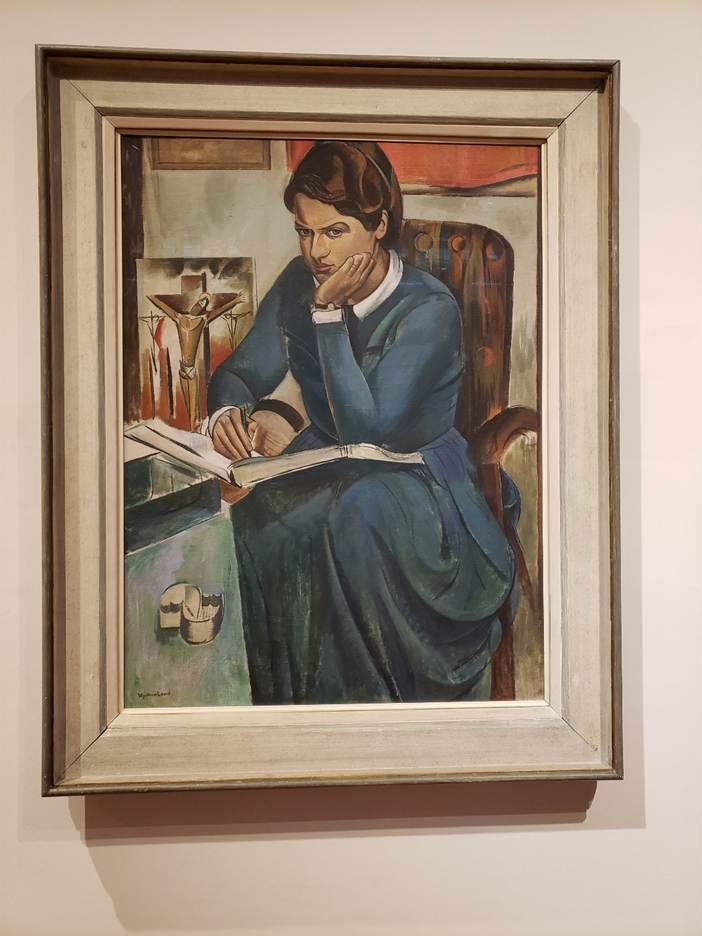
(Portrait of Naomi Mitchison by Wyndham Lewis, 1938)

I was not surprised to learn that Naomi Mitchison (1897-1999) was a writer and women’s rights activist. The Gallery’s website provides this description of her life:

“Naomi Mitchison was a novelist, poet and passionate campaigner for social justice and women’s rights. Born in Edinburgh, Mitchison’s first novel was published in 1923, when she was twenty-six. Mitchison wrote over seventy books during her lifetime and edited and contributed to many more. She also produced hundreds of articles for newspapers and journals. Mitchison travelled extensively over five continents, was involved in the campaign for access to birth control from the 1920s and spent nearly twenty years as a local councillor in the Scottish Highlands. She was awarded a CBE in 1981.”

Another painting from later in her life is nearly as arresting.
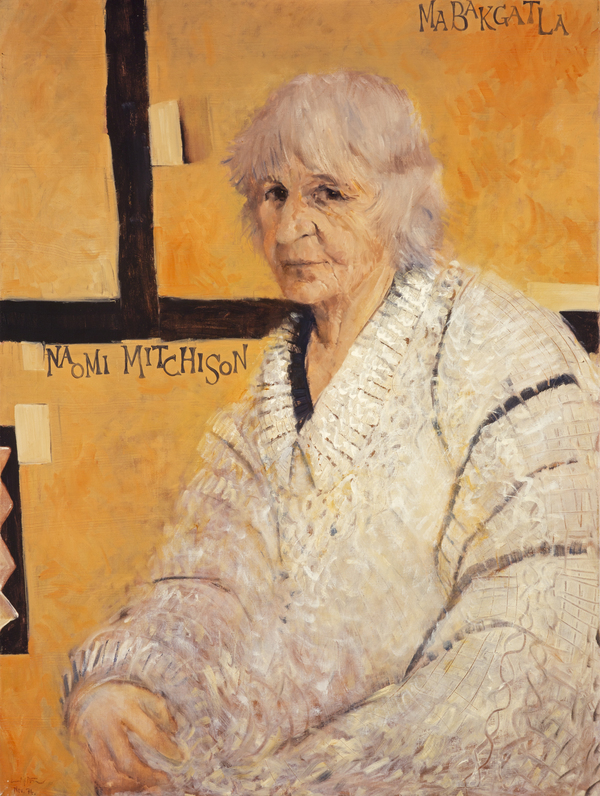
(Portrait of Naomi Mitchison by Clifton Pugh, 1974)

The Gallery website provided additional details of her life in connection with this painting:

“Edinburgh-born Naomi Mitchison was a writer of plays, fiction, poetry and essays as well as being a passionate campaigner for a range of social and political issues. With her husband, barrister and later Labour MP, G. Richard Mitchison, she entertained a circle of intellectuals and literary friends in their house in Hammersmith and later at Carradale in Kintyre. During the 1950s and 1960s she travelled widely in India, the Middle East and Africa. Her personal involvement with the Bakgatla people of Botswana – to which the inscription on this portrait refers – inspired a number of writings on African issues. Mitchison was awarded a CBE in 1981. She died at Carradale in 1999, aged 101. The National Galleries of Scotland also hold a sculpture bust and an earlier portrait of Mitchison.”

A quick internet search about Mitchison (minus any AI “sources”) revealed that she was interested in science (specifically genetics), qualified for a spot at Oxford University, and halted her studies to volunteer as a nurse during World War I. Mitchison married a barrister in 1916 and turned to writing in the 1920s. She also had seven children and a string of lovers.

Hers was a life packed with adventures. It was big and important, deserving of a biography. I’m going to track down Jenni Calder’s, titled The Nine Lives of Naomi Mitchison.

What I’m Reading

I’ve started historian Megan Kate Nelson’s latest, The Westerners: Mythmaking and Belonging on the American Frontier.

In honor of the Scotland vacation, I picked up a Val McDermid police procedural set in Edinburgh, Past Lying, the seventh in her series featuring Karen Pirie. It holds my interest.

What I’m Watching

Started Legends, about a small team of British customs agents circa 1990 attempting to infiltrate a heroin ring, and the second season of The Chestnut Man, a Danish mystery, both on Netflix.

Continuing with The Other Bennet Sister (still enjoyable) and After the Flood, both on BritBox.

Heading into the last season of Ghosts UK (Paramount+). I’m still watching the Australian drama from the 2010s, A Place to Call Home (Prime), but it’s getting a bit soapy. I may have to alternate with episodes of Deep Space Nine (Paramount+).

Finished The Trial of Christine Keeler (BritBox), an interesting British political drama set in the 1960s.

What Else Is Happening

Getting back to bowling after a week off wasn’t as bad as I thought it would be. Despite too many splits and a few gutter balls, the overall scores were acceptable. I especially appreciated rolling two strikes in the tenth frame.

Have a good couple of weeks. Hope you stop by for the next installment.
Dispatches from the Writing Life #13: More Life Than Writing

I made a bit of progress on revisions, still working through some history of World War I as it pertains to Jane Grant’s experiences. I read up on the 1916 Council of National Defense and the Woman’s Committee it created in April 1917. Once the United States entered the war, the government decided it needed the support of women and tapped into the well-established network of female organizations that had been around for decades.

Then I looked to see what kinds of articles the New York Times published about these developments to better understand the atmosphere at the newspaper where Jane worked. And I started considering how press coverage of the conflict and the existence of the Woman’s Committee (run locally by the upper-class women she covered for the Society Department) influenced the choices she made about what to do during the war.

Writing occupies a significant chunk of time almost every day, yet there are always other things going on, too. I used to think that I would have more time for writing in retirement, but I’ve found more flexibility in my schedule rather than more time. And that’s okay. This past week I met a friend for a leisurely lunch, wrote an endorsement (blurb) for a forthcoming book about the Philippines during World War II, and spent a lot of time getting ready for a weekend with family centering on a baby shower.

What I’m Reading

Gayle Feldman’s Nothing Random: Bennett Cerf and the Publishing House He Built remains absorbing. It’s due back at the library in five days and can’t be renewed, so I’ll have to finish it some other time. It’s a remarkable achievement.

What I’m Watching

Only one episode left to finish this season of The Forsytes (PBS).

Watched the first episode of the new Dan Levy comedy, Big Mistakes, on Netflix. Very unsure about it. The cast is great and I get the premise, but the execution didn’t quite land during that first episode. Still, with Levy, it’s probably worth watching at least one more episode. (I had to try Schitt’s Creek twice before I stuck with it, but that was mostly because of the presence of Chris Elliott.)

Nearing the end of all the available episodes of Animal Control on Netflix.

Finished the Netflix series, Detective Hole and the first season of Helsinki Crimes (PBS). I think we started Helsinki Crimes last week, but I forgot about it. Not that it’s bad, but it’s a pretty routine police procedural. It’s set in Helsinki, though, which gives it a little something special.

During one of the several family gatherings over the weekend, conversation turned to one of our favorite good bad movies: VelociPastor. I don’t know if any synopsis can do it justice.

What Else Is Happening

Slightly better bowling this week. There were gutter balls again during the first game, but the second game had a strike and a few spares. And afterward—ice cream!

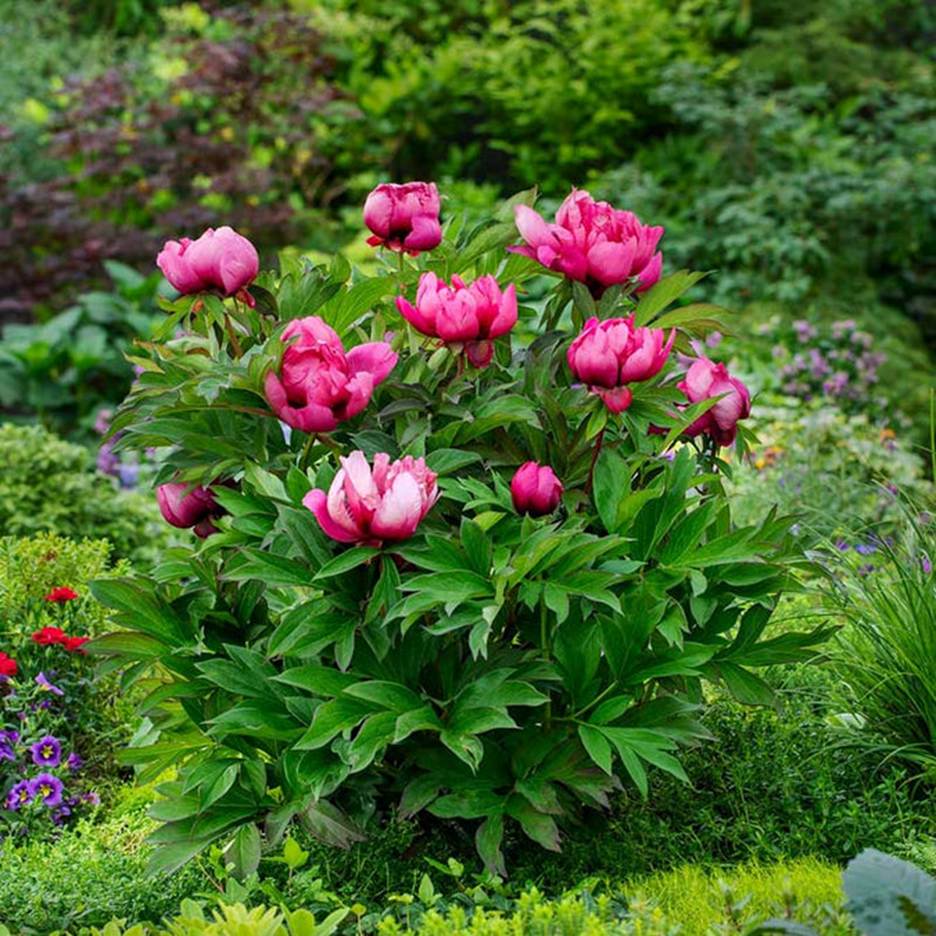
The two pear trees and the mulberry tree survived a week of rain and winds, so that bodes well. There are more buds on all. A most welcome sight is the rapid growth of the peony bushes. Peonies are my favorite spring flower, and every year I closely watch their progress.

(not our peony bushes)

Have a good week. Hope you stop by for the next installment.
Dispatches from the Writing Life #1

Welcome to the first in a weekly (I hope) series that charts the progress of my current writing project, Invisible Me: Jane Grant and The New Yorker.

Since I have no deadline for finishing this book, the pace of progress is up to me. I’ve set goals throughout and meeting them has been greatly aided by three very supportive online writing communities. I envision this weekly series as adding another layer of accountability and cultivating another community (all of you).

I’ve been working on Invisible Me for a few years. Writing nonfiction history requires lots of time-consuming research and lots of writing, through multiple drafts. For this project, I’ve already made two major research trips, tracked down digitized online collections, and read dozens of published sources. Then I wrote an extremely bloated and somewhat blurry first draft.

After I finished, I wrote a book proposal so I could query literary agents for representation. The proposal, basically a sales pitch for the book, forced me to focus on the contours of the story, to make sure that Jane comes across as a multi-faceted person with plans and dreams, failures and successes, who has historical importance. During this past week, the last queries went out, and now I’m waiting to hear back from the agents. Or not. Many agents now don’t have the time to even send a rejection email, so if I don’t receive a response in a few weeks or a few months, it means they’ve passed. Or not. It’s fair game to nudge them once or twice before giving up.

While in agent-waiting mode, I’ll read through those first draft chapters to assess the scope of writing work ahead, to start a second, bloat-free draft. I may set an initial goal of completing one chapter per month.

Writing occupies part, but certainly not all, of my day. It’s the work part of my day. Luckily, since I’ve retired from academia, I set my own hours. I also read a lot and watch shows on various streaming services.

What I’m Reading

I recently finished a couple of nonfiction books about spies: The Art Spy: The Extraordinary Untold Tale of WWII Resistance Hero Rose Valland by Michelle Young and Family of Spies: A World War II Story of Nazi Espionage, Betrayal, and the Secret History Behind Pearl Harbor by Christine Kuehn. Both are good, and Kuehn’s book especially packs a lot of yikes moments.

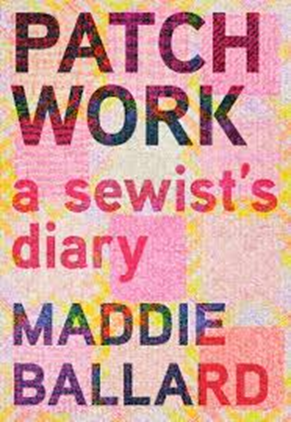
In two blissful sittings I read Maddie Ballard’s compact memoir, Patchwork: A Sewist’s Diary. I recently returned to sewing after a thirty-some year hiatus, and I loved how Ballard wrote about garment construction and identity and relationships. It’s beautiful.

And now I’m a few chapters into Palace of Deception: Museum Men and the Rise of Scientific Racism by Darrin Lunde, not at all the usual kind of book I pick up. But I’m a big fan of museums, and he presents an interesting story.

On the fiction front, I recently read Ann Cleeve’s The Killing Stone, a new Jimmy Perez story. I’m a big fan of Shetland (see below) and was happy that Cleeve brought back one of my favorite detectives, even if he’s not on Shetland anymore. I absolutely loved Sacrament, Susan Straight’s marvelous novel about nurses at a California hospital during Covid. And I continue reading (or sometimes plodding through) Vanity Fair, the 19th century classic by William Makepeace Thackeray. I’m sticking with it for an online book discussion next month. In previous years, this group has read Anna Karenina and Middlemarch, so there’s a definite vibe to these selections.

What I’m Watching

BritBox recently debuted Season 10 of Shetland, and I’m eagerly keeping up with all the episodes. Perez has moved on, but his replacement, Ruth Calder, has great chemistry with Alison “Tosh” McIntosh. I’m already looking forward to Season 11.

On PBS, there’s a new season of All Creatures Great and Small and a new mystery series called Bookish. And Paramount+ launched Starfleet Academy, the latest addition to the Star Trek universe, and it’s okay so far.

I keep meaning to watch the final episode of Stranger Things on Netflix but haven’t been in the right mood yet. I find Young Sheldon and Mom (neither of which I watched on network t.v.) reliably good, and I revisit The West Wing and The Closer from time to time.

What Else I’m Doing

Daily exercising (a portable elliptical machine is essential during winter), sewing (very sporadically lately), thrifting (one of my favorite pastimes that sometimes is related to what I’m sewing), bowling (once a week as extra exercise that’s also a fun outing).

That’s it for now. Thanks for reading. Hope you check back next week to see what kind of progress I’ve made.

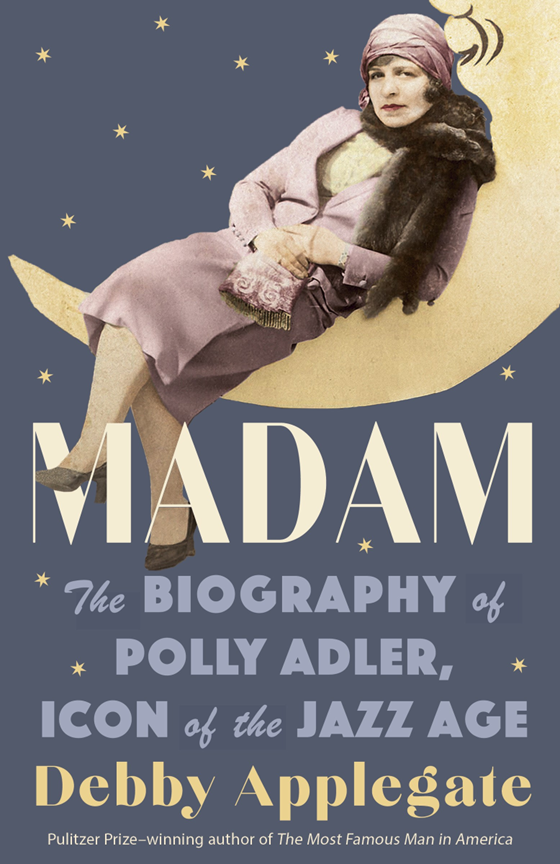
On Reading (and not yet finishing) Madam: The Biography of Polly Adler, Icon of the Jazz Age By Debby Applegate

Back in the summer of 2024, I started reading Debby Applegate’s biography of Polly Adler, the (in)famous Manhattan madam of the 1920s. It was an obvious choice for me: a story about a little-known woman—today, not back then—written by a woman who turned what she learned in graduate school into a Pulitzer Prize winning writing career. Applegate won that award for her first book, The Most Famous Man in America, a biography of the nineteenth-century minister Henry Ward Beecher.

(That book also serves as the sample proposal in the extraordinarily useful Thinking Like Your Editor: How to Write Great Serious Nonfiction—and Get It Published by Susan Rabiner (Applegate’s literary agent) and Alfred Fortunato. My copy is dog-eared now. It is the resource I turn to when I need to write a book proposal. Now I am reading Tilar Mazzeo’s How to Write a Bestseller: An Insider’s Guide to Writing Narrative Nonfiction for General Audiences, which may prove to be equally valuable.)

Madam is Applegate’s second book. (I admire an author who takes their time to conduct quality research.) I knew going in that it would be good. My interest in Madam extended beyond character to setting. Right now I want to read as much as I can about New York City in the 1920s to get background information for my current book-in-progress about Jane Grant, co-founder of The New Yorker.

Polly Adler was born around 1900; Jane in 1891. When Polly arrived in New York City from Russia in 1913, Jane had already been there (from Kansas) for five years. Both changed their first names to make a break with their pasts. The two young women struggled to gain a foothold in the city so they could live the life of their dreams. Each got what she wanted, mostly, in some way.

It is not unreasonable to think their paths may have crossed in New York in the 1920s, though trying to imagine that encounter makes my head spin. Polly opened her first brothel at the beginning of that decade that was known for its roar. By 1924, as Applegate writes, “her house had become an after-hours clubhouse for the adventurous Broadway bohemians who gathered at the Algonquin Hotel for lunch.” Jane Grant was a member of the legendary Round Table that met at the Algonquin. As was her husband, the talented editor Harold Ross. Their home was another “after-hours clubhouse” for the Round Tablers, though the entertainment they provided did not include Polly’s specialty.

(I have come to think of Jane as the anti-Polly.)

With some trepidation, I looked for Harold Ross’s name in the index of Madam and found it. (Jane’s is not there.) I could hardly bring myself to read what was on the corresponding page—would he turn out to be a rat or a super rat? But according to Applegate, Ross was “one of the few who failed to fall for Polly’s charms.” The lone time friends dragged him to her brothel, he carried along a stack of manuscripts, which he read “while the fun eddied around him.” This left me with a lot to think about.

I read about a quarter of Madam before I set it aside. It had nothing to do with the quality of the biography, which is as excellent as I anticipated, but rather because I started to consider it an ideal model for my book on Jane Grant. Too ideal. I am still very much at the beginning of my project, and I started to worry that I would imitate Applegate’s style. I do not want to cross the line between modeling and imitating. I need space, considerable space right now, to identify that boundary, to develop my own style and voice based on how I think Jane’s story needs to be told.

This is not the way I typically respond to the secondary (or published) sources I read for my book research. Every so often, though, I encounter a book—whether during leisure reading or work reading—I admire so much that I am overwhelmed by a sense of futility. (Also known, perhaps, as imposter syndrome.) As in, why should I continue to do what I do when someone has already published the perfect gem of a book. (Rebecca Donner’s All the Frequent Troubles of Our Days, about Mildred Harnack, was the last book to strike me like that.)

The feeling eventually passes, and, of course, I go on to do what I do, because what I write ends up different than what anyone else writes. And maybe it is as good, maybe not. But that is what happens. I write the best book I can.

When I’m ready for my first round of revisions on the (still in progress) rough draft, I might pick up Debby Applegate’s book again. Or maybe I will wait for the second round. But I know I will finish reading that biography. I need to find out what happened to Polly Adler. And I need to pay close attention to how Applegate makes me care.

Up next: more on this year of Jane Grant.

Reading Nonfiction in 2020

My nonfiction reading for 2020 was typical in terms of amount–too many to count. A lot of them were assigned for book reviews so I can’t include any of those in my best-of list. The other chunk was research reading for my (still) book-in-progress about Dale Evans.

(Dale Evans c. 1939)

The books for research reading usually don’t make it to my year-end list because I like to keep my work reading separate from my leisure reading. (The same goes for the book review books.) But I made an exception for a book I picked up because I thought it might provide some helpful background on women in 1940s-1950s Hollywood. It did, to a certain degree, but The Lady From the Black Lagoon turned out to be much more than that. Mallory O’Meara brilliantly writes about Milicent Patrick, an animator at Disney who went on to create one of the most iconic movie monsters. I kept thinking about the book, and about the many women ignored despite their achievements, long after I turned the final page.

Paperback The Lady from the Black Lagoon : Hollywood Monsters and the Lost Legacy of Milicent Patrick Book

O’Meara’s book did well, garnering reviews from The Los Angeles Times, The Washington Post, and The Christian Science Monitor. It’s a great example of how the life of an “unknown” woman can be made into a fascinating story.

I also loved Sarah Broom’s The Yellow House, a memoir about growing up in New Orleans that’s infused with history and current events.

Hardcover The Yellow House Book

Broom’s debut was a New York Times bestseller, and it won the 2019 National Book Award. The writing is lovely, the story compelling.

My third favorite nonfiction book from 2020 was also a memoir, one first published in 1945 and quickly forgotten. Françoise Frenkel was a Polish Jewish woman who opened a French bookstore in Berlin in the 1920s. Pushed out in the late 1930s, she spent years fleeing the Nazis.

A Bookshop in Berlin

Another “unknown” woman, another important story. There seems to be a theme here with books I like to read–and write.

Dale Evans is the most famous woman I’ve ever written about, though she’s much less well known today than she was in the mid-20th century. Many of my blog posts in 2021 will center on that writing and publication journey. Stay tuned.