
Another new month of revisions, and Jane Grant is still trying to get off to war. It was a big one, first called the Great War or the European War, later to be eclipsed by an even more cataclysmic one that necessitated the numbering of them: World War I and World War II.
Jane played a small part in that first war, but it took a lot of dogged determination before she found a way to get over to France. Her time there is pretty well documented, mostly because it was where she met Harold Ross, which is considered a big, important event in her life because of what their meeting led to.
Yet Jane never explained that was behind her drive to go overseas. Maybe she thought that should be evident. Her country was at war in 1917 and as a citizen of that country, she should support the war. But Americans had been deeply divided over the war since it had broken out in 1914. It was not a foregone conclusion that a citizen would be in favor of U.S. participation.
During this round of revisions, I’ve been bringing into sharper focus the ideas and events that may have influenced Jane. And I think a lot of it comes down to location: living in New York City (and forming romantic attachments to men who lived there, too) and working at the New York Times.
John Purroy Mitchel, the city’s mayor, initially embraced the neutrality that President Woodrow Wilson promoted in 1914, well before the United States joined the European conflict. A year later, Mitchel advocated preparedness and created the Mayor’s Committee on National Defense. (Jane met the mayor at least once, at a social occasion, and the only question she had the opportunity to ask him was the kind that reflected how she received her workplace nickname, Fluff.)
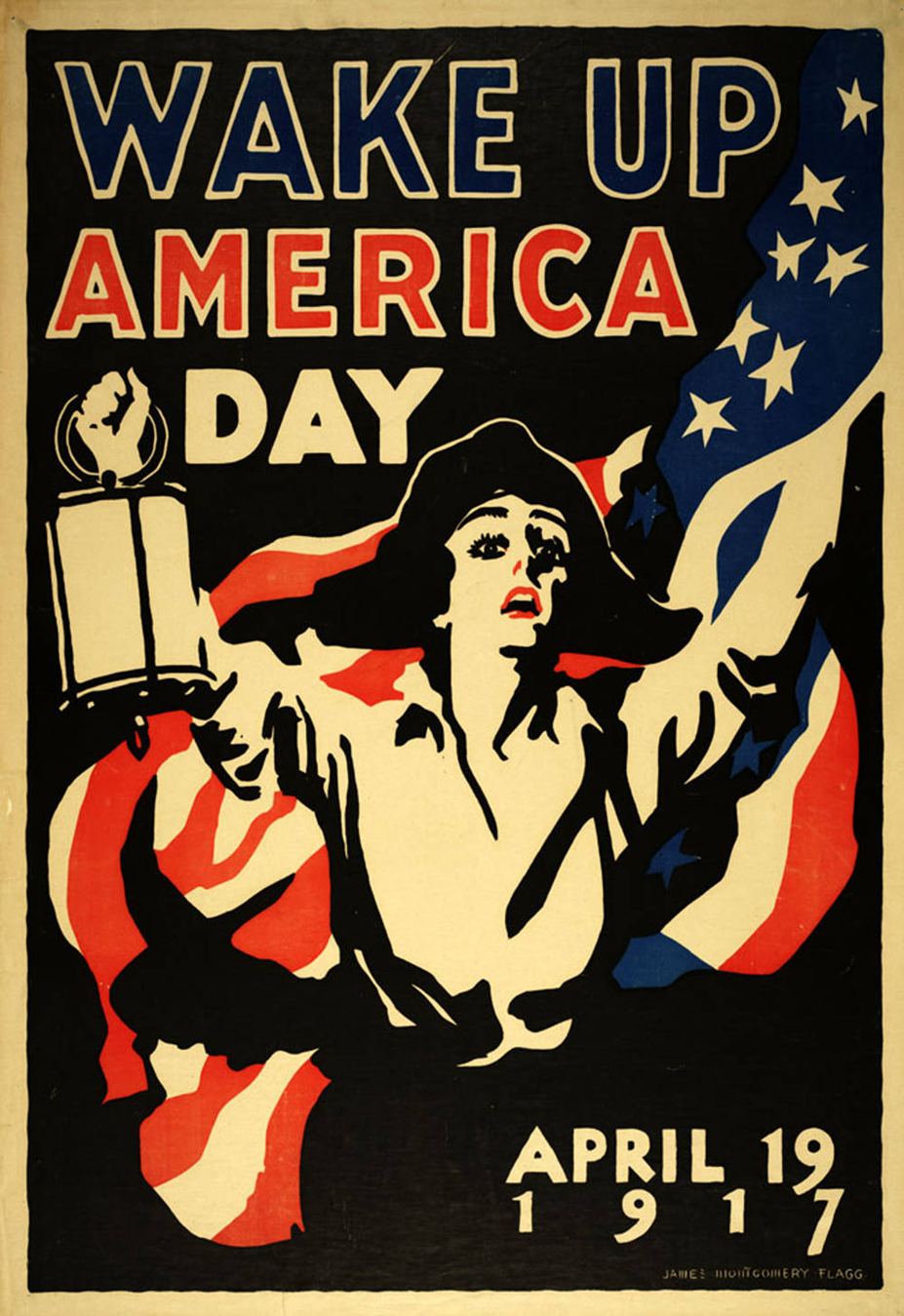
(Illustration by James Montgomery Flagg, 1917)
The Times backed Mitchel’s efforts, as did many of the upper-class people Jane covered for the Society Department. She was not an overtly political person, but she was aware, attentive, and thoughtful. She worked at the Times and she socialized with her colleagues. She could not avoid conversations about the war. But the only thing Jane gave voice to, backed by action, was her desire to go overseas when the United States entered the war in 1917. More than a year passed before she could make it happen.
It’s been hard to move on from this section before I’m satisfied with my understanding of what was happening with Jane during these war years. It may also have something to do with a failed book proposal of mine from several years ago about various America women like Jane who went overseas to play a role in the war. I found the subject fascinating and there was no other book quite like it, so I wanted to write it. Despite a proposal that both me and my then-agent were excited about, no editor shared that excitement. I abandoned the project and moved on to another. It’s just something that sometimes happens in the writing life.
What I’m Reading
I’ve been catching up on recent issues of The New Yorker. I usually don’t let them pile up, but when I’m reading library books with due dates, something has to give.
I finished Ocean Vuong’s novel The Emperor of Gladness. Beautiful and sad.
I finished The Typewriter and the Guillotine: An American Journalist, a German Serial Killer, and Paris on the Eve of WWII by Mark Braude. The journalist is Janet Flanner, who Jane Grant recruited in 1925 as the Paris correspondent for The New Yorker. The book, unfortunately, didn’t work for me. I didn’t find the connection between Flanner and the serial killer to be important or even interesting enough to support a book-length narrative.
I still have Gayle Feldman’s Nothing Random: Bennett Cerf and the Publishing House He Built waiting for me to do more than skim. But I get kind of overwhelmed just looking at it.
What I’m Watching
Another couple of episodes of The Forsytes (PBS). This new version has altered some of the characters and the circumstances, and it’s too early in the series to see the point.
More of the Netflix series, Detective Hole, set in contemporary Oslo, Norway, and it’s rather bleak.
Another weekly episode of Mudtown (BritBox), a crime series set in Wales, featuring a female magistrate. Lots of people in lots of trouble.
Finished Young Sherlock (Prime) and it was enjoyable enough, though I think the plot was over-stuffed.
Animal Control (Netflix), an amusing workplace comedy, continues as filler watching.
What Else Is Happening
No bowling! There was a big ice storm, and just when I thought we would get through it relatively unscathed (the shotgun-like popping sounds of tree branches snapping was heartbreaking), the power went out. We were lucky overall. Our inconvenience was small: no electricity or internet for a few hours. Our flora damage was small, too, with all of Southfork’s big trees keeping their branches. We will find out soon enough if our apples trees got too frozen. Other houses in the neighborhood had bigger problems with lots of branches down and longer stretches without power.
Yet new, small greenery has popped up. I think we have tulips and daffodils arriving. Unless the deer get overly interested.
Thanks for reading!
 Theresa Kaminski
You must be logged in to post a comment.