Above the East China Sea: 2015 Top Ten

The second on my list of favorite books from 2015 (I read them in 2015 but they weren’t necessarily published that year) is one I also mentioned on this blog last January:

East China

Sarah Bird’s masterful work of historical fiction is every bit as moody and melancholy as Katy Simpson Smith’s The Story of Land and Sea. Bird situates her dual timeline in 1945 and in contemporary Okinawa. During World War II, young Tamiko experiences the savagery of the final months of the conflict between Japan and the United States. In modern day Okinawa, the teenaged Luz tries to make sense of her older sister’s recent death as she adjusts to this new air force posting with her mother.

As both of these young women struggle to stay alive, they learn about the importance of love and family, patriotism and country. Part mystery, part ghost story, part coming-of-age tale, this is a mesmerizing novel.
 

The Story of Land and Sea: 2015 Top Ten

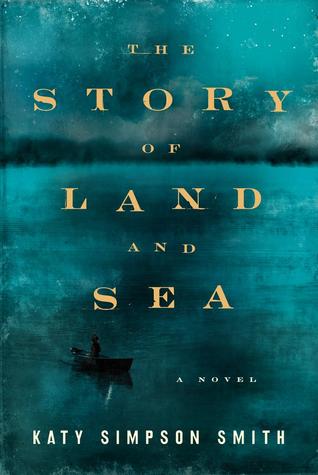
The first on my list of favorites from 2015 (books I read last year, not necessarily books that were published then) is one I mentioned on this blog last January: The Story of Land and Sea by Katy Simpson Smith.

Land and Sea

It was one of the first novels I read in 2015, and the story has stuck with me. Smith has a PhD in history and her masterful knowledge of early American history is subtly woven throughout this slim, powerful book.

In three parts, The Story of Land and Sea tells the story of a man named John living in coastal North Carolina during the long revolutionary period. The glories and the tragedies of the newly-emerging United States are reflected in John’s career as a sailor and then a merchant, and in his private life with his wife Helen, daughter Tabitha, and the enslaved woman Moll.

This is marvelous historical fiction. I can’t wait for Smith’s next novel.


Japanese Troops Occupied Manila on January 2, 1942

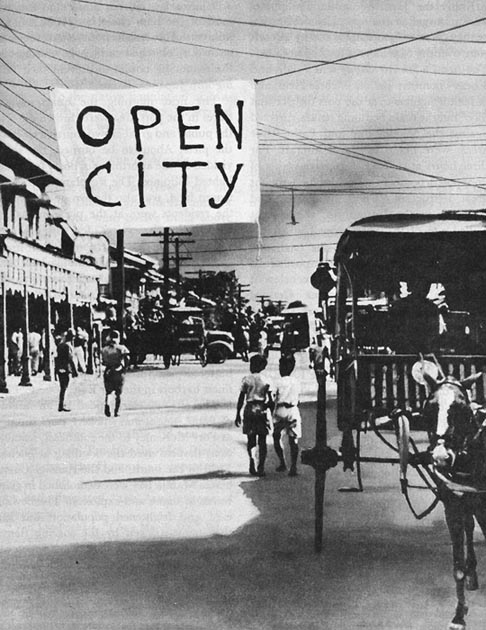
The attack had been underway since December 8, 1941. With the United States Army Forces Far East withdrawn to the Bataan peninsula and Manila declared an open city, its residents waited for the inevitable.

Japanese head into Manila 1942

Restaurateur Gladys Savary went to the market early on the morning of January 2, 1942, assuming that whatever was to come, people would still need to eat. The streets were mostly deserted; city officials had encouraged people to stay indoors. Still, customers trickled into the Restaurant de Paris throughout the day. Some friends urged Gladys to have a drink with them across the street at the Bay View Hotel, and she joined them briefly in the early evening.

Gladys may have caught a glimpse of Peggy Utinsky there. Peggy had spent the day nursing patients at Remedios Hospital, unaware the Japanese had arrived in Manila. At six o’clock, she was told to go home, and as she walked along a city street, a passerby pointed out signs of the occupation: Japanese motorcycles, Japanese soldiers, Rising Sun flags. “Here they are, they have us,” Peggy thought. She ducked into the Bay View Hotel and for the next hour chatted with other Americans, gathering all the information they had. Then Peggy returned to her apartment on A. Mabini Street and began planning how she would undermine the enemy occupation.

Margaret Utinsky signal corps public domain

1941: The Week Between Christmas and New Year

For people living in the Philippine Islands, the usual celebratory holiday week that stretched from Christmas into the New Year was fraught with danger and uncertainty. The Japanese began bombing the Philippines on December 8, 1941, after they had concluded their attack on Pearl Harbor. On December 22, they launched an invasion at Lingayen Gulf on the main Philippine island of Luzon. American and Filipino forces, no match at this point for the Japanese, retreated to the presumed safety of the Bataan peninsula or the small island fortress of Corregidor.

The day after Christmas, General Douglas MacArthur declared Manila an open city, hoping to spare its destruction. The Japanese continued their bombing campaign as their troops headed for the capital city.

Manila_declared_open_city

During those dangerous days and nights, Peggy Utinsky, an American woman living in the Philippines since the 1920s, worked as a nurse in one of the Manila hospitals and volunteered at a local soldiers’ canteen. For two precious days, her husband Jack managed to get away from his duties on Bataan to visit her. But Peggy’s medical skills were sorely needed, and she couldn’t take any additional time off to spend with him. Before she knew it, Jack was gone.

Gladys Savary, owner of the popular Manila eatery, the Restaurant de Paris, kept her business open during that hectic time. It proved a comforting diversion from the personal pain of biding goodbye to her nephew, Edgar Gable, who headed off to fight on Bataan. Gladys began New Year’s Day 1942 with a morning eggnog. Enemy forces, moving rapidly, were twenty miles from the city.


Complicating Rosie the Riveter

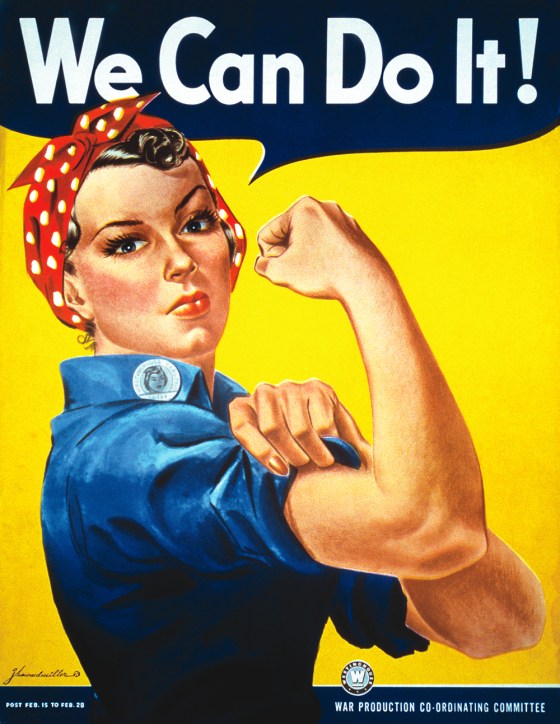
I’ve written books about “ordinary” women caught up in the extraordinary times of World War II, and I’m fascinated by how women’s wartime contributions have been remembered.

Miller Rosie

Rosie the Riveter is one of the most enduring images of World War II. In this blog post for Oxford University Press, I talk about the reality behind this illustration.

Complicating Rosie the Riveter

Anyone interested in reading more deeply on this topic should take a look at the sources I consulted:

Hegarty, Marilyn. Victory Girls, Khaki-Wackies, and Patriotutes: The Regulation of Female Sexuality during World War II. New York: New York University Press, 2008.

Honey, Maureen. Creating Rosie the Riveter: Class, Gender, and Propaganda During World War II. Amherst: University of Massachusetts Press, 1984.

Kimble, James J. and Lester C. Olson, “Visual Rhetoric Representing Rosie the Riveter: Myth and Misconception in J. Howard Miller’s ‘We Can Do It!’ Poster,” Rhetoric & Public Affairs 9:4 (Winter 2006): 533-569.

Knaff, Donna B. Beyond Rosie the Riveter: Women of World War II in American Popular Graphic Art. Lawrence: The University Press of Kansas, 2012.

McEuen, Melissa. Making War, Making Women: Femininity and Duty on the American Home Front 1941-1945. Athens: University of Georgia Press, 2011.

Meyer, Leisa D. Creating G.I. Jane: Sexuality and Power in the Women’s Army Corps During World War II. New York: Columbia University Press, 1997.

Sharp, Gwen and Lisa Wade, “Secrets of a Feminist Icon,” Contexts.10:2 (2011): 82-83. Accessed online https://lisawadedotcom.files.wordpress.com/2011/02/sharp-wade-2011-secrets-of-a-feminist-icon.pdf