Red boots look even better with Angels.
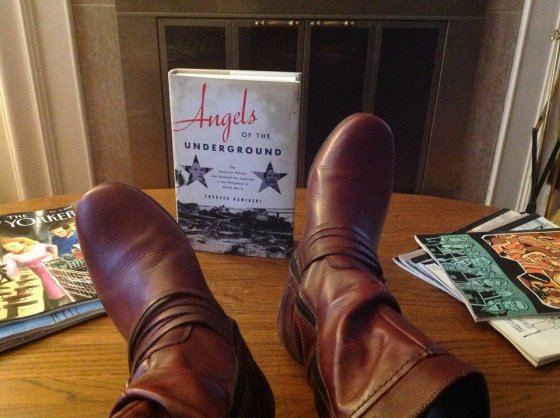
Official publication date is tomorrow, December 14.

Red boots look even better with Angels.
Official publication date is tomorrow, December 14.
It’s been 74 years since the Japanese bombed Pearl Harbor, bringing the United States into the Second World War.
Hawaii was not the only territory the United States held. It still controlled the Philippine Islands, where thousands of Americans had been living for decades. The Philippines are located about 1900 miles south of Japan, between the Pacific Ocean and the South China Sea, and about 5400 miles west of Hawaii.
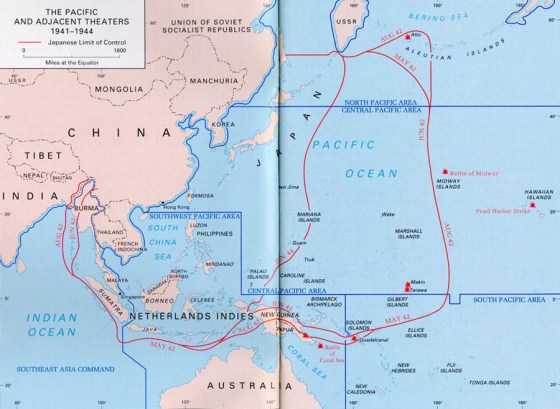
American women living in the Philippines were shocked by the news of Pearl Harbor. Elizabeth Vaughan, wife of a civil engineer and the mother of two young children, wrote in her diary, “My world collapsed.”

Grace Nash, a violinist also married to an engineer and mother to two young sons, remembered, “My lips tightened over clenched teeth. I wasn’t numb, I was befuddled and angry. I knew war would come…and now it has come!”

Fifteen-year-old Dorothy Dore, daughter of an American father and mestiza mother, was away at school when Pearl Harbor was bombed, but made her way home to the island of Mindanao. Dorothy’s father, a veteran of the Spanish-American War, took a civilian job with the United States Army Forces Far East (USAFFE), and Dorothy worked as a nurse’s aide at a military dispensary.

In Manila, Yay Panlilio had already signed on as an intelligence agent for USAFFE. The attack on Pearl Harbor and subsequent attacks on the Philippine Islands made her work all the more critical.
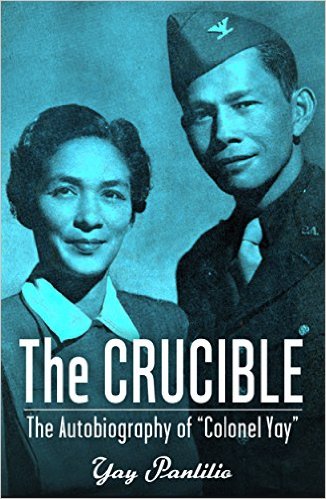
For these American women, and so many others, Pearl Harbor was a turning point in their lives.
I was right about that shipping notification from OUP. When I returned home from my long day of teaching on Tuesday (senior seminar runs into the early evening), I found a big and heavy box on my front porch. Inside were these lovelies:

They arrived in time to serve as an extra reminder of how thankful I am to be able to research, write, and publish.
And for those of you looking for that special holiday gift for the reader in your life, I hope you’ll consider Angels.
This morning I received an email from Oxford University Press, advising me that my order had been shipped.
Although I’ve ordered books in the past from OUP (as should everyone–they publish great books), I couldn’t remember doing so recently.
Then I remembered. I WROTE a book for Oxford, and although the official publication date is December 14, I’d been told copies would start shipping in November.
So this is it. Angels of the Underground is getting out into the hands of readers. And pretty soon, after all the years of working on the manuscript, I’ll find out how it looks as a real live book.
Pretty soon it will be time to celebrate.

In 2007, I had the amazing opportunity to participate in a workshop/conference called The Varieties of Experience: Views of the Two World Wars. It was an international, interdisciplinary event held at the University of Caen in France. I’d been working for what seemed forever on my second book:

Ethel Thomas Herold, who hailed from Potosi, Wisconsin, experienced both world wars. The first time around, she was finishing college, after which she took a job teaching high school history and, in her spare time, worked for the local chapter of the Food Administration and the Red Cross. In December 1941, Ethel was living with her husband and children on the island of Luzon in the Philippines. She spent the Second World War in a civilian internment camp there, a prisoner of the occupying Japanese forces.
I knew this workshop/conference would provide the opportunity for some critical feedback on the project. Also, I hadn’t been to France since high school, and, well, who doesn’t want to go to France?
On a whim, I asked my father if he’d like to come along. A veteran of the Korean War (he’d been a few years too young to join up in World War II), he read a lot of history about both wars. Although he was well-traveled, he’d never been to France, and he liked the idea of being able to tour the Normandy beaches. We planned to leave early enough to have a few hours of sight-seeing in Paris before taking the train to Caen, then have a day to tour the beaches. My father was looking forward to seeing where D-Day happened. So was I–I teach about it every year.
Bad weather scuttled that plan. My father’s flight from Chicago went on schedule, but mine, from a small Central Wisconsin airport, was cancelled when an incoming plane slid off the runway. I couldn’t leave for another 24 hours. My father skipped the sight-seeing in Paris, went by train to Caen and took the tour. By the time I caught up with him at the hotel in Caen, he was already comfortably settled in and had much to tell me about his adventures.
My father attended most of the conference events. It was a good conference–helpful in the ways I’d anticipated. My father and I explored Caen a bit, and we ate some very good meals, including a dinner to celebrate his 78th birthday. We talked about a lot of things.
I’m not very good at taking pictures, but I happened to snap one of the best ones of my father while we were out walking one day.
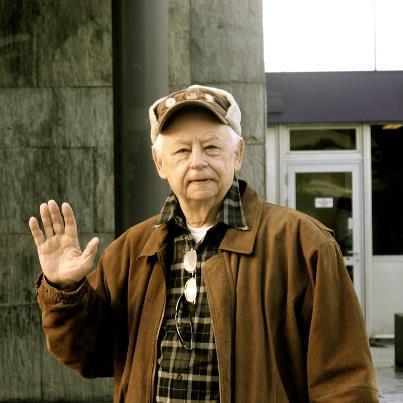
At the end of the conference, we looked forward to the few hours we’d have in Paris before our flight left, figuring we could at least get to the Eiffel Tower and perhaps the Louvre.
But the airline had lost my luggage on the way out. It was just one bag, and when it finally arrived after I’d left on the train for Caen, they refused to send it on to me at the hotel. A helpful customer service person said I’d have to pick up the bag myself when I got to the airport for the return flight. Then no one at the airport seemed to know where exactly I had to go to retrieve my luggage. Of course by the time it was all straightened out, we had no time to see Paris. All either one of us had seen of the city was what we’d glimpsed out of taxi and train windows. It was disappointing. But as my father pointed out, it wasn’t the main reason we’d come to France.
We settled into our seats on the plane, and while dinner was being served, we set up our viewing screens and made our selections. After a while, my father nudged me and pointed to his screen. He’d been watching “Casablanca” and it was at the flashback scene where Rick and Ilsa were in Paris, the Eiffel Tower in the background.
“Look,” my father said as he smiled. “There it is. We’ve seen Paris.”
He died less than two years later. I’m still grateful for the time we did and didn’t have in Paris.
 Theresa Kaminski
You must be logged in to post a comment.