I look forward to the beginning of each new year so I can round up and reflect on the reading I’ve done over the preceding year. Pulling together my own “favorites” lists of fiction and nonfiction will take me a bit longer than usual because I’ve got a big thing happening starting next week.
I’ll be in New York City (for the first time ever) to complete a Short-Term Research Fellowship at the New York Public Library. For two weeks I get to comb through the records of The New Yorker magazine, which was co-founded in 1925 by Jane Grant, the subject of my next biography. I’m thrilled and honored to receive this support from the NYPL.
(Audrey Hepburn in Breakfast at Tiffany’s. Nothing remotely like what I’ll be doing in New York.)
(Library of Congress photo. Where I’ll actually spend most of my time.)
This will be the second major research trip for my new book project, which is tentatively titled The Jazz-Age Feminism of Jane Grant. Back in October, I traveled to the University of Oregon to research Grant’s papers, housed in the archives of the Knight Library.
I started to write a blog post about that experience, which turned into quite a different piece that’s still unfinished but not abandoned. So, after I post my 2023 reading lists in late January, I’ll polish the unfinished piece and get that up, then, in time for Women’s History Month, there will be a couple of articles about these research trips and an update on the status of my book project.
Until then, here’s a link to a post I wrote for Shepherd, a reading recommendation site, about my three favorite novels that I read before October 2023. It’ll give you a sneak peek at what will be in my full list.
The Japanese attacked Pearl Harbor in Hawaii on December 7, 1941, in less than two hours dropping bombs that killed over 2400 Americans and destroyed a large part of the U.S. fleet in the Pacific. This act of aggression brought the United States into World War II.
(National World War II Museum)
First Lady Eleanor Roosevelt gave a brief radio address that day, part of it directed at “the women of the country.” She acknowledged the tough times ahead and encouraged women to take care of themselves, their families, their communities. “Whatever is asked of us,” the First Lady said, “I am sure we can accomplish it.”
Peggy Utinsky probably did not hear Roosevelt’s words, but she did not need them to spur her into action. Peggy, a nurse, had been living in the Philippine Islands since the 1920s and had married Jack Utinsky, an engineer working for the U.S. military there. As tensions escalated between the United States and Japan in 1940 and 1941, Jack worried about the safety of the Philippines, located about 1900 miles from Japan.
Jack tried to send Peggy back to the states earlier in 1941, but she refused to go. While Jack was working to fortify the Bataan peninsula, Peggy rented an apartment in Manila and split her days between working at the Red Cross and a soldiers’ canteen.
The Japanese bombed the Philippines the same day they hit Hawaii–though because of the International Dateline, it was Monday, December 8 in the Philippines. Unlike their attack on Hawaii, this was a prelude to invasion and occupation. Peggy Utinsky didn’t wait until anyone asked anything of her. She kept working. Wounded civilians and military personnel crowded into Manila hospitals and emergency medical facilities. Peggy worked until she couldn’t stand up anymore. Then, nearly sightless in the blacked-out night, she picked her way back to her apartment along bomb-ravaged sidewalks. After a few hours of rest, she headed back to the hospital.
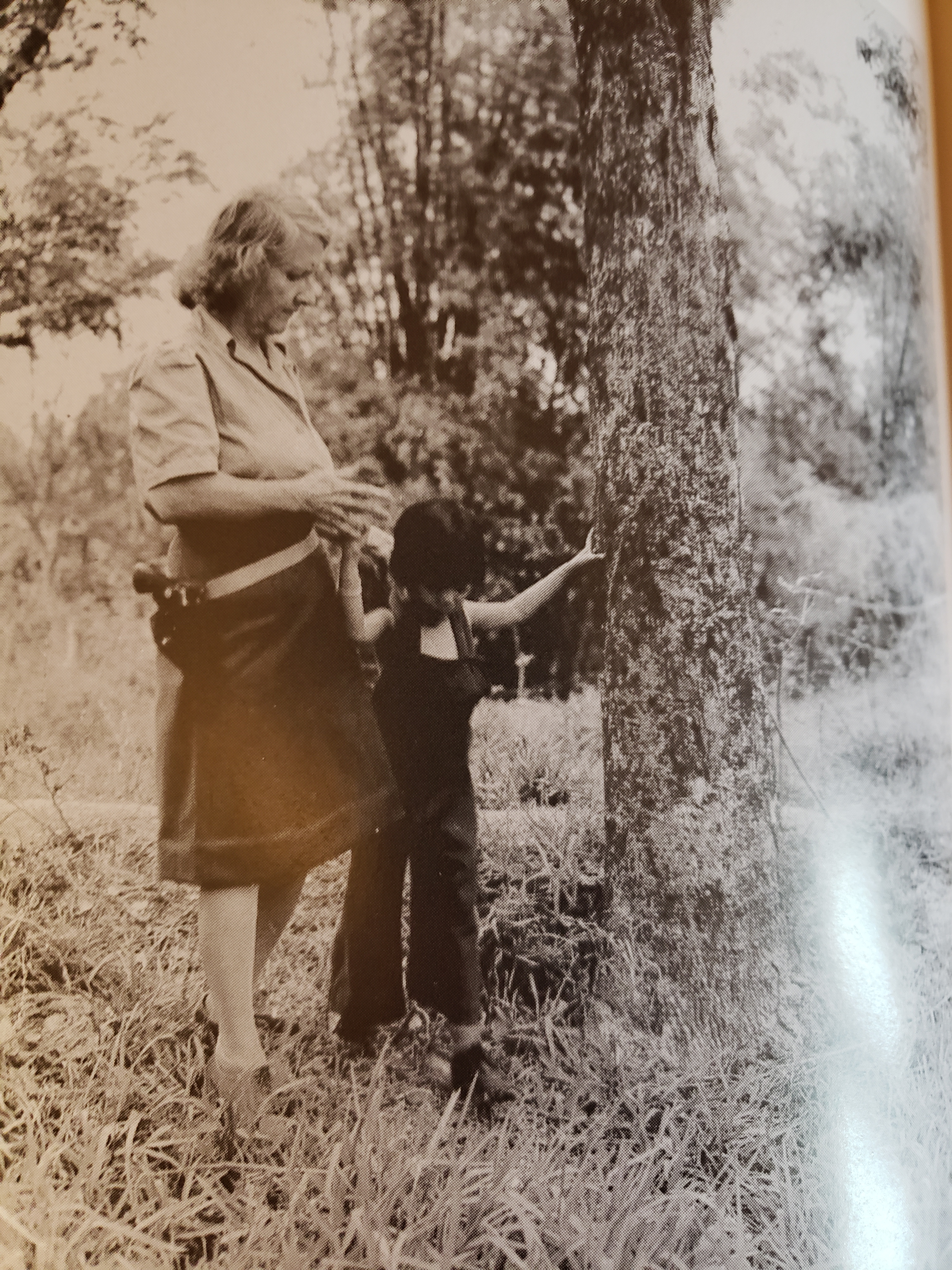
As the Japanese occupied the Philippines in early 1942, Peggy Utinsky undertook the dangerous work of smuggling supplies into the prisoner of war camps in the island of Luzon. She lost much during the war: her husband Jack died as a POW, she sold or bartered away her possessions to raise funds for her underground network, she suffered from physical and psychological ailments in the aftermath of her arrest and torture by the Japanese.
(NARA photo)
I wrote about Peggy and three other remarkable American women in Angels of the Underground, and I still remember them every year on this anniversary.
*Note: This is a revised version of a blog post from December 2016.
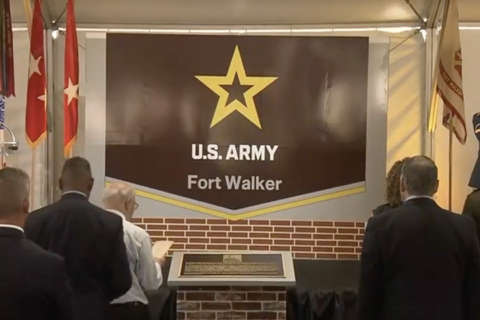
On August 25, 2023, with modest fanfare, the U.S. Army’s Fort A.P. Hill, located south of Fredericksburg, Virginia, near the town of Bowling Green, became Fort Walker. Dr. Mary Walker, who served the army as a civilian surgeon during the Civil War, remains the only woman to have received the Medal of Honor. Now she is the only woman to have a military installation named solely in her honor.*
(photo: Fort Walker on Facebook)
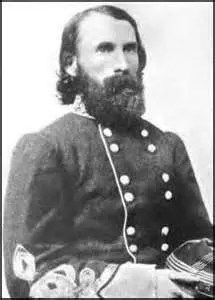
But that honor originally belonged to Ambrose Powell Hill, Jr., a native of Culpeper, Virginia. Born in 1825 to a family that held enslaved people, Hill graduated from the United States Military Academy in 1847 and served competently enough to earn a promotion to first lieutenant in 1851.
As politicians in Virginia debated secession following Abraham Lincoln’s presidential victory in 1860, Ambrose Hill resigned his U.S. army commission. He signed on as a colonel with the 13th Virginia Infantry Regiment when Virginia seceded from the United States. He became a brigadier general in 1862 and was promoted to lieutenant general in 1863. During the battle of Petersburg, a week before the end of the war in 1865, Hill was shot dead by a soldier of the United States army.
(photo: U.S. National Park Service)
A.P. Hill did a lot of things in his military career before and during the Civil War. Several websites provide details of his service, there is a lengthy YouTube documentary that labels him the Confederate Warrior, he appears in numerous books about the war, and he is the subject of at least two published biographies.
But the most important thing to know is that A.P. Hill served the Confederacy. He chose to renounce his allegiance to the United States and to make war on its people. Yet some eighty years later, his name was attached to a U.S. military installation. This was made possible because, as historians such as Karen Cox and Adam Domby have shown, white southerners successfully promoted the myth of the “lost cause”—that their forebears nobly fought the Civil War to protect their homes and families.**
Another eighty years later, in response to waves of racial justice activism, Congress established in 2021 the Commission on the Naming of Items of the Department of Defense that Commemorate the Confederate States of America or Any Person Who Served Voluntarily with the Confederate States of America to oversee the removal of Confederate names from property owned or controlled by the Department of Defense. The Naming Commission solicited recommendations for the nine designated military installations and narrowed the suggestions to ninety names. Several women appeared on the list, but it was dominated by men.
Still, Dr. Mary Walker made the final cut, and it is particularly fitting that an army post in Virginia now bears her name. In 1861, during the first year of the Civil War, Mary Walker, an 1855 graduate of the Syracuse Medical College, shuttered her private medical practice in New York and traveled to Washington, D.C. She failed to convince the secretary of war to commission her as a surgeon in the U.S. army, so she volunteered at the city’s Indiana Hospital, run by Dr. J.N. Green of the 19th Indiana Volunteers, who recognized her medical credentials and gratefully allowed her to work as a doctor.
Dr. Walker expanded her services into Virginia, tending to General Ambrose Burnside’s Army of the Potomac in the wake of the 1862 fighting at Fredericksburg. She treated men at Gettysburg and Chattanooga in 1863 before receiving a contract as a civilian surgeon for the army.
Confederate soldiers in northern Georgia arrested Mary Walker in 1864. She was posted at the time with the 52nd Ohio Volunteers at Lee and Gordon’s Mills and had been out in the surrounding countryside tending to sick civilians. The enemy soldiers found her activities suspicious. (Indeed, she was also gathering intelligence.) Dr. Walker spent several months as a prisoner of war in Castle Thunder in Richmond, Virginia, and gained her release through a prisoner swap.
(image: F. Dielman, artist; F. E. Sachse & Company, lithographer)
She went right back to work for the army, accepting an appointment at the Female Military Prison in Louisville, Kentucky. Dr. Walker may have expressed sympathy over her patients’ medical ailments, but she meted out punishment for their disloyal talk about the United States and their insistence on singing Confederate songs. During her final contract weeks at a refugee hospital in Clarksville, Tennessee, in the spring of 1865, Mary Walker caused a scene during Easter Sunday at the Episcopal Trinity Church when she interpreted the color scheme of the minister’s holiday decorations as too Confederate.
A few months after the Civil War ended, guided by the recommendations of the secretary of war and the judge advocate general who lauded her contributions to the army, President Andrew Johnson awarded Dr. Mary Walker the Medal of Honor.
(photo: Library of Congress)
Dr. Walker’s opinion of Confederates did not soften with their defeat. While in Paris attending the 1867 Exposition Universelle—a world’s fair—she was physically ejected from one of the United States exhibition halls. She resented a display of photos of Confederate generals, especially the one of Robert E. Lee. Its caption, she believed, was entirely too flattering. The American organizers ignored Dr. Walker’s complaint, so she tore down the caption card, prompting her swift removal.
It’s not hard to imagine how Mary Walker would have reacted to seeing the U.S. military name some of its installations after traitors of her country. She would have had no truck with “lost cause” sentimentalities. She would have known that those Confederate names did not belong on those establishments. She would have known that her name did.
(photo: see below)
*The former Fort Lee, also in Virginia, was renamed Fort Gregg-Adams, to honor Lieutenant General Arthur Gregg, the first Black man to achieve that rank, and Lieutenant Colonel Charity Adams, the first Black woman officer in the Women’s Army Auxiliary Corps.
**Anyone interested in the history of the “lost cause” myth and how it has reverberated through history should read Karen Cox, Dixie’s Daughters: The United Daughters of the Confederacy and the Preservation of Confederate Culture as well as her No Common Ground, Confederate Monuments and the Ongoing Fight for Racial Justice; and Adam Domby, The False Cause: Fraud, Fabrication, and White Supremacy in Confederate Memory.
This is a bit of a heads up because I don’t think this issue of RetroFan Magazine has actually hit the newsstands yet (or Barnes and Noble or your local comic shop). But an article I wrote about Dale Evans is included in the November 2023 issue!
I think this is my first magazine article, and the whole process went very smoothly, thanks to editor Michael Eury and his great staff. I enjoyed the Beany and Cecil serendipity. That cartoon is the subject of the featured article, and I happened to mention it in my own piece. If you’re a fan of 1960s-1980s television shows, you will want to take a look at RetroFan.
I was fortunate to receive an advanced copy via NetGalley of Virginia Pye’s new novel, which will be out from Regal House in October. I have followed Virginia on social media for several years now, and I really enjoyed her other two historicals, Dreams of the Red Phoenix and River of Dust, novels that feature American missionaries in China.
The Literary Undoing of Victoria Swann is quite different yet equally satisfying and rich in historical context. Victoria Swann, who lives in Boston during the Gilded Age, is the author of a series of popular novels that feature adventurous heroines in exotic places. Her husband and her editor both keep a close eye on her career, always encouraging her to write more.
But Victoria grows increasingly unhappy with the stories they push her to write. She longs to produce works of literary value, stories that reflect the ways in which women really experience life. After completing the first such manuscript, her editor puts it away in a drawer, unwilling to give it even a cursory read. Her husband rails against her lack of business sense, and their marriage begins to unravel.
When Victoria is assigned a new editor at the publishing house, she sees a chance to push forward with her literary liberation. What follows is a unique kind of adventure story of how a determined woman takes control of her life in a time (and place) when almost everything works against her.
Two things I especially liked about this novel: the fine characterization of Victoria Swann and the ways in which Virginia Pye’s narrative gently echoes Gilded Age women writers. If she is a new-to-you author, I would encourage you to read any of her already-published books while you await the release of The Literary Undoing of Victoria Swann.








 Theresa Kaminski
You must be logged in to post a comment.