Whether Scholarly or Trade…..

Writing for either kind of press requires a lot of work. A lot. Research. Thinking. Drafting. Writing. Thinking again. Writing some more. Deleting lots of stuff. Writing more. Thinking all the time. Polish, revise, polish. Send it off. Then come the editor’s comments. So it’s time for a little bit of this:

exhausted writer

And then back to work. Think. Revise, revise, revise.

More on Writing History for the Trade Press

Jill Lepore’s New Yorker article came to mind again this morning:

http://www.newyorker.com/magazine/2006/04/24/plymouth-rocked

For me, it’s a wonderfully incisive, insightful, and pointed commentary on writing good history, especially for a general audience. I’ve also been kind of following the mixed reviews for  this new book:

American Queen

The review in the New York Times suggests that a major weakness of the book is how the author fails to deal effectively with history, in particular women’s history–issues most academic historians would be very familiar with.

This is similar to the issue Lepore raised several years ago.

So that’s what I’m thinking about this Sunday.

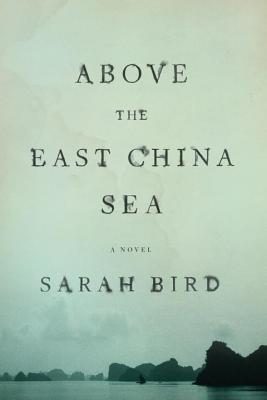
Review of Above the East China Sea by Sarah Bird

East China

Lately I have been avoiding novels with dual plot lines, one set in the past and one in the present. Too often, the contemporary part seems kind of tacked on as an artificial way of connecting with modern-day readers. For me, that ruins the historical part.

But in Sarah Bird’s lovely and haunting Above the East China Sea, past and present are blended into the Okinawan culture in which her story is set. The living honor and care for the dead even as they plan for their own transition to the other side.

During World War II, Okinawans were compelled to support Japan’s war against the Allies. In 1945, as they prepare for a U.S. invasion, Tamiko and her sister Hatsuko begin working as nurses in the hospitals the Japanese Imperial Army has established in the island’s caves. On modern-day Okinawa, teenager Luz, living on a U.S. military base, is trying to cope with the death of her only sister. Sarah Bird seamlessly weaves these two stories together, painting a devastating portrait of war, racism, love, and loss.

So Far in Historical Fiction….

Land and Sea

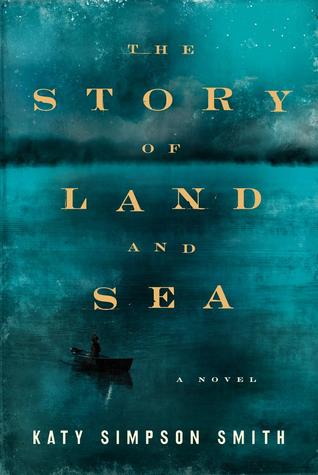
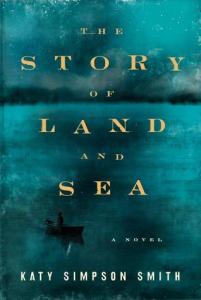
During early January I’ve read three works of historical fiction that I liked well enough to recommend. My favorite of the trio is by Katy Simpson Smith, who has the distinction of holding both a PhD in History and an MFA. Her debut novel is The Story of Land and Sea, a slender, elegant story set near the end of the American Revolution along the North Carolina coast. The war doesn’t take center stage, but it is–along with slavery–an integral part of the story. Smith poignantly examines the love between parents and their children, and how loss shapes actions. It’s a quiet yet powerful story.
Lucky Us

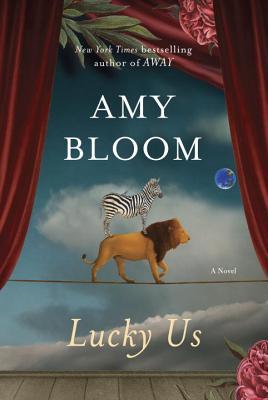
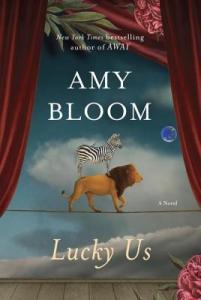
I also liked Amy Bloom’s Lucky Us, set in the United States during the 1930s and 1940s. It’s also about family, but the kind that is acquired. Bloom assembles a cast of quirky yet likable characters who are drawn to sisters Iris and Eva, who have run away from their unreliable father. Beautiful Iris is determined to become a movie star, but when things fall apart in Hollywood, the siblings have to scramble for a plan B. I really liked Bloom’s episodic style with its shifting points of view. One of the plot lines didn’t really work for me, and I thought the book ended rather abruptly, but I still enjoyed it.
The Lie

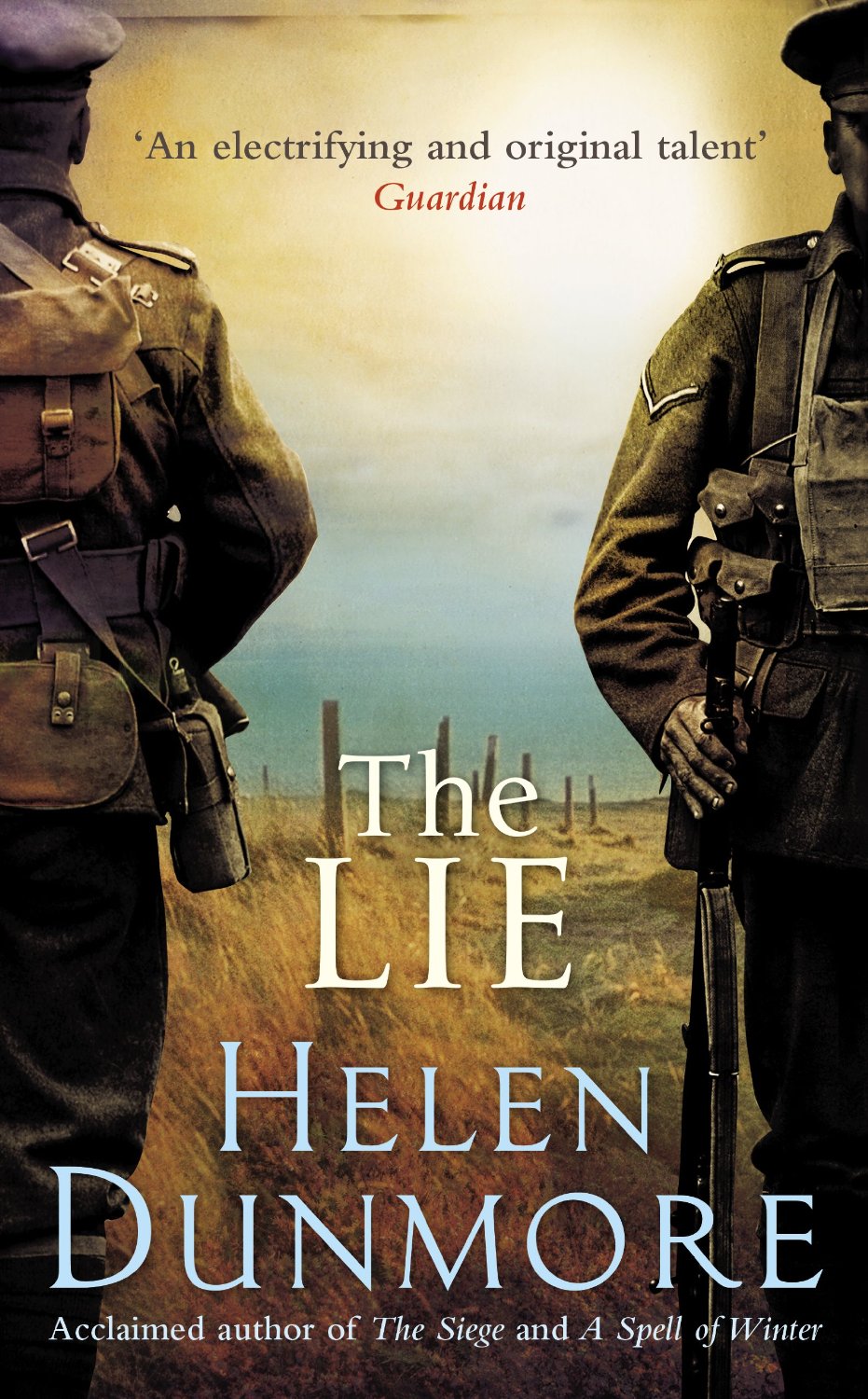
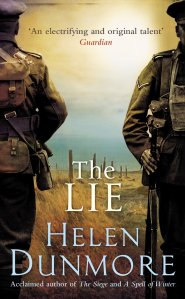
Rounding out the trio is Helen Dunmore’s novel of World War I and its aftermath, The Lie. Alternating between the killing fields of the western front and quiet Cornwall, Dunmore tells the story of Daniel Branwell, who survived the war only to return home lost and alone. The story may be a bit familiar, but Dunmore’s depictions of the war are especially vivid, and the individual characters are so finely drawn that the book was hard to put down.

All in all, a great start to the reading year.
The Final Novel in My Top Ten: The Narrow Road to the Deep North by Richard Flanagan

Narrow Road

I am kind of burned out on historical novels with dual story tracks: one in the present, one in the future. (I’m also tired of book titles that identify female main characters in their relation to men.) As an avid reader of historical fiction, I always find that part of the story much more interesting than the contemporary one. But I liked the way this double story line worked, and The Narrow Road ended up being one of my favorite novels of the year.

The story centers on Dorrigo Evans, an Australian doctor serving with the army during World War II. He is taken prisoner by the Japanese and endures one of the worst horrors faced by those Allied captives: forced labor on the Thailand-Burma railroad. Richard Flanagan does not make his main character a hero, nor is he an endearingly flawed character. Dorrigo is much more an ordinary guy, sometimes likeable, sometimes irritating. Before leaving on military assignment, he jeopardizes his engagement by getting involved with his uncle’s young wife, Amy. The memories of that relationship and his hopes for the future shape Dorrigo’s POW experiences, and the resolution of that love triangle is a bit unexpected. But the real power of this novel lies in Dorrigo’s character. He is in most ways average and ordinary, yet he survives an extraordinary event. Flanagan resists making Dorrigo into a hero. Sometimes events don’t make the man. Sometimes he is already made, and the events simply make him more himself.