The Final Novel in My Top Ten: The Narrow Road to the Deep North by Richard Flanagan

Narrow Road

I am kind of burned out on historical novels with dual story tracks: one in the present, one in the future. (I’m also tired of book titles that identify female main characters in their relation to men.) As an avid reader of historical fiction, I always find that part of the story much more interesting than the contemporary one. But I liked the way this double story line worked, and The Narrow Road ended up being one of my favorite novels of the year.

The story centers on Dorrigo Evans, an Australian doctor serving with the army during World War II. He is taken prisoner by the Japanese and endures one of the worst horrors faced by those Allied captives: forced labor on the Thailand-Burma railroad. Richard Flanagan does not make his main character a hero, nor is he an endearingly flawed character. Dorrigo is much more an ordinary guy, sometimes likeable, sometimes irritating. Before leaving on military assignment, he jeopardizes his engagement by getting involved with his uncle’s young wife, Amy. The memories of that relationship and his hopes for the future shape Dorrigo’s POW experiences, and the resolution of that love triangle is a bit unexpected. But the real power of this novel lies in Dorrigo’s character. He is in most ways average and ordinary, yet he survives an extraordinary event. Flanagan resists making Dorrigo into a hero. Sometimes events don’t make the man. Sometimes he is already made, and the events simply make him more himself.

Other Books I Enjoyed in 2014

Even with the number of novels I read every year, only a handful really knock my socks off, which earns them a place on my Top Ten list. But every year I read a lot of books that I end up liking a lot. So, here they are, divided into historical and contemporary categories:

Historical

Quiet Dell by Jayne Phillips

Let Him Go by Larry Watson

Longbourn by Jo Baker

The Signature of All Things by Elizabeth Gilbert

Alice I Have Been by Melanie Benjamin

The Wind of Not a River by Brian Payton

Euphoria by Lily King

Rose Gold by Walter Mosley

Crimson Angel by Barbara Hambly

Contemporary

Just One Evil Act by Elizabeth George

Bark: Stories by Lorrie Moore

Through the Evil Days by Julia Fleming-Spencer

Saints of the Shadow Bible by Ian Rankin

An Untamed State by Roxane Gay

The Snow Queen by Michael Cunningham

The Wind-Up Bird Chronicle by Haruki Murakami

The Arsonist by Sue Miller

The Dog Year by Ann Garvin

A Dangerous Fiction by Barbara Rogan

The Silkworm by Richard Galbraith

Almost Done With My Top Ten: The Wives of Los Alamos by TaraShea Nesbit

Los Alamos

During World War II, the United States launched the Manhattan Project, which culminated in the development of the atomic bomb. In this surprising novel,TaraShea Nesbit focuses on the women who were caught up in this because of the men they happened to be married to. It is a marvelous slice of wartime life. What particularly struck me about Nesbit’s book, in addition to the little-known subject matter and her deft use of historical detail, is the fact she chose to tell the story in the first person plural. The humming hive of “we” works brilliantly, allowing Nesbit to highlight both the collective and the individual. Mesmerizing.

The Elegance of Marilynne Robinson’s Lila

lila

Lila is every bit as stunning as Gilead and Home, all part of a trilogy examining religious faith and theology in small town America. (Each book can be read as a stand-alone.) It reminds me of Orfeo–both novels illuminate their subject matter through elegant, precise language with a keen sense of what matters to their characters.

Lila, as many readers will know from the previous books, is the young woman who appears in Gilead, Iowa, circulating at its margins, until she connects with a local minister, John Ames. John has been a widower for decades but he falls for the quiet, mysterious Lila, and the two marry. This is Lila’s story–where she came from, how she survived until she reached Gilead, and what she plans to do when she outlives her husband. Its beauty is quiet and powerful. Robinson is a master.

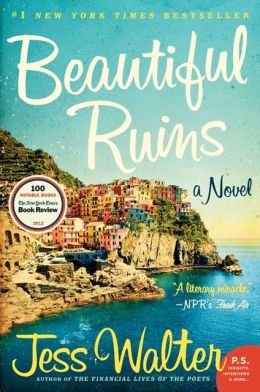
#6 of My 2014 Top Ten: Beautiful Ruins by Jess Walter

Beautiful Ruins

I have to admit I never would have picked up this book if it hadn’t been assigned for a writing conference I attended last November. Nothing about the cover–design or title–caught my eye, nor did the synopsis about a young actress in Italy who is told she is dying.

But it was an assignment, so I dutifully waded in, expecting a chore, expecting to have all sorts of snarky comments rolling through my head. (It’s been a long time since I’ve been on the other side of the podium in a classroom, and this gave me a fresh perspective on that situation.)

Of course I ended up loving the book. Walter created believable, nuanced characters, and he set them in a fresh plot. The story, told from multiple perspectives, moved back and forth in time. Beautiful Ruins is marvelously constructed and just, well, marvelous.