The Final Novel in My Top Ten: The Narrow Road to the Deep North by Richard Flanagan

Narrow Road

I am kind of burned out on historical novels with dual story tracks: one in the present, one in the future. (I’m also tired of book titles that identify female main characters in their relation to men.) As an avid reader of historical fiction, I always find that part of the story much more interesting than the contemporary one. But I liked the way this double story line worked, and The Narrow Road ended up being one of my favorite novels of the year.

The story centers on Dorrigo Evans, an Australian doctor serving with the army during World War II. He is taken prisoner by the Japanese and endures one of the worst horrors faced by those Allied captives: forced labor on the Thailand-Burma railroad. Richard Flanagan does not make his main character a hero, nor is he an endearingly flawed character. Dorrigo is much more an ordinary guy, sometimes likeable, sometimes irritating. Before leaving on military assignment, he jeopardizes his engagement by getting involved with his uncle’s young wife, Amy. The memories of that relationship and his hopes for the future shape Dorrigo’s POW experiences, and the resolution of that love triangle is a bit unexpected. But the real power of this novel lies in Dorrigo’s character. He is in most ways average and ordinary, yet he survives an extraordinary event. Flanagan resists making Dorrigo into a hero. Sometimes events don’t make the man. Sometimes he is already made, and the events simply make him more himself.

Almost Done With My Top Ten: The Wives of Los Alamos by TaraShea Nesbit

Los Alamos

During World War II, the United States launched the Manhattan Project, which culminated in the development of the atomic bomb. In this surprising novel,TaraShea Nesbit focuses on the women who were caught up in this because of the men they happened to be married to. It is a marvelous slice of wartime life. What particularly struck me about Nesbit’s book, in addition to the little-known subject matter and her deft use of historical detail, is the fact she chose to tell the story in the first person plural. The humming hive of “we” works brilliantly, allowing Nesbit to highlight both the collective and the individual. Mesmerizing.

The Evolution of Evil: Lovers at the Chameleon Club, Paris 1932 by Francine Prose

Lovers

Growing up in interwar France, Lou Villars is a misfit. When she’s shipped off to receive a convent education she begins to come into her own as a person, but not the feminine, demure, and obedient kind the nuns expect. Lou excels at sports–she becomes a race car driver–and later she dresses in men’s clothing. Her outsider status propels her to make choices that will have disastrous consequences for those around her who struggle against creeping fascism and the Nazi occupation.

Though based on a true story, it is not a well known one. What made Lovers one of my favorite novels of 2014 was Prose’s careful crafting of characters and her smart use of alternating viewpoints. Lou’s perspective is intertwined with a photographer’s, a novelist’s, a singer’s, among others. My particular favorite was the biographer who put her own peculiar spin on Lou’s actions and motivations. The novel is a fascinating portrait of the evolution of evil.

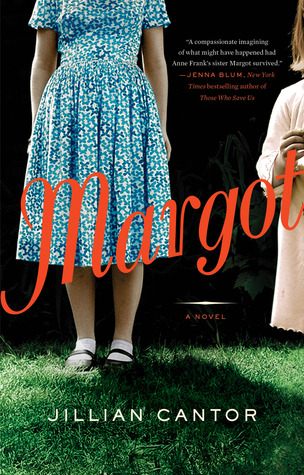
Another Intriguing Book Read in 2014: Margot by Jillian Cantor

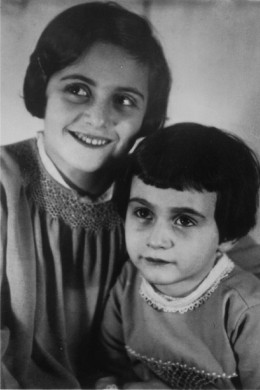
MargotANNE FRANK AND SISTER IN THIS FILER FOR FEATURE BC FRANK Anne Frank is the sister we all know. As a girl, she kept a diary while she and her family endured increasingly restrictive anti-Jewish regulations in Amsterdam during World War II. The Frank family–Otto and Edith, with their two daughters Margot and Anne–along with the van Pels family, eventually took refuge in what Anne called The Secret Annex, hoping to wait out the Nazi terrors. But in August 1944 they were betrayed and deported. Otto Frank, Anne’s father, was the only member of the family to survive.

Jillian Cantor’s novel takes a “what if?” approach to this well known story, imagining that Margot, Anne’s older sister, survived the death camps and made her way to the United States, settling in Philadelphia and working as a secretary. Her desire to suppress her background is challenged because her wartime memories refuse to remain submerged. Try as she might, Margot cannot escape her past.

While this is not a perfect book–one particular plot point didn’t work for me and there was the occasional dash of melodrama–it is a haunting tale of sibling love and rivalry compounded by survivor’s guilt. Ideally, it should be read along with Ellen Feldman’s excellent The Boy Who Loved Anne Frank, which centers on Peter van Pels and how he would have led his life had he survived.

My next entry will also focus on captivity and survival: a review of the movie version of Unbroken.