Launching a New Book Project

I’m not a fast writer. When I hear authors talk about how it took them two or three long years to write a book, I struggle to hide my reaction.

I can take two or three years to research a book. Even then, research continues as I start writing.

Since Angels of the Underground was published last December, I’ve been casting about for a new project. I really wanted to return to one I’d started before Angels, but every time I raised the subject with my agent, she was skeptical. I was amazed at how quickly she could run down a list of concerns about the commercial viability of the project.

Although my day job is as an academic historian, I want to write books that will sell well. I figure if I invest so much in creating them, I’d like to see a material return on that investment.

I spent the early part of the summer working on an abbreviated book proposal, to clearly map out for my agent my vision for the project she was skeptical about. And she still wasn’t convinced.

So it wasn’t until this month that I started pitching other projects.

And one stuck. A very good one, we both believe. It’s another story of a group of “ordinary” American women who make an extraordinary contribution to a U.S. war effort. (No more details at this point. I don’t want to jinx it.)

I’ve started work on the book proposal, which will end up at around 50 pages of overview, market analysis, and chapter synopses. Then it will go out on submission in hopes of finding an editor who thinks the book is as exciting as we do.

Stay tuned. It may be a long haul.
The Meaning of a Date

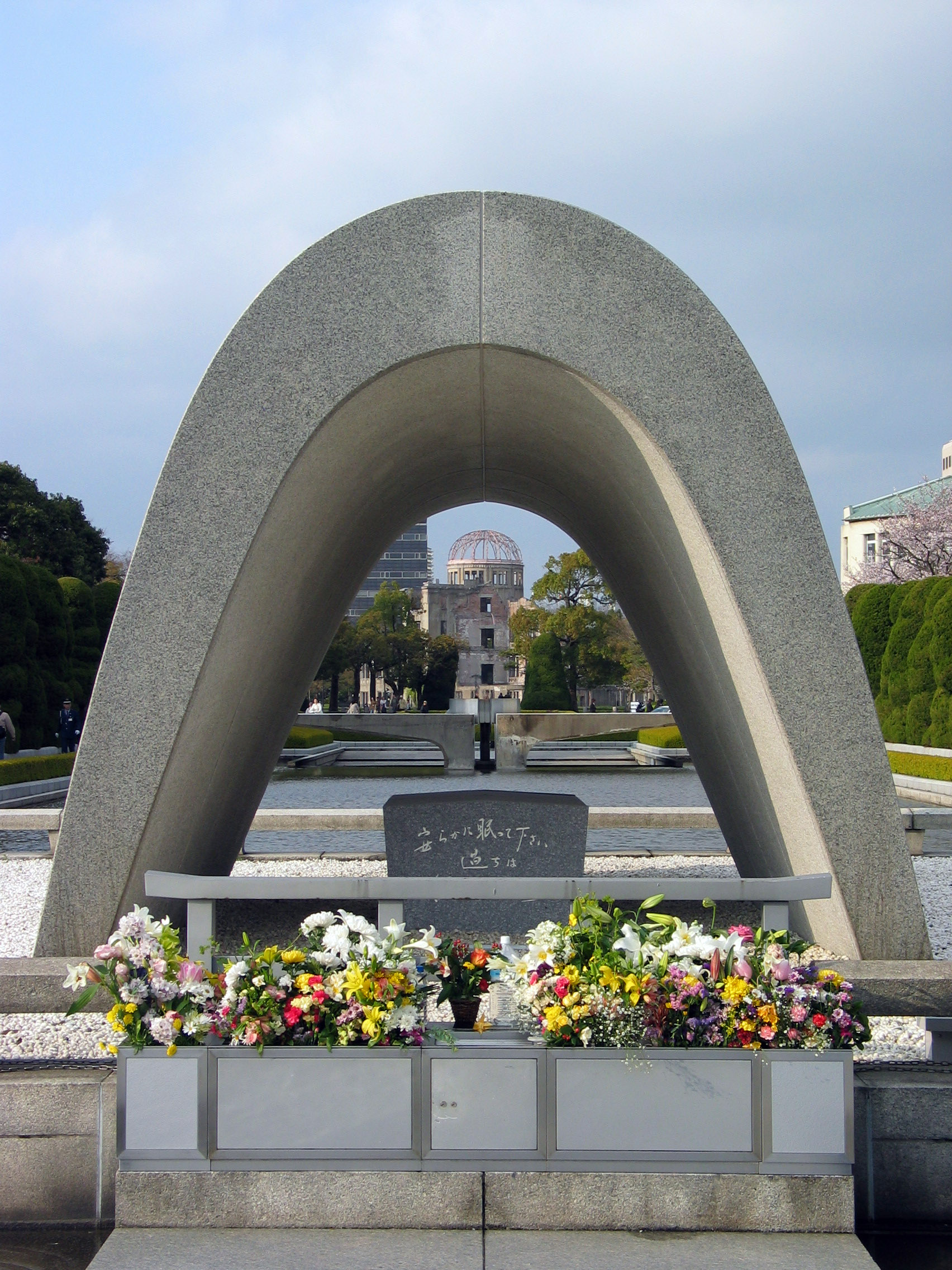
For most people around the world, August 6 marks the day everything changed. To hasten the end of the war in the Pacific, the United States dropped the first atomic bomb on Hiroshima, Japan.

One of the first accounts I read was John Hersey’s now classic piece, published in The New Yorker in 1946. Part of the brilliance of that article was Hersey’s ability to render this catastrophic event in very personal terms. For Hersey, it was the people who mattered.

By the time “Hiroshima” appeared in the magazine, World War II had been over for a year. Survivors worldwide were in various stages of rebuilding. Part of that meant grappling with the realities of living in an atomic age. Human beings now possessed extraordinary destructive power. Every year on August 6, people commemorate Hiroshima and contemplate what led to the decision to use atomic weapons.

The end of World War II also left people grappling with personal issues. Peggy Utinsky, a nurse, spent the war years trapped in the Philippines under an enemy occupation. After the surrender of American and Filipino forces to the Japanese in the spring of 1942, Peggy had one goal: the find her husband Jack, one of the surrendered.

Now labeled an enemy alien in Japanese-occupied Manila, Peggy arranged for fake identity papers and joined a Red Cross medical mission to the Bataan peninsula. Amidst the smoldering ruins of that battle, she treated wounded and sick Filipino citizens, always asking after Jack.

When Peggy learned that the POWs had been put into Camp O’Donnell, she helped set up an underground supply network to make sure the men received the food and medicine they needed. She assumed Jack was there, but couldn’t get confirmation.

When the Japanese transferred the POWs to Cabanatuan, Peggy shifted her operation there. At the end of December 1942, one of her associates, Naomi Flores, made contact with one of the American prisoners working in the camp’s vegetable garden, Lieutenant Colonel Edward Mack. Naomi asked him to find out where Jack Utinsky was, and Mack wrote out a message for Peggy:

“Your husband died here on August 6, 1942. You will be told he died of tuberculosis. That is not true. The men say that he actually died of starvation.”

For the rest of her life, August 6 would have a special, personal heartbreaking meaning for Peggy Utinsky. Every year when she marked the anniversary of her husband’s death, the rest of the world talked about Hiroshima. For Peggy, these two events would always be linked.

In late 1942, news of Jack’s death had a profound effect on Peggy. She still had the rest of the war ahead of her. She had to figure out how to survive it. The rest of her story can be found in Angels of the Underground.


Remembering the Seneca Falls Convention

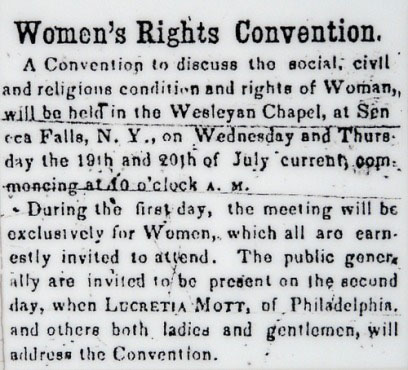
This week, while lots of people are glued to the proceedings of a very different convention, my thoughts are on one that took place in Seneca Falls, New York, on July 19-20, 1848.

Elizabeth Cady Stanton and Lucretia Mott, two white women who had been involved with the abolitionist movement, planned the convention–the first of its kind to deal exclusively with women’s rights issues–on short notice and weren’t sure how many people would show up.

To guide the discussion at the convention, Cady Stanton wrote the Declaration of Sentiments, modeled after the Declaration of Independence.

She asserted: “We hold these truths to be self-evident; that all men and women are created equal.” However, “The history of mankind is a history of repeated injuries and usurpations on the part of man toward woman, having in direct object the establishment of an absolute tyranny over her.” Cady Stanton then listed these injuries and usurpations, which included the system of coverture which denied married women standing as individuals before the law, a sexual double standard, and barriers to education and jobs.

The women and men who assembled at Seneca Falls read the Declaration and debated it. One of Elizabeth Cady Stanton’s central concerns, women’s voting rights, would not be achieved until 1920.

The Seneca Falls Convention was daring in its insistence on focusing on issues of gender. It couldn’t solve all of the problems women faced; it couldn’t completely grasp how race, class, and sexuality affected women’s lives. But it provided a starting point, an important step in any movement.

Honoring Servicewomen on Memorial Day, Part II

Nursing was a dangerous occupation for female service members during World War II. Six army nurses, including 2nd Lt. Ellen Ainsworth, died in February 1944 when the Germans attacked an Allied beachhead at Anzio, in Italy.

Lt. Aleda Lutz, originally from Freeland, Michigan, was also involved with the battle of Anzio. An ANC general duty nurse assigned to the 802nd Medical Air Evacuation Transportation Squadron, she took care of the wounded soldiers as they were airlifted away from the war zone. The Germans shot at her, too, but she survived.

Lutz had evacuated the wounded from various areas of the European theater, as well as Africa, ultimately logging 814 hours in the air, perhaps more than any other member of the Army Nurse Corps during World War II.

On November 1, 1944, Lutz embarked on her 196th mission. She accompanied 15 wounded soldiers (some American, some German POWs) from Lyon, France to a hospital in Italy. During a storm, the plane crashed into a mountainside. There were no survivors.

Aleda Lutz was 28 when she died.She had been an army nurse for 3 years. Lutz was posthumously awarded the Distinguished Flying Cross. In 1950, the Aleda E. Lutz Veterans Affairs Medical Center was dedicated in Saginaw, Michigan. Lutz is one of the servicewomen who deserves to be remembered on Memorial Day.