Here on the blog, I have designated 2025 as the year of Jane Grant, mostly because it marks the centennial of The New Yorker, the magazine Jane co-founded with her first husband, Harold Ross.
(Jane Grant, c. 1917. Jane Grant Photograph Collection, PH141, University of Oregon Libraries Special Collections)
Also, because for more than a year, I have been engrossed with writing the (very) rough draft of a book about her. I hope this is the year I finish the draft and start reworking it into a less messy version, with a clearer shape, sharper writing, and more vivid story arcs.
My Jane Grant book is not a cradle-to-grave biography. It focuses instead on how Jane got The New Yorker off the ground in 1925 and kept it going. To accomplish this, I explore her journalism career in New York City in the 1910s and 1920s, plus her marriage and subsequent divorce from Harold Ross. All bolstered by an unwavering dedication to the pursuit of gender equality.
Other books have told The New Yorker’s story, but they have been, predictably, male centered. Jane Grant’s presence is sidelined in them, her role largely subsumed under that of “wife.”
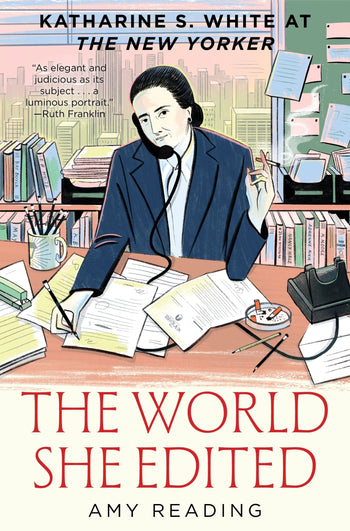
As Amy Reading points out in The World She Edited, her marvelous 2024 biography of the magazine’s long-time fiction editor Katharine White:
“But there’s another way to tell the magazine’s origin story: by traveling along the networks forged by the women who were there from the beginning and who have been barely mentioned in histories of the magazine.” Reading’s book traces how White’s tenure at The New Yorker (like Jane Grant’s involvement, as I will demonstrate) “shows quite simply that so many of The New Yorker’s early successes were due to the efforts of feminist women who interpreted the magazine’s obsession with sophistication in a way guaranteed to appeal to readers like themselves—educated, active participants in the city’s cultural life.”
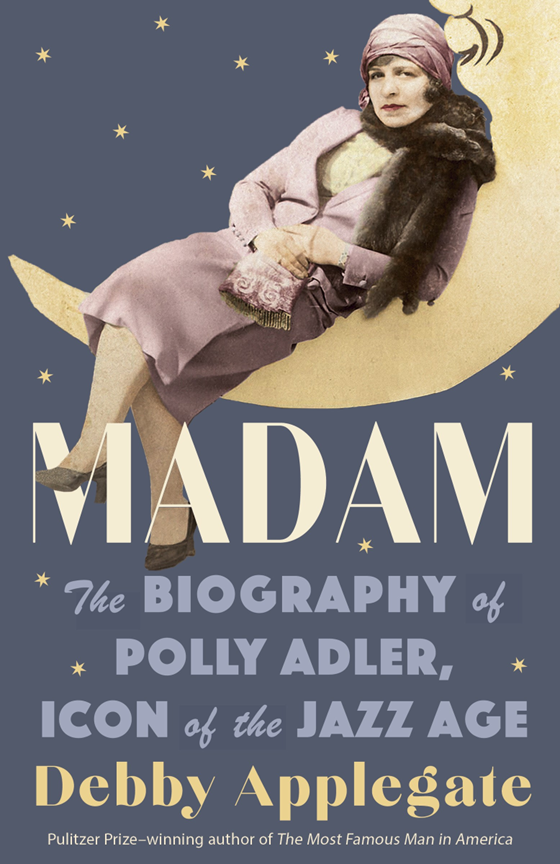
Reading’s book has proved a good resource for my project. It is also an inspirational model of writing, as is Debby Applegate’s biographyMadam, about Polly Adler. I anticipate that Laurie Gwen Shapiro’s forthcoming book, The Aviator and the Showman, about Amelia Earhart, will form the third point of that inspirational model triangle.
I will be touching on these books (and others) plus exploring fascinating primary sources as I write my way through 2025 and the year of Jane Grant. Some of the more interesting findings will appear on the blog during the year, most likely at irregular intervals (Writing history is challenging, and, for me, writing about writing history is even more so.) Hope you will follow along.
Back in the summer of 2024, I started reading Debby Applegate’s biography of Polly Adler, the (in)famous Manhattan madam of the 1920s. It was an obvious choice for me: a story about a little-known woman—today, not back then—written by a woman who turned what she learned in graduate school into a Pulitzer Prize winning writing career. Applegate won that award for her first book, The Most Famous Man in America, a biography of the nineteenth-century minister Henry Ward Beecher.
(That book also serves as the sample proposal in the extraordinarily useful Thinking Like Your Editor: How to Write Great Serious Nonfiction—and Get It Published by Susan Rabiner (Applegate’s literary agent) and Alfred Fortunato. My copy is dog-eared now. It is the resource I turn to when I need to write a book proposal. Now I am reading Tilar Mazzeo’s How to Write a Bestseller: An Insider’s Guide to Writing Narrative Nonfiction for General Audiences, which may prove to be equally valuable.)
Madam is Applegate’s second book. (I admire an author who takes their time to conduct quality research.) I knew going in that it would be good. My interest in Madam extended beyond character to setting. Right now I want to read as much as I can about New York City in the 1920s to get background information for my current book-in-progress about Jane Grant, co-founder of The New Yorker.
Polly Adler was born around 1900; Jane in 1891. When Polly arrived in New York City from Russia in 1913, Jane had already been there (from Kansas) for five years. Both changed their first names to make a break with their pasts. The two young women struggled to gain a foothold in the city so they could live the life of their dreams. Each got what she wanted, mostly, in some way.
It is not unreasonable to think their paths may have crossed in New York in the 1920s, though trying to imagine that encounter makes my head spin. Polly opened her first brothel at the beginning of that decade that was known for its roar. By 1924, as Applegate writes, “her house had become an after-hours clubhouse for the adventurous Broadway bohemians who gathered at the Algonquin Hotel for lunch.” Jane Grant was a member of the legendary Round Table that met at the Algonquin. As was her husband, the talented editor Harold Ross. Their home was another “after-hours clubhouse” for the Round Tablers, though the entertainment they provided did not include Polly’s specialty.
(I have come to think of Jane as the anti-Polly.)
With some trepidation, I looked for Harold Ross’s name in the index of Madam and found it. (Jane’s is not there.) I could hardly bring myself to read what was on the corresponding page—would he turn out to be a rat or a super rat? But according to Applegate, Ross was “one of the few who failed to fall for Polly’s charms.” The lone time friends dragged him to her brothel, he carried along a stack of manuscripts, which he read “while the fun eddied around him.” This left me with a lot to think about.
I read about a quarter of Madam before I set it aside. It had nothing to do with the quality of the biography, which is as excellent as I anticipated, but rather because I started to consider it an ideal model for my book on Jane Grant. Too ideal. I am still very much at the beginning of my project, and I started to worry that I would imitate Applegate’s style. I do not want to cross the line between modeling and imitating. I need space, considerable space right now, to identify that boundary, to develop my own style and voice based on how I think Jane’s story needs to be told.
This is not the way I typically respond to the secondary (or published) sources I read for my book research. Every so often, though, I encounter a book—whether during leisure reading or work reading—I admire so much that I am overwhelmed by a sense of futility. (Also known, perhaps, as imposter syndrome.) As in, why should I continue to do what I do when someone has already published the perfect gem of a book. (Rebecca Donner’s All the Frequent Troubles of Our Days, about Mildred Harnack, was the last book to strike me like that.)
The feeling eventually passes, and, of course, I go on to do what I do, because what I write ends up different than what anyone else writes. And maybe it is as good, maybe not. But that is what happens. I write the best book I can.
When I’m ready for my first round of revisions on the (still in progress) rough draft, I might pick up Debby Applegate’s book again. Or maybe I will wait for the second round. But I know I will finish reading that biography. I need to find out what happened to Polly Adler. And I need to pay close attention to how Applegate makes me care.
This year’s list of my favorite nonfiction contains two more books than last year. (I gave seven nonfiction books five stars on Good Reads in 2024 and five in 2023.) But like last year, I am also including a bonus section of books that I liked.
Biographies dominated these seven favorites of 2024. (Unlike last year, I read very few memoirs in 2024.) Most of the biographies were about women, though one, a family biography, features both men and women. Another, which also was not a biography (or at least a traditional biography), centers on a man but has a couple of strong female secondary characters. Its author is the only man to appear on this list of seven. Make of this what you will. (Mostly that there are a lot of women’s stories out there to explore and lots of women writers to do so.) Here are the books, roughly in the order in which I read them.
1. Mott Street: A Chinese American Family’s Story of Exclusion and Homecoming by Ava Chin. I remember being totally drawn into this book at the beginning of 2024, as I was getting ready to make my first trip to New York City. It is wonderfully written, with a delicate balance of history and family stories. Chin has produced an emotional yet not overly sentimental family biography.
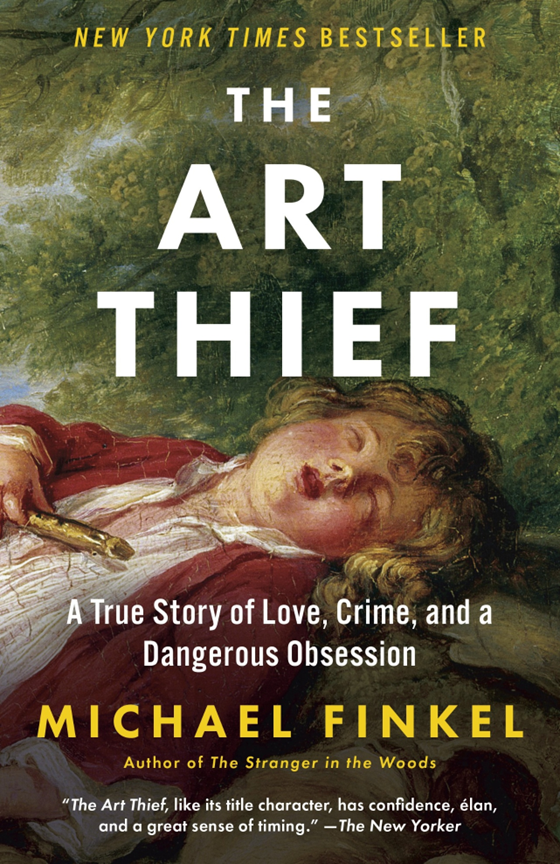
2. The Art Thief: A True Story of Love, Crime, and a Dangerous Obsession by Michael Finkel. I was a bit late to this book mostly because it is not the kind of thing I usually read. But I was convinced by the title and the cover design to pick it up from the library and never regretted the decision. Finkel briskly tells the wild story of Stéphane Bréitwieser, who stole about $2 billion worth of art from various European museums. Then there is the revelation of what happened to some of the pieces. Yikes.
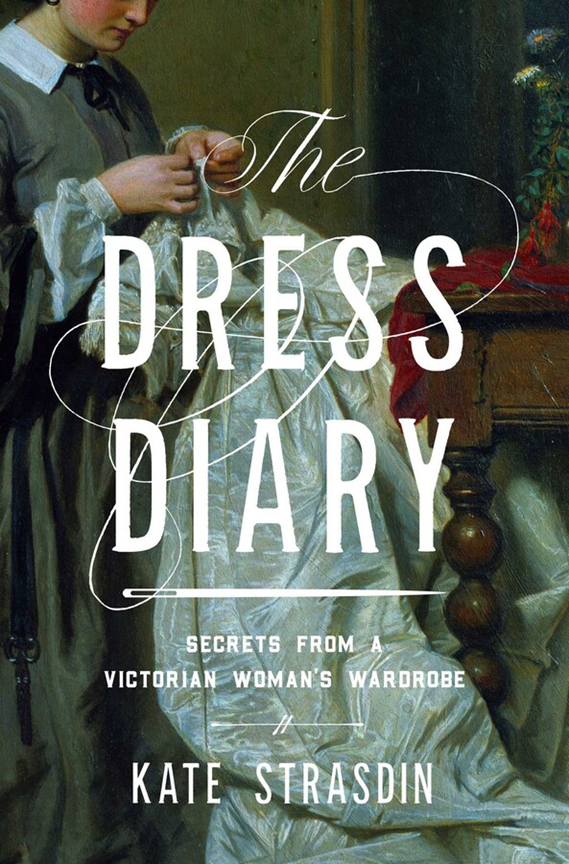
3. The Dress Diary: Secrets From a Victorian Woman’s Wardrobe by Kate Strasdin. Using surviving clothing fragments belonging to Anne Sykes, Strasdin skillfully recreates the world of this nineteenth-century Englishwoman. The author’s expertise as a fashion historian and museum curator really shines through in this creative history.
4. The Silenced Muse: Emily Hale, T.S. Eliot, and the Role of a Lifetime by Sara Fitzgerald. Emily Hale has appeared as a minor character in previous books about the poet Eliot, but Fitzgerald flips the relationship, investigating it from Hale’s perspective. (This does not end well for Eliot’s reputation as a human being.) Hale emerges as a fully formed character with a fascinating life.
5. Portrait of a Woman:Art, Rivalry, and Revolution in the Life of Adélaïde Labille-Guiard by Bridget Quinn. Adélaïde Labille-Guiard was a well-known and well-regarded painter in France during the 1700s, at least up until the French Revolution. Quinn makes good use of the scant information available on the artist’s life to restore her to her proper place in the historical record. And Quinn’s breezy writing style makes this biography a delight to read.
6. The World She Edited: Katharine S. White at The New Yorker by Amy Reading. The long-time fiction editor of The New Yorker magazine, which celebrates its 100th anniversary this year, receives a well-deserved biography that focuses on White’s ability to recognize talented writers and get their work published in the magazine. It is a fascinating portrait of an important literary life.
7. Loving Sylvia Plath: A Reclamation by Emily Van Duyne. Ted Hughes (like T.S. Eliot above) does not come off well in Van Duyne’s trenchant probing of not just Plath’s life, but how others have written about that life. Van Duyne makes a convincing—and haunting—case for Hughes as the ultimate in unreliable narrators. Reclamation, indeed.
Of the two bonus books from my 2024 reading, one is very much in line with most of the favorites listed above. Drew Gilpin Faust’s memoir, Necessary Trouble: Growing Up at Midcentury is an engaging account of the prominent historian’s involvement with the various social and political movements of the 1960s.
The other, Leave While the Party’s Good: The Life and Legacy of Baseball Executive Harry Dalton by Lee Kluck, is a book that anyone who knows me would not believe that I ever picked up. I am not a sports person. I don’t watch games or watch movies or shows about sports. (Well, okay, I did like Bend It Like Beckham and Bull Durham, and I have watched Field of Dreams. But otherwise, no.) (And actually, growing up at 2912, baseball was ubiquitous during the spring and summer. I knew spring had arrived when my mom set up her ironing board in front of the television in the family room so she could watch the Cubs while she ironed. I still know a lot about baseball.)
Lee Kluck was, many years ago, a student of mine, and I followed his writing journey with great interest. He has produced a nicely researched and crisply written biography of an important figure in major league baseball. The University of Nebraska Press, known for its sports series, published his book. So, yay for Lee and for Harry Dalton. If you or anyone you know is into sports biographies, do not miss this one.
That is a wrap on my favorites of 2024. Up next: some thoughts on a very good book I started reading in 2024 but have yet to finish.
Welcome to my annual reading round-up, in which I share my favorite books, both fiction (in this post) and nonfiction (in the next post). I prefer to stay away from the term “best” because of how subjective that is. These are the books I enjoyed in 2024, though a few may have been published earlier. Sometimes I don’t get around quickly to ones I want to read because of lengthy hold lists at the public library. Sometimes I’m interested in a book and know I’m not in the right mood to read it. So, reasons.
According to Goodreads, where I keep track of such things, I read five more books in 2024 than I did in 2023—from 46 to 51. (Yet for some reason it seems like I did not read much. I’m not sure why—it may have to do with the time I have been spending on my new book project.)
Of the novels I read in 2024, I marked five with five stars. Because there are so few, I find it impossible to rank them. Instead, these are listed in roughly the chronological order I read them. (Not surprisingly, they are all historical.)
1. The Storm We Made by Vanessa Chan. Set in World War II Malaya, this riveting historical drama depicts the heartbreaking choices people make during an enemy occupation. Cecily Alcantara, a devoted wife and mother, finds herself in increasingly impossible situations.
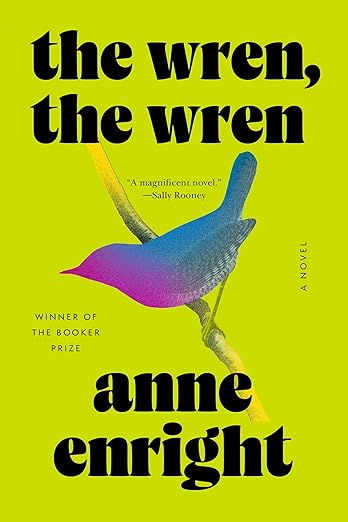
2. The Wren, the Wren by Anne Enright. Nell McDaragh, granddaughter of a famous Irish poet, and her mother Carmel, the poet’s daughter, both struggle with his legacy. Sensitive and beautifully written.
3. The Vaster Wilds by Lauren Groff. This novel is utterly and admirably void of any romancing of the early years of the English colonization of North America. Propelled by a pervasive sense of dread and entranced by the brutal beauty of the story, I could not stop reading.
4. The Road from Belhaven by Margot Livesey. Character and setting are pitch perfect in this historical drama set in rural Scotland during the nineteenth century. A young woman can see some glimpses of the future but has to figure out what to make of the information.
5. Whale Fall by Elizabeth O’Connor. Just before the beginning of World War II, a young woman living on a small Welsh island is unexpectedly confronted with the opportunity to change the anticipated course of her future. Delicate and lovely.
Additional recommendations (very close to five stars):
Two of my favorite mystery writers published new additions to their long-running series. Jacqueline Winspear drew her excellent Maisie Dobbs series to a close with The Comfort of Ghosts, which provided a satisfying ending. With Pay Dirt, Sara Paretsky delivered another powerful installment of her V.I. Warshawski investigations.
Alice McDermott’s Absolution depicts U.S. involvement in Vietnam in the 1960s from the perspective of white American women living there with their husbands. Very thought-provoking.
The God of the Woods by Liz Moore is a well-crafted mystery that made me glad I never went away to summer camp.
And the biggest surprise of my 2024 reading was Elizabeth Crook’s The Madstone, which I pulled off the library’s Westerns shelf on a whim and got helplessly drawn into the story.
In my quest for a new-to-me Christmas-y movie, I finally watched Holiday Inn. I have always known that White Christmas was based on Holiday Inn, and I’ve seen White Christmas (the “Sisters” acts are perfection, and Doris’s comment, “Well I like that! Without so much as a ‘kiss my foot’ or ‘have an apple’,” is snortingly funny) too many times to count. It is one of the few musicals I will watch without fast forwarding through the song-and-dance numbers. (Yes, not a big fan.)
The 1942 Paramount Pictures musical Holiday Inn starred Bing Crosby as Jim Hardy and Fred Astaire as Ted Hanover. They have a singing and dancing act with Lila Dixon, played by Virginia Dale. After Jim’s engagement to Lila fails (she throws him over for Ted), he moves to a farm in Connecticut that he decides to turn into an inn that will only open on holidays. Aspiring entertainer Linda Mason (played by Marjorie Reynolds) shows up at the farm intent on getting a job, she and Jim sing “White Christmas,” and he falls in love with her.
All sorts of other things happen—there is a whole lot of plot here stretched out to link the many musical numbers—before another round of “White Christmas” and the happy Hollywood ending. I did my usual fast forwarding, though I have always enjoyed Crosby’s smooth voice and appreciated the genius of Astaire’s fancy footwork. Also, the racist elements (especially the blackface performance of “Abraham”) and the sexist attitudes (too numerous to mention) of the story make many of the scenes cringe-worthy.
I was particularly interested in Marjorie Reynolds’s performance. She had trained as a dancer and began appearing in silent films when she was a child. The 1930s found her in bit parts in several movies at the big Hollywood studios, including a small role in MGM’s Gone With the Wind in 1939. Reynolds did not turn down offers from B studios like Monogram and Republic, where, in 1941 she appeared opposite the popular singing cowboy Roy Rogers in Robin Hood of the Pecos. She was a working actor, and she likely believed her part in Holiday Inn, which put her alongside the star Fred Astaire, would quickly elevate her status.
According to IMDb, the role of Linda Mason in Holiday Inn had been written for Mary Martin, an accomplished vocalist and dancer who was already a hit on Broadway. She declined, saying she was pregnant so could not take the role. Director Mark Sandrich suggested Ginger Rogers (Astaire’s most famous dancing partner) and Rita Hayworth, but Paramount would not sign off. Sandrich would have to find someone else. Perhaps a Hollywood newcomer.
In the summer of 1941, Dale Evans arrived in Los Angeles. She had been a professional singer since the late 1920s, and over the past few years her stints on Chicago radio stations and her appearances at some of the city’s trendiest nightclubs had gained her quite a following. Joe Rivkin, a Hollywood agent, made a point of listening to Dale every week on the radio. He sent telegrams offering to represent her if she was interested in making the move into motion pictures. Rivkin pestered her to send photographs that he could circulate to casting agents. Dale finally relented, sending off some old publicity stills, and thought no more of it. She did not think she was attractive enough for the big screen. Besides, she was twenty-eight years old, much too old for a start in Hollywood.
But Joe Rivkin liked Dale’s looks and told her she would be perfect for a new musical, Holiday Inn, that was still in the process of casting. He cabled her, “Come at once,” and she did. After a quick session at the beauty salon of the Hollywood Plaza Hotel (Rivkin found Dale’s appearance disappointing in person and ordered a new hairstyle and better makeup), the agent brought his client to meet Bill Meiklejohn, head of talent and casting for Paramount.
The trio sat together in the studio’s commissary. Dale endured another appraisal. Meiklejohn found her nose too long for her chin; Rivkin reassured him that could be taken care of with plastic surgery. Then Rivkin launched into his pitch to promote his client’s talents. Meiklejohn seemed impressed. He asked Dale if she could dance. Rivkin answered for her, “She makes Eleanor Powell look like a bum!” (It is doubtful any dancer could have made Powell, considered at the time the world’s best tap dancer, look like a bum.)
Dale could not allow this lie to linger. “No, I can’t dance, Mr. Meiklejohn,” she said. “I’m a pretty fair ballroom dancer, but that is as far as it goes.” Rivkin insisted that Dale was talented enough to quickly pick up any dance routine. But the casting agent knew better. He told Dale, rather gently given the circumstances, that the female actor they put in the role would have to dance with Fred Astaire. She would have to be a top-notch dancer. Dale clearly did not have that experience. She would not get the part.
But Meiklejohn liked Dale. He admitted Paramount had a hefty roster of singers on its payroll; still, he wanted Dale to stay and do a screen test. If it turned out well, the studio might offer her a contract.
So Dale Evans missed the opportunity to sing “White Christmas” with Bing Crosby because she was not a good enough dancer to pair with Fred Astaire in Holiday Inn. Marjorie Reynolds was cast because she was a good enough dancer, but her vocals were not up to Paramount standards. Her singing was dubbed by Martha Mears. (I still think Dale would have been better.)
Marjorie Reynolds remained a working actor, appearing in movies through the 1940s and then on television in the 1950s. Dale Evans never received a contract from Paramount. But Twentieth Century-Fox offered a one-year contract, so she left Chicago for Hollywood. In 1943, Dale signed on with Republic Pictures, which immediately put her in featured roles, then, in 1944, cast her opposite Roy Rogers in The Cowboy and the Senorita. The film was a hit with Rogers’s fans, so Republic continued pairing them. Dale would become known as the Queen of the West and reach the heights of popularity many entertainers only dream of. And it may have come about from a missed opportunity.








 Theresa Kaminski
You must be logged in to post a comment.