At the Point of No Return

A really good story has to be under a cover this great

Angels cover

and today my page proofs arrived. It’s my last look at the manuscript, the last chance to catch any mistakes and hope there aren’t many. Changes now are expensive. But I’m a perfectionist. So we’ll see how this goes.

“Till I’ve done all that I can….” On Women and War

This line is the title of a creative digital history project launched by Michelle Moravec focusing on the Alma A. Clarke papers in the Bryn Mawr College Special Collections.

Alma A. Clarke and John S. Clarke

Alma, pictured here with her brother Jack, was an American woman who volunteered for nursing duty in France, just after the outbreak of the Great War in 1914. You can explore the project here:

http://clarke.rdigitalh.org/

Alma Clarke’s experiences illustrate what is true of a lot of American women: their contributions to war efforts have largely been forgotten. Yet the comment that headlines this project, “Till I’ve done all that I can” is representative of the attitude of many women who figured out ways to support the wartime goals of the United States. In the last book I published, I recounted how the young Ethel Thomas, living in southwestern Wisconsin, did all she could during the First World War by volunteering for Red Cross work and for Food Administration projects.

The stakes were higher for the four women featured in my forthcoming book, Angels of the Underground. Trapped in enemy-occupied territory thousands of miles away from the United States, the actions they took put them in danger every day. “Till I’ve done all that I can” had dire consequences for them.

On Historians and Literary Models

In Part III of her Crossing Over series, historian Ann Little discussed the literary models for her forthcoming book, The Many Captivities of Esther Wheelwright, to be published by Yale University Press in 2016. Since much of the story takes place while Esther was a child in the 1700s, Ann turned to her favorite writer of childhood, Laura Ingalls Wilder. This is the link to Ann’s full article:

Crossing over, part III: The uses and limits of literary models

This really resonated with me, not because of the childhood issue, but because of how both the Little House books and Ann’s forthcoming biography are grounded in a sense of place. I loved how Ann described the first three chapters of her book, in which Esther wakes up in three very different places.

Place looms large in my books, all of which focus on the Philippine Islands, a place I have never been. So I have to work extra hard to convey that sense of place. The most thrilling document I found while researching my second book, Citizen of Empire, was a detailed map of the town of Baguio, where Ethel Thomas Herold lived with her husband and children, which marked the locations of the homes of the prominent American families. Great for geographically grounding the story, great evidence of the nature of U.S. imperialism.

I’m also fascinated by the feeling that is associated with a certain place, especially if that place is considered home. Ethel Herold was an American woman, but for most of her adult life she considered the Philippines home. Then, on a tumultuous day in December 1941, Japanese troops marched into Ethel’s home town of Baguio, occupied it, and took the Americans living there–some 500 men, women, and children–prisoners. I kept trying to imagine what it was like for this middle-aged woman from Wisconsin to watch enemy soldiers march into her town, how frightened she must have been when a small contingent of them burst into her home one evening.

Ethel kept a diary and she wrote her autobiography late in life, so I had solid primary sources to build the book around. But I drew a lot of inspiration from Anne Frank’s diary, which I first read in 8th grade English class. These two women were a world apart in terms of geography and age. Anne was confined first to a hiding place, then was hauled off to a concentration camp where she died, a victim of the Holocaust. How she reacted to these changing circumstances was never far from my mind when I wrote about Ethel.

All of these feelings came back into play as I researched and wrote Angels of the Underground. The four American women featured in this book also embraced the Philippines as their home. But unlike Ethel Herold, they did not spend the war years imprisoned. Rather, they risked their lives to undermine the Japanese occupation. The women’s actions were rooted in how they viewed their place in the Philippines (much colored by U.S. imperialism); they wanted their home back.


The Public Side of an Author’s Life and Being a Historian in Public

Meghan Tifft’s article for The Atlantic, “An Introverted Writer’s Lament,” conjures up memories of school dances in the streamer-decorated gymnasium, with the popular kids out on the dance floor, carefree and having lots of fun, while the rest of the attendees hang around on the bleachers, trying to look like they’re enjoying themselves but wishing they’d stayed home to watch “Fantasy Island” and “The Love Boat.” The large mass of the regular kids do well in the classroom, feel comfortable there, and may even excel. But not at the dance. Never at the dance.

Here’s Tifft’s full article:

http://www.theatlantic.com/entertainment/archive/2015/08/an-introvert-writers-lament/400238/?utm_source=SFFB

I don’t agree with everything Tifft says, but she asks a question that each writer these days must answer for herself: “What if I just want to make something? What if all this communing actually hurts the primary means by which I set out to participate and communicate–my writing itself?”

I can almost hear the strangled screams of publishing marketing and publicity people. How can an author hope to sell a book if she’s not OUT THERE promoting it?

Still, the article made me wonder about historians who write for a general reading audience. Once they’ve written a “popular” history book, how public do they have to be, personally? Is it any different from what any other writers experience? Do some of these historians dread the prospect of public readings and/or of becoming the public “expert” on their topic? Or would most be at ease with these roles, given the other duties of their academic lives? What kinds of opportunities do historians have to promote their work when they have classroom obligations from August until May? Is it appropriate to talk up their book in their own classes?

Would love to know your thoughts.

On historians writing “popular” books: How I Did It.

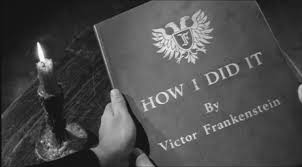
This week I’ve been reading about other historians’ successes with breaking into the trade press. I love these stories/discussions, and they always make me think of this scene from Young Frankenstein:

how I did it

So read on for good advice on how you can do it, too:

Crossing over, part I: What is my book about?

and

http://www.elizabethcovart.com/how-to-write-for-your-readers/?utm_content=buffera0e1f&utm_medium=social&utm_source=twitter.com&utm_campaign=buffer

Does anyone else have additional advice?