Supporting Characters

I love to research. That’s a good thing, considering I’m a historian. One document leads to another, and sometimes I find myself buried in all kinds of details that may or may not be important to my story. But I have to have all of the information before I can decide.

While researching Angels of the Underground, I ran across many fascinating people who interacted in various ways with the four women in the book. Some of them appear in the book as supporting characters. I had to restrain myself from expanding on their stories, because I had to stay focused on four women. On this blog, however, I can highlight some of these people, and give them the spotlight.

Frederick Painton, journalist.
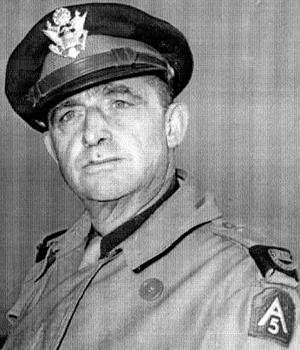
Frederick C. Painton

This has been identified as a photo of Painton. There aren’t many of them.

He was always interested in journalism, and when the U.S. entered the First World War, he served in France with the new air service before taking an assignment with Stars and Stripes. After that war ended, Painton worked for some New York newspapers before he started writing fiction, much of it for pulp magazines that ran stories about spies.

The next world war started, and Painton became a war correspondent for Reader’s Digest, traveling with U.S. troops from North Africa to Italy and up through France. As the war in Europe wound down, he moved over to the Pacific theater. He was in Manila in early 1945, writing about B-29 crews, when he met an American woman who was recuperating in a hospital ward in the recently liberated civilian internment camp at Santo Tomas University. Her name was Claire Phillips, and she told Painton such an astonishing story that he had to help her get it published.
The Beginning of November

Throughout the month of November, as I anticipate the release of Angels of the Underground, I’ll be sharing some things I thought about as I researched and wrote the book.

Bogart

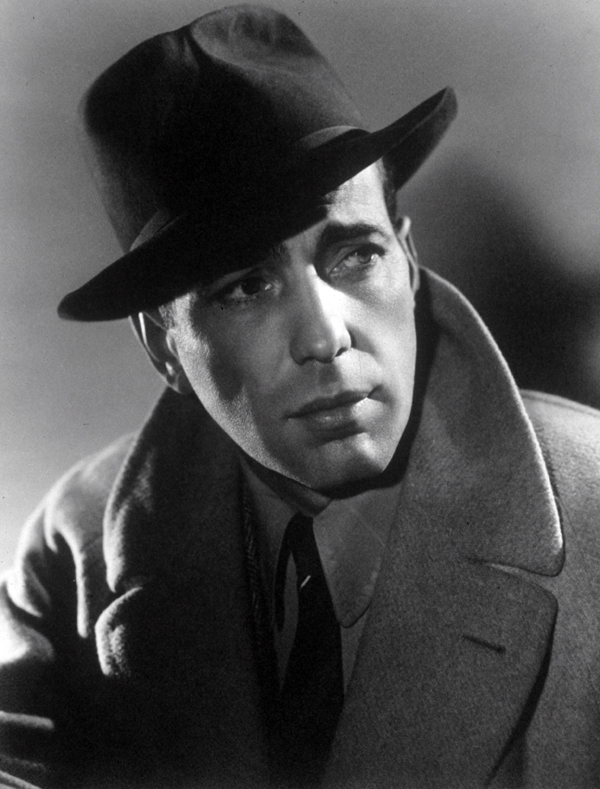
I bet no one was expecting Humphrey Bogart.

He doesn’t make an appearance in the book, but whenever I think of the title, I think of the way Bogart said the word angel. It had an edge to it. Whichever woman he was calling angel, well, it was hard to believe he really thought of her as angelic.

Bogart would have used that tone when addressing the women in Angels of the Underground. To resist the Japanese occupation, to accomplish what they set out to do, to survive the war, they had to be anything but angelic.

As the Release Date for Angels of the Underground Approaches

December will be a big month. In addition to the holidays and the end of another academic semester, Angels of the Underground will be officially released.

Thanks to the efficiency of the internet, you can easily pre-order a copy by clicking on any of these handy links. And remember, December is a gift-giving month. If you know someone who likes history topics that are a bit off the beaten path, Angels would make a perfect gift.

Oxford University Press
Amazon
Barnes & Noble
Powells

Angels cover

Talking to People About My Book

It’s almost October and my book is still scheduled to be available in December. The last thing I did with the actual manuscript was proof the index. That was a weird experience, seeing the big story carved up into key words and names. This week I saw the mock-up of the whole book jacket, and I made some requests about changing the wording of the synopsis. Then there was a little thing about the author photo, which I’ll address in a different post.

Now all of that work is done and the only thing left is promotion–talking to people about my book, hoping they will be interested enough to buy it.

At a small social function this past weekend, I had my first chance to talk to strangers about my book. I brought along some photocopies of the cover art to hand out in case the conversation turned to what I do for a living. It’s a pretty nifty, eye-catching cover.

Angels cover

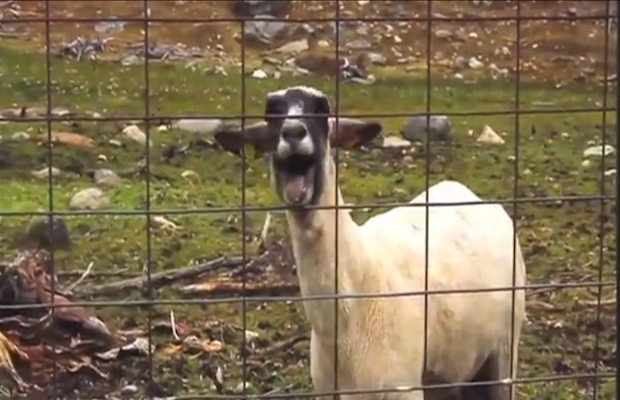
The first person who looked at it, did a double take, and said to me that no such women existed. I’m pretty sure the look I gave him in return was very much like this:

goat

I emphasized that I am a historian, that I spent years researching the topic–including a trip to the National Archives–so I know these women did, in fact, exist. He gave a small shrug, folded up the piece of paper, put it in his pocket, and walked away to talk to someone else.

Later in the evening, a woman and her husband picked up one of the photocopies, admired the artwork, and asked if this was a real book. I knew exactly what they meant. Still, my covert reaction was:

Shocked-Alaskan-Malamute

They wanted to know, by using the word “real,” if the book was self-published or commercially published. I bragged on Oxford for a bit, and we all had a wonderful conversation about good nonfiction history books and about the need for more unconventional war stories. They kept one of the photocopies, too, and made sure to note my e-mail address so we could stay in touch.

I hope to have lots more conversations with many more people about the book. Hopefully, it won’t be too long before I stop being startled all the time.

Saving Forgotten History: Who Has Forgotten It?

A title like this irritates me to no end:

http://www.vanityfair.com/culture/2015/07/novels-about-historical-women-saint-mazie-circling-the-sun

This is not a criticism of the authors (well, maybe a bit) and novels that are discussed in the article. I’m a huge fan of historical fiction. Huge. Seems that not a week goes by without me reading some, and I’m very likely to read one or more of these.

What irritates me is the notion that without novelists, women’s history would be solely relegated to that month of March that’s designated Women’s History Month. I have a hard time believing that people at Vanity Fair are unfamiliar with the fact that historians write lots of women’s history, have done so in great volumes since at least the 1970s. And that this history is taught in high school as well as college classrooms.

For instance, I have been introducing college students to the Grimke (I know an accent mark belongs over the e. I don’t know how to insert it.) sisters for over 20 years. Their story is a staple of my U.S. History survey course and my Women in American History course. I discuss their importance to the Civil War in a Women in War course and to the women’s rights movement in a class on Women’s Rights and Feminism. Yet a lot of articles and reviews that (justifiably–I thought the book was wonderful) praised Sue Monk Kidd’s novel The Invention of Wings made it sound like no one had heard of Sarah and Angelina until Kidd brought them to life.

I wasn’t the only person to notice the title of this Vanity Fair article and take exception to it. On her blog (one of my favorites), literary scholar Rohan Maitzen observed: “Women’s history is actually a pretty venerable field now, so I think the real (if inadvertent) point is not that it is forgotten so much as that the writer, and apparently the authors she interviewed, took their own relative ignorance of women’s history as definitive. The wheel they’re busy reinventing wasn’t brand new….” Here’s the whole article:

http://www.openlettersmonthly.com/novelreadings/coloring-books-for-adults-sure-why-not/

And honestly, historical novelists usually give a nod to the historians who laid the foundation for their fiction. In the Acknowledgments of her wonderful book Balm, Dolen Perkins-Valdez wrote, “I have always said fiction writers have a lot of ground to cover if we want to catch up with the scholars.”

I don’t think it’s a matter of catching up, though, as much as a matter of respectfully acknowledging the work of historians, which Perkins-Valdez then went on to do. Historical fiction isn’t a substitute for history, but it can be a way of drawing readers into history, igniting interest and passion.