Depictions of D-Day

As a historian who has written quite a bit about World War II (okay, three books), nothing looms as large as D-Day, Operation Overlord, launched on June 6, 1944. Allied forces stormed the Normandy beaches and fought their way east to Germany. The war ended in Europe in May 1945.

Into the Jaws of Death 23-0455M edit.jpg

(NARA)

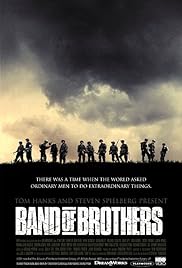
What a lot of people today know about D-Day probably comes from Steven Spielberg’s 1998 movie Saving Private Ryan, which is lauded for its realistic depiction of the landing on Omaha Beach. And in 2001, fans of the movie likely tuned in to HBO’s limited series, Band of Brothers, to follow the exploits of Easy Company, the men who parachuted into Normandy. The series was based on Stephen Ambrose’s popular 1992 book of the same name.

Image result for band of brothers

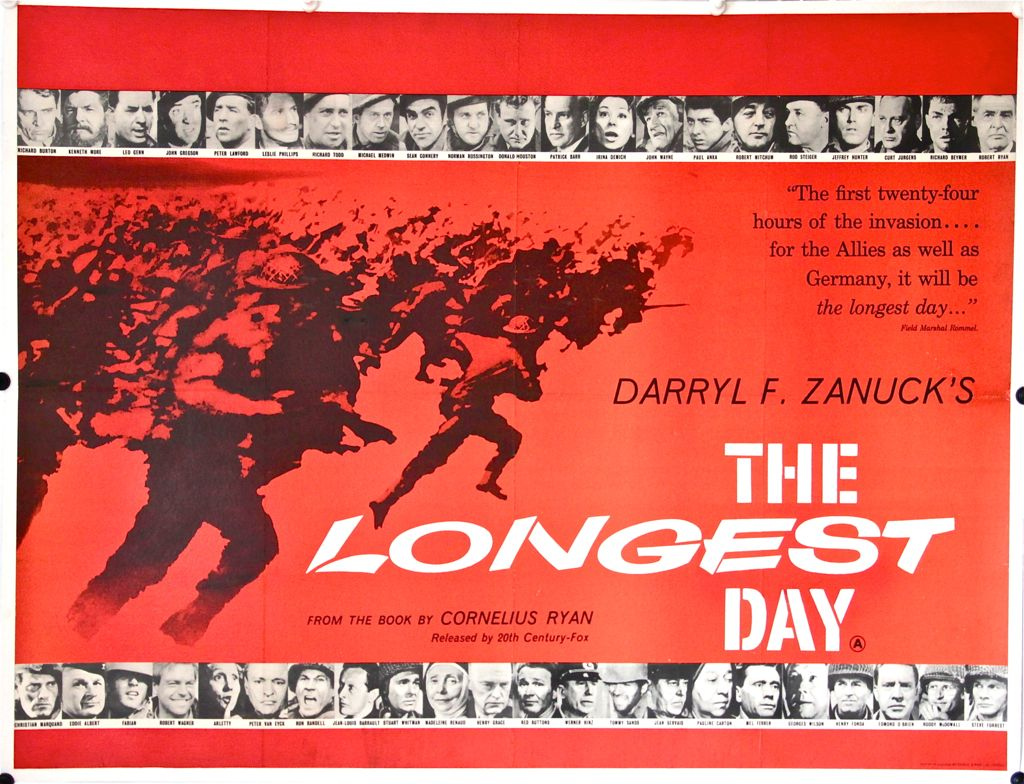
While both of these projects benefitted from updated, modern filming techniques, the structure of their stories is decades old. Assemble a motley crew of men, give them a mission, and watch what happens. Sure, these newer film versions have vivid color and up close violence. But they don’t have the gritty black-and-white moodiness of the 1962 Darryl Zanuck epic, The Longest Day. And they don’t have John Wayne as Lt. Col. Ben Vandervoort, a real-life hero.

Image result for the longest day movie

All of these are Hollywood, and no matter how many claims film and series creators make for authenticity, they cannot be regarded as accurate history. Scads of books have been published about D-Day. One of the most recent–and one of the best–about soldiers’ experiences in Europe is Mary Louise Roberts’s What Soldiers Do.

What Soldiers Do

According to the book’s synopsis: “Roberts tells the fascinating and troubling story of how the US military command systematically spread—and then exploited—the myth of French women as sexually experienced and available. The resulting chaos—ranging from flagrant public sex with prostitutes to outright rape and rampant venereal disease—horrified the war-weary and demoralized French population. The sexual predation, and the blithe response of the American military leadership, also caused serious friction between the two nations just as they were attempting to settle questions of long-term control over the liberated territories and the restoration of French sovereignty.”

This view of D-Day and its aftermath isn’t likely to make it to the screen, big or little. But for those interested in a deeper understanding of World War II, Roberts’s book is essential reading.


The Things I Carried

Every academic semester ends in a rush–mad dashes off to final exam periods followed by grading marathons so grades can be posted in a timely manner.

Image result for posting final grades

I had one additional duty at the end of this semester. I had to clear out my campus office. I’d been doing a bit of it at a time throughout the semester. Pitching old, half-started research projects and unclaimed student papers. Giving away piles of books I’d accumulated over 25+ years of teaching. I saved my very favorite books for my students, bringing them to class to give away to anyone who wanted them.

I finally got down to a handful of books that I couldn’t part with. I’d acquired them while working on my dissertation, which launched my scholarly career. The dissertation that was never turned into a book. The first big failure of my academic life.

So on the last day I hauled stuff out of my office, I carried some things that reminded me of the highs and lows of my career. I carried a tote bag stuffed with copies of primary sources and books that document mid-twentieth century feminism. And I carried the briefcase my aunt and uncle presented me with when I earned my Ph.D. I used that briefcase every day I taught. It’s got a few worn spots now, and the locks have to be set to zeroes or they won’t open, but I still think it’s really spiffy.

If the books serve as a reminder of the disappointments, the briefcase represents the accomplishments. The things I carried out that day signified a balanced career.

office clean out.jpg

And just to keep it light, I posted this next to my office door:

Image result for elvis has left the building

Thank you. Thank you very much.


I Opted for Casual

In terms of marking milestones, I taught my last ever class today, finishing up a survey of American women’s history.

It was a nice, sunny spring morning, so I opted for casual attire.

last day

This was how I started the semester back in January, my last first-day-of-the-semester outfit.

last first

Today didn’t seem much different than the 20+ ends of the spring semester I’ve experienced over my career.

But on the inside, I think I looked more like this today:

Peggy Olson

And the soundtrack in my head has been on a steady loop of

and

Finals start on Monday.


On Being Named a Distinguished Professor

Last night I received a major award. No, it wasn’t this one:

Image result for leg lamp from christmas story

The College of Letters and Science at the university where I have worked my entire academic career gave me its annual Distinguished Professor award. I was especially honored because I’d been nominated by my Department of History and International Studies.

It was also kind of bittersweet since this is my last semester as a professor. I opted for a retirement incentive because of the way the university administration has proposed to deal with a big budget deficit. The intention is to slash 13 majors, most in the humanities and social sciences, and lay off faculty due to program discontinuance. The History major is one of those 13. I knew I could not work at that kind of university.

When I found out I would be expected to make remarks at the ceremony when I received my award, I knew I couldn’t go away without saying something.

So I delivered some brief remarks, which went like this:

I thanked the interim dean and the staff of the College who have been doing their best to help everyone through this difficult time. I thanked my department chair for the same thing, without mentioning that I don’t know how he ever manages to keep his temper in all those meetings he has to sit through. And I thanked my husband who knows the ins and outs of academia, from both the teaching and the administrative sides. Plus he’s always made life on the home front very easy while I’ve spent so much time teaching, researching, writing, and doing committee work.

I acknowledged that I was honored to be part of such an accomplished group of scholars who have received this Distinguished Professor award, including three of my fellow department members who were colleagues for most of the years I’ve been in the department. I pointed out that all of us are women, so yay us!

Then I said it was time for a brief history lesson. I took everyone back fifty-some years ago to the New Frontier and the Great Society, when there was a push for federal funding for the arts and the humanities to keep them on par with the sciences.

Speaking before a Senate committee, the head of the Atomic Energy Commission, Glenn Seaborg, said: “We cannot afford to drift physically, morally, or esthetically in a world in which the current moves so rapidly perhaps toward an abyss. Science and technology are providing us with the means to travel swiftly. But what course do we take? This is the question that no computer can answer.”

Surely, a strong statement about the importance of the humanities.

In September 1965, when President Lyndon Johnson signed the bill that created the National Endowment for the Humanities, he affirmed the need to value the humanities on an equal basis with the sciences, pointing out, “We in America have not always been kind to the artists and the scholars who are the creators and the keepers of our vision. Somehow, the scientists always seem to get the penthouse, while the arts and the humanities get the basement.”

Of course, the humanities have never belonged in the basement. So in conclusion, I paraphrased that famous line from the 1980s classic movie “Dirty Dancing,” and said, “No one ever puts Baby in the basement.”

nobody puts baby in the corner dirty dancing animated GIF

I’m now heading into the last two weeks of my teaching career.


Triangle Shirtwaist Factory Fire

On Saturday, March 25, 1911, just before closing time, a fire started in the upper floors of the Asch building at 23-29 Washington Place in Manhattan.

File:Triangle Factory fire 004.jpg

The Triangle Shirtwaist Company’s non-union shop employed about 500 workers, mostly young immigrant women from Italy and Eastern Europe.

trianglehbo.JPG HBO photo

They worked long hours under unpleasant conditions for minimal wages making shirtwaists, a popular clothing item of the New Woman of the early twentieth century.

Image result for shirtwaist

The fire, caused by a carelessly tossed match or cigarette, spread quickly through the various combustible materials on site. Many workers had no easy avenue of escape. Windows didn’t open properly, doors were locked, fire escapes didn’t function. In less than twenty minutes, 146 people died; all but 17 were women.

Image result for triangle shirtwaist factory

The best online resource about the Triangle Fire is the one maintained by the ILR School at Cornell University. It provides an informative historical overview and contains numerous primary sources, including photographs, oral histories, and a transcript of the criminal trial of the factory’s owners.

There are several good nonfiction books about the fire, including:

And there is one fine work of historical fiction about the fire:

In fact, Weber’s book is on my list of all-time favorite novels. It’s the very model of historical fiction for the way in which it evokes time and place while delivering memorable characters.

So pick up any one of these books to learn more about the fire. I recommend starting with Weber’s.