Recap of the Book Festival

The Kerrytown BookFest took place on a gorgeous late summer Sunday in Ann Arbor, MI. It was the first book festival I participated in as an author.

Kerrytown

Barbara Mhangami-Ruwende, a scholar-practitioner in public health with a focus on minority women’s sexual and reproductive health, founder/director of the Africa Research Foundation for the Safety of Women, and author,  moderated the panel on “Women in History.” She kept the conversation lively as four of us (two nonfiction writers, two fiction writers) talked about our work.

Laurel Davis Huber and Greer Macallister have written fascinating novels based on the lives of real women. Laurel’s is about Margery Williams Bianco, author of The Velveteen Rabbit, and her daughter Pamela, a passionate and troubled artist.

Greer’s takes readers into the life of Kate Warne, the first woman hired as a detective by the Pinkerton Agency.

Pamela Toler, one of the co-founders of the Nonfiction Fans discussion group on Facebook (I’m another co-founder), wrote the companion book to the popular PBS series Mercy Street.
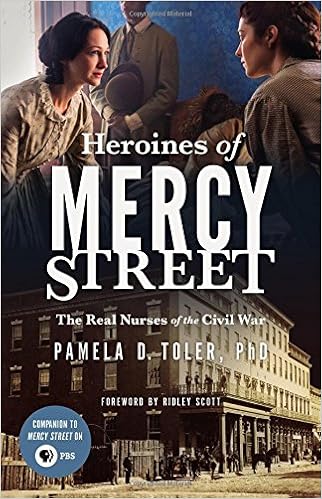
And I rounded out the panel talking about some heroines of World War II.

What was especially great was being able to talk to readers–those who asked questions during the panel as well as those who visited our book table afterward. It’s always nice to know that there are readers who are just as fascinated by history as I am.

And I am very much looking forward to the next books by all of my co-panelists.

Of Book Fests and Libraries

Next week I will be heading to Ann Arbor, Michigan, to take part in the Kerrytown Book Fest.

On Sunday, September 10 at 11:00 a.m. I’ll be in the Main Tent with Laurel Huber Davis, Greer Macallister, and Pamela Toler talking about “Women in History” in fiction and nonfiction. Barbara Mhangami-Ruwende will moderate.

It’s certainly not the first time I’ll be talking about women in history, but it will be my first appearance at a book festival. I’m sure I’ll be meeting all sorts of interesting readers and writers. (Maybe I’ll even see more of Ann Arbor than I did the last time I was there, when all my views were of the inside of an archives!)

And on Monday, November 20, the Paging Through the Past book club at the Portage County (Wisconsin) Public Library will be discussing Angels of the Underground. I’ll be on hand for that, too. For additional details, click here.

I’m glad to have these two events on my calendar. I love talking to people about what they’re reading–whether it’s my book or someone else’s. Plus it helps keep my mind off the whole book proposal submission process, which is where I’m at right now.


What Happened to Amelia Earhart?

History is full of all sorts of unsolved mysteries. One of the most intriguing from the 20th century is the disappearance in 1937 of famed aviator Amelia Earhart.

Image result for amelia earhart [photo via History.net]

In an attempt to become the first woman to fly around the world, she and her navigator Fred Noonan disappeared in the Pacific. Air and sea searches proved fruitless. No one knows what happened to Earhart and Noonan. There have been plenty of theories, but nothing’s been proven.

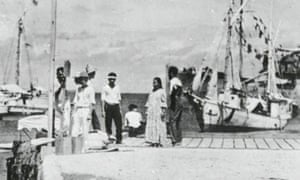
A recent documentary on the History Channel claimed to have solved the mystery. Allegedly, a photograph misfiled for decades showed Earhart and Noonan on a Japanese-occupied island. Therefore, the pair likely died in Japanese custody.

The woman said to resemble pilot Amelia Earhart is seen sitting on the dock in the centre of the picture.

Not so, claims a Tokyo-based blogger, who found this very same photo in a 1935 Japanese-language book. Nothing in the caption indicated Earhart or Noonan as any of the figures in the image.

The question of what ever happened to Amelia Earhart remains unanswered. If you’re interested in learning more about her life, I highly recommend this excellent biography:

Amelia Earhart is important for much more than her mysterious disappearance.

Captain Viola McConnell and the Korean War

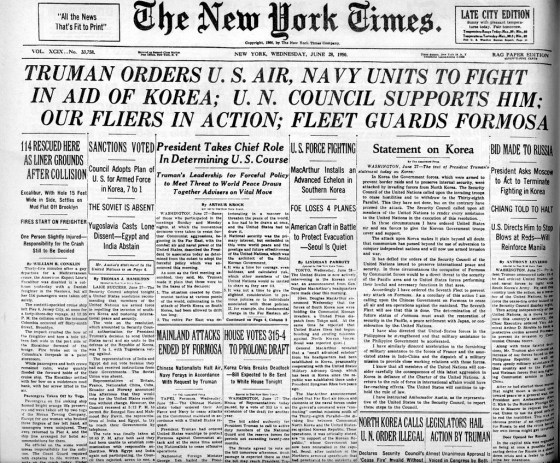
On June 25, 1950, North Korean forces attacked South Korea in an attempt to reunify the country.

Korean War headlines

Though thousands of women served in the Army Nurse Corps at the time, over 2000 of them in the Pacific region, only one, Captain Viola McConnell happened to be in Korea on June 25. She had remained at Camp Sobinggo, near Seoul, working at its dispensary and advising the newly created Korean Army Nurse Corps.

Captain McConnell took responsibility for more than 600 evacuees , accompanying them from Seoul to Japan on board a Norwegian freighter.  She returned to Korea and worked with the 24th Infantry Division, caring for and helping evacuate its wounded soldiers. McConnell was later awarded the Bronze Star for these actions, including an Oak Leaf Cluster for her work with the American nationals she assisted on their way to Japan.

Fifty-seven nurses arrived in Pusan on July 5, and they established first aid stations and hospitals. Within days, some were assigned to MASH units, bringing them closer to combat areas. Before the end of that first summer of the war, over 100 army nurses were serving in Korea. They accompanied the troops that landed at Inchon in September, and they advanced and retreated from the Yalu. Below is Captain Sylvia Pavolvich with the 8209th MASH.

8209th MASH CPT Pavolvich

Air force and navy nurses also served in Korea. By the time the war ended with an armistice in 1953, sixteen nurses had lost their lives.


Honoring Servicewomen on Memorial Day

American women became a permanent part of the U.S. military in 1948 when President Harry Truman signed the Women’s Armed Services Integration Act. Prior to that, when the country was not at war, women could only serve in the Army or Navy nurse corps. During both world wars, however, the various branches of the military recruited women for non-combat service.

This didn’t keep servicewomen safe during wartime. In World War II, over 540 women died while on duty. Though most of those deaths were from accidents and illness, at least 16 of them were the result of enemy actions.

Twenty-four-year old 2nd Lt. Ellen Ainsworth was one of six nurses killed during the battle of Anzio.

(Ainsworth, on duty in Italy, is second from right.)

A member of the Army Nurse Corps working with the 56th Evacuation Hospital, Ainsworth was in Anzio, on the west coast of Italy, in early 1944. The Allies were still trying to wrest the country from the Germans, who put up bitter resistance.

On February 10, 1944, Ainsworth was working in a tent hospital on one of the beachheads the Allies had established. German plans bombed and strafed the area. Disregarding her own safety, Ainsworth stayed with her patients. A piece of shrapnel hit her in the chest, and she died six days later. For her bravery, Ainsworth posthumously received the Silver Star. She is buried in Italy.

2nd Lt. Ellen Ainsworth is one of many servicewomen who deserve to be remembered and honored on Memorial Day.

[This post originally went up for Memorial Day 2016.]