The Last Time I Saw Paris

In 2007, I had the amazing opportunity to participate in a workshop/conference called The Varieties of Experience: Views of the Two World Wars. It was an international, interdisciplinary event held at the University of Caen in France. I’d been working for what seemed forever on my second book:

book cover

Ethel Thomas Herold, who hailed from Potosi, Wisconsin, experienced both world wars. The first time around, she was finishing college, after which she took a job teaching high school history and, in her spare time, worked for the local chapter of the Food Administration and the Red Cross. In December 1941, Ethel was living with her husband and children on the island of Luzon in the Philippines. She spent the Second World War in a civilian internment camp there, a prisoner of the occupying Japanese forces.

I knew this workshop/conference would provide the opportunity for some critical feedback on the project. Also, I hadn’t been to France since high school, and, well, who doesn’t want to go to France?

On a whim, I asked my father if he’d like to come along. A veteran of the Korean War (he’d been a few years too young to join up in World War II), he read a lot of history about both wars. Although he was well-traveled, he’d never been to France, and he liked the idea of being able to tour the Normandy beaches. We planned to leave early enough to have a few hours of sight-seeing in Paris before taking the train to Caen, then have a day to tour the beaches. My father was looking forward to seeing where D-Day happened. So was I–I teach about it every year.

Bad weather scuttled that plan. My father’s flight from Chicago went on schedule, but mine, from a small Central Wisconsin airport, was cancelled when an incoming plane slid off the runway. I couldn’t leave for another 24 hours. My father skipped the sight-seeing in Paris, went by train to Caen and took the tour. By the time I caught up with him at the hotel in Caen, he was already comfortably settled in and had much to tell me about his adventures.

My father attended most of the conference events. It was a good conference–helpful in the ways I’d anticipated. My father and I explored Caen a bit, and we ate some very good meals, including a dinner to celebrate his 78th birthday. We talked about a lot of things.

I’m not very good at taking pictures, but I happened to snap one of the best ones of my father while we were out walking one day.
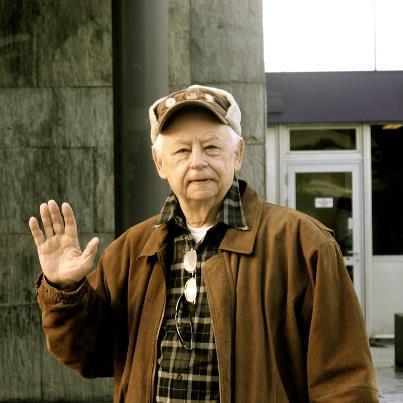
Dad in France

At the end of the conference, we looked forward to the few hours we’d have in Paris before our flight left, figuring we could at least get to the Eiffel Tower and perhaps the Louvre.

But the airline had lost my luggage on the way out. It was just one bag, and when it finally arrived after I’d left on the train for Caen, they refused to send it on to me at the hotel. A helpful customer service person said I’d have to pick up the bag myself when I got to the airport for the return flight. Then no one at the airport seemed to know where exactly I had to go to retrieve my luggage. Of course by the time it was all straightened out, we had no time to see Paris. All either one of us had seen of the city was what we’d glimpsed out of taxi and train windows. It was disappointing. But as my father pointed out, it wasn’t the main reason we’d come to France.

We settled into our seats on the plane, and while dinner was being served, we set up our viewing screens and made our selections. After a while, my father nudged me and pointed to his screen. He’d been watching “Casablanca” and it was at the flashback scene where Rick and Ilsa were in Paris, the Eiffel Tower in the background.

“Look,” my father said as he smiled. “There it is. We’ve seen Paris.”

He died less than two years later. I’m still grateful for the time we did and didn’t have in Paris.
On Veterans Day

Since Veterans Day originated as Armistice Day, marking the end of World War I, it is especially appropriate to remember one of the men who figures prominently in Angels of the Underground.

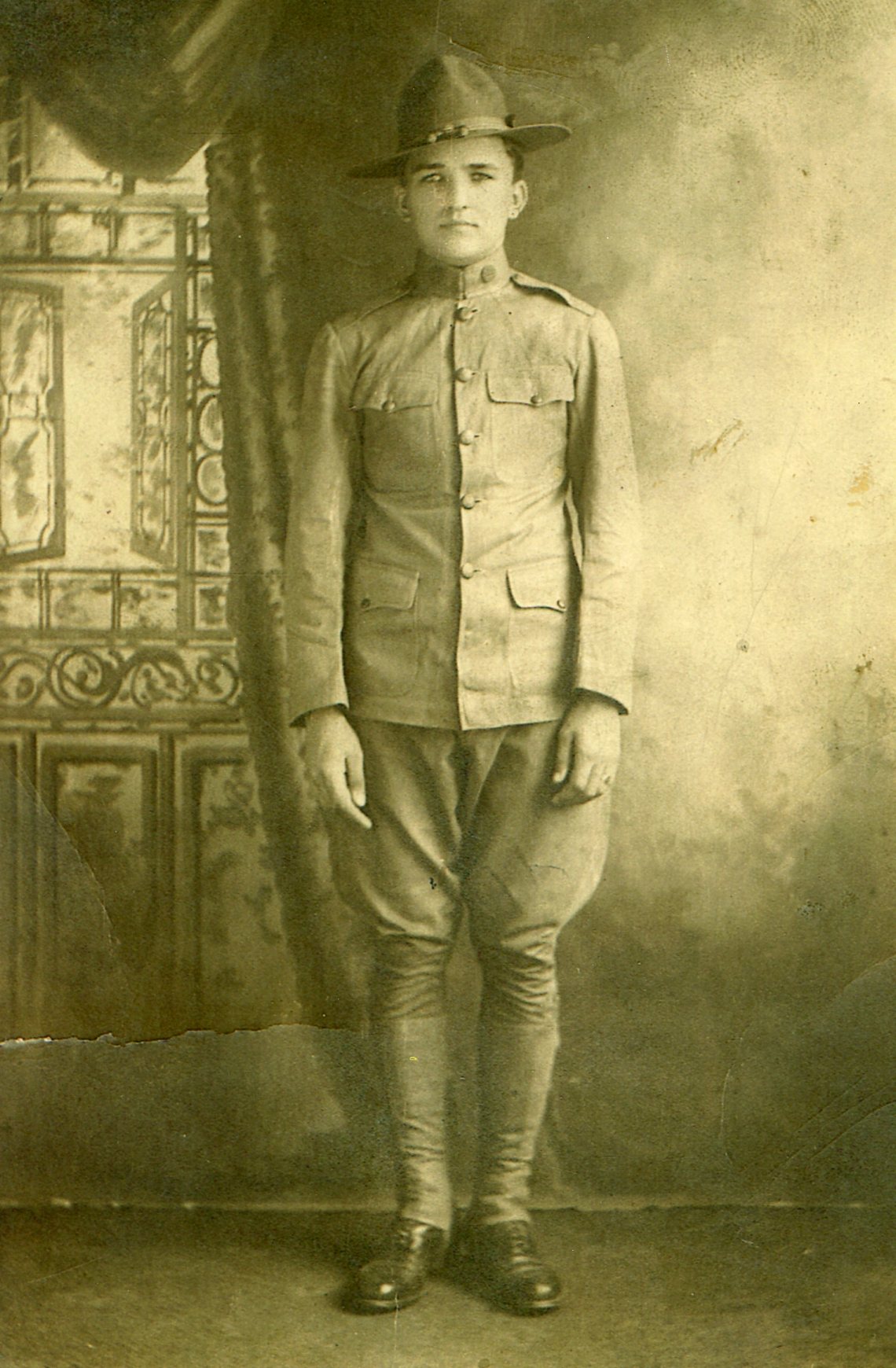
Jack Utinsky 1917

John (Jack) Utinsky grew up in Springfield, Illinois. Details of his military service are a bit hazy, but he joined up when the United States entered the world war in 1917. After his discharge, he settled in the Philippine Islands, working as a civilian engineer for the U.S. military. Sometime in the early 1930s, Jack met a vivacious young widow named Peggy who arrived in Manila for a vacation and decided not to leave. After they married, the Utinskys settled into what they assumed would be a pleasant, leisurely life. That lasted only until December 1941, when the Japanese attacked the Philippines. Once again, Jack Utinsky heeded his country’s call and joined up.

The rest of his story, along with Peggy’s, can be found in my new book, which will be published on December 14.

Supporting Characters

I love to research. That’s a good thing, considering I’m a historian. One document leads to another, and sometimes I find myself buried in all kinds of details that may or may not be important to my story. But I have to have all of the information before I can decide.

While researching Angels of the Underground, I ran across many fascinating people who interacted in various ways with the four women in the book. Some of them appear in the book as supporting characters. I had to restrain myself from expanding on their stories, because I had to stay focused on four women. On this blog, however, I can highlight some of these people, and give them the spotlight.

Frederick Painton, journalist.

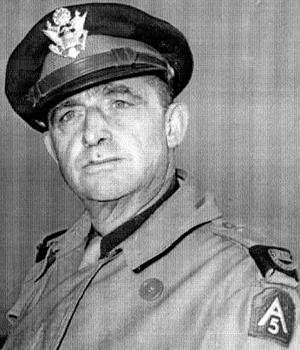
Frederick C. Painton

This has been identified as a photo of Painton. There aren’t many of them.

He was always interested in journalism, and when the U.S. entered the First World War, he served in France with the new air service before taking an assignment with Stars and Stripes. After that war ended, Painton worked for some New York newspapers before he started writing fiction, much of it for pulp magazines that ran stories about spies.

The next world war started, and Painton became a war correspondent for Reader’s Digest, traveling with U.S. troops from North Africa to Italy and up through France. As the war in Europe wound down, he moved over to the Pacific theater. He was in Manila in early 1945, writing about B-29 crews, when he met an American woman who was recuperating in a hospital ward in the recently liberated civilian internment camp at Santo Tomas University. Her name was Claire Phillips, and she told Painton such an astonishing story that he had to help her get it published.

The Beginning of November

Throughout the month of November, as I anticipate the release of Angels of the Underground, I’ll be sharing some things I thought about as I researched and wrote the book.

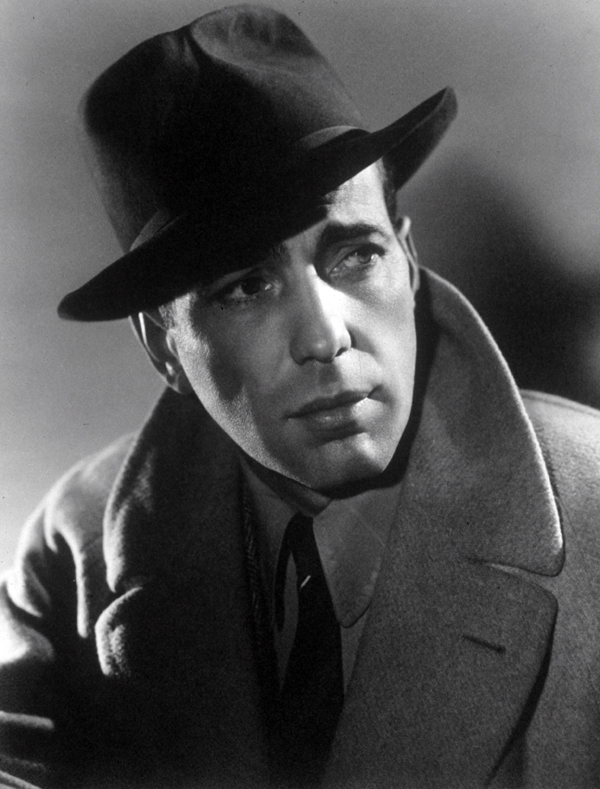
Bogart

I bet no one was expecting Humphrey Bogart.

He doesn’t make an appearance in the book, but whenever I think of the title, I think of the way Bogart said the word angel. It had an edge to it. Whichever woman he was calling angel, well, it was hard to believe he really thought of her as angelic.

Bogart would have used that tone when addressing the women in Angels of the Underground. To resist the Japanese occupation, to accomplish what they set out to do, to survive the war, they had to be anything but angelic.

As the Release Date for Angels of the Underground Approaches

December will be a big month. In addition to the holidays and the end of another academic semester, Angels of the Underground will be officially released.

Thanks to the efficiency of the internet, you can easily pre-order a copy by clicking on any of these handy links. And remember, December is a gift-giving month. If you know someone who likes history topics that are a bit off the beaten path, Angels would make a perfect gift.

Oxford University Press
Amazon
Barnes & Noble
Powells

Angels cover