Dispatches from the Writing Life #10: Revisions, Real and Imagined

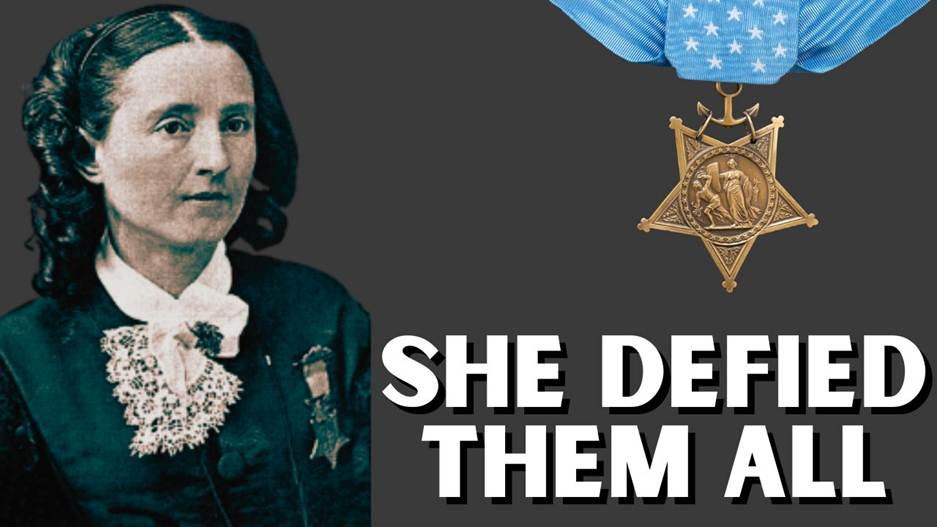
This past Tuesday, I enjoyed presenting “She Defied Them All.” This talk about Dr. Mary Walker is now available on John Heckman’s YouTube channel, The Tattooed Historian, for you to watch at your leisure. You can also find The Tattooed Historian page on Facebook, Instagram, this podcast, and on Substack. A lot of good history content is there.

Any presentation I give is the result of several days of preparation. I start with a basic set of PowerPoint slides and corresponding notecards (to keep me from wandering from my point) that I created back in 2020, when Dr. Mary Walker’s Civil War first came out. Then I tailor it for each individual event. This time, the talk revolved around the theme of defiance, and plenty of it was in evidence throughout Walker’s life.

That tailoring means I reread portions of my own book to reacquaint myself with the details of Mary Walker’s experiences and beliefs. And that’s hard for me to do because I always, always find sentences, paragraphs, and even entire pages that I wish I could rewrite to make them better. It’s less about historical facts and analysis and more about style.

I have yet to find the sweet spot where historical analysis meets elegant narrative. I have to keep working at it. I do this by doing: writing and rewriting. I also read books on craft written by very accomplished people. I take workshops with very accomplished people. I read and reread books that I admire.

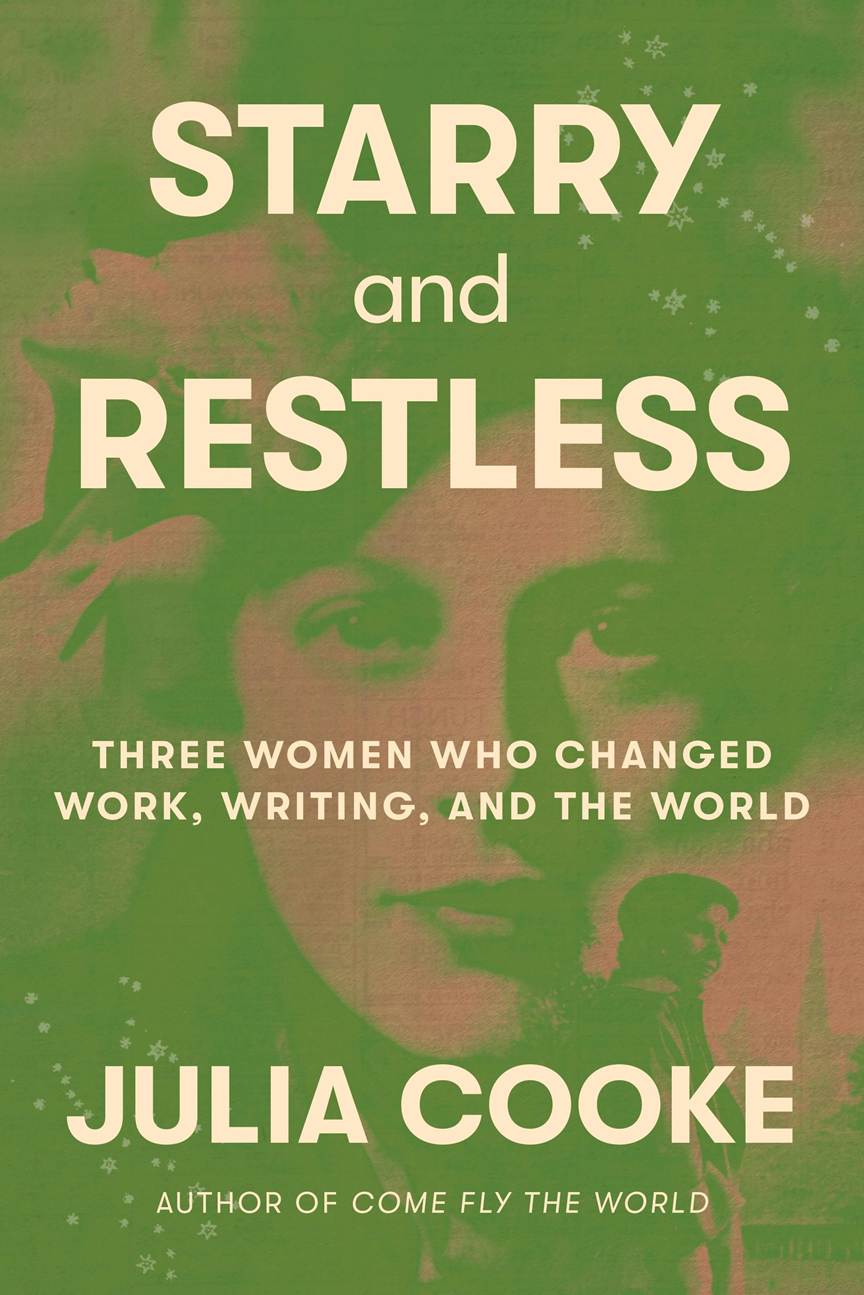
Right now, I’m in awe of Julia Cooke’s style. I finished reading Starry and Restless: Three Women Who Changed Work, Writing, and the World this week, and it’s one of the best books I’ve read so far this year. That’s the way I wish I could write. It’s something to aim for.

And this may be one of the reasons why I’ve been drawn to Jane Grant’s story. She tried to do so many things with her life and rarely achieved the success she envisioned. In writing about her life, I am trying to uncover the source(s) of her motivation, how she handled disappointments, and what she marked as achievements.

These are the things I think about as I continue with this new draft of the Jane Grant book. It seems about as rough as the last one. But I’m still at it every day, still sticking with my decision to carve out a whole separate chapter about Jane’s determination to get the France during World War I. I think it’s crucial for understanding her aspirations for her career and her personal life. And it was a pivotal time for thousands of American women who, like Jane, felt compelled to decide how (or if) they were going to support the war effort.

Women’s History Month

It’s almost over for 2026. Pamela Toler’s annual WHM blog series on History in the Margins ends today, but you can always read the pieces any time. Be sure to take a look.

What I’m Reading

My leisure reading book is Ocean Vuong’s luminous novel, The Emperor of Gladness. I had to skip the section about the hogs.

I’ve started The Typewriter and the Guillotine: An American Journalist, a German Serial Killer, and Paris on the Eve of WWII by Mark Braude. Not that you would know it from the title (I know title and cover design are about marketing and selling books), but it’s about the great writer Janet Flanner, who Jane Grant recruited in 1925 as the Paris correspondent for The New Yorker.
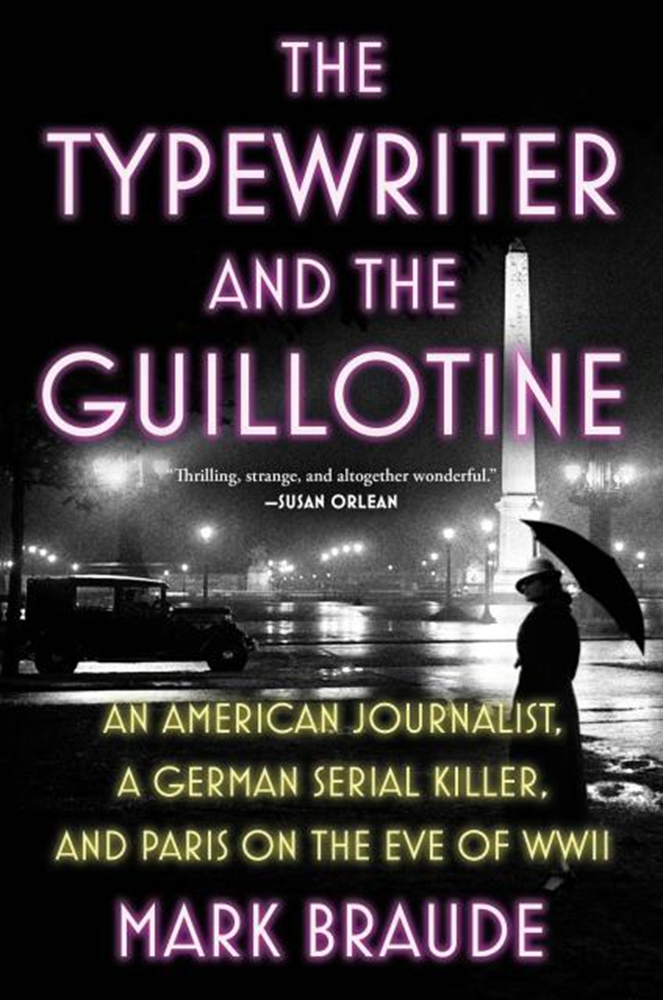
I probably would never have picked up this book if I hadn’t read a review of it that actually identified Flanner as that American journalist. For me, that’s the book’s biggest draw. So far, I’ve been enjoying the sections about her life in France and her writing career. I’m curious about how and why a serial killer becomes important to Flanner. So, I keep reading.

I also have Gayle Feldman’s magisterial Nothing Random: Bennett Cerf and the Publishing House He Built. I’ve only looked through the table of contents, index, bibliography, and skimmed some of the 800+ pages of text. I don’t know how much of it I’ll have the time to read.

What I’m Watching

One episode in on each of the new PBS dramas, The Forsytes and The Count of Monte Cristo.

Started the new Netflix series, Detective Hole, set in contemporary Oslo, Norway.

Another weekly episode of Mudtown (BritBox), a crime series set in Wales, featuring a female magistrate. It’s intense.

Only one episode left of Young Sherlock (Prime)

The filler sitcom has been Animal Control (Netflix), an amusing workplace comedy.

Still haven’t been back to Hope Street (BritBox) or Scarpetta (Prime).

What Else Is Happening

Back to two games of mediocre bowling for me. But it was still fun.

Almost all the snow from the big blizzard is gone. The birds are singing again in the morning. I watched a young buck saunter through the back forty here at Southfork. But I haven’t seen any new greenery popping up yet.

Thanks for reading!
Dispatches from the Writing Life #9: A Blizzard and Its Aftermath

Two things from this week:

1. In revisionland, it was another week of digging into primary sources. This time I was examining a pair of letters that Alexander Woollcott sent to Jane Grant while he was in France during World War I. They were colleagues at the New York Times where he worked as a drama critic before he enlisted, and they exchanged gossip about co-workers and other people they knew in New York.

I fell down a bit of a research rabbit hole trying to fill in the details about one of the subjects of their gossip whose important position with the newspaper was tied directly to the war. And I kept coming up with almost nothing. I searched through the Times as well as the Newspapers.com database, both of which returned scant information. Ancestry returned to many hits that sorting through them would have taken much more time than I wanted to devote to a short scene. But I had to know something more about this person.

Turns out I had been misspelling the name. It all came down to the placement of one “e,” which actually belonged someplace else. That threw everything off in the searches. Once I corrected that I found what I needed, finished writing the section, and moved on.

2. I’ve been thinking a lot about Jennifer Szalai’s review of Julia Cooke’s Starry and Restless: Three Women Who Changed Work, Writing, and the World in the March 15 issue of the New York Times Book Review. It is a positive review. Szalai pronounces the book “a vibrant triple biography” of the writers Rebecca West, Martha Gellhorn, and Emily Hahn, appreciating how Cooke writes with “verve and expansiveness.” Although I haven’t finished reading Starry and Restless yet, I agree. Cooke is a wonderful writer, and I get totally immersed in these women’s lives whenever I sit down with the book.

Then there is Szalai’s final paragraph:

“Apparently the cultural imperative to wrest salutary lessons, even from the most audacious and defiant women is strong: ‘Maybe they offer a new compass by which a person may orient herself within her own choices.’ Maybe. Or maybe the idiosyncratic lives of these peregrinating writers invite a simpler, but no less significant, proposal: Read this book and be enthralled.”

That’s the part that has stuck with me all week as I think about the subject of my book and the very different worlds of writing (i.e. Toni Morrison’s advice: “If there’s a book that you want to read, but it hasn’t been written yet, then you must write it.”) and publishing (i.e. who is going to read and buy this book?)

And how many times do you think I checked the spelling of Szalai’s name?

Women’s History Month

Final reminder that I will appear live on John Heckman’s YouTube channel on March 24 at 2:00 p.m. Central to talk about Dr. Mary Walker. The installment bears the bold title, “She Defied Them All.” You can find The Tattooed Historian’s page on Facebook, follow him on Instagram, listen to his podcast, read him on Substack, and/or watch his YouTube channel.

Pamela Toler’s annual WHM blog series on History in the Margins is still posting new Q&As. Be sure to take a look.

What I’m Reading

As mentioned above, I’m still reading Starry and Restless: Three Women Who Changed Work, Writing, and the World by Julia Cooke. I’ve found Emily Hahn’s life particularly fascinating, plus it’s been interesting to see Alexander Woollcott make an appearance. He was one of Jane Grant’s first friends when she joined the New York Times.

Finished Dinner at the Night Library, a novel by Hika Harada, translated by Philip Gabriel, which was lovely.

Kind of hurriedly finished Mike Pitts’s Island at the Edge of the World: The Forgotten History of Easter Island because it was due back at the library and was non-renewable.

What I’m Watching

Finished How to Get to Heaven from Belfast (Netflix) and liked it. Not sure what will come next.

Sticking with Mudtown (BritBox), a crime series set in Wales, featuring a female magistrate, with episodes that drop once a week. That’s okay. We’ve never done binge-watching.

Also continuing Young Sherlock (Prime) but haven’t been back to Hope Street (BritBox) yet because of its unevenness and soapiness. And haven’t felt at all compelled to return to Scarpetta (Prime) after that first episode.

What Else I’ve Been Doing

This was the first time in over three weeks that bowling went very well, this despite a bigger crowd because of spring break, one lane that stopped properly resetting the pins, and another lane that only periodically returned the balls. Yet one of us had their highest lifetime score and the other one had no trouble breaking 100 in each game. Then we went for ice cream.

I finally hemmed a pair of black jeans, just in time to get a few more wears out of them before I do my seasonal closet changeover.

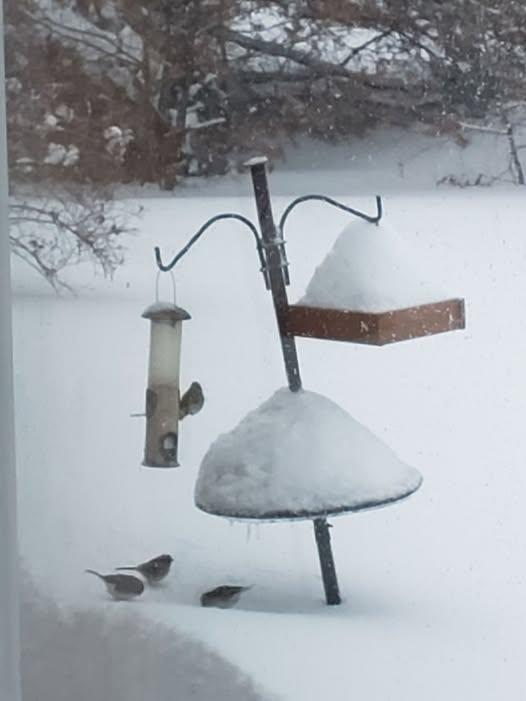
We got through an actual blizzard. More than 20 inches fell here at Southfork over last weekend. But thanks to prompt and excellent snow removal (especially by the foreman) plus moderate to mild temperatures, right now it looks like only an average amount of snow on the ground for early spring.

So, happy spring and thanks for reading. See you next week.

Dispatches from the Writing Life #8: Jane Grant in Love?

I became totally engrossed with archival sources when I decided to look more closely at Jane’s pre-World War I romances. I spent the whole week not only piecing together her love life but also thinking about how and why people choose which documents to keep with them throughout their lives and how those items end up in boxes in archives for researchers to later scrutinize.

The papers in this particular box of Jane’s papers that are held at the University of Oregon comprise her correspondence from 1911-1918, but it is one-sided, made up of letters she received. Sometimes they provide clues about what Jane had written to prompt a response, sometimes they don’t. It’s up to the historian to figure out what was going on.

For example, one letter, undated (which adds another layer of difficulty), was addressed to “My Dear Little Jeanette” (Jane’s legal first name) and signed “Geo.” Someone had penciled in a date range of 1912-1915 at the top of the first page, which confirmed a year referred to by “Geo” within the letter.

The letterhead was printed with “Newton Farm, Los Gatos, California.” It was easy to conclude that the letter was written by George Newton. Supplied with a date range, location, and name, I turned to Ancestry and Newspapers.com, two online library databases. A few hours of searching enabled me to make some informed assumptions.

George F. Newton, born in Iowa and in the mid-1910s somewhere in his middling forties, owned the eponymous farm, but used it as a country getaway. He and his new wife Avis, some twelve years his junior, lived most of the year in the San Francisco/Oakland area where he ran a fireworks company.

Newton wrote to Jane to thank her for her “sweet little birthday letter.” Because he told her he couldn’t spend much time on the farm until after the Fourth of July (a big day for fireworks) and because he encouraged her to come visit in 1915, I think the letter was written in the spring or early summer of 1914.

But it’s not clear how Jane knew Newton. At one point, when he was young, his family lived in Kansas, so it’s possible he was an old family friend or even a relative. In the opening salutation, he called her Jeanette, the name she tried to put behind her when she moved to New York.

I’m still trying to figure out if this sentence provides a clue about their relationship: “I have the limousine in the city and think of you every time I ride in it.” Did Newton know about Jane’s career ambitions, and did he pick up on her desire to have fine things?

Newton wasn’t angling for an affair, though. Twice in the letter he mentioned his wife, and he explained the reason behind his invitation to visit. “I am sure you could get along better here than in that big cold city of N.Y. Mrs. Newton says for you to come out here and call us Father and Mother and see how you like this country. If I can find you a position in advance will you come?” Newton understood that Jane’s career was important to her.

And here’s the connection to Jane’s love life. Newton tried to sweeten the offer in his P.S.: “I have a dandy handsome fellow picked out here for you his name is Billie.” Apparently, he knew about how she socialized with young men and wanted to assure her that she would have plenty of options in California. But maybe Jane worried that Newton’s main purpose was to get her married and settled. That was not what she wanted.

It’s not surprising that Jane didn’t take Newton up on his offer. His letter only indirectly refers to Jane’s dating. There are no other letters in the collection from Newton, but there are some from men that provide more evidence about her relationships. These men were involved with her, and thought they knew her and knew how she felt about them. But it seemed they were very wrong.

For some reason, these letters ended up with all of Jane’s other papers at the University of Oregon. It’s hard to know if she kept them on purpose because they brought back particular memories, or if they just got stuck in a folder somewhere and never got tossed out. This may all become clearer after I conduct another round of research. Or it may not.

Women’s History Month

A reminder that I will appear live on John Heckman’s YouTube channel on March 24 at 2:00 p.m. Central to talk about Dr. Mary Walker. The installment bears the bold title, “She Defied Them All.” You can find The Tattooed Historian’s page on Facebook, follow him on Instagram, listen to his podcast, read him on Substack, and/or watch his YouTube channel.

Also remember to check out Pamela Toler’s annual WHM series on her blog, History in the Margins. She runs the best Q&As with people who write women’s history.

What I’m Reading

I picked up my library copy of Starry and Restless: Three Women Who Changed Work, Writing, and the World by Julia Cooke. I’ve been particularly interested to read about Emily Hahn, one of the women I wrote about in my very first book, Prisoners in Paradise. I’m pleased to see that Jane Grant’s name pops up a few times in Starry and Restless, and the book had got me thinking about some of the choices Jane made during the 1930s, after she’d been shut out of The New Yorker and she left her job at the New York Times. Jane was restless then, but not, I think, starry.

I’m continuing with Mike Pitts’s Island at the Edge of the World: The Forgotten History of Easter Island. It still holds my interest.

For pure leisure reading, I’ve been enjoying Dinner at the Night Library, a novel by Hika Harada, translated by Philip Gabriel.

What I’m Watching

Started Mudtown (BritBox), a crime series set in Wales, featuring a female magistrate, and it’s good so far. Better though—at least based on the first two episodes—is Young Sherlock (Prime). I always like a good reimagining of Sherlock Holmes.

I’m much more on the fence after watching the first episode of Scarpetta (Prime). I don’t mind the dual timeline, but the portion that takes place in the present day (with Nicole Kidman as Kay Scarpetta) reminds me of why I stopped reading the novels by Patricia Cornwell that the series is based on.

Hope Street (BritBox) has been a bit uneven, but I’ve been enjoying How to Get to Heaven from Belfast (Netflix).

Finished Starfleet Academy (Paramount+) and The Lincoln Lawyer (Netflix). The season finale of Starfleet displayed the qualities I’d hoped to see in all of the episodes but didn’t.

What Else I’ve Been Doing

Weekly bowling, two games. The first was abysmal, the second mediocre. So, progress, I guess.

Almost finished another very small sewing project: hemming a pair of jeans, something I’ve been meaning to do ever since I bought them two or three years ago. No matter how much I measure and pin and try them on, I keep thinking I’m going to make them too short.

Thanks for reading. I’m not sure what’s more ferocious than a March lion, but whatever it is, it’s barreling into the upper Midwest. Between Saturday night and Monday morning there might be at least twenty inches of snow, accompanied by high winds. Here at Southfork, we’re under a blizzard warning, and there is ample gasoline for the snowblower and a fully stocked refrigerator, both courtesy of the foreman (who is also my bowling partner and my partner in everything, especially life).

See you next week.

Dispatches from the Writing Life #7: Springing Forward

Chapter revisions of the Jane Grant book continued over this past week. Did I get as much done as I wanted? No. As I hoped? Again, no. Right now it looks like chapters two and three need to expand a bit to make room for some important historical context. I managed to answer a couple of questions I had about changes to the passport system during World War I and how the influenza pandemic affected New York City. Both had an impact on Jane’s wartime journey to France.

And I’m also thinking that chapter two needs to include something about Jane’s love life. There’s evidence that she had one well before she met Harold Ross, and I find it interesting that marriage did not seem to be her end game.

Women’s History Month

Just when I thought this would be the first Women’s History Month in recent memory that I didn’t have some kind of event planned, John Heckman, known on social media as The Tattooed Historian, invited me to appear live (!) on his YouTube channel on March 24 to talk about Dr. Mary Walker. You can find his page on Facebook, follow him on Instagram, listen to his podcast, read him on Substack, and/or watch his YouTube channel.

Here’s the information about my presentation/discussion, which bears the bold title, “She Defied Them All.”

And remember to check out Pamela Toler’s annual WHM series on her blog, History in the Margins. She runs the best Q&As with people who write or produce/promote women’s history.

What I’m Reading

I’ve started Mike Pitts’s Island at the Edge of the World: The Forgotten History of Easter Island. I probably wouldn’t have picked it up if I hadn’t seen reference to Katherine Routledge. In the book’s preface, Pitts writes, “Though I had never heard of Katherine and Scoresby Routledge, their visit was well known on the island, where it was said they had conducted the best statue survey and collected important histories. … Who was Katherine Routledge? My quest brought ever more surprises as I leafed through piles of rarely seen manuscripts in archives across England. …Why had the lifework of this woman, who seemed to have understood the place like no other outsider, vanished? The loss of this perspective mattered because, I realized, the story being told of the island’s ancient past, even today, is profoundly wrong.” (p. xviii) Of course I’m very curious to see where Pitts’s story goes.

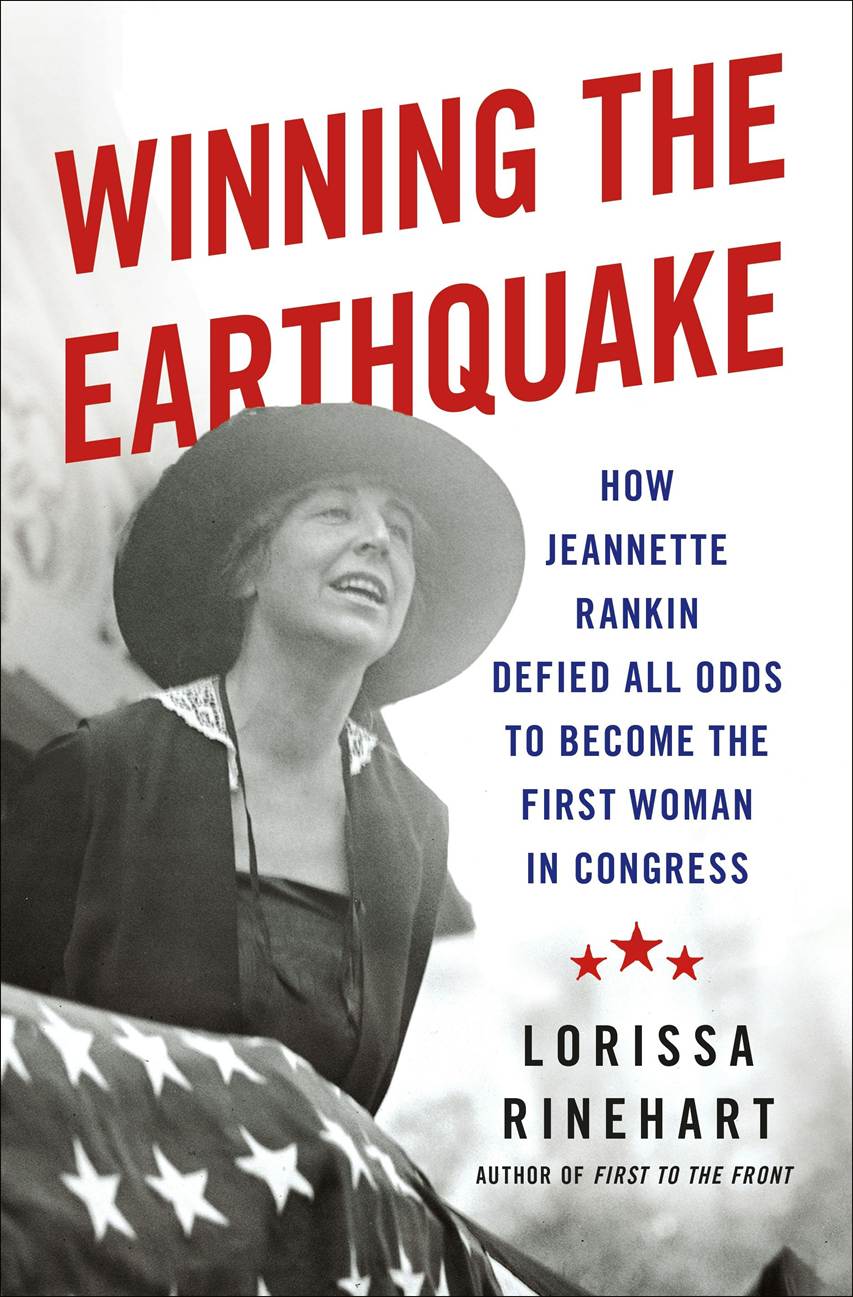
I finished Winning the Earthquake: How Jeannette Rankin Defied All Odds to Become the First Woman in Congress by Lorissa Rinehart and liked it.

What I’m Watching

I saw the first episode of the new season of Call the Midwife (PBS), and it had a couple of interesting twists.

New in the rotation are the police crime drama Hope Street (BritBox) and the quirky, comedic, kind of murder mystery How to Get to Heaven from Belfast (Netflix).

Finished The Game (BritBox), which was an effective thriller, and All Creatures Great and Small (PBS), dependably sentimental.

Saw the latest, better than most, episode of Starfleet Academy (Paramount+) and watched more of The Lincoln Lawyer (Netflix).

The filler sitcom is still Ghosts (Paramount+), and if there’s time for a filler drama, it’s been The West Wing (Netflix).

What Else I’ve Been Doing

Took a whole day away from revisions this week to go up to Green Bay. Visited the Neville Public Musuem for the first time and found the exhibits well done, especially in ways that promote learning for children. Then it was off to lunch at the Copper State Brewing Company where no beer was actually consumed, but the food was good.

Weekly bowling, two games. Both quickly slid from mediocre to awful. That’s not the direction I was aiming for.

Finished a very small sewing project, in which I turned an outdated eternity scarf into a wraparound, making it much more versatile.

Thanks for reading. March has indeed arrived like a lamb, with slightly warmer temperatures and rain instead of snow. And now, in most of the United States, we’re headed into daylight saving time. Don’t forget to set your clocks forward. Regardless of how it registers on the clock, I’m always happy with more light in any given twenty-four hour period. See you next week.

Dispatches from the Writing Life #6: Women and the Great War

Revisions on chapters two and three of the Jane Grant book have re-ignited my interest in the Great War of 1914-1918, now more commonly known as World War I, and have given me the opportunity to dive back into primary and secondary sources about women’s support of the conflict. One of my favorite books on the topic remains Kimberly Jensen’s Mobilizing Minerva: American Women in the First World War.

The U.S. military dragged its feet about female enlistment, but thousands of women found ways to get overseas to do something to contribute to the cause. Most of them went under the auspices of the Red Cross and YMCA, and officials of those organizations worried about the women’s motivations. Patriotism was ideal, of course, but a belief in “proper” moral standards or religious convictions would do. Adventurers, career opportunists, and romantics were discouraged, but they were not easily recognizable.

Jane sailed through the YMCA application process, but understanding her motivation(s) for going overseas is more complicated than choosing a category. It is emblematic of her life that she could not be easily pigeon-holed. And that makes her a fascinating character.

Women’s History Month

March is Women’s History Month. The National Women’s History Alliance has designated the 2026 theme as Leading the Change: Women Shaping a Sustainable Future.

Don’t miss Pamela Toler’s annual WHM series on her blog, History in the Margins. She runs the best Q&As with people who write women’s history.

What I’m Reading

Winning the Earthquake: How Jeannette Rankin Defied All Odds to Become the First Woman in Congress by Lorissa Rinehart has once again moved to the top of my reading pile. It’s especially (unfortunately) timely. Rankin was passionately devoted to pacifism, and she voted against U.S. entry into both world wars.

Yesterday I retrieved my library copy of Alia Hanna Habib’s Take It From Me: An Agent’s Guide to Building a Nonfiction Writing Career from Scratch. It’s very nicely organized and well written, and I think it will be especially useful for those starting out. I’ll be able to pick up a few tips about writing a book proposal, which I appreciate.

I finished Gertrude Stein: An Afterlife by Francesca Wade, and it’s a big WOW for me. Wade presents a well-crafted biography that focuses both on the literary and personal aspects of Stein’s life. I also appreciated Wade’s insights on research and on the form of biography itself.

Despite a strong start and vivid characters, Angela Flournoy’s The Wilderness just didn’t work for me. YMMV.

What I’m Watching

Yesterday was a very charming movie about a struggling singer/songwriter who wakes up after a bicycle accident to find himself in a world where the Beatles never existed. Great premise, well executed.

Nothing new in the rotation. The final episode of Grace did a nice setup for next season. Saw the latest episode of Starfleet Academy (Paramount+) and watched more of The Lincoln Lawyer (Netflix).

Finally, finally polished off the last episode of Stranger Things. It did not need so many seasons, just like Lost, which started off intriguing but devolved into convolution.  Also got through all of Young Sheldon, which I was really fond of. Now the filler sitcom is Ghosts (Paramount+) because I’m behind on this season. It’s total fluff.

I’m looking forward to two new Masterpiece series available this month on PBS: The Count of Monte Cristo and The Forsytes (not to be confused with the earlier series, The Forsyte Saga, which I always referred to as Soames Behaving Badly). I’ll also resume Call the Midwife, but this series is getting a bit dusty.

Still haven’t finished The Game and All Creatures.

What Else I’ve Been Doing

Not much.

Weekly bowling, two games, both very mediocre, devoid of any interesting frames. Sometimes that’s just the way it goes.

Last week’s 6-7 inches of snow left the streets a bit tricky to maneuver on foot, which limited outside walks. But March is supposed to start off with a gradual warming trend so, fingers crossed.

Feels like late winter doldrums.

Thanks for reading. Tune in next week to find out if March has indeed arrived like a lamb—and if that matters one iota for the progress of book revisions.