Depictions of D-Day

As a historian who has written quite a bit about World War II (okay, three books), nothing looms as large as D-Day, Operation Overlord, launched on June 6, 1944. Allied forces stormed the Normandy beaches and fought their way east to Germany. The war ended in Europe in May 1945.

Into the Jaws of Death 23-0455M edit.jpg

(NARA)

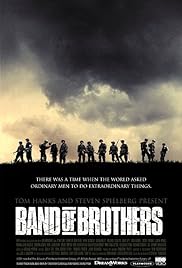
What a lot of people today know about D-Day probably comes from Steven Spielberg’s 1998 movie Saving Private Ryan, which is lauded for its realistic depiction of the landing on Omaha Beach. And in 2001, fans of the movie likely tuned in to HBO’s limited series, Band of Brothers, to follow the exploits of Easy Company, the men who parachuted into Normandy. The series was based on Stephen Ambrose’s popular 1992 book of the same name.

Image result for band of brothers

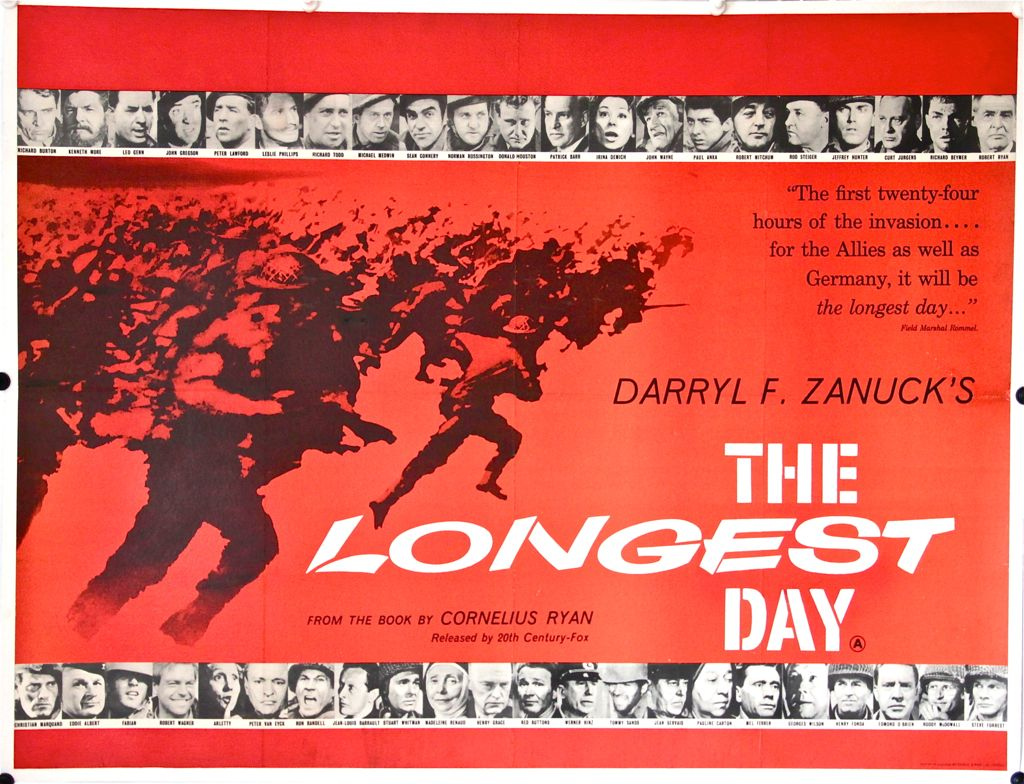
While both of these projects benefitted from updated, modern filming techniques, the structure of their stories is decades old. Assemble a motley crew of men, give them a mission, and watch what happens. Sure, these newer film versions have vivid color and up close violence. But they don’t have the gritty black-and-white moodiness of the 1962 Darryl Zanuck epic, The Longest Day. And they don’t have John Wayne as Lt. Col. Ben Vandervoort, a real-life hero.

Image result for the longest day movie

All of these are Hollywood, and no matter how many claims film and series creators make for authenticity, they cannot be regarded as accurate history. Scads of books have been published about D-Day. One of the most recent–and one of the best–about soldiers’ experiences in Europe is Mary Louise Roberts’s What Soldiers Do.

What Soldiers Do

According to the book’s synopsis: “Roberts tells the fascinating and troubling story of how the US military command systematically spread—and then exploited—the myth of French women as sexually experienced and available. The resulting chaos—ranging from flagrant public sex with prostitutes to outright rape and rampant venereal disease—horrified the war-weary and demoralized French population. The sexual predation, and the blithe response of the American military leadership, also caused serious friction between the two nations just as they were attempting to settle questions of long-term control over the liberated territories and the restoration of French sovereignty.”

This view of D-Day and its aftermath isn’t likely to make it to the screen, big or little. But for those interested in a deeper understanding of World War II, Roberts’s book is essential reading.


Reading Nonfiction in 2017

I read fiction for pleasure and relaxation. Even if the stories are dark and twisty, I can sink into them and remove myself from life’s realities for awhile. Case in point, one of my all-time favorite novels that I still can’t resist recommending:

Whenever I pick up a work of nonfiction, though, I feel caught in a kind of hyper-reality, always aware of the time and place of its narrative. I read a lot of history for work: research, course prep, book reviewing. I can’t set aside my training as a historian even when I pick up a nonfiction book for leisure reading. My critical senses are always tingling.

Of the many nonfiction books that crossed my desk and/or found their way into my book bag in 2017, there are a couple–one old, one new–that stand out.

Malcolm’s book is a modern classic, a fascinating analysis of the life of Sylvia Plath told through an examination of the various biographies written about Plath. It’s a near perfect meditation on the struggle to control the meaning of a life.

I rarely read memoirs or true crime stories, but I was intrigued that Marzano-Lesnevich chose to combine both in this inventive hybrid. She is such a talented writer that both parts of the story are almost equally strong, with the whole book a compulsive page-turner.

On Facebook and Twitter, I co-moderate Nonfiction Fans, a discussion group that launched in early 2017. (Join up and/or follow to get some of the best nonfiction recommendations, especially ones by and/or about women.) Because of that group, I’ve read some wonderful books, including:

Hindley has written a terrific story and a stellar work of history.

Though I rarely read true crime stories, if they are set in the past, I can’t resist. Cox’s book is especially valuable for its emphasis on race.

Finally, a few other works of history I liked in 2017:

American Heiress: The Wild Saga of the Kidnapping, Crimes and Trial of Patty Hearst

I have memories of this event, and Toobin recounts it with compelling precision.

Last Hope Island: Britain, Occupied Europe, and the Brotherhood That Helped Turn the Tide of War

Most of my World War II reading (and writing) focuses on the Pacific theater, so I enjoyed expanding my knowledge of the European theater with Olson’s book.

Ties That Bound: Founding First Ladies and Slaves

An absolutely fascinating slice of early American history.

The Electrifying Fall of Rainbow City: Spectacle and Assassination at the 1901 World's Fair

Anyone who loved The Devil in the White City should definitely read Creighton’s tale of the 1901 Pan American Exposition in Buffalo, New York.

The Rival Queens: Catherine de' Medici, Her Daughter Marguerite de Valois, and the Betrayal that Ignited a Kingdom

Renaissance rivalry among French queens. A great examination of the monarchy through the experiences of women.

And that’s a wrap of my 2017 reading.


Reading History of the Hidden Corners

It’s that time of year for the deluge of “best” book lists.

Image result for piles of booksLitHub photo (2015)

Many of these lists separate fiction and nonfiction. (In a few weeks I’ll be posting my own fiction favorites here.) Smithsonian.com, however, compiles a list of history books! This year it includes a few of the “big men” biographies (Richard Nixon, Ulysses S. Grant, Muhammad Ali) that remain so popular with many readers. But is also includes several that illuminate hidden corners of history.

Marjorie Spruill’s Divided We Stand is about the 1977 National Women’s Conference in Houston that provoked a counter-conference organized by Phyllis Schlafly. Anyone interested in women’s rights issues should read this book.

Preview thumbnail for 'Divided We Stand: The Battle Over Women's Rights and Family Values That Polarized American Politics

In The Jersey Brothers, Sally Mott Freeman delves into her own family history to tell the story of the Pacific theater in World War II. While there are lots of books about World War II, I think the Pacific is still a neglected area.

Preview thumbnail for 'The Jersey Brothers: A Missing Naval Officer in the Pacific and His Family's Quest to Bring Him Home

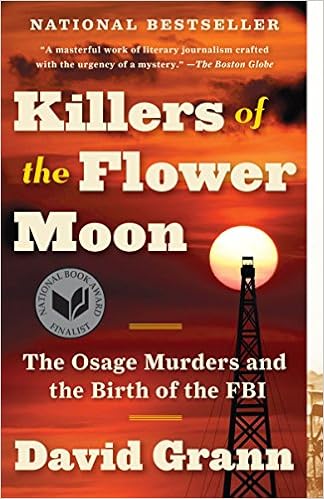
And of course, Killers of the Flower Moon, David Grann’s gripping tale of the murder of Osage Indians in the 1920s is on many “best” lists, and deservedly so.

Preview thumbnail for 'Killers of the Flower Moon: The Osage Murders and the Birth of the FBI

If you’ve missed these 2017 books, take some time over the holidays to get caught up on your reading. (Hint: put them on your holiday gift wish list and/or buy them as gifts for the favorite people in your life.)


Nonfiction Recommendation: Goat Castle

If you’re a fan of true crime stories, don’t miss this wonderful historical one by Karen Cox, Professor of History at the University of North Carolina at Charlotte.

Goat Castle

According to the University of North Carolina Press website, the book tells this story:

In 1932, the city of Natchez, Mississippi, reckoned with an unexpected influx of journalists and tourists as the lurid story of a local murder was splashed across headlines nationwide. Two eccentrics, Richard Dana and Octavia Dockery—known in the press as the “Wild Man” and the “Goat Woman”—enlisted an African American man named George Pearls to rob their reclusive neighbor, Jennie Merrill, at her estate. During the attempted robbery, Merrill was shot and killed. The crime drew national coverage when it came to light that Dana and Dockery, the alleged murderers, shared their huge, decaying antebellum mansion with their goats and other livestock, which prompted journalists to call the estate “Goat Castle.” Pearls was killed by an Arkansas policeman in an unrelated incident before he could face trial. However, as was all too typical in the Jim Crow South, the white community demanded “justice,” and an innocent black woman named Emily Burns was ultimately sent to prison for the murder of Merrill. Dana and Dockery not only avoided punishment but also lived to profit from the notoriety of the murder by opening their derelict home to tourists.

Karen’s southern Gothic story has even earned a blurb from John Grisham: “Goat Castle is a highly entertaining story about a long-forgotten murder. It is also a reminder of the racism and intolerance found in southern history and of how difficult change has been. It’s a terrific read.”

Karen stopped by the Nonfiction Fans Facebook discussion group to talk about Goat Castle and her writing process. Take a look there for more fascinating tidbits about the book.

And if you’re already thinking about holiday gift giving, you should put Goat Castle at the top of your book-buying list.


Final Entry: Best Books I Read in 2016

In this list of the last three of my best books from 2016 are an old favorite author and two stories that were outside my reading comfort zone.

The first was:

As Good As Gone

Ever since I read and adored Montana 1948, I’ve eagerly awaited each of Watson’s novels. This, his tenth, is set in 1963 Montana, and focuses on the Sidey family. Bill asks his estranged father, Calvin, to move in and watch his children while he takes his wife Marjorie to Missoula for surgery. Watson layers in some good family secrets, both past and present, to create a truly effective domestic drama.

Outside of my comfort zone was:

I normally don’t read stories about children in jeopardy. I’ve grown tired of seeing the word “Girl” in book titles. But this one came with a blurb from Celeste Ng, which was enough to persuade me to give it a try. Hamer deftly negotiates a story that is the stuff of every parent’s nightmare: during a public outing, a child goes missing.

Finally, a contemporary crime story (not something I usually read) I wouldn’t have picked up if it hadn’t been for two things. First, other readers whose opinions I trust were raving. Next….

Angels Madison

early last year it showed up in a book display with Angels of the Underground.

Nicholas Petrie’s debut novel The Drifter introduces Peter Ash, a veteran of the wars in Iraq and Afghanistan, who looks into the death of a friend from the Marines. The next installment in the series, Burning Bright, is out this month, and I’m looking forward to reading it.

So, that’s my 2016 reading roundup. Until this time next year, my posts will be less about novels I’ve read and more about history and writing. I hope everyone’s year is off to a good start.