Part VII: Best Books I Read in 2016

I keep up with a lot of mystery series. Some of them are historical, some are contemporary, all feature strong female characters.

Unfortunately, 2016 was devoid of new entries from two authors I really, really look forward to: Sara Paretsky and Elizabeth George. Paretsky writes the marvelous V.I. Warshawski series, set among the muck of Chicago politics. Her latest, Brush Back, was published in 2015, as was the most recent of George’s Inspector Lynley stories, A Banquet of Consequences.

Another long-running series with a new entry in 2016 was:

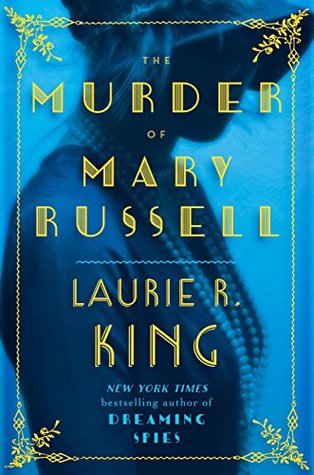
25177005

Quite a startling title, considering Mary Russell is the main character of the series, which also features Sherlock Holmes. I liked the earlier books much better, but this is one of King’s more recent books that I’ve found interesting again. Lately there haven’t been too many stories in which Russell and Holmes are actually together solving a mystery, and that happens here as well. But King has taken a mostly successful risk in centering the plot around the beloved Mrs. Hudson. For that, the book is worth checking out.

An even better addition to a historical mystery series was:

Journey to Munich (Maisie Dobbs, #12)

The Maisie Dobbs series has been consistently strong because Winspear has been willing to grow and change her main character as she moves through the interwar period. In this novel, Maisie is still reeling from some devastating personal losses when she takes on a case that brings her face to face with the evils of fascist Germany.

I read the two most recent Chief Inspector Armand Gamache books in 2016. (The first was published in the summer of 2015, but I didn’t get to it until early 2016.)

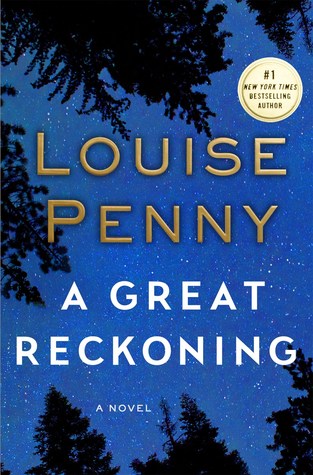
24586590

28220985

Penny’s novels are set in a small Canadian village called Three Pines, but the stories are never provincial. Both of these deal with the devastation of events that cannot remain buried in the past. I’m a late arrival to this series, so I haven’t read it from the beginning, but you really don’t have to in order to appreciate Penny’s fine writing skills.

I’ll wrap up this 2016 reading roundup tomorrow.


Part VI: Best Books I Read in 2016

I first read Jane Eyre when I was about 12 years old. My grandmother had sent my parents home with stacks of old books that had been moldering in her basement. I was intrigued by the hefty, no-frills volume: plain green cover, no illustrations, funky smell. I loved the heroine’s name. I loved the story.

The title page to the original publication of Jane Eyre, including Brontë's pseudonym "Currer Bell".

I’ve reread Jane Eyre several times since then. I’ve read other Brontë novels and I’ve read up on the Brontë sisters. I’ve also been fascinated, and usually delighted, with how contemporary authors have reworked Jane’s story.

Mystery writer Joanna Slan wrote a pair of novels that continued Jane’s story after she married Rochester–and took up amateur sleuthing.

In Patricia Park’s reimagining, Jane is a half-Korean half-American orphan living in modern day Flushing, Queens.

In 2016, one of my favorite Jane Eyre-inspired novels was:

Jane Steele is every bit as strong-willed as Jane Eyre (and the former is also aware of the latter), but she is determined to secure an inheritance she believes is rightly hers. Steele doesn’t hesitate to deal decisively with people who’ve wronged her. This is a wonderfully inventive story.

Another very good novel that I read in 2016 that featured a vengeful woman was:

The young Englishwoman Mary Jebb swears to pay back the man she holds responsible for her arrest and subsequent deportation to Australia in the late 1700s. The novel has a great Gothic vibe and some pretty interesting recipes.

Tomorrow: strong entries in long-running mystery series.

Part V: Best Books I Read in 2016

Yesterday I revealed my favorite book from 2016, the lyrical, haunting:

Image result for thomas jefferson dreams of sally hemings

Slavery is at the heart of that story, and it takes center stage in two other novels I really liked in 2016.

The first is:

Image result for underground airlines ben winters

Winters, who’s already made a name for himself as the author of the fine The Last Policeman trilogy, chillingly imagines a United States in which slavery has survived into contemporary times. The “Hard Four” states are determined never to give it up, and the federal government is required to support these states, including assisting with the retrieval of fugitive slaves. Victor, a successful bounty hunter, pursues a runaway called Jackdaw and finds much more than he’d ever imagined. Though Winters wrapped up this story line, it’s clear this has series potential.

The second is:

National Book Award winner, New York Times bestseller, Oprah’s book club–Whitehead’s book has had quite a year. Historical fiction with a wash of steampunk, Whitehead’s underground railroad is an actual train beneath the surface that carries runaways North. Cora, fleeing from a Georgia plantation, makes stops along the way, in locations that seem to offer some version of freedom.

If you can manage, it would be fascinating to read all three of these books one after the other. The horrors of slavery will never leave you.

Tomorrow: two works of historical fiction that feature women and revenge.


Part IV: Best Books I Read in 2016

Judging by the historical novels I normally gravitate towards, my favorite book from 2016 shouldn’t appear on this “Best” list. It’s the kind of book more likely to end up on one of my “Worst” lists.

Image result for surprised woman reading

My favorite novel of 2016 focuses on real-life historical figures, my least favorite kind of historical fiction. And one of those figures is a founding father. In my own real life as an academic historian, I haven’t leapt on the founding father bandwagon to devour big, bulky biographies of the men who kickstarted this country. And though I’ve heard some of the songs, I haven’t listened to the entirety of Hamilton or schemed to score a couple of tickets.

I still hold a grudge because those guys couldn’t see that the “course of human events” involved so much more than white men.

The first couple times I saw this novel–the one that turned out to be my favorite–on the library shelf, I passed it by. I looked at the title, winced, and left it there. Then one day I decided to add it to my check-out pile. It was a library book. It didn’t cost me anything. If I got frustrated with the first few pages, I’d just return it.

I didn’t get frustrated. I became mesmerized. This is the novel I think about more than any other from 2016:

Image result for thomas jefferson dreams of sally hemings

In my reading, O’Connor doesn’t romanticize what happened between Jefferson and Hemings, nor does he reduce Hemings to a one-dimensional victim.

The two best reviews I’ve read of the novel come from the always astute Ron Charles and the novelist Jean Zimmerman.

Charles concluded his review:

“Ultimately, this is a book in vigorous debate with itself, just as strange and contradictory as the author of the Declaration of Independence. With its magically engineered collection of fiction, history and fantasy, and particularly with its own capacious spirit, Thomas Jefferson Dreams of Sally Hemings doesn’t just knock Jefferson off his pedestal, it blows us over, too, shatters the whole sinner-saint debate and clears out new room to reconsider these two impossibly different people who once gave birth to the United States. It’s heartbreaking. It’s cathartic. It’s utterly brilliant.”

Here, Zimmerman highlights Sally Hemings:

“…after reading this novel I would love to know Sally Hemings…. She is one of history’s numberless mystery women, but she comes thoroughly and thrillingly alive in O’Connor’s telling.”

History is full of “numberless mystery women.” My fascination with them is the reason I so admire O’Connor’s novel.

Check back tomorrow, when I recommend two novels about slavery.


Part III: Best Books I Read in 2016

Mothers and daughters. That’s the theme for today’s pair of recommendations.

4 Auguste Reading to Her Daughter impressionism mothers children Mary Cassatt (Mary Cassatt)

The 5-star is:

Image result for the wonder by emma donoghue

Ever since reading Slammerkin I’ve eagerly awaited each new book by Donoghue. I haven’t liked them all, but she always comes up with interesting plots. The Wonder is set in 19th century Ireland where a little girl named Anna O’Donnell seems to be surviving without eating. Lib Wright, a trained nurse from England, is brought in to determine if this is a miraculous event or a clever fraud. Donoghue’s careful portrayal of Lib’s growing closeness to Anna, interlaced with an array of artfully concealed secrets, serves as a meditation on the bond between mothers and daughters.

Very close to 5 stars:

For me, this slender novel narrowly missed 5 stars because I was left wanting a bit more plot. Maybe that’s a testament to Strout’s finely drawn characters. Lucy Barton is in the hospital, her estranged mother comes for a visit, and the family stories flow. It is a marvelous book about mother-daughter love and the power of shaping a story about it.

Tomorrow, the last of my 5-star novels from 2016. Then a few more posts about several other books I liked a lot.