Dr. Mary Walker Wednesday #4

This is the fourth in my Dr. Mary Walker Wednesdays series. Each week I’ll post the first sentence of a new chapter, along with an image (or two) that relates to material in the chapter. This week features Dr. Walker’s medical work in the field, caring for sick and wounded soldiers. Since this first sentence is short, I’ve included a couple extra.

Chapter Four: Field Surgeon

Dr. Mary Walker still could not secure a commission.

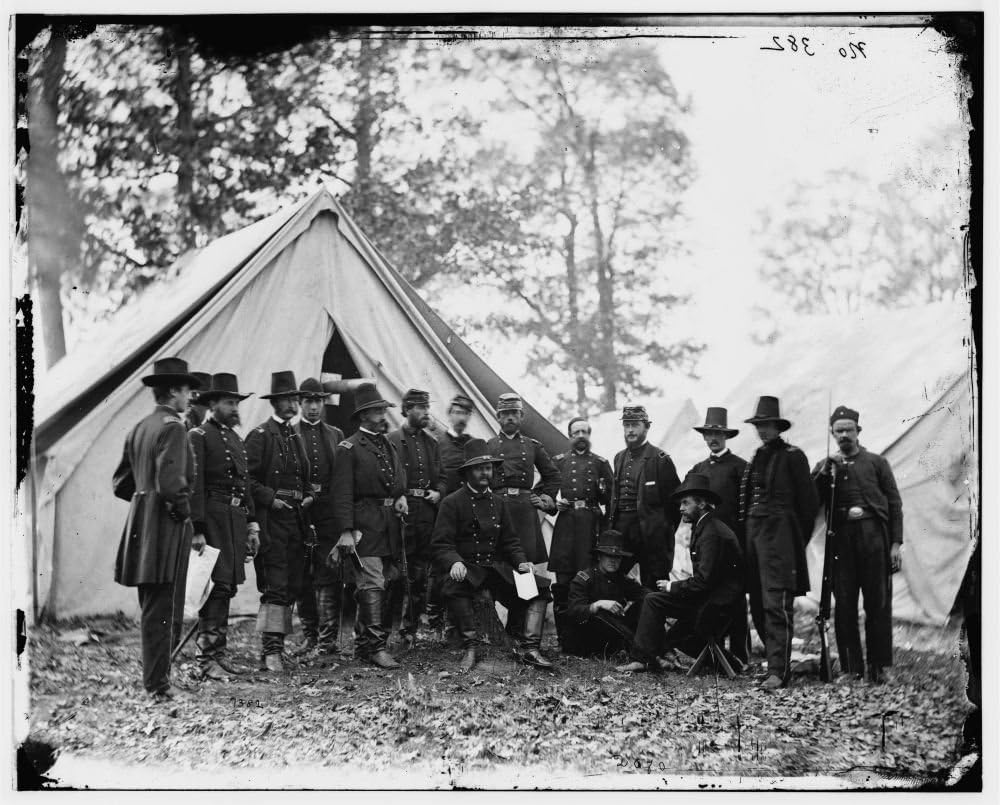
[In November 1862, she decided General Ambrose Burnside’s sick and wounded men at Warrenton, Virginia, needed help, so she went.]

Carrying with her a blank book for keeping track of the names of patients, Dr. Walker found some men on the floor of an old house, many suffering the effects of typhoid.

(General Burnside and staff at Warrenton, 1862)

[In December] Dr. Mary Walker volunteered at Lacy House in Falmouth, a behind-the-lines station where soldiers received treatment before being sent on to Washington.

(Smithsonian Institution)


Dr. Mary Walker Wednesday #3 (plus a little bonus)

This is the third in my Dr. Mary Walker Wednesdays series. Each week I’ll post the first sentence of a new chapter, along with an image (or two) that relates to material in the chapter. This week features Walker’s medical work in the nation’s capital. And since we’re all thinking a lot about containing the spread of disease, I’ve added some bonus content from the book that explains how Americans dealt with this during the Civil War.

Chapter Three: Volunteer Surgeon

Dismissed by the secretary of war, Dr. Mary Walker searched Washington, DC, for a position at one of the new military hospitals.

(both images from the Smithsonian Institution)

Dr. Walker volunteered her services at the Indiana Hospital, situated inside the US Patent Office Building. One of her primary responsibilities was to perform pre-admittance examinations of patients to make sure they did not have smallpox. “Patients were daily brought in ambulances to the west sidewalk of the Patent Office Building,” she later wrote. Dr. Green, the physician in charge, would send for her “to come down and examine the cases so that no cases of possible smallpox might be taken up there” to the hospital ward.

A viral infection, smallpox spread through face-to-face contact via coughing and sneezing. Fever and body aches were followed by a red rash in the mouth and on the tongue, culminating in a pustule rash on the rest of the body. Three out of every ten people who caught it usually died. A successful vaccination had been developed, but it was not widely used in the early 1800s. During the Civil War, desperate soldiers fashioned their own vaccine, taking pus from an afflicted compatriot and scratching it into their skin. Their limited knowledge made this a high-risk proposition.

Doctors like Mary Walker managed to contain smallpox during the war. Pure, unadulterated vaccines reached enough soldiers to prevent an epidemic, but not enough to eradicate the disease. Quarantine, the primary method Walker relied on, also helped to stem the contagion.

Next week’s entry will provide a glimpse of some of Mary Walker’s other wartime activities.

Stay safe and stay healthy.


Dr. Mary Walker Wednesday #2 (No Fooling)

This is the second in my Dr. Mary Walker Wednesdays series. Each week I’ll post the first sentence of a new chapter, along with an image that relates to material in the chapter. This week features the man who served as President Lincoln’s first Secretary of War.

Chapter Two: Commission Seeker

Dr. Mary Walker met with sixty-two-year-old Simon Cameron, a tall, clean-shaven man with an abundance of white hair.

(Library of Congress)


Before There Was a Veterans Day

President Woodrow Wilson created the first Armistice Day in 1919 to mark the anniversary of the end of World War I, November 11, 1918. During the 1920s, successive presidents made annual proclamations for observing November 11 with appropriate ceremonies. Armistice Day became a legal holiday in 1938, designed to honor veterans and the cause of world peace.

(LOC)

The peace did not last. After World War II ended in 1945, a movement started for a designated remembrance of all veterans. Congress passed legislation in 1954 substituting Veterans Days for Armistice Day. Beginning in 1971, because of the Uniform Monday Holiday Act, official celebrations of Veterans Day were moved to the fourth Monday in October.

Before the two world wars, the United States had been involved in its own Civil War. A year after that conflict ended in 1865, the Grand Army of the Republic (GAR) formed to provide fellowship and support for Union veterans. The GAR also organized the earliest Memorial Day celebrations and supported federal pensions for veterans.

The GAR extended membership to at least two women: a vivandiere from Rhode Island named Kady Brownell and Sara Emma Edmonds, who dressed like a man to join the 2nd Michigan Infantry.

Though no evidence exists that she was a member, Dr. Mary Walker attended many GAR events, including one in Steubenville, Ohio in 1879. Her employment as a contract surgeon with the 52nd Ohio was as close to military service that she could get during the Civil War. After the war, Dr. Walker frequently received letters from men she had treated or met. If they were in need of assistance, she always tried to help.

About 6200 veterans marched in a parade in Steubenville on August 28, 1879. Twenty-five thousand people crowded into the city to take part in the festivities. Many belonged to area GAR posts. Dr. Walker sat on the bandstand platform, surrounded by politicians and generals, to listen to speeches. Local newspapers referred to her as a “veteran”–with the word carefully bracketed by quotation marks. She felt honored.

(LOC)

As Civil War veterans aged and died, membership in the GAR dwindled. It dissolved in 1956, after the death of its last member.