My 2024 Reading, Part One: Fiction

Welcome to my annual reading round-up, in which I share my favorite books, both fiction (in this post) and nonfiction (in the next post). I prefer to stay away from the term “best” because of how subjective that is. These are the books I enjoyed in 2024, though a few may have been published earlier. Sometimes I don’t get around quickly to ones I want to read because of lengthy hold lists at the public library. Sometimes I’m interested in a book and know I’m not in the right mood to read it. So, reasons.
According to Goodreads, where I keep track of such things, I read five more books in 2024 than I did in 2023—from 46 to 51. (Yet for some reason it seems like I did not read much. I’m not sure why—it may have to do with the time I have been spending on my new book project.)

Of the novels I read in 2024, I marked five with five stars. Because there are so few, I find it impossible to rank them. Instead, these are listed in roughly the chronological order I read them. (Not surprisingly, they are all historical.)

1. The Storm We Made by Vanessa Chan. Set in World War II Malaya, this riveting historical drama depicts the heartbreaking choices people make during an enemy occupation. Cecily Alcantara, a devoted wife and mother, finds herself in increasingly impossible situations.

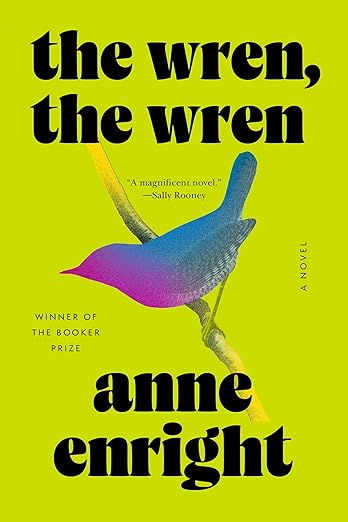
2. The Wren, the Wren by Anne Enright. Nell McDaragh, granddaughter of a famous Irish poet, and her mother Carmel, the poet’s daughter, both struggle with his legacy. Sensitive and beautifully written.

3. The Vaster Wilds by Lauren Groff. This novel is utterly and admirably void of any romancing of the early years of the English colonization of North America. Propelled by a pervasive sense of dread and entranced by the brutal beauty of the story, I could not stop reading.

4. The Road from Belhaven by Margot Livesey. Character and setting are pitch perfect in this historical drama set in rural Scotland during the nineteenth century. A young woman can see some glimpses of the future but has to figure out what to make of the information.

5. Whale Fall by Elizabeth O’Connor. Just before the beginning of World War II, a young woman living on a small Welsh island is unexpectedly confronted with the opportunity to change the anticipated course of her future. Delicate and lovely.

Additional recommendations (very close to five stars):

Two of my favorite mystery writers published new additions to their long-running series. Jacqueline Winspear drew her excellent Maisie Dobbs series to a close with The Comfort of Ghosts, which provided a satisfying ending. With Pay Dirt, Sara Paretsky delivered another powerful installment of her V.I. Warshawski investigations.

Alice McDermott’s Absolution depicts U.S. involvement in Vietnam in the 1960s from the perspective of white American women living there with their husbands. Very thought-provoking.

The God of the Woods by Liz Moore is a well-crafted mystery that made me glad I never went away to summer camp.

And the biggest surprise of my 2024 reading was Elizabeth Crook’s The Madstone, which I pulled off the library’s Westerns shelf on a whim and got helplessly drawn into the story.

Up next: My favorite nonfiction books of 2024.

My Favorite Fiction of 2022

I read at least 54 books, both fiction and nonfiction, in 2022. I’m not great at keeping an exact count, mostly because I consider many of the books “work”—for research and for reviews—and don’t add them to my Goodreads page. The only stars I assign on Goodreads are five stars because I find it too difficult to dole out the lesser numbers. (After the fabulousness of five stars, how can I determine why a book rates four or three? And honestly, I wouldn’t give a book one or two stars because I don’t finish books I don’t like.)

Here are the eleven novels (all but two written by women) I read in 2022 (not all were published in 2022) that received five stars from me. They are not in the order I read them (but may be in the order that I love them and still think about them).

The Love Songs of W.E.B. Du Bois by Honorée Fanonne Jeffers. I rarely buy a book (especially in hardcover) before I’ve read a library copy. I made an exception here because I’d heard such glowing things about it, and because I found out our town finally got an independent bookstore and said bookstore had this novel in stock and I wanted to support said bookstore. I loved it. (The book, but also the store. Five stars to Bound to Happen Books, too.) I had a hard time putting the novel down to do the routine things of the day. Yet I also tried to stretch out reading it because I didn’t want this compelling multi-generational, history-laden story of a Black family to end.

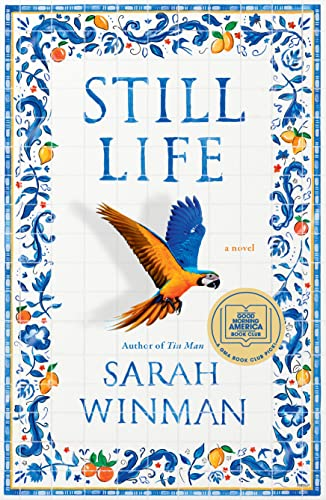
Still Life by Sarah Winman. I loved this book so much for its wonderful story of love and beauty that I bought it as a gift for a friend. I also loved how Winman ignored the tropes of most of today’s love-in-the-time-of war stories to create something more authentic. Ulysses Temper, a soldier in Italy during World War II meets an art historian named Evelyn Skinner, and their lives unfold over the next forty years. (There’s also a talking parrot.) I will someday buy a copy of this book for myself.

Sea of Tranquility by Emily St. John Mandel. I’m a fan of Station Eleven and The Glass Hotel, and I ended up purchasing this book after I read the library copy. Lovely and heartbreaking, the story opens with a chance encounter in a Canadian forest between a young Englishman and a shadowy figure named Gaspery Roberts. It reminded me a bit of David Mitchell’s Cloud Atlas, one of my favorite novels.

The Magician by Colm Tóibín. I picked this up on a whim from the New Books shelf at the library. I’ve read some of Tóibín’s other novels (The Master, Brooklyn, The Testament of Mary, and Nora Webster) but I didn’t really expect to be interested in a story about Thomas Mann. I was very wrong. I really admired how deftly Tóibín made Mann’s life relevant to contemporary issues.

There There by Tommy Orange. It took me a long time to get around to reading this bestselling Pulitzer finalist about Native Americans coming together at a pow-wow in Oakland. And it took me a long time to read this book because I would get such a strong sense of foreboding that I had to set it aside for weeks at a time before I could read more. So beautifully written and so very heart-wrenching.

Four Treasures of the Sky by Jenny Tinghui Zhang. Also so beautifully written—a story about what happens to a young woman kidnapped in China in the late nineteenth century and sold into sexual slavery in San Francisco—with an ending that will gut you.

Woman of Light by Kali Fajardo-Anstine. Set mostly in Depression-era Denver, the novel centers on Luz Lopez, who earns money reading tea leaves, coming to terms with her family’s past as she tries to carve out a good present and future for herself. Her brother, a snake charmer, is a great supporting character.

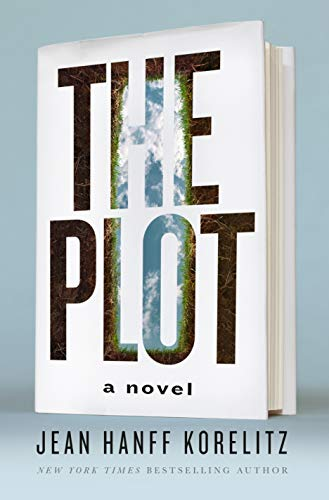
The Plot by Jean Hanff Korelitz. I don’t usually read suspense, but since this was about all the complications that ensure when a novelist steals the plot from one of his student’s work in progress, I couldn’t resist. Korelitz is so, so good at building suspense while making everything very plausible and adding a touch of dark humor.

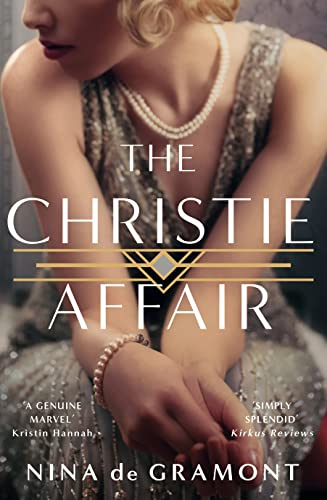
The Christie Affair by Nina de Gramont. In the 1920s, popular mystery writer Agatha Christie went missing. De Gramont’s novel imagines what led her to walk away from her family and how she was eventually found. The author manages an homage to Christie’s style without resorting to blatant pastiche.

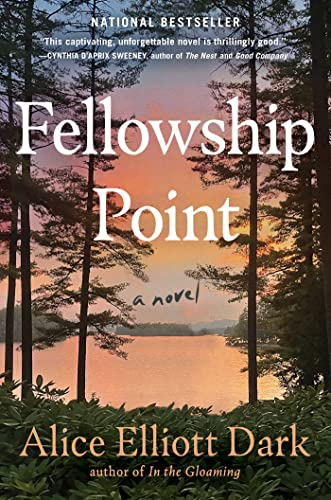
Fellowship Point by Alice Elliott Dark. I picked this up because I was intrigued to find that the main characters are elderly women. I found myself quickly drawn into the story of the meaning of friendship, family, and doing good in the world. It was a real bright spot in my 2022 reading.

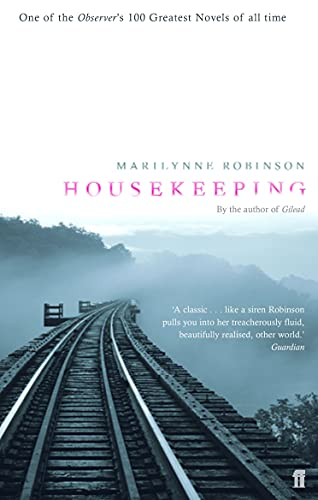
Housekeeping by Marilynne Robinson. I can’t believe it took me so long to get around to what is by now certainly a classic of American literature. A spare, deeply moving story of orphaned sisters struggling to stay together while they grow up.

Next up, the list of my favorite nonfiction books of 2022.

My Favorite Novels of 2021

I read forty-two works of fiction in 2021; forty were new and two were re-reads. (I also read ten novels as a PW reviewer, but none of those are included in this roundup.) For the second year in a row, I’ve read considerably fewer novels than in pre-Covid years. It’s hard to tell if this is only because of Covid. I also spent the last two-plus years writing two books, which occupied a lot of my attention.

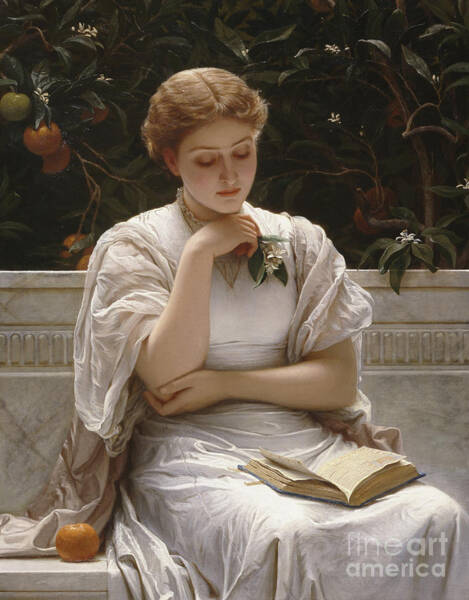
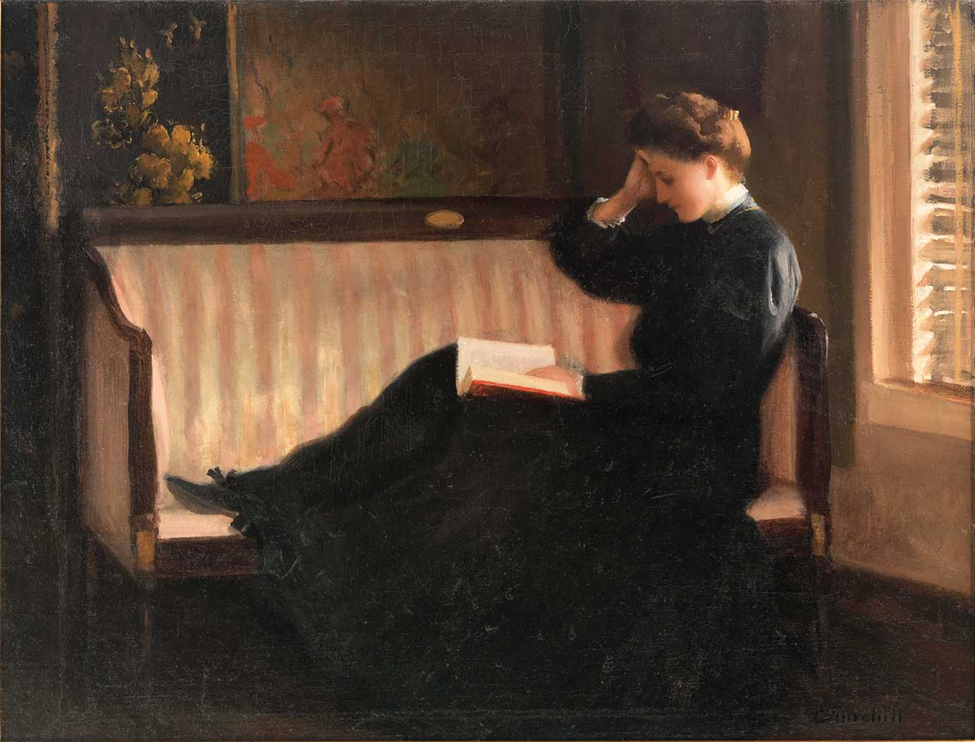
Woman Reading Book Paintings | Fine Art America
Painting by Charles Edward Perugini

Fortunately, as in past years, I read many good books. I know that a “Top Ten” is standard for “Best of” lists, but I had to stretch to eleven for 2021. And a reminder, this list is for the books I read in 2021, but not all the books were necessarily published that year.

Here they are, in no particular order:

1. The Final Revival of Opal & Nev by Dawnie Walton

I’m not sure what I expected when I started this novel, but it certainly exceeded every expectation I had about the story.

2. Shuggie Bain by Douglas Stuart. I put off reading this for awhile, and while I was reading it I had to set it aside for days at a time because of the subject matter. But it really is a beautiful book.

3. We Begin at the End by Chris Whitaker. I picked it up on a whim from the New Books shelf at the public library and had a hard time putting it down. Wonderful characters and a great structure.

4. Of Women and Salt by Gabriela Garcia. A fabulous generational story about Cuban women.

5. House of the Patriarch by Barbara Hambly. I read a lot of mystery series, and historical ones are my favorite. (Jacqueline Winspear’s newest addition to her Maisie Dobbs series was also one of my favorite reads of 2021.) Hambly’s Benjamin January is one of the genre’s most unforgettable characters.

6. The Office of Historical Corrections by Danielle Evans. Inventive and stunning.

7. A Girl is a Body of Water by Jennifer Nansubuga Makumbi. A riveting drama of a teenage girl who longs to know her mother.

8. Yellow Wife by Sadeqa Johnson. This is a sensitive exploration of the kinds of realities faced by enslaved women in the antebellum South.

9. Annie and the Wolves by Andromeda Romano-Lax. I can’t resist reading about characters who are academics. It has a time-travel twist.

10. Outlawed by Anna North. This alternate history of the American West contains one of my favorite opening lines: “In the year of our Lord 1894, I became an outlaw.”

11. Build Your House Around My Body by Violet Kupersmith.

Wow! There’s time-travel here, too, as well as some ghosts. Totally different from what I usually read but I couldn’t stop reading it.

My 2022 reading is still very new, but I’ve started the year with two stunners. One I began late last month and didn’t want to rush through it to finish before the end of the year. I know both will be on my “Best of 2022” list, so stay tuned until next January for that!

Up next, reflections on my 2021 nonfiction reading. Then some other new stuff, especially about my forthcoming book, Queen of the West: The Life and Times of Dale Evans.

Happy New Year everyone.

So Far in Historical Fiction….

Land and Sea

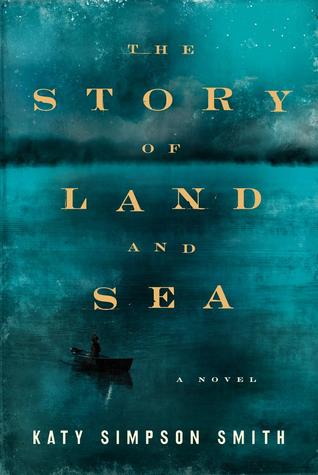
During early January I’ve read three works of historical fiction that I liked well enough to recommend. My favorite of the trio is by Katy Simpson Smith, who has the distinction of holding both a PhD in History and an MFA. Her debut novel is The Story of Land and Sea, a slender, elegant story set near the end of the American Revolution along the North Carolina coast. The war doesn’t take center stage, but it is–along with slavery–an integral part of the story. Smith poignantly examines the love between parents and their children, and how loss shapes actions. It’s a quiet yet powerful story.

Lucky Us

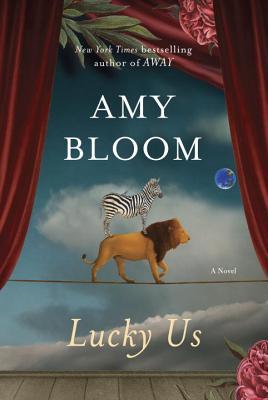
I also liked Amy Bloom’s Lucky Us, set in the United States during the 1930s and 1940s. It’s also about family, but the kind that is acquired. Bloom assembles a cast of quirky yet likable characters who are drawn to sisters Iris and Eva, who have run away from their unreliable father. Beautiful Iris is determined to become a movie star, but when things fall apart in Hollywood, the siblings have to scramble for a plan B. I really liked Bloom’s episodic style with its shifting points of view. One of the plot lines didn’t really work for me, and I thought the book ended rather abruptly, but I still enjoyed it.

The Lie

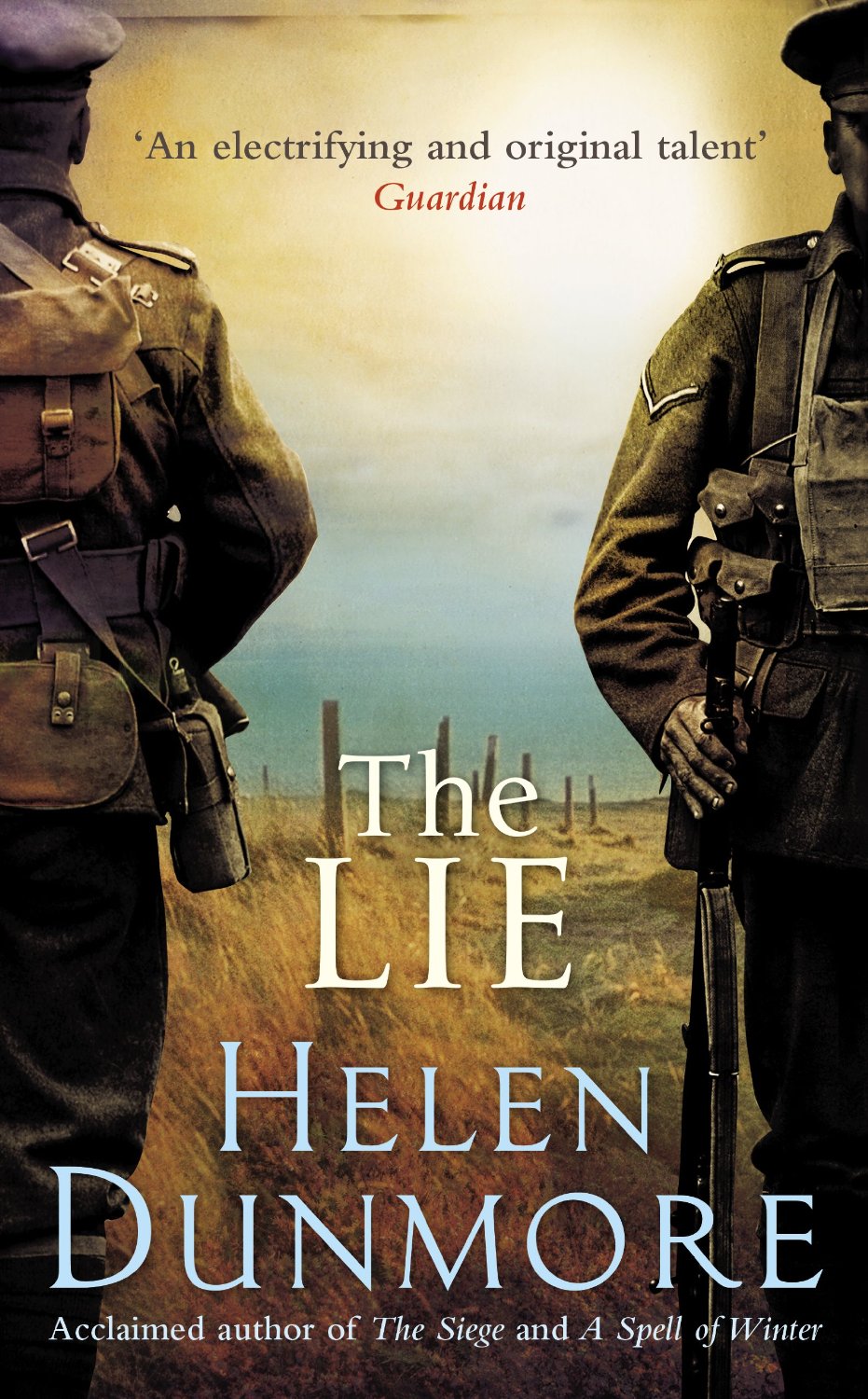
Rounding out the trio is Helen Dunmore’s novel of World War I and its aftermath, The Lie. Alternating between the killing fields of the western front and quiet Cornwall, Dunmore tells the story of Daniel Branwell, who survived the war only to return home lost and alone. The story may be a bit familiar, but Dunmore’s depictions of the war are especially vivid, and the individual characters are so finely drawn that the book was hard to put down.

All in all, a great start to the reading year.

The Final Novel in My Top Ten: The Narrow Road to the Deep North by Richard Flanagan

Narrow Road

I am kind of burned out on historical novels with dual story tracks: one in the present, one in the future. (I’m also tired of book titles that identify female main characters in their relation to men.) As an avid reader of historical fiction, I always find that part of the story much more interesting than the contemporary one. But I liked the way this double story line worked, and The Narrow Road ended up being one of my favorite novels of the year.

The story centers on Dorrigo Evans, an Australian doctor serving with the army during World War II. He is taken prisoner by the Japanese and endures one of the worst horrors faced by those Allied captives: forced labor on the Thailand-Burma railroad. Richard Flanagan does not make his main character a hero, nor is he an endearingly flawed character. Dorrigo is much more an ordinary guy, sometimes likeable, sometimes irritating. Before leaving on military assignment, he jeopardizes his engagement by getting involved with his uncle’s young wife, Amy. The memories of that relationship and his hopes for the future shape Dorrigo’s POW experiences, and the resolution of that love triangle is a bit unexpected. But the real power of this novel lies in Dorrigo’s character. He is in most ways average and ordinary, yet he survives an extraordinary event. Flanagan resists making Dorrigo into a hero. Sometimes events don’t make the man. Sometimes he is already made, and the events simply make him more himself.