This may be a first for my annual list of nonfiction favorites, but it’s certainly not surprising. All fifteen of the books listed below, plus a bonus title, were written by women. And all fifteen are about women. Unusual and a bit surprising: I read several memoirs.
In my last post I mentioned that I sometimes forget to log my books on Goodreads, which makes tallying up a year’s worth of reading inexact. I’m leading the 2025 list with my most embarrassing omission from last year because I can’t bear for everyone not to know that it’s one of my favorite works of nonfiction. The rest are listed roughly in the order in which I read them.
1. The Dragon from Chicago: The Untold Story of an American Reporter in Nazi Germany by Pamela D. Toler. This is an excellent and much needed biography of Sigrid Schultz, the Chicago Tribune’s bureau chief and foreign correspondent in Central Europe who warned about the dangers of Adolf Hitler and Nazism. The book received starred reviews from Publishers Weekly and Kirkus Reviews, and it was a finalist for the Los Angeles Times’s 2024 Book Prize in Biography.
2. The Icon and the Idealist: Margaret Sanger, Mary Ware Dennett, and the Rivalry That Brought Birth Control to America by Stephanie Gorton. A first-rate dual biography of two of the most important birth control activists in United States history. Sanger’s name is the more familiar of the two, but Gorton convincingly demonstrates that Dennett deserves just as much attention. I’ve long been a huge fan of Dennett so was particularly pleased to see her in the limelight. And she’s the subject of an Ogden Nash poem, probably the only verse I know by heart.
I for one
Think the country would be better run,
If Mary Ware Dennett
Explained things to the Senate.
3. The Many Lives of Anne Frank by Ruth Franklin. I first read The Diary of a Young Girl in a grade school English class. Over the years, I’ve read the expanded versions as well as books about Frank, her family, and the people who made the Secret Annex possible. Franklin combines a well-written biography of Anne Frank with investigations into the various forms of the diary, the ways in which it has been dramatized for stage and screen, and how Frank has become a fictional character in the works of other authors. Fascinating all the way through.
4. Tell Me a Story Where the Bad Girl Wins: The Life and Art of Barbara Shermund by Caitlin McGurk. This biography wins Best Title of the Year, at least as far as me and my list are concerned. Who wouldn’t want to hear that story? And McGurk has done a marvelous job of situating artist Shermund in her proper place in the history of American illustrators and cartoonists. I was especially intrigued with Shermund’s work for The New Yorker during its early years, when Jane Grant was still around. The two women probably had a lot in common.
5. After Lives: On Biography and the Mysteries of the Human Heart by Megan Marshall. These essays, by a genius biographer, blend memoir with craft advice. It’s all beautifully written and inspiring.
6. Wifedom: Mrs. Orwell’s Invisible Life by Anna Funder. Wow, wow, wow. An insightful, incisive biography of Eileen O’Shaughnessy, who married George Orwell. Funder shows exactly what O’Shaughnessy contributed to the artistic success of Orwell and explores how and why she was pretty much written out of the biographies of the author. The book has made a huge impact on how I view Jane Grant.
7. Dust and Light: On the Art of Fact in Fiction by Andrea Barrett. I adore Barrett’s fiction, and I loved her take on novelists’ use of history in their (and her own) work. Beautiful.
8. The Trouble of Color: An American Family Memoir by Martha S. Jones. Jones is a brilliant historian, and she has deployed her formidable skills to answer a personal question for herself: “Who do you think you are?” Her search takes her through her family’s history, which included enslavement, as she grapples with the meaning of color in the lives of her ancestors—and herself.
9. The Last American Road Trip: A Memoir by Sarah Kendzior. A family memoir of a different kind, Kendzior looks at politics and society in America, past and present, through road trips she takes with her family during the pandemic years. I admired the gorgeous writing, the strong sense of place, and the whiffs of nostalgia infused with a bit of hopefulness.
10. Marion Greenwood: Portrait and Self-Portrait—A Biography by Joanne B. Mulcahy. This biography focuses on all the things I’m drawn to in this genre: a once well-known woman, incredibly smart and talented, whose political beliefs led her to live an unconventional life, who somehow disappears from history. Greenwood, a devotee of social realism, painted some of the most stunning murals and portraits in the first half of the twentieth century. Mulcahy, with her usual elegant prose, reminds us why it’s still important to know about her.
11. Birding to Change the World: A Memoir by Trish O’Kane. Originally an investigative journalist, O’Kane switched careers after Hurricane Katrina upended her life. She developed an interest in birds, enrolled in an environmental studies Ph.D. program, and embarked on a social justice campaign to save a local park from over-development. O’Kane’s passion and dedication shine through—for her academic work and love of learning, her community and its people, and the many species of birds she encounters.
12. Foreign Fruit: A Personal History of the Orange by Katie Goh. Goh traces the history of the orange as she untangles the strands of her multi-cultural heritage. She travels from Ireland to China and Malaysia to connect with far flung family members, seeking answers about her identity. The orange, with its own complicated history, gives her grounding and perspective. I liked this unique approach to memoir.
13. The Girl in the Middle: A Recovered History of the American West by Martha A. Sandweiss. The presence of a Native American girl, Sophie Mousseau, in an 1868 photograph taken at Fort Laramie is Sandweiss’s jumping off point for this meticulous work of history about post-Civil War America and westward expansion. It’s a densely packed story, and Sandweiss’s other real-life characters, including photographer Alexander Gardner and Union general William S. Harney, occupy much of the narrative. But Mousseau is a constant, almost haunting presence, at the heart of the story.
14. Sisters of Influence: A Biography of Zina, Amy, and Rose Fay by Andrea Friederici Ross. During the Victorian era, known for its constraints on women’s behavior, these three sisters pushed at the boundaries of those expectations to make names for themselves in music, writing, and domestic reform. It’s an absorbing family biography, and Ross calmly and ably juggles all the different personalities.
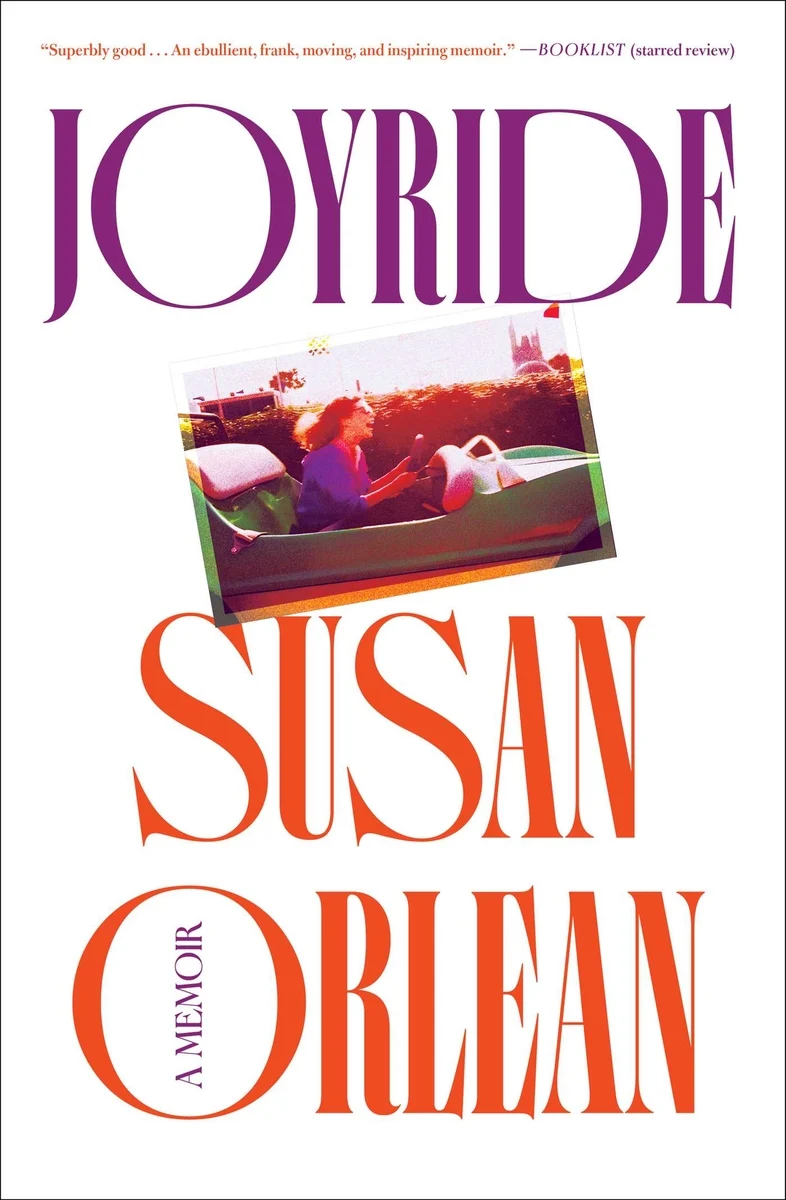
15. Joyride: A Memoir by Susan Orlean. I’m a fan of Orlean but not a super fan. I haven’t read everything she’s written but I liked The Library Book and many of her articles. Reading this memoir provides the sense of exhilaration portrayed on the book’s cover. I was fascinated by how Orlean carved out a career as a writer and enjoyed the snippets of her personal life that she included.
Bonus book:
How to Write a Bestseller: An Insider’s Guide to Writing Narrative Nonfiction for General Audiences by Tilar J. Mazzeo. A former academic who has written bestsellers, and Mazzeo provides practical advice to narrative nonfiction writers, especially those who want to move away from scholarly writing. It’s one of the most helpful how-to writing books I’ve read in a long time.
And one final kind of quirky thing about my 2025 reading. In a previous post I wrote about how much I liked Debby Applegate’s Madam: The Biography of Polly Adler, Icon of the Jazz Age, but had to stop reading it because it invaded too much of my head space while I was drafting my book about Jane Grant. Well, that happened again. This time I set aside The Aviator and the Showman: Amelia Earhart, George Putnam, and the Marriage that Made an American Icon, Laurie Gwen Shapiro’s latest book. It’s terrific, but Shapiro’s voice is so strong that the book is now sitting on the shelf next to Madam, where they will stay until I’m much further along with Jane. (At least I didn’t put them in the freezer, which was Joey Tribianni’s solution to troublesome books.)
To all of you who made it this far, thanks for reading. I hope you encounter loads of good books in 2026 that take you on your own joyride.






 Theresa Kaminski
You must be logged in to post a comment.