The Other Anne of Massachusetts Bay

Anne Dudley Bradstreet arrived with her husband Simon in the Puritan colony in 1630. They sailed on the same ship with John Winthrop, the man intent on establishing a “city upon a hill.” Bradstreet was 18 at the time, and she hadn’t been happy about giving up her comfortable life in England for an uncertain one in North America. But she was a dutiful and loving wife and an observant Puritan. Her place was with her husband.

Bradstreet gave birth to eight children, the first arriving about three years after the couple settled in Massachusetts. Life in the new colony required everyone to work. Bradstreet was always busy in her home, taking care of her growing family, coping with health issues. Several times, Simon moved the family, attempting to increase his income and his political standing.

Though her domestic duties took up much of her time, Bradstreet was a passionate reader, and now, as she struggled to cope with her new circumstances, she scraped together some spare time to write poetry. This was not something a woman was expected to do. Bradstreet would have been sensitive to Puritan beliefs about gender roles. She was a contemporary of Anne Hutchinson, and Simon Bradstreet participated in Hutchinson’s interrogation.

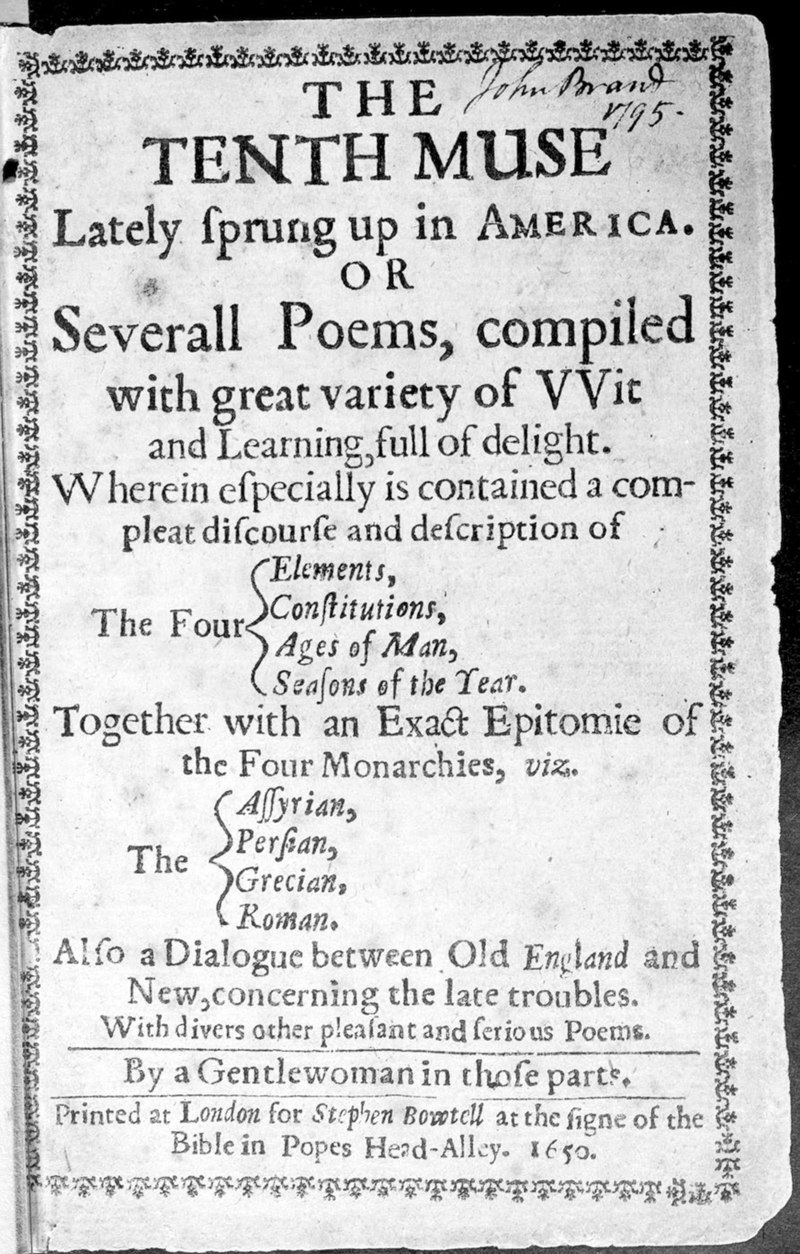
Still, Bradstreet kept writing poetry, most of which honored God and acknowledged the joys and pains of family life. Her poems circulated among family members, and Bradstreet’s brother-in-law arranged to have them published anonymously in London in 1650.

Want to know more?

Women’s History Month: Anne Hutchinson

In honor of Women’s History Month, I will present little known/under-appreciated women in American history. I’ll aim for one a day. We’ll see how long that lasts. It’s not that there aren’t enough women to write about. It’s that sometimes the days get away from me.

Anne Marbury Hutchinson was born and raised in England. She arrived in the Massachusetts Bay colony in 1634 and settled with her husband, William, and eleven of their children in Boston.

A devout Puritan, Hutchinson regularly attended church services, and she held religious discussion groups in her home to help other women in the community better understand John Cotton’s sermons. By 1636 those group meets had become so large and so popular that they attracted the notice of civil and religious authorities.

Hutchinson posed a couple of threats to Puritan Boston. She presided over meetings that gradually comprised both women and men, and presumed to teach men about the Bible and theology. She criticized Boston ministers for promoting salvation through good works rather than grace.

In 1637, the General Court called Hutchinson to appear and answer charges of disrupting the peace of the colony, being in league with a condemned group, and traducing or slandering local ministers. She was found guilty and sentenced to banishment. Next, Hutchinson’s church called her for an examination regarding her beliefs. The ministers declared her a liar and excommunicated her.

Hutchinson and a group of her followers, including William and the children, settled in Rhode Island in 1638, then moved on to New York. In 1643, Hutchinson and her remaining family members were killed in a Native American attack.

Want to know more?