At Least This Year We Eat

Whenever my husband and I come into a bit of money (quarter from the sidewalk, tax refund–that kind of thing), we always say, “At least this year we eat.” If you’re a Cheers fan, you’ll get the reference.

Cheers

So that was my remark yesterday when I opened an envelope from my agent and found the balance of the advance for my forthcoming book, Angels of the Underground. It was for more than 25 cents and it is probably more than any tax refund we’ve ever received, but so far I’ve found this–the money earning stuff–the least exciting part of being an author. (I have a day job, so I don’t rely on writing to pay the bills.)

Research and writing are exciting, but the big, big thrill is signing the publication contract. A close second is the first look at the book’s cover art. Of course, I certainly won’t be disappointed if the book earns way beyond its advance. But the smell of a freshly signed contract–that’s the smell of victory.

Lost in Revisionland

I spent the last week or so on manuscript revisions. All of them. The whole thing. By April 15, which was yesterday. While millions of other people were scrambling to meet a different deadline, I had my Angels deadline.

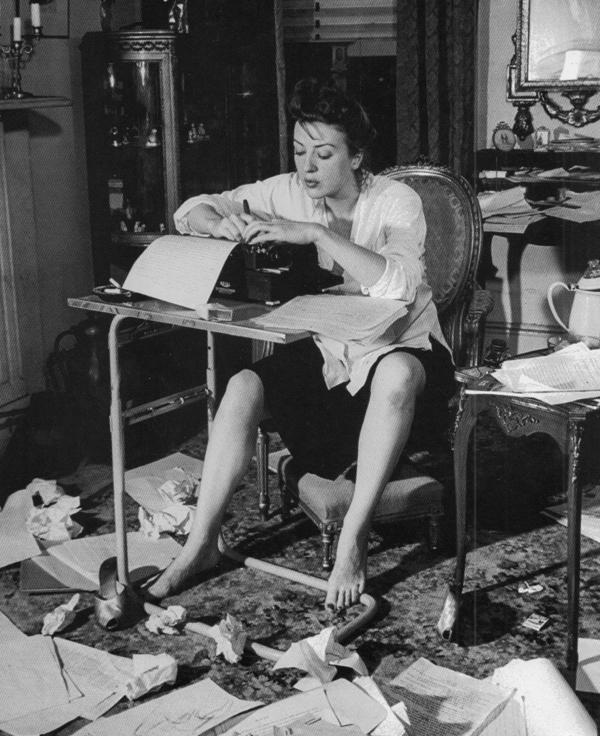
writer messy

So this is pretty much what my week looked like. I did very little besides focus on the 500+ page manuscript. There was some sleeping and I ate the quickest food I could prepare (cereal and sandwiches work for all sorts of meals) and I only did the dishes when the kitchen started to stink.

And I got it done. I didn’t think I could, but I did.

Now the book I planned on finishing some day is done. Well, the major work is done. Now comes all of the production things that have to be done to turn those manuscript pages into an actual book.

Stay tuned.

On Spring Break and Channeling Martha Gellhorn

I have just been on spring break and used the week to work on revisions for my book, Angels of the Underground. There has been a lot to do, especially at the beginning of the manuscript, where the reader has to be drawn into the lives of four very different American women. The one thing the women all had in common was that they left their home country and settled in the far off Philippine Islands. They each had different reasons for doing so, and each thought she had found her particular kind of paradise. That was all upended on December 8, 1941, when the Japanese attacked the Philippines.

Gellhorn Hemingway 1941.jpg

I was reminded of the journalist Martha Gellhorn (pictured here in 1941 with Chinese military personnel and her husband, Ernest Hemingway) who once observed that “War happens to people, one by one.” That’s how I’ve been thinking about the four women in my book. One by one, they each grappled with the reality of the Japanese attack and the subsequent occupation. They each decided to resist. Though it seemed like an easy decision, it was, of course, fraught with danger. One by one, they did what they thought was right to help bring about an Allied victory. And each one paid a price.

In honor of the running of the llamas in Sun City, Arizona, today, I revised.

llamas

Who can resist images like this? Look at those llamas, just wanting to be free. And off they went.

Today I needed to divert myself from a whole bunch of real world stuff, and I couldn’t take off running like the llamas. So I did my active fleeing into the revisions of my second chapter. For a few hours I got to write about four American women heading off to exciting new lives in the Philippine Islands. That was pretty fun.

A good day, for not being a llama.

So, how are those revisions coming along? A weekly wrap-up.

Well, I pretty much still feel like this:

But my goal was to rewrite the Introduction, which still hadn’t sufficiently answered the “so what?” question. My book centers on the activities of four American women caught in the Philippines during the Japanese occupation of World War II. For me, the “so what?” was pretty obvious, but I am not my readers. Now I think I have finally explained that this is a riveting story of wartime intrigue and resistance that reveals the far-reaching consequences of imperialism. So in the week ahead I will be revising Chapter One to explain how the United States became involved in the Philippines. Stay tuned.