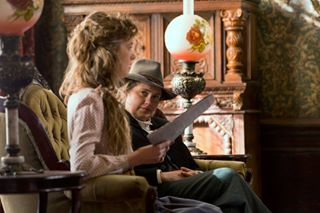
Halt and Catch Fire: A Smart Series

Four seasons, forty episodes. That’s all this fine series, helmed by Christopher Cantwell and Christopher C. Rogers, needed to tell its story about smart people and their dreams. That two of those smart people are women, makes Halt and Catch Fire a riveting chronicle of the lives of working women in the recent past.

Image result for halt and catch fire

The story stretches from the early 1980s into the 1990s, documenting the rise of the personal computing industry and providing a glimpse of what it was like to be a woman working in that field. Cameron Howe (played by Mackenzie Davis) is the brilliant programmer, lured away from college to help launch risky new projects. Donna Clark (played by Kerry Bishé) is a computer engineer bored with her job at Texas Instruments. She and her husband Gordon (Scoot McNairy), also an engineer, had tried and failed to build their own PC, but Gordon hasn’t given up. Joe MacMillan (Lee Pace) is the brash young entrepreneur who brings them all together. Four main characters: two male, two female.

The key to Halt and Catch Fire‘s success was the relationship between Cameron and Donna, two strong women intelligent in different ways. They accomplish great things individually; together they are like a supernova. The writers didn’t relegate them to supporting characters. Cameron and Donna had personal lives every bit as complicated as their professional lives. They weren’t on screen simply as love interests or to prop up the male leads.

The respect for the show’s female characters extended beyond Donna and Cameron. In the fourth season, Donna and Gordon’s daughter Haley (Susanna Skaggs) reveals her own computer genius, and she becomes an integral part of the plot. Even more stellar is Anna Chlumsky’s Dr. Katie Herman, a librarian with a Ph.D. hired by Gordon and Joe’s company, Comet, as its chief ontologist. Without her, Comet cannot succeed. (She eventually has an affair with Gordon, but that’s not her main purpose as a character.)

Image result for Dr. Katie Herman halt and catch fire

At its core, this is a brainy series. During the fourth season, Cameron finishes a new computer game, something unique and personal. She is bemused by the negative responses from beta testers who simply don’t get it. They want games with bright graphics and fast-moving parts that allow them to shoot and blow up things. Cameron has created a masterpiece for people who are challenged by thinking. She knows the audience she wants to reach. And so did the creators of Halt and Catch Fire.


When the Queen of the West Didn’t Meet the Queen of England

It could have been one of the most fascinating meetings of the post-World War II period– if the Queen of the West, the popular American singer and actor Dale Evans, had met the Queen of England. Given what they had in common (besides the Queen title), they would have had a lot to talk about. Elizabeth may wear a crown, but Dale always had the best hats.

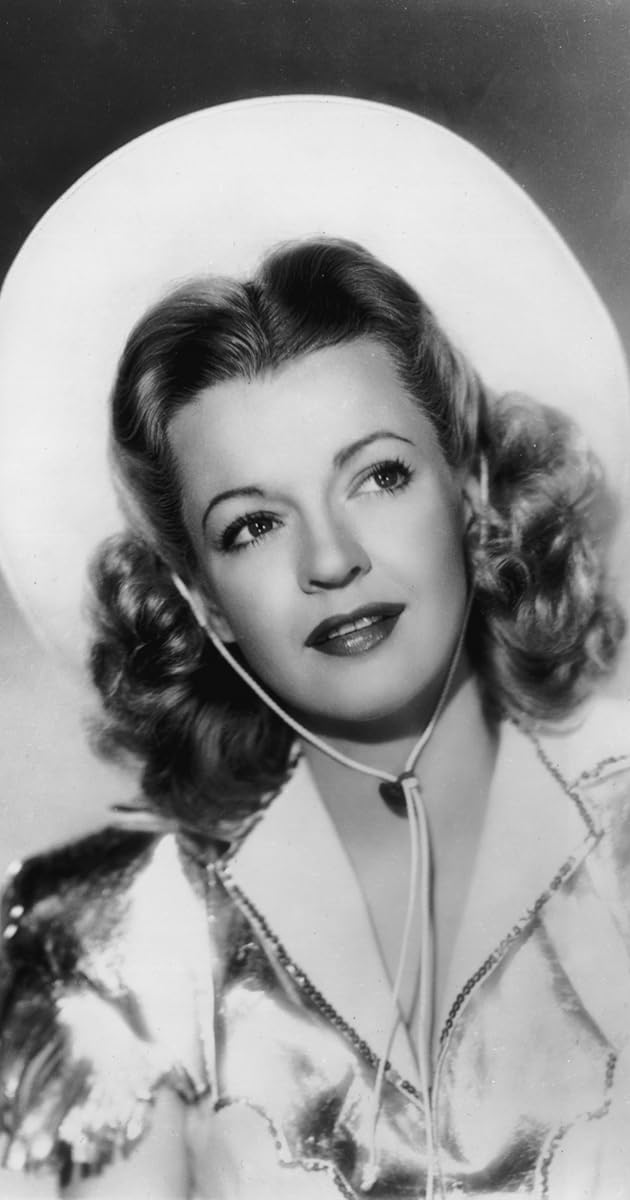
Image result for queen elizabeth 1954

Image result for dale evans 1950

Most of what I know about Queen Elizabeth II comes from the Netflix series The Crown. While I watch episodes, I search online to see how much is based in fact. For me, it’s a fun way to watch t.v. When season 2 debuted earlier this month, I was happy enough to continue the saga of Elizabeth II’s reign and increase my knowledge of modern British history. The first few episodes focus on The Marriage, still floundering because of Philip’s ongoing struggle with the fact that he’s not really the head of anything. (Elizabeth loves him and wants him to feel important, so sometimes he gets to wear really flashy clothes while she dresses like a suburban housewife.)

Image result for the crown season 2Newsweek photo

Episode 6, “Vergangenheit,” really caught my attention–enough that I watched it straight through without looking up a thing until it was over. The episode centers on Elizabeth’s attempt to reconcile her feelings about her uncle, the Duke of Windsor, whose abdication from the throne eventually made her queen. And being Queen, well, that’s what has been causing the problems with Philip. She wants to be a good wife and mother, but she also happens to have the best day job ever. How can she make it all work?

It’s 1955; the abdication is part of the past. But not the very long past–not for Elizabeth or other members of the royal family or the entire country.

Elizabeth considers herself a good Christian, though, which makes her wonder about forgiveness. It just so happens that a charismatic American preacher, Billy Graham, is touring England, so Elizabeth decides that a chat with him about faith is in order. Oh, and she finds him attractive, but of course not so much so that she’d consider doing anything untoward.
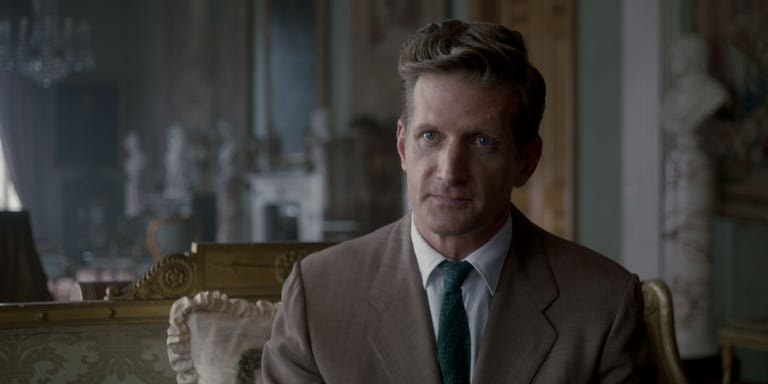
Image result for the crown season 2 billy graham

As Chris Gehrz points out in his Patheos article, the two did meet in real life when the Queen invited Graham to give a sermon in Windsor’s private chapel, after which he had an audience with her.

Faithful Christian or not, it would have been difficult for the Queen to have ignored Billy Graham’s popularity. The 1955 visit was his second to Great Britain. He had brought his “crusade” there the year before, and his London appearance attracted a crowd of millions.

Billy Graham in London BillyGraham.org

Prior to that trip, Graham had been unsure of his reception overseas. In the United States, his preaching had gone public only a few years earlier, in 1949 with the “Canvas Cathedral With the Steeple of Light” crusade in Los Angeles. Over eight weeks, 350,00 people crowded into a large tent to hear his message.

Image result for billy graham 1949 L.A. crusade ARDA

Part of Graham’s success in 1949 stemmed from his association with the Hollywood Christian Group, which included actors Jane Russell, Virginia Mayo, and Dale Evans. Most of what I know about Dale Evans comes from years of on-again, off-again researching and writing a book about her. In 1949, Dale had been married to Roy Rogers, the famous singing cowboy known as the King of the Cowboys, for almost two years. Dale already had a grown son from a previous marriage. Her union with Roy brought her three young step-children, and in 1950 they would have a daughter together. These big life changes prompted Dale to re-embrace the Christian faith she had sidelined on her road to stardom.

Billy Graham remained popular with the Hollywood Christian Group. As Dale recalled in the memoir Happy Trails, Graham had come to the Rogers-Evans home in the fall of 1953 to preside over a prayer meeting. He mentioned that he had been invited to bring his crusade to England, but he worried he wouldn’t attract much of an audience. Roy had a huge fan club there, so he said to Graham, “Why don’t we go over there ahead of you?  We’ll take Trigger and the whole show, do some performances to pave the way, then join you in London the first week you’re there.”

And they did. In February 1954, Dale Evans and Roy Rogers (with Trigger, too) toured Glasgow, Edinburgh, Birmingham, Liverpool, Belfast, and Dublin before moving on to London to work with Graham for the last eight days of his crusade. The couple attracted huge crowds wherever they went, and their performances always incorporated Christian music into their western-themed show. They also demonstrated their ongoing interest in children’s issues, dropping in at Mearnskirk Hospital in Glasgow to visit the young patients.

Dale Evans with patients and staff at Mearnskirk Hospital, 1954

Billy Graham didn’t need the Roy Rogers-Dale Evans warm-up act in 1955. But I wonder what would’ve happened if he did. Would the Queen of England have met the Queen of the West? Would they have discussed the importance of faith in their lives? The challenges of being well-known women balancing demanding jobs with equally demanding personal lives? The determination to do good on this Earth? It would’ve been a royally fascinating conversation.


The Unsurprising Disappointment of “Godless”

For a brief moment–actually for one minute, fifty-two seconds–I was excited about the Netflix series Godless. The trailer is a stunner.

A western town run by the women who lost their menfolk in a mining accident. Merritt Wever (from the twitchy Nurse Jackie) and Michelle Dockery (from the British show that everyone but me was so wild about) as complicated, headstrong women who are very handy with weapons. They need to be, because something even worse is about to happen to their town.


After watching the trailer, I couldn’t wait until the series dropped so I could find out what happened in that small mining town of La Belle.

Opening the first episode: men. Not a backstory of the husbands, fathers, and brothers who died in the accident, but the real focus of writer and director Scott Frank’s story–the ruthless, deeply flawed, yet somehow still relatable villain Frank Griffin (wonderfully acted by Jeff Daniels) being hunted down by good guy sheriff and grieving widower Bill McNue (wonderfully acted by Scoot McNairy).

Image result for godless netflix

Griffin is in a lather because a member of his posse, Roy Goode (Jack O’Connell, who delivers a fine acting job, too), has gone rogue by going good. Goode doesn’t want to be part of the outlaw gang anymore, but to Griffin it isn’t a gang. It’s family. He took Goode in when he was a little boy and raised him right to rob and kill. Griffin doesn’t want his family broken up, so he tracks down Goode, destroying everything and everyone who gets in his way. McNue tries to minimize the damage and bring Griffin to justice.

So that whole bit about women running their own town–it’s backdrop. It’s window dressing for the story Scott Frank wants to tell. And it’s a tired, tired story.

The deeply flawed bad guy with his own (twisted) version of family. That’s already been done in The Sopranos, Sons of Anarchy, and Mad Men.* And before that in The Godfather. A version of the good guy sheriff shows up in every western. Yes, McNue is dealing with losing his eyesight as well as grieving for his wife, but John Wayne’s character in The Shootist coped with terminal cancer.

Godless‘s most interesting characters–the women–are glossed over. Wever’s Mary Agnes, once happily married to a man, is now besotted by the town prostitute turned schoolteacher. Two fascinating characters right there; three if you add the German immigrant painter who ran away from her husband and who also spends a lot of time with the schoolteacher.

Image result for godless mary agnes and callie

The intriguing possibilities for Dockery’s Alice Fletcher–twice widowed, living on an isolated ranch with her Native American mother-in-law and her son–get reduced to the standard love interest. Guess where Roy Goode ends up after fleeing Griffin’s gang? Guess who Sheriff McNue secretly loves?

Image result for godless alice fletcher

In the end, I wasn’t surprised that I was disappointed in Godless. Movies and television are still dominated by men. They aren’t interested in telling women’s stories. Even when those stories are right in front of them.**

The unsurprising disappointment of Godless is one reason why more women writers, directors, and producers are needed for movies and television series. Maybe they would see the possibilities.

*Yes, I consider Don Draper a villain. More than anything, I would like to have that entire Mad Men series re-edited to highlight Joan’s and Peggy’s story lines. Now that would be something unique.

**I love westerns, and I’d be up for a second series of Godless if it really was about the women.


Reading History of the Hidden Corners

It’s that time of year for the deluge of “best” book lists.

Image result for piles of booksLitHub photo (2015)

Many of these lists separate fiction and nonfiction. (In a few weeks I’ll be posting my own fiction favorites here.) Smithsonian.com, however, compiles a list of history books! This year it includes a few of the “big men” biographies (Richard Nixon, Ulysses S. Grant, Muhammad Ali) that remain so popular with many readers. But is also includes several that illuminate hidden corners of history.

Marjorie Spruill’s Divided We Stand is about the 1977 National Women’s Conference in Houston that provoked a counter-conference organized by Phyllis Schlafly. Anyone interested in women’s rights issues should read this book.

Preview thumbnail for 'Divided We Stand: The Battle Over Women's Rights and Family Values That Polarized American Politics

In The Jersey Brothers, Sally Mott Freeman delves into her own family history to tell the story of the Pacific theater in World War II. While there are lots of books about World War II, I think the Pacific is still a neglected area.

Preview thumbnail for 'The Jersey Brothers: A Missing Naval Officer in the Pacific and His Family's Quest to Bring Him Home

And of course, Killers of the Flower Moon, David Grann’s gripping tale of the murder of Osage Indians in the 1920s is on many “best” lists, and deservedly so.

Preview thumbnail for 'Killers of the Flower Moon: The Osage Murders and the Birth of the FBI

If you’ve missed these 2017 books, take some time over the holidays to get caught up on your reading. (Hint: put them on your holiday gift wish list and/or buy them as gifts for the favorite people in your life.)


December 7, 1941

Gladys Slaughter Savary, an American woman living in Manila, the capital city of the Philippine Islands, had not even been to bed when Pearl Harbor was bombed. That Sunday night (Manila is on the other side of the International Dateline), she invited some friends to her Restaurant de Paris for dinner, a celebration of the promotion of a British naval officer she knew. After their meal, they headed over to the Jai Alai Club to watch a match–a “great weakness” of Gladys’s. Then they stopped at a nightclub before moving on to the Manila Hotel for drinks on the pavilion. Gladys and her friends concluded their evening at an all-night gambling den where they played roulette until dawn. When they finally dropped her at home, the newly-promoted British admiral said, “Kids, that’s the last fun we’ll have together for a long, long time.”

Image result for Jai Alai club manila 1930s Jai Alai Club, Manila

It was too late–or too early–for Gladys to go to sleep. As it was, she would have just enough time to shower, change, and eat a bit of breakfast before venturing out to the market to purchase the day’s food for the restaurant. When her servant Nick brought her morning coffee and the newspaper, he said, “Honolulu’s bombed. What’ll we do now?”

Image result for honolulu dec. 7, 1941KCBX-FM photo

Gladys’s first response was as a businesswoman. The restaurant would be busy, she predicted, because people were always hungry. She told Nick they would do their shopping as usual. “War or no war, we have to eat,” Gladys wrote in her diary. “I bought everything in large quantities. Nobody can know what’ll happen.”

During the ensuing days, as bombs fell on Manila and utilities stuttered on and off, Gladys worried about how long she would be able to keep the Restaurant de Paris going. It also did not take her long to realize that other people needed help, and the restaurant came in handy for meeting some of those needs. Gladys fed the American and Filipino soldiers who patrolled her neighborhood. “I haven’t time to do canteen work or roll bandages,” she jotted in her diary on December 16th, “so I have a private canteen for the lads. When they go on duty they get coffee and pastry here, and when they finish duty I hand them out something a bit stronger. Both seem to be appreciated, bless them.”

Image result for manila dec. 8, 1941

The United States was at war with Japan. Gladys Savary and thousands of other Americans were trapped in the Philippines. It was true, no one could know what would happen. For more than three years, Gladys struggled to survive in enemy-occupied territory, risking her own safety and freedom to subvert the Japanese and help those in need.

The rest of her story can be found in Angels of the Underground: The American Women who Resisted the Japanese in the Philippines in World War II.