I’m Working Here

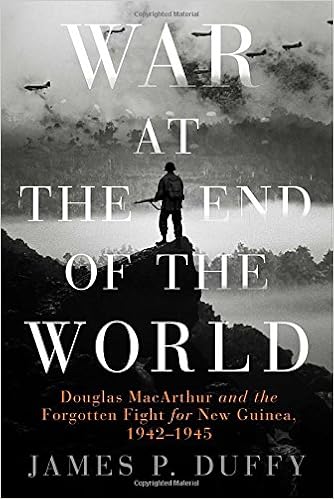
This summer I had the good fortune to meet author James Duffy. Most recently, he wrote this fascinating book about the Pacific theater in World War II:

He’s written more books than I ever will, and he’s done so while working a full-time job. James frequently turned down speaking engagements because he didn’t have the time. He was always working, whether at his day job or nights and weekends at his writing.

Now, whenever I hear the phrase “I’m working here,” I think about the life of a writer. We’re always working. The day job pays the bills. The writing, well, it both keeps us sane and drives us crazy.

Image result for writer at work sign

Right now, it’s keeping me sane. I’m doing what I think of as preliminary writing: working on a book proposal. Still, it’s writing and it’s history. It keeps my mind off the great swirl of contemporary politics. As a historian, I’m more comfortable dealing with events that happened in the past. For now, I keep the radio and the television turned off and keep my eyes and fingertips on the keyboard. I’m working here.

Image result for historian clipart


Progress Update: The Book Proposal

Eight weeks into the semester and I’m up to my…eyeballs in grading. The dining room table is groaning under the weight of various piles of exams and papers. It’s the most visual reminder of how much time and effort goes into my day job.

Image result for stacks of bluebook exams

Then there’s the whole trying-to-be-a-writer thing. I’ve been working on a proposal for a new book, and it’s been kind of bumpy. So it may be longer than I originally thought before I have any news to share about the topic of that book.

But I finished a draft of the proposal, without sample chapters, and sent it off to my agent for her thoughts. I know there will be more work to do on it, but I was at the point where I needed feedback. So now I’m waiting.

And while I wait, I’ll be grading exams.

Which will make me happier to get back to writing. Whenever that will be.

Image result for painting of a woman writing

An Interview with Historian Ann Little

I have dubbed today, September 26, as Esther Eve. It marks the night before Yale University Press’s official publication of this marvelous book.

Image result

Its author, Ann Little, is an associate professor of history at Colorado State University. I first became acquainted with her through her popular academic blog, Historiann. When I finally got around to setting up a Twitter account, she was one of the first people I followed. She’s an accomplished historian, and her new book is, simply, captivating. I’m delighted that Ann agreed to answer some questions about her writing process and about Esther Wheelwright.

Q. How did you first encounter Esther Wheelwright and what made you decide she would be a good subject for a biography?

A. I learned about her in the course of researching my first book, Abraham in Arms:  War and Gender in Colonial New England, which explored in some chapters the experiences of Anglo-American women and child captives in borderlands warfare. Esther’s life stood out because she became a nun, not a French Canadian wife and mother. That, and the fact that she was the Ursulines’ first and still the only foreign-born mother superior meant that I just had to learn more about her.

Her life was extraordinary because she lived in all three major cultures in the northeastern borderlands: Anglo-American, Native American, and French Canadian. Through her life and times, we can learn about all of the girls and women she lived with.

Q. Did you confront any challenges in researching Wheelwright’s life? How did you deal with them?

A. This was an impossible book to write, because Esther never wrote a captivity narrative describing her experiences. For all that, however, her life was better documented than most middling North American women because she entered a convent, and the convent recorded her progress through the ranks there from student to novice to choir nun. Convent records also recorded a few brief versions of her biography, but I have almost nothing in her own hand about her own life and family ties.

I was told by a senior male scholar that writing this book was “daft”—both my ideas for it and the fact I was spending time pursuing them. I was lectured by a literary agent that my introduction was just out-of-date feminist cant. Feedback like this only made me more determined to write this book and to write it on my own terms. The fact of the matter is that it’s still controversial to insist that women’s lives are important and of historical significance.

Q. What was the most intriguing piece of information you found about Wheelwright? Did it confirm something you already knew or suspected? Did it cause you to see her in a new light?

A. I’m probably most excited about my explorations of eighteenth-century material culture that Esther would have experienced and contributed to as a skilled embroiderer in the Ursuline workshop.

Material culture was critical in helping me to fill in the (major!) gaps. I used the lives of the girls and women around her whose lives were sometimes better documented to make educated guesses as to what Esther was experiencing at any given time. I also thought about her immediate sensory environment:  how did the world look, smell, sound, feel, and taste to a seven year-old girl in an Anglo-American or a Wabanaki village? To a twelve year-old student in early Québec? To an elderly nun coping with the British invasion and military occupation of her convent? What did they eat and wear, and even how did girls and women deal with menstruation in these different cultures? I loved immersing myself in these details, and I hope my readers find them at least as interesting as I did.

Q. What was it like to be a nun in the 18th century?

A. The important thing to remember is that nuns in the early modern period were no longer mystics who merely prayed and sought to have ecstatic visions. These nuns, especially those who came to the New World, were nuns with jobs.

Ursuline choir nuns were the higher-status nuns who taught and prayed the hours as well as performed all of the administrative labor or running an order with 45-60 nuns and dozens of boarding students at any given time, in addition to the day school. (The Augustinian nuns in other convents in Québec offered nursing care.) Lay nuns, also called converse sisters, performed the continuous and exhausting domestic labor required to provide all of these girls and women with three meals a day, clean clothing as well as bed and table linens, and tidy work spaces and living quarters.

In short, convents were a means by which French Canadian women could serve God as well as the French imperial state. They couldn’t be priests, and they couldn’t join the Troupes de la Marine or serve as colonial officials like their fathers and brothers did, but they could evangelize within their convent and serve the crown.

Q. Are there any ways in which this book project contributed to your skills as a writer?

A. At the risk of making necessity a virtue, not having many traditional historical sources at my disposal forced me to be creatively speculative. Readers will have to judge whether or not it worked, but I thought Esther’s story was so exciting and important that Americans and Canadians alike need to know about her life and to think about its implications.

We in the U.S. and in Canada have enjoyed the world’s longest and most lightly policed international border for more than 200 years now. We need to remember that it wasn’t always that way, and that our peaceful border is not the norm in the world today.

Q. Is there anything I should have asked but didn’t?

A. You didn’t ask if Esther was really pregnant at age 13 in the Ursuline convent as a student, as some in New England claimed! But you and your readers will just have to read the book to find out—


Intrigued? You can order your own copy of Ann’s book by clicking here. And when you’re finished reading, make sure to leave a review on Amazon and/or any of your favorite online sites. A review, no matter how brief, will boost the profile of this wonderful book.


More on the Writing Life of a Historian

For historians who research, write, and publish, the entire process can take years. First you think of a topic. Then you poke around to find out what’s been done and what’s still left to do. You figure out what you can bring to it that will be fresh and interesting and that will matter.

Image result for thinking person painting

Then you research and you start writing. Somewhere along the way you start talking to people about what you’re working on. You get advice (some good, some not so much), you get encouragement (some enthusiastic, some not so much).

You keep writing. Then you ask people you know and trust for feedback. You rethink, you revise.

You keep writing. Then you have a finished manuscript and it’s time to find a publisher.

I love success stories. My current favorite is Megan Kate Nelson’s. You should read her wonderful article about how she secured her book contract. And not to take any drama away from her story, there was bidding involved. Bidding! That’s one of the things that puts the cherry on the top of the years-long effort to write a book–more than one publisher wants the book and they are willing to pay a steep price to get it.

Image result for people bidding at an auction painting

So, with eyes on the prize, I continue to work on my book proposal.


I’ve Been on Television

All sorts of interesting things can happen once you’ve published a book. As an academic historian, I’m used to giving classrooms lectures and presenting research papers at scholarly conferences. The lectures usually involve large rooms of a mostly captive audience. The research presentations usually small rooms populated by other scholars interested in the same historical topic I am.

Image result for 1950s college classroom

After I published Angels of the Underground, I was invited to give a talk for a World War II symposium at the MacArthur Memorial. While most of the people who attended didn’t know much about those angels, they did know something about the war in the Pacific theater. It was a very engaging day, and I got to talk to a lot of interesting people.

The entire symposium was fascinating, and it was filmed. There was a C-SPAN camera rolling in the back of the auditorium while I gave my talk. I tried not to stare at it. I did pretty good with forgetting but not forgetting it was there.

C-SPAN3 American History TV aired the talk last night. You can watch it here:

https://www.c-span.org/video/?411781-4/us-women-spies-philippines-world-war-ii

So now I’ve been on t.v., and the angels have gained a wider audience.