My 2024 Reading, Part One: Fiction

Welcome to my annual reading round-up, in which I share my favorite books, both fiction (in this post) and nonfiction (in the next post). I prefer to stay away from the term “best” because of how subjective that is. These are the books I enjoyed in 2024, though a few may have been published earlier. Sometimes I don’t get around quickly to ones I want to read because of lengthy hold lists at the public library. Sometimes I’m interested in a book and know I’m not in the right mood to read it. So, reasons.
According to Goodreads, where I keep track of such things, I read five more books in 2024 than I did in 2023—from 46 to 51. (Yet for some reason it seems like I did not read much. I’m not sure why—it may have to do with the time I have been spending on my new book project.)

Of the novels I read in 2024, I marked five with five stars. Because there are so few, I find it impossible to rank them. Instead, these are listed in roughly the chronological order I read them. (Not surprisingly, they are all historical.)

1. The Storm We Made by Vanessa Chan. Set in World War II Malaya, this riveting historical drama depicts the heartbreaking choices people make during an enemy occupation. Cecily Alcantara, a devoted wife and mother, finds herself in increasingly impossible situations.

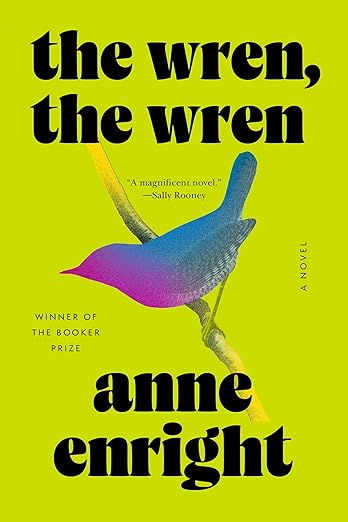
2. The Wren, the Wren by Anne Enright. Nell McDaragh, granddaughter of a famous Irish poet, and her mother Carmel, the poet’s daughter, both struggle with his legacy. Sensitive and beautifully written.

3. The Vaster Wilds by Lauren Groff. This novel is utterly and admirably void of any romancing of the early years of the English colonization of North America. Propelled by a pervasive sense of dread and entranced by the brutal beauty of the story, I could not stop reading.

4. The Road from Belhaven by Margot Livesey. Character and setting are pitch perfect in this historical drama set in rural Scotland during the nineteenth century. A young woman can see some glimpses of the future but has to figure out what to make of the information.

5. Whale Fall by Elizabeth O’Connor. Just before the beginning of World War II, a young woman living on a small Welsh island is unexpectedly confronted with the opportunity to change the anticipated course of her future. Delicate and lovely.

Additional recommendations (very close to five stars):

Two of my favorite mystery writers published new additions to their long-running series. Jacqueline Winspear drew her excellent Maisie Dobbs series to a close with The Comfort of Ghosts, which provided a satisfying ending. With Pay Dirt, Sara Paretsky delivered another powerful installment of her V.I. Warshawski investigations.

Alice McDermott’s Absolution depicts U.S. involvement in Vietnam in the 1960s from the perspective of white American women living there with their husbands. Very thought-provoking.

The God of the Woods by Liz Moore is a well-crafted mystery that made me glad I never went away to summer camp.

And the biggest surprise of my 2024 reading was Elizabeth Crook’s The Madstone, which I pulled off the library’s Westerns shelf on a whim and got helplessly drawn into the story.

Up next: My favorite nonfiction books of 2024.

My 2023 Reading, Part One: Fiction

In 2023, I read at least 46 books. As in previous years, I can’t provide an exact number. Sometimes I forget to add a book to Goodreads, and I usually don’t count the books I read for Publishers Weekly reviewing, a gig I finally ended in the fall after ten years.And I normally don’t include books I read as background material for my own writing projects. So, about 46 for 2023. Not bad. Not great.

In terms of quality over quantity, though, well, even that seemed to fall a bit short. I rarely deliver a tidy top ten list—usually going a bit over that number because of the many books I loved. For the fiction I read in 2023 (which included books published in other years), I gave five stars to eight novels. But I liked many others without feeling wowed by them. This is totally subjective, of course.

Of those eight five-starred novels that I read in 2023, I’ve already identified three for www.shepherd.com , which I posted about on January 1, 2024.

These represent the kind of novel I’m most drawn to: historical fiction written by women with plots heavily centered on women. I loved the expansiveness of Quinn’s story, which ranges over the two world wars of the twentieth century. (A t.v. series is purportedly in the works. Yay!) I loved how Jiles and Moustakis contained their poetic narratives in a briefer time frame. All three authors excelled at both character and place. I still think about these books often.

I consider Paulette Jiles’s novel an example of a new style of Western, and I would put Lucky Red by Claudia Cravens in the same category. It’s a delectable romp about a plucky teenaged orphan, Bridget, who must support herself in Dodge City. Prostitutes and gunslingers populate this entertaining, thrillerish, action-packed coming out story.

Catherine Lacey’s Biography of X is a compelling mash-up of alternative history and love story, with the widowed C.M. Lucca gathering information about her deceased wife, an artist known as X, to write a “true” biography of her life. A stunning riff on how we create ourselves and how much we can ever really know another person.

Leila Mottley’s debut, Nightcrawling, was longlisted for the 2022 Booker Prize and was an Oprah Book Club selection. It features a teenaged main character, Kiara, who turns to sex work to support herself, her brother, and an abandoned neighbor boy in Oakland, California. It was a tough story to read but beautifully done.

The same can be said of Brotherless Night by V.V. Ganeshanathan, set during Sri Lanka’s civil war. As Sashi studies to become a doctor, her family unravels, and she loses her four brothers in different ways. It’s a moving meditation on what it means to be a patriot and/or a terrorist during times of great political upheaval.

I was very late to Amor Towles’s debut, Rules of Civility. I’d really liked A Gentleman in Moscow, so when I found a used copy of his first novel, I decided to give it a try. It takes place in the Depression-era United States, following a young woman named Katey as she struggles to carve out a career and develop a relationship with the enigmatic Tinker Grey, who has links to the wealthy and powerful of New York City. It’s a fascinating story that surprised me in several places.

In addition to these eight, there were seven others that I enjoyed reading in 2023. Most centered on families. For some reason I’d left off reading Anne Tyler, so it was nice to return to her with French Braid, a solid example of her signature quirky family drama. Tom Lake by Ann Patchett is a nicely structured path-not-taken story with a lot of heart. Celeste Ng’s Our Missing Hearts is a chilling parent-and-child tale set in an alternate (but scarily plausible) United States. Day by Michael Cunningham is a heart-pulling piece about the affects wrought by the Covid pandemic. And Demon Copperhead, Barbara Kingsolver’s updated, reimagining of Charles Dickens’s David Copperfield, is a sad—and at times grim—story of a young boy’s search for family.

Rebecca Makkai’s sophisticated mystery I Have Some Questions for You takes place at a boarding high school. Bodie Kane, a former student, has returned to teach a short winter session, and in her spare time digs into the decades-old murder of her roommate there.

The only historical of the bunch is The Literary Undoing of Victoria Swann by Virginia Pye. (I posted a review of it in 2023.) I was especially fond of the titular character, a talented Gilded Age writer determined to control her career.

And finally, I read Anna Karenina by Leo Tolstoy. I would describe it as a plus-one to the seven enjoyable books. It’s one of those novels that I always thought I should read, and last year the nonfiction author Laurie Gwen Shapiro, organized an online book discussion of it so I decided to join in. I have to admit that it took some dogged dedication to get through the novel. It has a lot of plot. There are dozens of characters whose names spawn nicknames. There are big political and philosophical discussions. It is a big, big book.

Next up is Part Two: Nonfiction

Historical Novel Review: The Literary Undoing of Victoria Swann by Virginia Pye

I was fortunate to receive an advanced copy via NetGalley of Virginia Pye’s new novel, which will be out from Regal House in October. I have followed Virginia on social media for several years now, and I really enjoyed her other two historicals, Dreams of the Red Phoenix and River of Dust, novels that feature American missionaries in China.

The Literary Undoing of Victoria Swann is quite different yet equally satisfying and rich in historical context. Victoria Swann, who lives in Boston during the Gilded Age, is the author of a series of popular novels that feature adventurous heroines in exotic places. Her husband and her editor both keep a close eye on her career, always encouraging her to write more.

But Victoria grows increasingly unhappy with the stories they push her to write. She longs to produce works of literary value, stories that reflect the ways in which women really experience life. After completing the first such manuscript, her editor puts it away in a drawer, unwilling to give it even a cursory read. Her husband rails against her lack of business sense, and their marriage begins to unravel.

When Victoria is assigned a new editor at the publishing house, she sees a chance to push forward with her literary liberation. What follows is a unique kind of adventure story of how a determined woman takes control of her life in a time (and place) when almost everything works against her.

Two things I especially liked about this novel: the fine characterization of Victoria Swann and the ways in which Virginia Pye’s narrative gently echoes Gilded Age women writers. If she is a new-to-you author, I would encourage you to read any of her already-published books while you await the release of The Literary Undoing of Victoria Swann.

You can pre-order a copy of the book here: https://regal-house-publishing.mybigcommerce.com/the-literary-undoing-of-victoria-swann/

Reading Recommendations for Women’s History Month

If you want to celebrate Women’s History Month by reading more books by and about women, now is a good time to follow two of my favorite blogs.

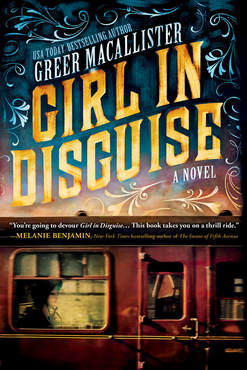
Novelist Greer Macallister, author of the delicious Girl in Disguise , is running a #read99women series on her blog that stretches before and after this month. You’ll find all sorts of great book ideas there.

Picture

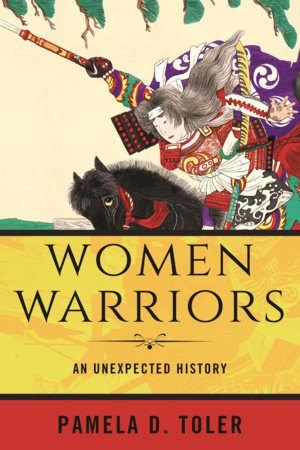
Historian and writer Pamela Toler has a month-long “Three Questions” event with a variety of women writers. (I happen to be featured today.) Pamela’s latest book, Women Warriors, is just out in paperback.

Women Warriors by Pamela D. Toler

And next week, I’ll be starting my own blog event, to pave the way for the launch of my next book, Dr. Mary Walker’s Civil War. Stay tuned!


Women’s History Month New Book Recommendations

For those of you interested in women’s history in book form, I have four recommendations of new releases, two nonfiction and two novels.

First, the nonfiction.

I’ve been talking about this book for a while now, so it’s probably no surprise that I’m leading with Pamela Toler’s Women Warriors: An Unexpected History. It’s smart and funny and very much worth your time.

The other, released today, is She the People by Jen Deaderick. It’s an illustrated history of the women’s rights movement, and it, too, is very smart.

Now the novels.

Also released today is Greer Macallister’s Woman 99, described as a historical thriller, about a woman determined to rescue her sister from an asylum.

Finally, for anyone interested in women’s rights history, there’s Finding Dorothy by Elizabeth Letts. The story focuses on Maud Gage Baum, who married the man who would write The Wizard of Oz, and whose mother was the famous women’s rights activist Matilda Gage.

Next up, the life of an African American artist.