Lots of things happen during revisions, including moments when you feel like doing a gentle head-bang on the desk because you can’t believe you almost overlooked something. That’s also when you realize this is exactly why revisions are essential.
They were right there in the scans from the archives. Two brief letters from Elisabeth Marbury, one to Jane Grant, one To Whom It May Concern, both from the summer of 1918, both a part of Jane’s quest to get an overseas posting.
Jane volunteered for the Publicity Bureau of the Mayor’s Committee of Women on National Defense (MCWND) sometime in 1918. Marbury, who officially headed the bureau, was a powerhouse in New York City theater circles, so it’s also possible that Jane already knew her or at least had known of her through her job at the New York Times.
Elisabeth “Bessy” Marbury was born in 1856, the daughter of a prominent New York City lawyer. A former debutante, she drew from her family’s wealth and connections to set herself up in business to promote and manage actors and playwrights. Marbury met Elsie de Wolfe, an aspiring actor about ten years her junior, in the 1880s. The couple lived together for forty years while Marbury grew her company, opening offices in Paris, London, Berlin, and Madrid, and de Wolfe launched herself as an interior decorator.
Together they bought a home in Versailles, France, where they spent part of every year until World War I made that impossible. But between 1914 and 1916, Marbury coordinated relief efforts for wounded French soldiers while she was still in the country. Queen Elizabeth of Belgium presented Marbury with a medal in honor of her war service in 1919.
(garden at Villa Trianon, Versailles, France)
Once back in the United States, Marbury worked with at least one other wartime organization in addition to the MCWND. Her business also remained open and thriving. Marbury utilized her theater contacts to put on programs to help fund the war effort. In the summer of 1918, Jane was “conducting the Publicity Bureau” for her on the MCWND and doing such a good job that Marbury both hated to lose her and willingly wrote a letter of recommendation to help her get overseas.
Jane didn’t forget Marbury. During the 1920s, when Jane was involved in two other quite different endeavors, she looped Marbury into those as well, one successfully, the other not. But by then, Jane was practiced in establishing connections with influential people and making good use of them.
What I’m Reading
Gayle Feldman’s Nothing Random: Bennett Cerf and the Publishing House He Built is very absorbing. It’s a huge book, and I admire all the careful research Feldman conducted and her skillful crafting of the narrative.
What I’m Watching
Two very quiet, excellent movies on Prime: Sam and Kate, starring Sissy Spacek and Dustin Hoffman, and The Summer Book, set on a small Finnish island, starring Glenn Close as the grandmother. No murders, nothing blows up. Just relationships.
More episodes of The Forsytes (PBS). Still very unlike the last series and clearly setting up a second season.
Only two episodes left of the Netflix series, Detective Hole.
Finished Mudtown (BritBox). The ending was a bit unexpected, and I still have some questions.
Animal Control (Netflix), an amusing workplace comedy, continues as filler watching.
What Else Is Happening
Voting happened on Tuesday. There were some local races plus the big statewide Supreme Court one that was a decisive liberal victory.
I listened to Megan Kate Nelson’s second appearance on the excellent Drafting the Past podcast, created and hosted by Kate Carpenter. If you like to read good history books, this is the place to hear authors talk about how they research and write them.
I also watched historian Pamel Toler on WW2TV on YouTube. Host Paul Woodadge designs great programs covering so many aspects of the war in addition to military history. It’s really worth a watch.
The usual two games of bowling served as a sharp reminder of the consequences of missing last week. A two-word summation of my experience this week: gutter balls.
More exciting was our first visit of the spring season to the garden center. We returned to Southfork with two pear trees and a mulberry tree, all of which the foreman planted in the front acreage. So far, the deer haven’t eaten them. They’ve also left alone the other tender green shoots that have been popping up in the garden beds. So far.
Have a good week. Hope you stop by for the next installment.
Welcome to the first in a weekly (I hope) series that charts the progress of my current writing project, Invisible Me: Jane Grant and The New Yorker.
Since I have no deadline for finishing this book, the pace of progress is up to me. I’ve set goals throughout and meeting them has been greatly aided by three very supportive online writing communities. I envision this weekly series as adding another layer of accountability and cultivating another community (all of you).
I’ve been working on Invisible Me for a few years. Writing nonfiction history requires lots of time-consuming research and lots of writing, through multiple drafts. For this project, I’ve already made two major research trips, tracked down digitized online collections, and read dozens of published sources. Then I wrote an extremely bloated and somewhat blurry first draft.
After I finished, I wrote a book proposal so I could query literary agents for representation. The proposal, basically a sales pitch for the book, forced me to focus on the contours of the story, to make sure that Jane comes across as a multi-faceted person with plans and dreams, failures and successes, who has historical importance. During this past week, the last queries went out, and now I’m waiting to hear back from the agents. Or not. Many agents now don’t have the time to even send a rejection email, so if I don’t receive a response in a few weeks or a few months, it means they’ve passed. Or not. It’s fair game to nudge them once or twice before giving up.
While in agent-waiting mode, I’ll read through those first draft chapters to assess the scope of writing work ahead, to start a second, bloat-free draft. I may set an initial goal of completing one chapter per month.
Writing occupies part, but certainly not all, of my day. It’s the work part of my day. Luckily, since I’ve retired from academia, I set my own hours. I also read a lot and watch shows on various streaming services.
What I’m Reading
I recently finished a couple of nonfiction books about spies: The Art Spy: The Extraordinary Untold Tale of WWII Resistance Hero Rose Valland by Michelle Young and Family of Spies: A World War II Story of Nazi Espionage, Betrayal, and the Secret History Behind Pearl Harbor by Christine Kuehn. Both are good, and Kuehn’s book especially packs a lot of yikes moments.
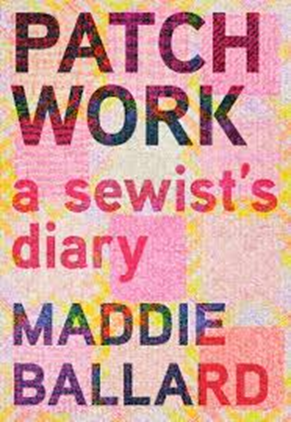
In two blissful sittings I read Maddie Ballard’s compact memoir, Patchwork: A Sewist’s Diary. I recently returned to sewing after a thirty-some year hiatus, and I loved how Ballard wrote about garment construction and identity and relationships. It’s beautiful.
And now I’m a few chapters into Palace of Deception: Museum Men and the Rise of Scientific Racism by Darrin Lunde, not at all the usual kind of book I pick up. But I’m a big fan of museums, and he presents an interesting story.
On the fiction front, I recently read Ann Cleeve’s The Killing Stone, a new Jimmy Perez story. I’m a big fan of Shetland (see below) and was happy that Cleeve brought back one of my favorite detectives, even if he’s not on Shetland anymore. I absolutely loved Sacrament, Susan Straight’s marvelous novel about nurses at a California hospital during Covid. And I continue reading (or sometimes plodding through) Vanity Fair, the 19th century classic by William Makepeace Thackeray. I’m sticking with it for an online book discussion next month. In previous years, this group has read Anna Karenina and Middlemarch, so there’s a definite vibe to these selections.
What I’m Watching
BritBox recently debuted Season 10 of Shetland, and I’m eagerly keeping up with all the episodes. Perez has moved on, but his replacement, Ruth Calder, has great chemistry with Alison “Tosh” McIntosh. I’m already looking forward to Season 11.
On PBS, there’s a new season of All Creatures Great and Small and a new mystery series called Bookish. And Paramount+ launched Starfleet Academy, the latest addition to the Star Trek universe, and it’s okay so far.
I keep meaning to watch the final episode of Stranger Things on Netflix but haven’t been in the right mood yet. I find Young Sheldon and Mom (neither of which I watched on network t.v.) reliably good, and I revisit The West Wing and The Closer from time to time.
What Else I’m Doing
Daily exercising (a portable elliptical machine is essential during winter), sewing (very sporadically lately), thrifting (one of my favorite pastimes that sometimes is related to what I’m sewing), bowling (once a week as extra exercise that’s also a fun outing).
That’s it for now. Thanks for reading. Hope you check back next week to see what kind of progress I’ve made.
Way back in the spring of this year I traveled to Washington, D.C. It was a multi-purpose trip. I wanted to attend the annual conference of the Biographers International Organization (BIO). I have been a member for several years and have met, mostly online, many wonderful and talented writers. This would be a chance to see some of them in person and to learn new things about writing biography.
And while in D.C., I could do some research at the Library of Congress in two collections that I thought might have some useful information about Jane Grant: the papers of author Marcia Davenport and the records of the Writers’ War Board (WWB).
The third reason was just as important: sightseeing. Charles and I hadn’t been to D.C. in a very long time and it’s one of our favorite cities. I hesitated a bit because of the presence of the current administration but then worried that because of the current administration, the things we enjoy seeing might not be accessible for much longer. (I was right to be concerned. The recent government shutdown caused the Smithsonian to close its doors.) So off we went.
It was a marvelous trip. We visited many of the Smithsonian museums and various monuments, we ate at very good restaurants—our favorite was probably Immigrant Food at the White House on Pennsylvania Avenue. The BIO conference was illuminating, and I enjoyed meeting other biographers. I hope to attend another soon, especially when it’s back in its usual New York City location, because then I can add some more Jane Grant research to my itinerary.
(Immigrant Food at the White House, 1701 Pennsylvania Ave. NW, via Tripadvisor)
About the second reason for the D.C. trip: archival research. I ended up not needing all the time for it that I blocked off. On the one hand—yay! More time for museums. On the other—rats! Nothing new about Jane. I knew it was a gamble going in, but a historian always hopes to get her eyes on something stunning. Or at least interesting. Mostly, though, the visit to the Library of Congress served as a sharp reminder of archival absences, what gets saved and preserved and what gets, for one reason or another, tossed.
(Library of Congress, Main Entrance of the Thomas Jefferson building, Billy Wilson, Flickr, 2022, NPS.gov)
During World War II, Jane served as the editor of the WWB’s newsletter. The board was a volunteer organization that helped the government produce well-written propaganda in support of the war effort by matching writers with issues the government and military wanted to highlight. The WWB’s records provided a lot of information on how this worked, but nothing about Jane’s role that I didn’t already know from the documents she saved and are with her papers at the University of Oregon.
I knew from the collection description of Marcia Davenport’s papers that they focused on her writing career—that there would be a lot about her public life and maybe nothing about her private life. The second part proved true. Since she and Jane were friends for many years, I’d hoped that some of their personal correspondence might have sneaked in. But Jane is as absent in the collection as she is in Marcia’s 1967 memoir Too Strong for Fantasy. (To be fair, Marcia does not appear in Jane’s memoir, either. But Marcia’s book covers the time period during which their friendship was the most active, and Jane’s does not.)
Jane first knew Marcia Davenport as Marcia Clarke. Before that, she was Abigail Marcia Glick, born in New York City in 1903 to Reba Feinsohn Glick and Bernard Glick, who worked in insurance. The Romanian-born Reba, twelve years younger than her husband, began formal singing lessons as an adult, taking her young daughter with her to Europe for her summer studies. Within a few years Reba was performing at the Metropolitan Opera under her stage name, Alma Gluck. Marcia’s parents divorced in 1911, and she started using the name Gluck instead of Glick, so throughout her life she was known, at different times, as Glick, Gluck, Clarke, and finally Davenport. Three years after the divorce, Alma Gluck married Ephrem Zimbalist, a concert violinist. (Alma then gave birth to Marcia’s half-brother, Ephrem Zimbalist, Jr., who went on to become an actor, probably most known as the lead in the 1960s television show The F.B.I., and the father of Stephanie Zimbalist, who in the 1980s co-starred in the marvelous Remington Steele with Pierce Brosnan.)
(Alma Gluck and daughter Marcia, c. 1915, Library of Congress)
Growing up, Marcia was surrounded by classical music and classical musicians. She had also become, by her own admission, a “spoilt brat.” Her mother sent her to live with the Earl Barnes family, friends of friends, in Philadelphia where she attended a Quaker day school. From there, Marcia enrolled at Wellesley College in 1921 but failed to graduate. During the summer of 1922, while taking some courses at the University of Grenoble in France, she met Frank Delmas Clarke, who was from New Orleans and a student at Yale University’s Sheffield Scientific School in New Haven, Connecticut.
They fell in love. Both returned to their respective colleges in the fall but hated being apart. Marcia, who had not done well during her freshman year, knew she was in danger of flunking out. Clarke was not happy with his program, so they decided to get engaged. Clarke dropped out of school, and a relative secured a position for him in the coal business in Pittsburgh. Marcia and Clarke married on April 22, 1923, in Port Chester, New York, before moving to the Steel City.
The next year, Marcia gave birth to a daughter. Clarke relocated the family to Philadelphia, where he had taken a new job, then walked out on them after a few weeks. Suddenly a single mother, Marcia scrambled to land a job as a copywriter for a local retail store. She enjoyed the work and thrived on it, appreciating the independence it afforded her. In 1927, she returned to New York City to pursue a job as a writer.
Vanity Fair editor and friend of the family Frank Crowninshield arranged an introduction to John Hanrahan, business manager at The New Yorker. Since Marcia lacked any real journalism experience, Crowninshield thought Hanrahan would be more likely to see the potential in her advertising copy portfolio. It would at least get her a foot in the door at the magazine.
The strategy worked. Hanrahan put in a word for Marcia with Harold Ross, and she was asked to write an article, on speculation, about a new apartment house that was going up. “The assignment was like handing a porterhouse steak to a hungry hound,” Marcia recalled in her memoir. “I was hired immediately as a general staff writer. My basic work was as a reporter for ‘The Talk of the Town.’ My job was leg-work, gathering at its sources the material which the rewrite geniuses turned into the front-of-the-book.”
Soon, in addition to her “Talk of the Town” work, Marcia was writing five columns under different pseudonyms. She later remembered that this frenetic activity was not unique to her. “We all worked as hard. We thought nothing of working from early morning until nine or ten at night, with a sandwich for lunch at our desks. Then after a dinner break the proofs would start coming in. They had to be corrected and rewritten in whole or in part after Ross got his hooks into them, so it was the rule rather than the exception to work from eleven or twelve at night until dawn.”
It’s not clear exactly when Jane Grant met Marcia, but it was likely not long after she started at The New Yorker. If the two women didn’t run into each other during one of Jane’s rare visits to the magazine’s office, Ross might have made a point of mentioning Marcia to his wife. The women had a lot in common: music, opera, journalism. It is likely that Jane invited Marcia to the brownstone for dinner at least once, maybe more often.
In 1929, the year Jane and Ross divorced, Marcia remarried. Russell Davenport was a Yale graduate and an aspiring novelist and poet from an influential Philadelphia family. Marcia Davenport left The New Yorker about a year later to focus on writing a biography of Mozart, which was published in 1932 by Charles Scribner’s Sons and remained in print for decades.
During the 1930s, when Jane traveled extensively through Europe, she and Marcia joined up for at least part of her journey. They got along so well that once, after they parted from their travels in the summer of 1937, Marcia wrote to Jane, “I can tell you with the utmost truth that the best part of the summer for me was our trip, even with the trials of Albania, and that Athens remains the high point of my experiences for a long time past.”
Their friendship may have continued beyond the late 1930s, after Jane stopped taking European vacations. Fascism had been on the rise and World War II was about to break out. William Harris, the man Jane was seeing in the 1930s and would later marry, took a job at Fortune in 1937, the same year Russell Davenport became the magazine’s managing editor, so the two women had that connection as well.
Marcia Davenport’s writing career took off in the 1930s. She worked for a few years as the music critic for Stage magazine, which had a financial connection to The New Yorker. She penned two best-selling novels in the 1940s: The Valley of Decision, a multi-generational family drama, and East Side, West Side, a story of the unraveling of the marriage of a New York City couple. Both became big-budget MGM movies; the first starred Greer Garson and Gregory Peck, the second James Mason and Barbara Stanwick.
(Marcia Davenport at NBC radio, 1936)
So far, I have found no evidence that Jane read either of the novels or saw the movie versions. But I will be making another research trip to the University of Oregon for another look through Jane’s papers. I did not have enough time to turn over every page during my first trip, but one of the things I want to keep an eye out for on my next visit is additional information about the Jane/Marcia friendship. It may exist. It may not. That’s all part of the research life—finding the conversations and confronting the silences.
Now that December is here, it’s time to draw to a close The Year of Jane Grant. My work on the Jane Grant book will continue into 2026, so stay tuned for updates on its progress. The first posts of 2026 will likely be my annual roundup of my favorite books from the past year, something I love to share.
The New York Times ran a short article on page 15 of its Friday, November 28, 1924, issue: “Greet Santa Claus as ‘King of Kiddies’.” Police estimated that at 9:00 in the morning on Thanksgiving Day, about 10,000 people had jammed 34th Street between Sixth and Sevenths Avenues in Manhattan to watch a parade sponsored by Macy’s, one of the city’s big department stores.
The event had been designed to celebrate the opening of Macy’s new store at 34th near Seventh Avenue, but much of the crowd, made up of small children, were there to catch a glimpse of the big man of the holiday season: Santa Claus.
“Santa came in state,” the article reported. “The float upon which he rode was in the form of a sled driven by reindeer over a mountain of ice. Preceding him were men dressed like the knights of old, their spears shining in the sunlight.”
The parade, populated with clowns, animals, marching bands, and floats, began at Convent Avenue and 145th Street and attracted audiences standing some four or five deep along the walk. It concluded at noon at the entrance of the new Macy’s, with Santa’s new nickname, “King of the Kiddies,” lit up on the store’s marquee. “When Santa seated himself on the throne he sounded his trumpet, which was the signal for the unveiling of the store’s Christmas window, showing the ‘Fairy Frolics of Wondertown,’ designed and executed by [puppeteer] Tony Sarg. The police lines gave way and with a rush the enormous crowd flocked to the windows to see Mother Goose characters as marionettes.”
This was, of course, the first Macy’s Thanksgiving Day parade. It has since been immortalized by the 1947 movie Miracle on 34th Street and has been shown on network television since 1948. I’m a big fan of Miracle on 34th Street but not of parades. They don’t hold my attention for more than a few minutes.
But as I cruised through the internet yesterday, an article with a headline about the first Macy’s parade taking place in 1924 did catch my attention.
I immediately wondered if Jane Grant watched any of the parade. She worked on the New York Times city desk in 1924, after logging in some years in the society department, so it would have been within her purview. (And she enjoyed the many fine retail establishments the city had to offer.)
Macy’s advertised in the Times for what was originally called its Christmas parade and placed a full-page ad that ran the day before the event, encouraging “Everybody Be On Hand!” The newspaper ran a brief, two-paragraph article, “Santa to Lead a Parade,” that day, too. A smaller ad appeared on the day of the parade. The day after, the store published a “thank-you” ad and announced this would become an annual event. “We advise you now to make no other engagement for the morning of Thanksgiving Day, 1925.”
But if Jane did not cover the parade, she may not have taken the time to watch it. During the fall of 1924 she was stretched thin. In addition to her full-time job at the Times, she had been writing articles and stories for other publications to boost her income. She and her husband Harold Ross needed the money because, in addition to everything else, Jane was working at all hours that fall with Ross to get the first issue of The New Yorker magazine ready for publication.
That would happen in February 1925. And like the Macy’s Thanksgiving Day parade, The New Yorker has thrived into the 21st century.
Wishing you all a peaceful start to the holiday season.
Jane Grant, co-founder of The New Yorker, writer, and newspaperwoman, worked and/or crossed paths with many intelligent, ambitious career women. Like her, most of them were well known in their lifetimes but have since fallen into historical obscurity. As I tell the story of Jane’s involvement with The New Yorker, I weave in bits of those women’s lives, too—to remind the world of their accomplishments and to show how they may have inspired Jane.
Caroline Singer was one. By 1909, when she was still in her early 20s, she worked as a newspaper reporter in San Francisco, the city she grew up in, and had her own byline. Caroline married newspaper man William (“Doc”—he would, for a short time, practice dentistry) Mundell in 1911; two years later he changed careers again and opened a private detective agency.
In 1918, while the United States was involved in what would come to be called the First World War, the couple temporarily lived in Washington, D.C. Mundell was recruited for “secret service work” for one of President Wilson’s cabinet members. Caroline served as a member of the education committee of the War Camp Community Service under Raymond Fosdick, chair of the Committee on Training Camp Activities.
The American Red Cross then hired Caroline to go to France as part of its news service and to assist with publicity. She arrived during the last weeks of the war in 1918. She quickly found the Stars and Stripes office in Paris, where she made an immediate impression on its all-male staff. Caroline was not only a smart, seasoned journalist, she also commanded attention, standing at six feet tall, with inquisitive hazel eyes and cropped brown hair, all of which later earned her the nickname “the Goddess.”
Jane Grant, who also frequented The Stars and Stripes office, made fast friends with Caroline. The two women spent time together when free from their other obligations—Jane performing with the YMCA and Caroline gathering information for a book she would co-write about the history of the Red Cross during the war. Jane later remembered how “Caroline and I were called the Stars and Stripes camp followers by this mad crowd.” The women surely understood the double entendre.
Cyrus Leroy (known as Roy) Baldridge, the artist-illustrator for the newspaper whose own height surpassed six feet, was particularly captivated by Caroline Singer. A romance ensued. But when her Red Cross work wrapped up in 1919, Caroline returned to San Francisco and, presumably at least for a while, Mundell. The marriage did not last; Caroline and Baldridge wed in November 1921 and settled in Harmon, an area of Croton-on-Hudson, New York, about an hour north of New York City.
They built a blue stone cottage on a hill overlooking the Hudson River. A reporter noted a few years later that the locals, “more or less accustomed by now to the queer ways of bohemians, still watch them, wide eyed,” and “can’t tell Caroline from Roy at a distance, for they both wear flannel sport shirts, riding breeches, and her hair is cropped as close as his.”
[Caroline Singer, c. 1920s]
Every Sunday for about three years, visitors from New York City—mostly editors, publishers, writers, painters—made the trek north to spend the day soaking in the natural beauty of the place and having fun. It is likely that Jane Grant and Harold Ross were among them.
In the summer of 1924, Caroline Singer and Roy Baldridge rented out the cottage and headed off to Asia for six months. The result was a book, Turn to the East (1926), written by Caroline and illustrated by Baldridge. They continued this professional partnership as they traveled widely during the rest of the 1920s and into the 1930s, producing White Africans and Black (1929) and Half the World is Isfahan (1936). The books earned positive reviews, both for Caroline’s narrative style and Baldridge’s artistic talent.
International travel became more dangerous by the end of the 1930s, and the couple adjusted their careers accordingly. Caroline wrote children’s books (she also volunteered for children’s organizations in New York), which Baldridge illustrated. They both became involved with liberal political causes. Caroline may have attended meetings of the feminist group, Heterodoxy, and she joined the Women’s International League for Peace and Freedom and the League of Women Voters.
Caroline also continued to write articles, mostly for magazines, including Opportunity: A Journal of Negro Life, published by the National Urban League. A reporter for the Black weekly newspaper the New York Age described her in 1941 as “one of America’s better known white writers.” The article highlighted a piece Caroline had recently written for Opportunity, in which she asked white women to “make real democracy work here in America.” Caroline labeled “Anti-Negroism the most deeply-rooted and the most wide-spread of our Anti-Democratic and Anti-Social prejudices.” She believed they were a “national vice.” Caroline called on white women to admit Black women into their clubs and organizations, especially—and crucially now that it was wartime—those involving civilian defense.
Caroline Singer and Roy Baldridge left New York in 1952 and settled in Santa Fe, New Mexico. Baldridge joined the faculty of the Hill and Canyon School of the Arts. Caroline apparently stopped writing, perhaps due to ill health. She died in 1963.
“Mrs. Baldridge, Noted Writer, Dies After Illness” announced the obituary that ran in the local paper. It identified, with little elaboration, that Caroline was an “author and artist of renown in her own right,” and acknowledged that “her name before her marriage was Caroline Singer.” Such a cursory nod to such a remarkable career for an American white woman in the first half of the twentieth century.
After Caroline’s death, Baldridge donated to the University of Chicago, his alma mater, some of his drawings and copies of the books they published. His papers are also there, a modest accumulation amounting to four boxes, probably bequeathed after his death in 1977. Traces of his wife can be found in the collection’s Series III, labeled Caroline Singer, containing pieces of her published and unpublished work, portraits, and photographs from 1920 to 1943. They comprise three file folders.
The Chicago art critic, poet, and world traveler Blanche Coates Matthias, a friend of the couple, saved many of the letters she received from Caroline Singer. Those are located in the Blanche Matthias Papers (17 boxes, 2 file folders of Caroline’s letters that have been digitized and make fascinating reading) at the Yale University Archives.
That is what remains of Caroline Singer: her books and articles, plus some modest archival holdings.
In 1927, the journalist and critic Alexander Woollcott, who had been one of Jane Grant’s first friends at the New York Times, wrote about Caroline Singer and Roy Baldridge for a newspaper piece. Woollcott was particularly fascinated by Baldridge’s “penchant” for traveling, and pointed out that “Caroline Singer is far from his silent partner in vagrancy. She goes along and helps.” According to Woollcott, how did this wife help her husband? When Baldridge decided, while out on one of their adventures, to make a sketch, Caroline “pitches in” to arrange the subject. “Or they come out of Japan with a book in mind, and, as in the case of their beautiful Turn to the East, she will write its text.”
How is writing the text of a book—actually writing a book—considered helping? The title page lists Caroline’s name first, as it was on the couple’s subsequent books. Caroline was not “far from” being Baldridge’s silent partner; she was not silent at all. She was an equal partner and deserved, in all situations, to be recognized as such. Yet despite her accomplishments, because Caroline was married, many people like Woollcott assumed she was the helpmate of her husband.
Jane Grant faced the same assumption about her role with The New Yorker. This is one of the ways in which women disappear from or are obscured in the historical record. Uncovering and restoring these women’s lives is essential to documenting and understanding a complete history of any given society. (And “complete,” these days, is especially important.) This is why Women’s History Month remains crucial.




You must be logged in to post a comment.