Dispatches from the Writing Life #1

Welcome to the first in a weekly (I hope) series that charts the progress of my current writing project, Invisible Me: Jane Grant and The New Yorker.

Since I have no deadline for finishing this book, the pace of progress is up to me. I’ve set goals throughout and meeting them has been greatly aided by three very supportive online writing communities. I envision this weekly series as adding another layer of accountability and cultivating another community (all of you).

I’ve been working on Invisible Me for a few years. Writing nonfiction history requires lots of time-consuming research and lots of writing, through multiple drafts. For this project, I’ve already made two major research trips, tracked down digitized online collections, and read dozens of published sources. Then I wrote an extremely bloated and somewhat blurry first draft.

After I finished, I wrote a book proposal so I could query literary agents for representation. The proposal, basically a sales pitch for the book, forced me to focus on the contours of the story, to make sure that Jane comes across as a multi-faceted person with plans and dreams, failures and successes, who has historical importance. During this past week, the last queries went out, and now I’m waiting to hear back from the agents. Or not. Many agents now don’t have the time to even send a rejection email, so if I don’t receive a response in a few weeks or a few months, it means they’ve passed. Or not. It’s fair game to nudge them once or twice before giving up.

While in agent-waiting mode, I’ll read through those first draft chapters to assess the scope of writing work ahead, to start a second, bloat-free draft. I may set an initial goal of completing one chapter per month.

Writing occupies part, but certainly not all, of my day. It’s the work part of my day. Luckily, since I’ve retired from academia, I set my own hours. I also read a lot and watch shows on various streaming services.

What I’m Reading

I recently finished a couple of nonfiction books about spies: The Art Spy: The Extraordinary Untold Tale of WWII Resistance Hero Rose Valland by Michelle Young and Family of Spies: A World War II Story of Nazi Espionage, Betrayal, and the Secret History Behind Pearl Harbor by Christine Kuehn. Both are good, and Kuehn’s book especially packs a lot of yikes moments.

In two blissful sittings I read Maddie Ballard’s compact memoir, Patchwork: A Sewist’s Diary. I recently returned to sewing after a thirty-some year hiatus, and I loved how Ballard wrote about garment construction and identity and relationships. It’s beautiful.

And now I’m a few chapters into Palace of Deception: Museum Men and the Rise of Scientific Racism by Darrin Lunde, not at all the usual kind of book I pick up. But I’m a big fan of museums, and he presents an interesting story.

On the fiction front, I recently read Ann Cleeve’s The Killing Stone, a new Jimmy Perez story. I’m a big fan of Shetland (see below) and was happy that Cleeve brought back one of my favorite detectives, even if he’s not on Shetland anymore. I absolutely loved Sacrament, Susan Straight’s marvelous novel about nurses at a California hospital during Covid. And I continue reading (or sometimes plodding through) Vanity Fair, the 19th century classic by William Makepeace Thackeray. I’m sticking with it for an online book discussion next month. In previous years, this group has read Anna Karenina and Middlemarch, so there’s a definite vibe to these selections.

What I’m Watching

BritBox recently debuted Season 10 of Shetland, and I’m eagerly keeping up with all the episodes. Perez has moved on, but his replacement, Ruth Calder, has great chemistry with Alison “Tosh” McIntosh. I’m already looking forward to Season 11.

On PBS, there’s a new season of All Creatures Great and Small and a new mystery series called Bookish. And Paramount+ launched Starfleet Academy, the latest addition to the Star Trek universe, and it’s okay so far.

I keep meaning to watch the final episode of Stranger Things on Netflix but haven’t been in the right mood yet. I find Young Sheldon and Mom (neither of which I watched on network t.v.) reliably good, and I revisit The West Wing and The Closer from time to time.

What Else I’m Doing

Daily exercising (a portable elliptical machine is essential during winter), sewing (very sporadically lately), thrifting (one of my favorite pastimes that sometimes is related to what I’m sewing), bowling (once a week as extra exercise that’s also a fun outing).

That’s it for now. Thanks for reading. Hope you check back next week to see what kind of progress I’ve made.

My 2025 Reading, Part Two: Nonfiction

This may be a first for my annual list of nonfiction favorites, but it’s certainly not surprising. All fifteen of the books listed below, plus a bonus title, were written by women. And all fifteen are about women. Unusual and a bit surprising: I read several memoirs.

In my last post I mentioned that I sometimes forget to log my books on Goodreads, which makes tallying up a year’s worth of reading inexact. I’m leading the 2025 list with my most embarrassing omission from last year because I can’t bear for everyone not to know that it’s one of my favorite works of nonfiction. The rest are listed roughly in the order in which I read them.

1. The Dragon from Chicago: The Untold Story of an American Reporter in Nazi Germany by Pamela D. Toler. This is an excellent and much needed biography of Sigrid Schultz, the Chicago Tribune’s bureau chief and foreign correspondent in Central Europe who warned about the dangers of Adolf Hitler and Nazism. The book received starred reviews from Publishers Weekly and Kirkus Reviews, and it was a finalist for the Los Angeles Times’s 2024 Book Prize in Biography.

2. The Icon and the Idealist: Margaret Sanger, Mary Ware Dennett, and the Rivalry That Brought Birth Control to America by Stephanie Gorton. A first-rate dual biography of two of the most important birth control activists in United States history. Sanger’s name is the more familiar of the two, but Gorton convincingly demonstrates that Dennett deserves just as much attention. I’ve long been a huge fan of Dennett so was particularly pleased to see her in the limelight. And she’s the subject of an Ogden Nash poem, probably the only verse I know by heart.

I for one
Think the country would be better run,
If Mary Ware Dennett
Explained things to the Senate.

3. The Many Lives of Anne Frank by Ruth Franklin. I first read The Diary of a Young Girl in a grade school English class. Over the years, I’ve read the expanded versions as well as books about Frank, her family, and the people who made the Secret Annex possible. Franklin combines a well-written biography of Anne Frank with investigations into the various forms of the diary, the ways in which it has been dramatized for stage and screen, and how Frank has become a fictional character in the works of other authors. Fascinating all the way through.

4. Tell Me a Story Where the Bad Girl Wins: The Life and Art of Barbara Shermund by Caitlin McGurk. This biography wins Best Title of the Year, at least as far as me and my list are concerned. Who wouldn’t want to hear that story? And McGurk has done a marvelous job of situating artist Shermund in her proper place in the history of American illustrators and cartoonists. I was especially intrigued with Shermund’s work for The New Yorker during its early years, when Jane Grant was still around. The two women probably had a lot in common.

5. After Lives: On Biography and the Mysteries of the Human Heart by Megan Marshall. These essays, by a genius biographer, blend memoir with craft advice. It’s all beautifully written and inspiring.

6. Wifedom: Mrs. Orwell’s Invisible Life by Anna Funder. Wow, wow, wow. An insightful, incisive biography of Eileen O’Shaughnessy, who married George Orwell. Funder shows exactly what O’Shaughnessy contributed to the artistic success of Orwell and explores how and why she was pretty much written out of the biographies of the author. The book has made a huge impact on how I view Jane Grant.

7. Dust and Light: On the Art of Fact in Fiction by Andrea Barrett. I adore Barrett’s fiction, and I loved her take on novelists’ use of history in their (and her own) work. Beautiful.

8. The Trouble of Color: An American Family Memoir by Martha S. Jones. Jones is a brilliant historian, and she has deployed her formidable skills to answer a personal question for herself: “Who do you think you are?” Her search takes her through her family’s history, which included enslavement, as she grapples with the meaning of color in the lives of her ancestors—and herself.  

9. The Last American Road Trip: A Memoir by Sarah Kendzior. A family memoir of a different kind, Kendzior looks at politics and society in America, past and present, through road trips she takes with her family during the pandemic years. I admired the gorgeous writing, the strong sense of place, and the whiffs of nostalgia infused with a bit of hopefulness.

10. Marion Greenwood: Portrait and Self-Portrait—A Biography by Joanne B. Mulcahy. This biography focuses on all the things I’m drawn to in this genre: a once well-known woman, incredibly smart and talented, whose political beliefs led her to live an unconventional life, who somehow disappears from history. Greenwood, a devotee of social realism, painted some of the most stunning murals and portraits in the first half of the twentieth century. Mulcahy, with her usual elegant prose, reminds us why it’s still important to know about her.

11. Birding to Change the World: A Memoir by Trish O’Kane. Originally an investigative journalist, O’Kane switched careers after Hurricane Katrina upended her life. She developed an interest in birds, enrolled in an environmental studies Ph.D. program, and embarked on a social justice campaign to save a local park from over-development. O’Kane’s passion and dedication shine through—for her academic work and love of learning, her community and its people, and the many species of birds she encounters.

12. Foreign Fruit: A Personal History of the Orange by Katie Goh. Goh traces the history of the orange as she untangles the strands of her multi-cultural heritage. She travels from Ireland to China and Malaysia to connect with far flung family members, seeking answers about her identity. The orange, with its own complicated history, gives her grounding and perspective. I liked this unique approach to memoir.

13. The Girl in the Middle: A Recovered History of the American West by Martha A. Sandweiss. The presence of a Native American girl, Sophie Mousseau, in an 1868 photograph taken at Fort Laramie is Sandweiss’s jumping off point for this meticulous work of history about post-Civil War America and westward expansion. It’s a densely packed story, and Sandweiss’s other real-life characters, including photographer Alexander Gardner and Union general William S. Harney, occupy much of the narrative. But Mousseau is a constant, almost haunting presence, at the heart of the story.

14. Sisters of Influence: A Biography of Zina, Amy, and Rose Fay by Andrea Friederici Ross. During the Victorian era, known for its constraints on women’s behavior, these three sisters pushed at the boundaries of those expectations to make names for themselves in music, writing, and domestic reform. It’s an absorbing family biography, and Ross calmly and ably juggles all the different personalities.

15. Joyride: A Memoir by Susan Orlean. I’m a fan of Orlean but not a super fan. I haven’t read everything she’s written but I liked The Library Book and many of her articles. Reading this memoir provides the sense of exhilaration portrayed on the book’s cover. I was fascinated by how Orlean carved out a career as a writer and enjoyed the snippets of her personal life that she included.

Bonus book:

How to Write a Bestseller: An Insider’s Guide to Writing Narrative Nonfiction for General Audiences by Tilar J. Mazzeo. A former academic who has written bestsellers, and Mazzeo provides practical advice to narrative nonfiction writers, especially those who want to move away from scholarly writing. It’s one of the most helpful how-to writing books I’ve read in a long time.

And one final kind of quirky thing about my 2025 reading. In a previous post I wrote about how much I liked Debby Applegate’s Madam: The Biography of Polly Adler, Icon of the Jazz Age, but had to stop reading it because it invaded too much of my head space while I was drafting my book about Jane Grant. Well, that happened again. This time I set aside The Aviator and the Showman: Amelia Earhart, George Putnam, and the Marriage that Made an American Icon, Laurie Gwen Shapiro’s latest book. It’s terrific, but Shapiro’s voice is so strong that the book is now sitting on the shelf next to Madam, where they will stay until I’m much further along with Jane. (At least I didn’t put them in the freezer, which was Joey Tribianni’s solution to troublesome books.)

To all of you who made it this far, thanks for reading. I hope you encounter loads of good books in 2026 that take you on your own joyride.

What’s in a Name?

Since I’ve been thinking of 2025 as the year of Jane Grant, I’ve been finding reminders of her in unexpected places.

Including episode 6, “Meet Michael Vanderkellen,” which originally aired on November 13, 1989 in the eighth and final season of the 1980s sitcom Newhart.*

The episode centers on newlyweds Michael Harris (Peter Scolari) and his wife Stephanie Vanderkellen (Julia Duffy) who are expecting their first child. Michael is unemployed. Stephanie, heiress to a huge fortune but, unable to independently access any of those funds, has been working as a maid at Dick (Bob Newhart) and Joanna (Mary Frann) Loudon’s Stratford Inn in Vermont. Now her room at the inn is not big enough for her growing family.

So Stephanie asks her mother to buy them a mansion in town. Mrs. Vanderkellen (Priscilla Morrill) agrees, but only if Michael changes his last name to Vanderkellen. Because Stephanie is an only child—and a woman—the elder Vanderkellens want insurance that their family name will go on.

Michael, the epitome of a materialistic Yuppie, asks for clarification. “You want me to sell my name, my legacy, my very being, for a house?” Then he immediately agrees.

No one suggests that Stephanie simply continue using her birth name and have the child use it, too.

Instead, Dick points out to Michael, “You sold your soul for a lot of closet space. Don’t you get it? When you give away your name, you’re giving away your identity, your integrity.”

Joanna interjects.

“Of course not,” he replies.

“Why is that?”

[You all know what’s coming.]

“You’re a woman.”

“Meaning?”

“Meaning you’re not a man.”

“So?”

“So it’s different.”

“What do you mean, it’s different?”

“It’s not the same.”

“Dick, I know what different means.”

“Good. I’m glad we cleared that up.”

Nothing is in fact cleared up. Dick is perfectly happy with the logic of his explanation, Joanna doesn’t buy it, and Stephanie simply doesn’t care.

Jane Grant faced the same range of responses more than sixty years earlier when she decided that marriage should not require her to give away her identity.

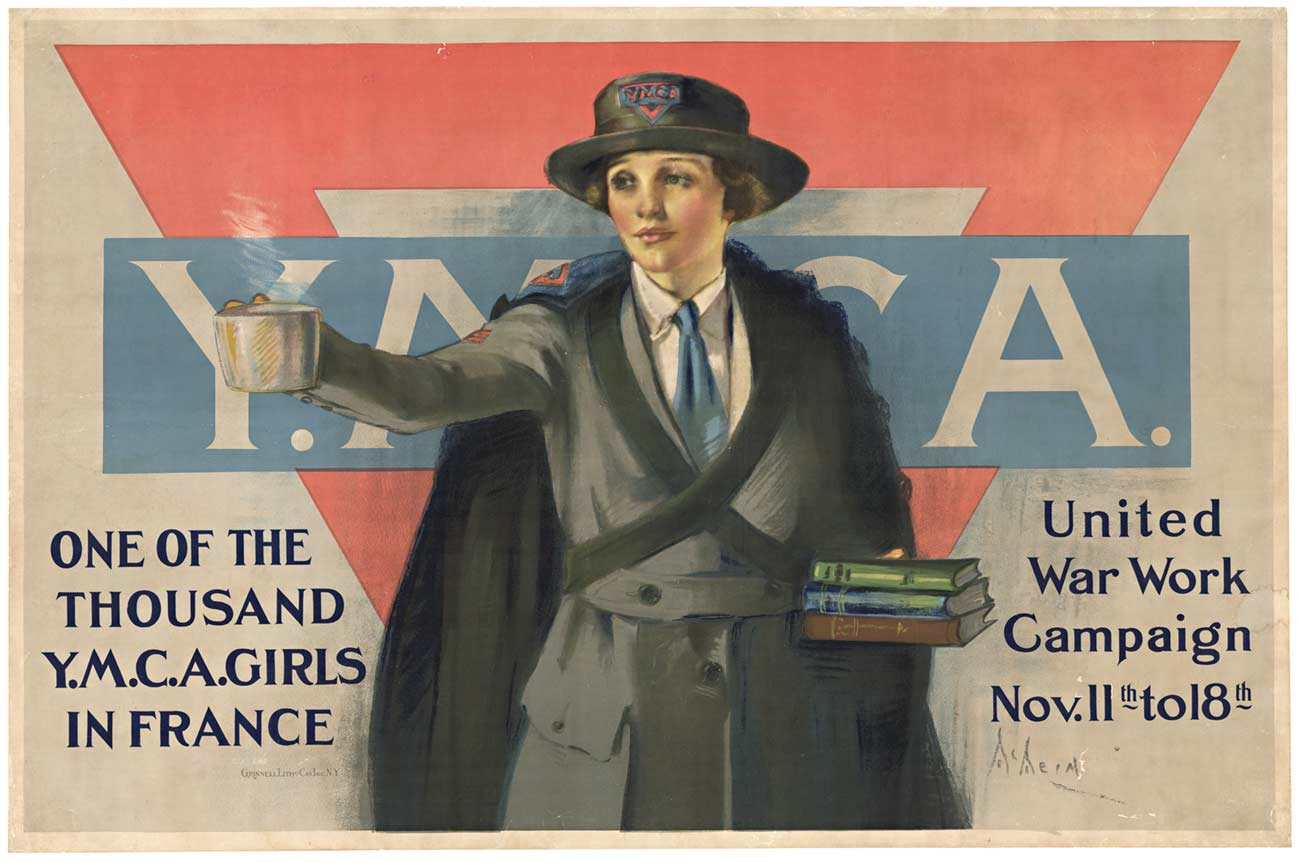
She married Harold Ross in New York City in March of 1920, not long after they both returned from France, where she had worked for the YMCA and he had been serving in the U.S. army. It was a quick, no-frills wedding at the Church of the Transfiguration. After the ceremony, the church secretary startled Jane with, “Congratulations, Mrs. Ross.”

“Never for a moment had I considered the possibility of losing my name,” Jane later wrote. The secretary’s comment “jolted me into the realization that my very own name might have been dissolved when the minister finished the ceremony.” She decided to remain Jane Grant.

In terms of legalities, this was not a simple thing to do, so in 1921, Jane and her friend Ruth Hale launched the Lucy Stone League, an organization that helped married women retain their birth names. (The State Department, for instance, would not allow a married woman to use her birth name on her passport.) The league’s goal attracted the attention of the National Woman’s Party, led by the charismatic suffragist Alice Paul, who would soon begin the long battle to secure the passage of the Equal Rights Amendment.

The two organizations joined forces on some projects, and many women belonged to both groups. The Lucy Stone League attracted much media attention, and soon any married woman who was known by her birth name was described as a Lucy Stoner.

The league operated as an official organization through the mid-1920s. Jane Grant revived it in 1950, along with Doris Fleischman, expanding its purpose to include pursuing “all civil and social rights of women” and serving as a center for research and information about the status of women. As such, the Lucy Stone League became a foundation for the so-called second wave of feminism that surfaced in the 1960s.

Yet in terms of the league’s original goal, appeals to equal rights proved no match for tradition. Over the next decades, only a small percentage of married women opted to retain their birth names. The 1989 airing date of that Newhart episode marked a kind of high point in a slight uptick of women doing so.

In “Making a Name: Women’s Surnames at Marriage and Beyond,” published in the spring 2004 issue of the Journal of Economic Perspectives, Claudia Goldin and Maria Shim speculated that by the 1990s, “Perhaps surname-keeping seems less salient as a way of publicly supporting equality for women than it did in the late 1970s and 1980s. Perhaps a general drift to more conservative social values has made surname-keeping less attractive.”

Nearly twenty years later, a 2023 study by the Pew Research Center found, “Most women in opposite-sex marriages (79%) say they took their spouse’s last name when they got married. Another 14% kept their last name, and 5% hyphenated both their name and their spouse’s name.”

“Women’s rights” has always been capacious. Jane Grant’s interest began with a small slice that quickly allowed her to see larger connections. Her commitment to gender equality issues likely played a big part in her divorce from Harold Ross. It also likely enriched and strengthened her relationship with William Harris, her second husband. Jane remained Jane Grant after their marriage, too. She never wavered.

* During season 8, Newhart spun out of control as it headed for its now famous finale.

[**spoiler alert**]

The whole thing—all eight seasons—had been the dream of Chicago psychologist Bob Hartley, the main character of Bob Newhart’s eponymous (and much better) 1970s sitcom.

2025: The Year of Jane Grant

Here on the blog, I have designated 2025 as the year of Jane Grant, mostly because it marks the centennial of The New Yorker, the magazine Jane co-founded with her first husband, Harold Ross.

(Jane Grant, c. 1917. Jane Grant Photograph Collection, PH141, University of Oregon Libraries Special Collections)

Also, because for more than a year, I have been engrossed with writing the (very) rough draft of a book about her. I hope this is the year I finish the draft and start reworking it into a less messy version, with a clearer shape, sharper writing, and more vivid story arcs.

My Jane Grant book is not a cradle-to-grave biography. It focuses instead on how Jane got The New Yorker off the ground in 1925 and kept it going. To accomplish this, I explore her journalism career in New York City in the 1910s and 1920s, plus her marriage and subsequent divorce from Harold Ross. All bolstered by an unwavering dedication to the pursuit of gender equality.

Other books have told The New Yorker’s story, but they have been, predictably, male centered. Jane Grant’s presence is sidelined in them, her role largely subsumed under that of “wife.”

As Amy Reading points out in The World She Edited, her marvelous 2024 biography of the magazine’s long-time fiction editor Katharine White:

“But there’s another way to tell the magazine’s origin story: by traveling along the networks forged by the women who were there from the beginning and who have been barely mentioned in histories of the magazine.” Reading’s book traces how White’s tenure at The New Yorker (like Jane Grant’s involvement, as I will demonstrate) “shows quite simply that so many of The New Yorker’s early successes were due to the efforts of feminist women who interpreted the magazine’s obsession with sophistication in a way guaranteed to appeal to readers like themselves—educated, active participants in the city’s cultural life.”

Reading’s book has proved a good resource for my project. It is also an inspirational model of writing, as is Debby Applegate’s biography Madam, about Polly Adler. I anticipate that Laurie Gwen Shapiro’s forthcoming book, The Aviator and the Showman, about Amelia Earhart, will form the third point of that inspirational model triangle.

I will be touching on these books (and others) plus exploring fascinating primary sources as I write my way through 2025 and the year of Jane Grant. Some of the more interesting findings will appear on the blog during the year, most likely at irregular intervals (Writing history is challenging, and, for me, writing about writing history is even more so.) Hope you will follow along.

On Reading (and not yet finishing) Madam: The Biography of Polly Adler, Icon of the Jazz Age By Debby Applegate

Back in the summer of 2024, I started reading Debby Applegate’s biography of Polly Adler, the (in)famous Manhattan madam of the 1920s. It was an obvious choice for me: a story about a little-known woman—today, not back then—written by a woman who turned what she learned in graduate school into a Pulitzer Prize winning writing career. Applegate won that award for her first book, The Most Famous Man in America, a biography of the nineteenth-century minister Henry Ward Beecher.

(That book also serves as the sample proposal in the extraordinarily useful Thinking Like Your Editor: How to Write Great Serious Nonfiction—and Get It Published by Susan Rabiner (Applegate’s literary agent) and Alfred Fortunato. My copy is dog-eared now. It is the resource I turn to when I need to write a book proposal. Now I am reading Tilar Mazzeo’s How to Write a Bestseller: An Insider’s Guide to Writing Narrative Nonfiction for General Audiences, which may prove to be equally valuable.)

Madam is Applegate’s second book. (I admire an author who takes their time to conduct quality research.) I knew going in that it would be good. My interest in Madam extended beyond character to setting. Right now I want to read as much as I can about New York City in the 1920s to get background information for my current book-in-progress about Jane Grant, co-founder of The New Yorker.

Polly Adler was born around 1900; Jane in 1891. When Polly arrived in New York City from Russia in 1913, Jane had already been there (from Kansas) for five years. Both changed their first names to make a break with their pasts. The two young women struggled to gain a foothold in the city so they could live the life of their dreams. Each got what she wanted, mostly, in some way.

It is not unreasonable to think their paths may have crossed in New York in the 1920s, though trying to imagine that encounter makes my head spin. Polly opened her first brothel at the beginning of that decade that was known for its roar. By 1924, as Applegate writes, “her house had become an after-hours clubhouse for the adventurous Broadway bohemians who gathered at the Algonquin Hotel for lunch.” Jane Grant was a member of the legendary Round Table that met at the Algonquin. As was her husband, the talented editor Harold Ross. Their home was another “after-hours clubhouse” for the Round Tablers, though the entertainment they provided did not include Polly’s specialty.

(I have come to think of Jane as the anti-Polly.)

With some trepidation, I looked for Harold Ross’s name in the index of Madam and found it. (Jane’s is not there.) I could hardly bring myself to read what was on the corresponding page—would he turn out to be a rat or a super rat? But according to Applegate, Ross was “one of the few who failed to fall for Polly’s charms.” The lone time friends dragged him to her brothel, he carried along a stack of manuscripts, which he read “while the fun eddied around him.” This left me with a lot to think about.

I read about a quarter of Madam before I set it aside. It had nothing to do with the quality of the biography, which is as excellent as I anticipated, but rather because I started to consider it an ideal model for my book on Jane Grant. Too ideal. I am still very much at the beginning of my project, and I started to worry that I would imitate Applegate’s style. I do not want to cross the line between modeling and imitating. I need space, considerable space right now, to identify that boundary, to develop my own style and voice based on how I think Jane’s story needs to be told.

This is not the way I typically respond to the secondary (or published) sources I read for my book research. Every so often, though, I encounter a book—whether during leisure reading or work reading—I admire so much that I am overwhelmed by a sense of futility. (Also known, perhaps, as imposter syndrome.) As in, why should I continue to do what I do when someone has already published the perfect gem of a book. (Rebecca Donner’s All the Frequent Troubles of Our Days, about Mildred Harnack, was the last book to strike me like that.)

The feeling eventually passes, and, of course, I go on to do what I do, because what I write ends up different than what anyone else writes. And maybe it is as good, maybe not. But that is what happens. I write the best book I can.

When I’m ready for my first round of revisions on the (still in progress) rough draft, I might pick up Debby Applegate’s book again. Or maybe I will wait for the second round. But I know I will finish reading that biography. I need to find out what happened to Polly Adler. And I need to pay close attention to how Applegate makes me care.

Up next: more on this year of Jane Grant.