The Year of Jane Grant: On This Day in 1924

The New York Times ran a short article on page 15 of its Friday, November 28, 1924, issue: “Greet Santa Claus as ‘King of Kiddies’.” Police estimated that at 9:00 in the morning on Thanksgiving Day, about 10,000 people had jammed 34th Street between Sixth and Sevenths Avenues in Manhattan to watch a parade sponsored by Macy’s, one of the city’s big department stores.

The event had been designed to celebrate the opening of Macy’s new store at 34th near Seventh Avenue, but much of the crowd, made up of small children, were there to catch a glimpse of the big man of the holiday season: Santa Claus.

“Santa came in state,” the article reported. “The float upon which he rode was in the form of a sled driven by reindeer over a mountain of ice. Preceding him were men dressed like the knights of old, their spears shining in the sunlight.”

The parade, populated with clowns, animals, marching bands, and floats, began at Convent Avenue and 145th Street and attracted audiences standing some four or five deep along the walk. It concluded at noon at the entrance of the new Macy’s, with Santa’s new nickname, “King of the Kiddies,” lit up on the store’s marquee. “When Santa seated himself on the throne he sounded his trumpet, which was the signal for the unveiling of the store’s Christmas window, showing the ‘Fairy Frolics of Wondertown,’ designed and executed by [puppeteer] Tony Sarg. The police lines gave way and with a rush the enormous crowd flocked to the windows to see Mother Goose characters as marionettes.”

This was, of course, the first Macy’s Thanksgiving Day parade. It has since been immortalized by the 1947 movie Miracle on 34th Street and has been shown on network television since 1948. I’m a big fan of Miracle on 34th Street but not of parades. They don’t hold my attention for more than a few minutes.

But as I cruised through the internet yesterday, an article with a headline about the first Macy’s parade taking place in 1924 did catch my attention.

I immediately wondered if Jane Grant watched any of the parade. She worked on the New York Times city desk in 1924, after logging in some years in the society department, so it would have been within her purview. (And she enjoyed the many fine retail establishments the city had to offer.)

Macy’s advertised in the Times for what was originally called its Christmas parade and placed a full-page ad that ran the day before the event, encouraging “Everybody Be On Hand!” The newspaper ran a brief, two-paragraph article, “Santa to Lead a Parade,” that day, too. A smaller ad appeared on the day of the parade. The day after, the store published a “thank-you” ad and announced this would become an annual event. “We advise you now to make no other engagement for the morning of Thanksgiving Day, 1925.”

But if Jane did not cover the parade, she may not have taken the time to watch it. During the fall of 1924 she was stretched thin. In addition to her full-time job at the Times, she had been writing articles and stories for other publications to boost her income. She and her husband Harold Ross needed the money because, in addition to everything else, Jane was working at all hours that fall with Ross to get the first issue of The New Yorker magazine ready for publication.

That would happen in February 1925. And like the Macy’s Thanksgiving Day parade, The New Yorker has thrived into the 21st century.

Wishing you all a peaceful start to the holiday season.

2025: The Year of Jane Grant

Here on the blog, I have designated 2025 as the year of Jane Grant, mostly because it marks the centennial of The New Yorker, the magazine Jane co-founded with her first husband, Harold Ross.

(Jane Grant, c. 1917. Jane Grant Photograph Collection, PH141, University of Oregon Libraries Special Collections)

Also, because for more than a year, I have been engrossed with writing the (very) rough draft of a book about her. I hope this is the year I finish the draft and start reworking it into a less messy version, with a clearer shape, sharper writing, and more vivid story arcs.

My Jane Grant book is not a cradle-to-grave biography. It focuses instead on how Jane got The New Yorker off the ground in 1925 and kept it going. To accomplish this, I explore her journalism career in New York City in the 1910s and 1920s, plus her marriage and subsequent divorce from Harold Ross. All bolstered by an unwavering dedication to the pursuit of gender equality.

Other books have told The New Yorker’s story, but they have been, predictably, male centered. Jane Grant’s presence is sidelined in them, her role largely subsumed under that of “wife.”

As Amy Reading points out in The World She Edited, her marvelous 2024 biography of the magazine’s long-time fiction editor Katharine White:

“But there’s another way to tell the magazine’s origin story: by traveling along the networks forged by the women who were there from the beginning and who have been barely mentioned in histories of the magazine.” Reading’s book traces how White’s tenure at The New Yorker (like Jane Grant’s involvement, as I will demonstrate) “shows quite simply that so many of The New Yorker’s early successes were due to the efforts of feminist women who interpreted the magazine’s obsession with sophistication in a way guaranteed to appeal to readers like themselves—educated, active participants in the city’s cultural life.”

Reading’s book has proved a good resource for my project. It is also an inspirational model of writing, as is Debby Applegate’s biography Madam, about Polly Adler. I anticipate that Laurie Gwen Shapiro’s forthcoming book, The Aviator and the Showman, about Amelia Earhart, will form the third point of that inspirational model triangle.

I will be touching on these books (and others) plus exploring fascinating primary sources as I write my way through 2025 and the year of Jane Grant. Some of the more interesting findings will appear on the blog during the year, most likely at irregular intervals (Writing history is challenging, and, for me, writing about writing history is even more so.) Hope you will follow along.

On Reading (and not yet finishing) Madam: The Biography of Polly Adler, Icon of the Jazz Age By Debby Applegate

Back in the summer of 2024, I started reading Debby Applegate’s biography of Polly Adler, the (in)famous Manhattan madam of the 1920s. It was an obvious choice for me: a story about a little-known woman—today, not back then—written by a woman who turned what she learned in graduate school into a Pulitzer Prize winning writing career. Applegate won that award for her first book, The Most Famous Man in America, a biography of the nineteenth-century minister Henry Ward Beecher.

(That book also serves as the sample proposal in the extraordinarily useful Thinking Like Your Editor: How to Write Great Serious Nonfiction—and Get It Published by Susan Rabiner (Applegate’s literary agent) and Alfred Fortunato. My copy is dog-eared now. It is the resource I turn to when I need to write a book proposal. Now I am reading Tilar Mazzeo’s How to Write a Bestseller: An Insider’s Guide to Writing Narrative Nonfiction for General Audiences, which may prove to be equally valuable.)

Madam is Applegate’s second book. (I admire an author who takes their time to conduct quality research.) I knew going in that it would be good. My interest in Madam extended beyond character to setting. Right now I want to read as much as I can about New York City in the 1920s to get background information for my current book-in-progress about Jane Grant, co-founder of The New Yorker.

Polly Adler was born around 1900; Jane in 1891. When Polly arrived in New York City from Russia in 1913, Jane had already been there (from Kansas) for five years. Both changed their first names to make a break with their pasts. The two young women struggled to gain a foothold in the city so they could live the life of their dreams. Each got what she wanted, mostly, in some way.

It is not unreasonable to think their paths may have crossed in New York in the 1920s, though trying to imagine that encounter makes my head spin. Polly opened her first brothel at the beginning of that decade that was known for its roar. By 1924, as Applegate writes, “her house had become an after-hours clubhouse for the adventurous Broadway bohemians who gathered at the Algonquin Hotel for lunch.” Jane Grant was a member of the legendary Round Table that met at the Algonquin. As was her husband, the talented editor Harold Ross. Their home was another “after-hours clubhouse” for the Round Tablers, though the entertainment they provided did not include Polly’s specialty.

(I have come to think of Jane as the anti-Polly.)

With some trepidation, I looked for Harold Ross’s name in the index of Madam and found it. (Jane’s is not there.) I could hardly bring myself to read what was on the corresponding page—would he turn out to be a rat or a super rat? But according to Applegate, Ross was “one of the few who failed to fall for Polly’s charms.” The lone time friends dragged him to her brothel, he carried along a stack of manuscripts, which he read “while the fun eddied around him.” This left me with a lot to think about.

I read about a quarter of Madam before I set it aside. It had nothing to do with the quality of the biography, which is as excellent as I anticipated, but rather because I started to consider it an ideal model for my book on Jane Grant. Too ideal. I am still very much at the beginning of my project, and I started to worry that I would imitate Applegate’s style. I do not want to cross the line between modeling and imitating. I need space, considerable space right now, to identify that boundary, to develop my own style and voice based on how I think Jane’s story needs to be told.

This is not the way I typically respond to the secondary (or published) sources I read for my book research. Every so often, though, I encounter a book—whether during leisure reading or work reading—I admire so much that I am overwhelmed by a sense of futility. (Also known, perhaps, as imposter syndrome.) As in, why should I continue to do what I do when someone has already published the perfect gem of a book. (Rebecca Donner’s All the Frequent Troubles of Our Days, about Mildred Harnack, was the last book to strike me like that.)

The feeling eventually passes, and, of course, I go on to do what I do, because what I write ends up different than what anyone else writes. And maybe it is as good, maybe not. But that is what happens. I write the best book I can.

When I’m ready for my first round of revisions on the (still in progress) rough draft, I might pick up Debby Applegate’s book again. Or maybe I will wait for the second round. But I know I will finish reading that biography. I need to find out what happened to Polly Adler. And I need to pay close attention to how Applegate makes me care.

Up next: more on this year of Jane Grant.

My 2024 Reading, Part Two: Nonfiction

This year’s list of my favorite nonfiction contains two more books than last year. (I gave seven nonfiction books five stars on Good Reads in 2024 and five in 2023.) But like last year, I am also including a bonus section of books that I liked.

Biographies dominated these seven favorites of 2024. (Unlike last year, I read very few memoirs in 2024.) Most of the biographies were about women, though one, a family biography, features both men and women. Another, which also was not a biography (or at least a traditional biography), centers on a man but has a couple of strong female secondary characters. Its author is the only man to appear on this list of seven. Make of this what you will. (Mostly that there are a lot of women’s stories out there to explore and lots of women writers to do so.) Here are the books, roughly in the order in which I read them.

1. Mott Street: A Chinese American Family’s Story of Exclusion and Homecoming by Ava Chin. I remember being totally drawn into this book at the beginning of 2024, as I was getting ready to make my first trip to New York City. It is wonderfully written, with a delicate balance of history and family stories. Chin has produced an emotional yet not overly sentimental family biography.

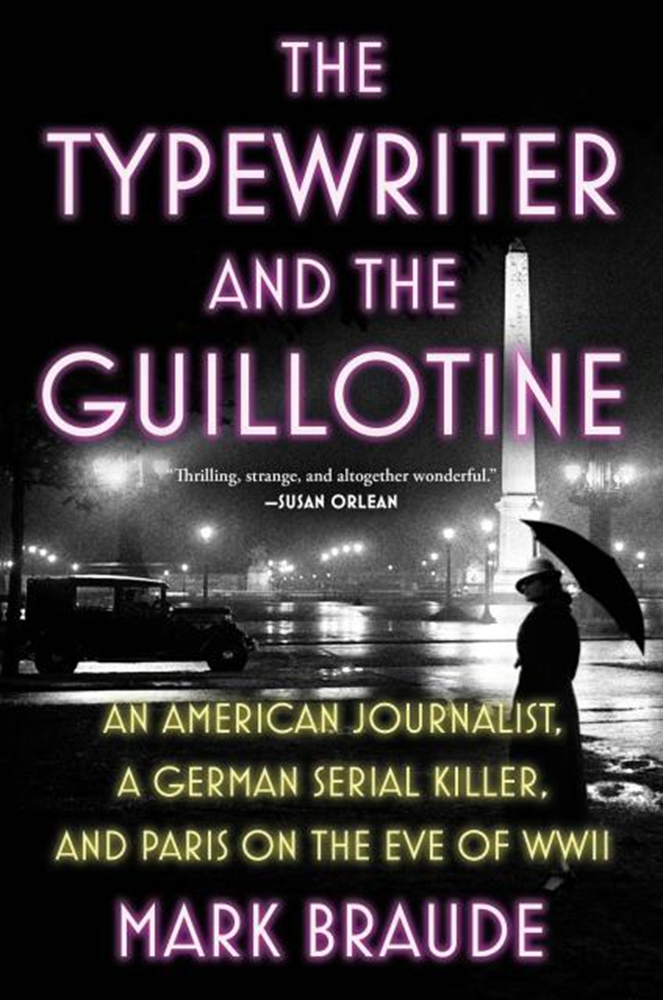
2. The Art Thief: A True Story of Love, Crime, and a Dangerous Obsession by Michael Finkel. I was a bit late to this book mostly because it is not the kind of thing I usually read. But I was convinced by the title and the cover design to pick it up from the library and never regretted the decision. Finkel briskly tells the wild story of Stéphane Bréitwieser, who stole about $2 billion worth of art from various European museums. Then there is the revelation of what happened to some of the pieces. Yikes.

3. The Dress Diary: Secrets From a Victorian Woman’s Wardrobe by Kate Strasdin. Using surviving clothing fragments belonging to Anne Sykes, Strasdin skillfully recreates the world of this nineteenth-century Englishwoman. The author’s expertise as a fashion historian and museum curator really shines through in this creative history.

4. The Silenced Muse: Emily Hale, T.S. Eliot, and the Role of a Lifetime by Sara Fitzgerald. Emily Hale has appeared as a minor character in previous books about the poet Eliot, but Fitzgerald flips the relationship, investigating it from Hale’s perspective. (This does not end well for Eliot’s reputation as a human being.) Hale emerges as a fully formed character with a fascinating life.

5. Portrait of a Woman:Art, Rivalry, and Revolution in the Life of Adélaïde Labille-Guiard by Bridget Quinn. Adélaïde Labille-Guiard was a well-known and well-regarded painter in France during the 1700s, at least up until the French Revolution. Quinn makes good use of the scant information available on the artist’s life to restore her to her proper place in the historical record. And Quinn’s breezy writing style makes this biography a delight to read.

6. The World She Edited: Katharine S. White at The New Yorker by Amy Reading. The long-time fiction editor of The New Yorker magazine, which celebrates its 100th anniversary this year, receives a well-deserved biography that focuses on White’s ability to recognize talented writers and get their work published in the magazine. It is a fascinating portrait of an important literary life.

7. Loving Sylvia Plath: A Reclamation by Emily Van Duyne. Ted Hughes (like T.S. Eliot above) does not come off well in Van Duyne’s trenchant probing of not just Plath’s life, but how others have written about that life. Van Duyne makes a convincing—and haunting—case for Hughes as the ultimate in unreliable narrators. Reclamation, indeed.

Of the two bonus books from my 2024 reading, one is very much in line with most of the favorites listed above. Drew Gilpin Faust’s memoir, Necessary Trouble: Growing Up at Midcentury is an engaging account of the prominent historian’s involvement with the various social and political movements of the 1960s.

The other, Leave While the Party’s Good: The Life and Legacy of Baseball Executive Harry Dalton by Lee Kluck, is a book that anyone who knows me would not believe that I ever picked up. I am not a sports person. I don’t watch games or watch movies or shows about sports. (Well, okay, I did like Bend It Like Beckham and Bull Durham, and I have watched Field of Dreams. But otherwise, no.) (And actually, growing up at 2912, baseball was ubiquitous during the spring and summer. I knew spring had arrived when my mom set up her ironing board in front of the television in the family room so she could watch the Cubs while she ironed. I still know a lot about baseball.)

Lee Kluck was, many years ago, a student of mine, and I followed his writing journey with great interest. He has produced a nicely researched and crisply written biography of an important figure in major league baseball. The University of Nebraska Press, known for its sports series, published his book. So, yay for Lee and for Harry Dalton. If you or anyone you know is into sports biographies, do not miss this one.

That is a wrap on my favorites of 2024. Up next: some thoughts on a very good book I started reading in 2024 but have yet to finish.

May all the books you read in 2025 be good ones.

My Favorite Nonfiction of 2022

My 2022 list (nonfiction books I read but were not necessarily published in 2022) is made up of an even dozen titles. All of them are about women, and all but one were written by women. This is not unusual for my reading preferences. What is unusual is the number of memoirs included. What is not unusual about the memoirs that made my list? Most of the authors focus on aspects of their writing lives.

So here they are, roughly in the order that I adore/admire them.

The Grimkes: The Legacy of Slavery in an America Family by Kerri K. Greenidge. An eye-opening account of the Grimke sisters, white women from South Carolina, who became outspoken advocates for abolition. Greenidge uses her expert historical skills to show the limits of the women’s understanding of and support for racial equality as they acknowledge their Black nephews, a side of the family that flourished after the Civil War. It’s a marvelous family biography wrapped around essential racial and gender history.

My Autobiography of Carson McCullers by Jenn Shapland. A luminous mixture of memoir and biography. I didn’t know much about McCullers going into this book and found Shapland’s approach to writing about the famous author innovative and intriguing.

Also a Poet: Frank O’Hara, My Father, and Me by Ada Calhoun. Another unusual memoir, this one intertwined with the biographies of poet O’Hara and of Calhoun’s father, the art critic Peter Schjeldahl. A great story of a complicated father-daughter relationship.

Sister Novelists: The Trailblazing Porter Sisters, Who Paved the Way for Austen and the Brontes by Devoney Looser. Jane and Maria Porter were bestselling novelists in England with a literary fame that spread around the world. Looser revives their reputations via a narrative as enthralling as anything Jane Austen wrote.

The Ruin of all Witches: Life and Death in the New World by Malcolm Gaskill. Gaskill brings to life the realities of eking out a living in the early Massachusetts Bay Colony and the power of Puritan beliefs in witchcraft to upend the precarious lives of the settlers. The story of Hugh and Mary Parsons is bone-chilling.

I Used to Live Here Once: The Haunted Life of Jean Rhys by Miranda Seymour. About as moody and atmospheric as Gaskill’s book, this literary biography delves into Rhys’s Caribbean background and its influence on her writing.

To Walk About in Freedom: The Long Emancipation of Phyllis Joyner by Carol Emberton. Historian Emberton uses the life of Joyner, born in North Carolina shortly before the Civil War, to explore how formerly enslaved people experienced the (sometimes limited) freedom of emancipation. This is a great example of how the life of an ordinary, “unknown” person can illuminate key periods in American history.

Inventing the It Girl: How Elinor Glyn Created the Modern Romance and Conquered Early Hollywood by Hilary Hallett. If you want to know anything about the evolution of the modern early twentieth-century woman, this is the book to read. Glyn started writing scandalous novels to make up for her husband gambling away most of the family fortune. And she ended up in Hollywood!

Becoming Duchess Goldblatt by Anonymous. This memoir of a real-life author and Twitter personality is a surprisingly touching and sometimes funny work about dealing with grief and depression. I don’t know who Duchess Goldblatt is, but that really, really doesn’t matter.

Funny Farm: My Unexpected Life with 600 Rescue Animals by Laurie Zaleski. I picked this up on whim at the library, expecting that it would mostly be about rescuing animals. There’s some of that, but it’s woven around Zaleski’s tale of her rocky childhood and it all blends together in a very pleasing way.

Ancestor Trouble: A Reckoning and a Reconciliation by Maude Newton. In this multi-generational story, Newton tracks down the truth behind the tales told by and about various family members over the years. It’s an eye-opening account of the power of genealogy.

Half in Shadow: The Life and Legacy of Nellie Y. McKay by Shanna Greene Benjamin. A fabulous exploration of the public and private lives of McKay, a writer and literary scholar who helped create the academic field of African American literature.  

What do you think? Have you read any of these? What are you looking forward to in 2023?