My 2024 Reading, Part Two: Nonfiction

This year’s list of my favorite nonfiction contains two more books than last year. (I gave seven nonfiction books five stars on Good Reads in 2024 and five in 2023.) But like last year, I am also including a bonus section of books that I liked.

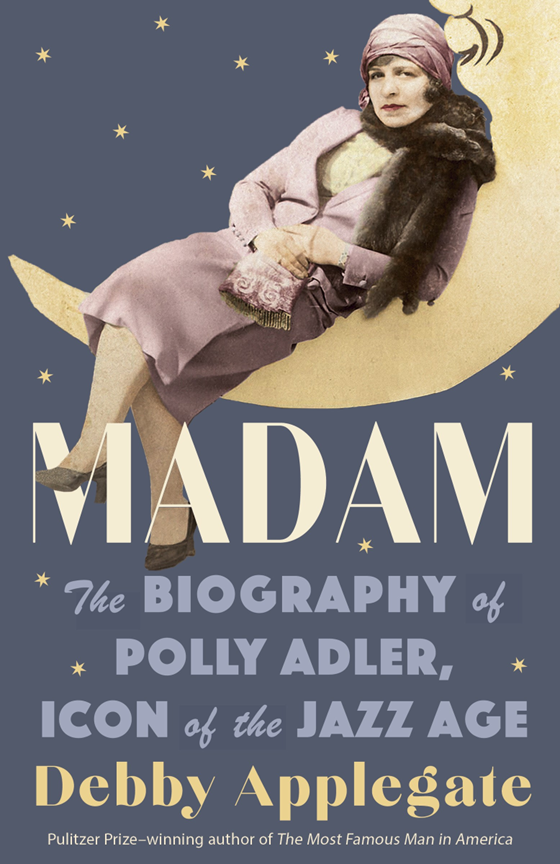
Biographies dominated these seven favorites of 2024. (Unlike last year, I read very few memoirs in 2024.) Most of the biographies were about women, though one, a family biography, features both men and women. Another, which also was not a biography (or at least a traditional biography), centers on a man but has a couple of strong female secondary characters. Its author is the only man to appear on this list of seven. Make of this what you will. (Mostly that there are a lot of women’s stories out there to explore and lots of women writers to do so.) Here are the books, roughly in the order in which I read them.

1. Mott Street: A Chinese American Family’s Story of Exclusion and Homecoming by Ava Chin. I remember being totally drawn into this book at the beginning of 2024, as I was getting ready to make my first trip to New York City. It is wonderfully written, with a delicate balance of history and family stories. Chin has produced an emotional yet not overly sentimental family biography.

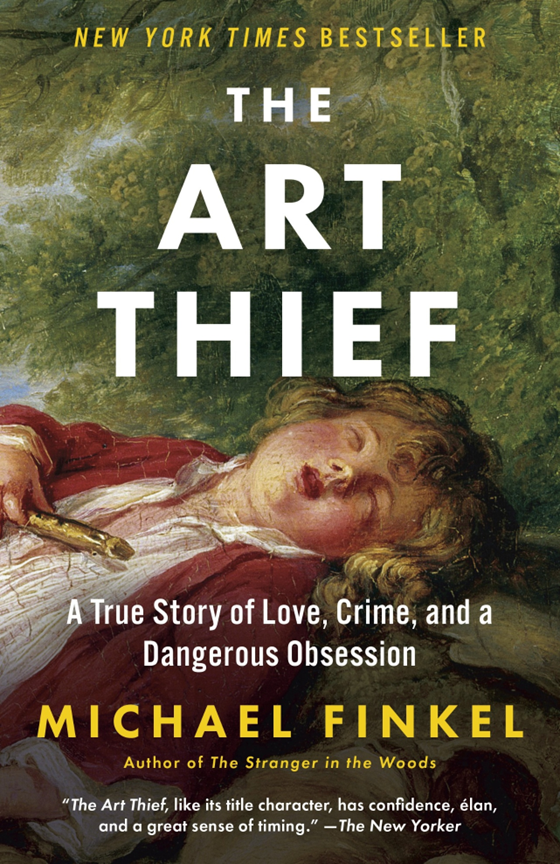
2. The Art Thief: A True Story of Love, Crime, and a Dangerous Obsession by Michael Finkel. I was a bit late to this book mostly because it is not the kind of thing I usually read. But I was convinced by the title and the cover design to pick it up from the library and never regretted the decision. Finkel briskly tells the wild story of Stéphane Bréitwieser, who stole about $2 billion worth of art from various European museums. Then there is the revelation of what happened to some of the pieces. Yikes.

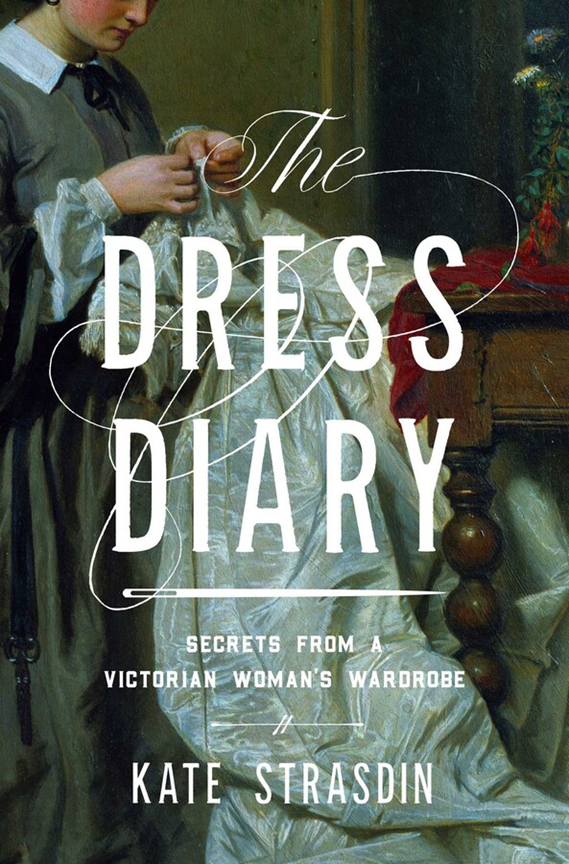
3. The Dress Diary: Secrets From a Victorian Woman’s Wardrobe by Kate Strasdin. Using surviving clothing fragments belonging to Anne Sykes, Strasdin skillfully recreates the world of this nineteenth-century Englishwoman. The author’s expertise as a fashion historian and museum curator really shines through in this creative history.

4. The Silenced Muse: Emily Hale, T.S. Eliot, and the Role of a Lifetime by Sara Fitzgerald. Emily Hale has appeared as a minor character in previous books about the poet Eliot, but Fitzgerald flips the relationship, investigating it from Hale’s perspective. (This does not end well for Eliot’s reputation as a human being.) Hale emerges as a fully formed character with a fascinating life.

5. Portrait of a Woman:Art, Rivalry, and Revolution in the Life of Adélaïde Labille-Guiard by Bridget Quinn. Adélaïde Labille-Guiard was a well-known and well-regarded painter in France during the 1700s, at least up until the French Revolution. Quinn makes good use of the scant information available on the artist’s life to restore her to her proper place in the historical record. And Quinn’s breezy writing style makes this biography a delight to read.

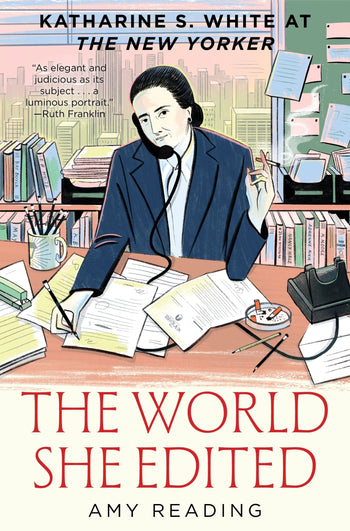
6. The World She Edited: Katharine S. White at The New Yorker by Amy Reading. The long-time fiction editor of The New Yorker magazine, which celebrates its 100th anniversary this year, receives a well-deserved biography that focuses on White’s ability to recognize talented writers and get their work published in the magazine. It is a fascinating portrait of an important literary life.

7. Loving Sylvia Plath: A Reclamation by Emily Van Duyne. Ted Hughes (like T.S. Eliot above) does not come off well in Van Duyne’s trenchant probing of not just Plath’s life, but how others have written about that life. Van Duyne makes a convincing—and haunting—case for Hughes as the ultimate in unreliable narrators. Reclamation, indeed.

Of the two bonus books from my 2024 reading, one is very much in line with most of the favorites listed above. Drew Gilpin Faust’s memoir, Necessary Trouble: Growing Up at Midcentury is an engaging account of the prominent historian’s involvement with the various social and political movements of the 1960s.

The other, Leave While the Party’s Good: The Life and Legacy of Baseball Executive Harry Dalton by Lee Kluck, is a book that anyone who knows me would not believe that I ever picked up. I am not a sports person. I don’t watch games or watch movies or shows about sports. (Well, okay, I did like Bend It Like Beckham and Bull Durham, and I have watched Field of Dreams. But otherwise, no.) (And actually, growing up at 2912, baseball was ubiquitous during the spring and summer. I knew spring had arrived when my mom set up her ironing board in front of the television in the family room so she could watch the Cubs while she ironed. I still know a lot about baseball.)

Lee Kluck was, many years ago, a student of mine, and I followed his writing journey with great interest. He has produced a nicely researched and crisply written biography of an important figure in major league baseball. The University of Nebraska Press, known for its sports series, published his book. So, yay for Lee and for Harry Dalton. If you or anyone you know is into sports biographies, do not miss this one.

That is a wrap on my favorites of 2024. Up next: some thoughts on a very good book I started reading in 2024 but have yet to finish.

May all the books you read in 2025 be good ones.

My Favorite Nonfiction of 2022

My 2022 list (nonfiction books I read but were not necessarily published in 2022) is made up of an even dozen titles. All of them are about women, and all but one were written by women. This is not unusual for my reading preferences. What is unusual is the number of memoirs included. What is not unusual about the memoirs that made my list? Most of the authors focus on aspects of their writing lives.

So here they are, roughly in the order that I adore/admire them.

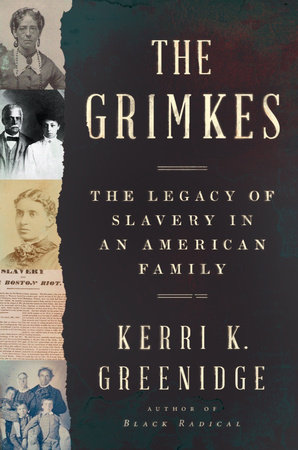
The Grimkes: The Legacy of Slavery in an America Family by Kerri K. Greenidge. An eye-opening account of the Grimke sisters, white women from South Carolina, who became outspoken advocates for abolition. Greenidge uses her expert historical skills to show the limits of the women’s understanding of and support for racial equality as they acknowledge their Black nephews, a side of the family that flourished after the Civil War. It’s a marvelous family biography wrapped around essential racial and gender history.

My Autobiography of Carson McCullers by Jenn Shapland. A luminous mixture of memoir and biography. I didn’t know much about McCullers going into this book and found Shapland’s approach to writing about the famous author innovative and intriguing.

Also a Poet: Frank O’Hara, My Father, and Me by Ada Calhoun. Another unusual memoir, this one intertwined with the biographies of poet O’Hara and of Calhoun’s father, the art critic Peter Schjeldahl. A great story of a complicated father-daughter relationship.

Sister Novelists: The Trailblazing Porter Sisters, Who Paved the Way for Austen and the Brontes by Devoney Looser. Jane and Maria Porter were bestselling novelists in England with a literary fame that spread around the world. Looser revives their reputations via a narrative as enthralling as anything Jane Austen wrote.

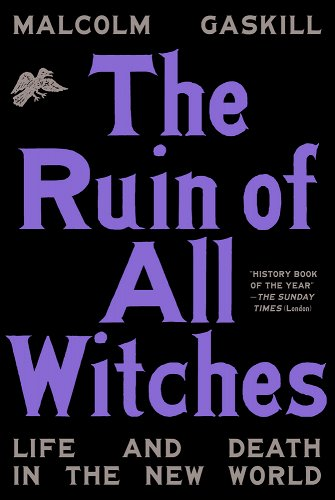
The Ruin of all Witches: Life and Death in the New World by Malcolm Gaskill. Gaskill brings to life the realities of eking out a living in the early Massachusetts Bay Colony and the power of Puritan beliefs in witchcraft to upend the precarious lives of the settlers. The story of Hugh and Mary Parsons is bone-chilling.

I Used to Live Here Once: The Haunted Life of Jean Rhys by Miranda Seymour. About as moody and atmospheric as Gaskill’s book, this literary biography delves into Rhys’s Caribbean background and its influence on her writing.

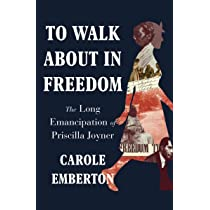
To Walk About in Freedom: The Long Emancipation of Phyllis Joyner by Carol Emberton. Historian Emberton uses the life of Joyner, born in North Carolina shortly before the Civil War, to explore how formerly enslaved people experienced the (sometimes limited) freedom of emancipation. This is a great example of how the life of an ordinary, “unknown” person can illuminate key periods in American history.

Inventing the It Girl: How Elinor Glyn Created the Modern Romance and Conquered Early Hollywood by Hilary Hallett. If you want to know anything about the evolution of the modern early twentieth-century woman, this is the book to read. Glyn started writing scandalous novels to make up for her husband gambling away most of the family fortune. And she ended up in Hollywood!

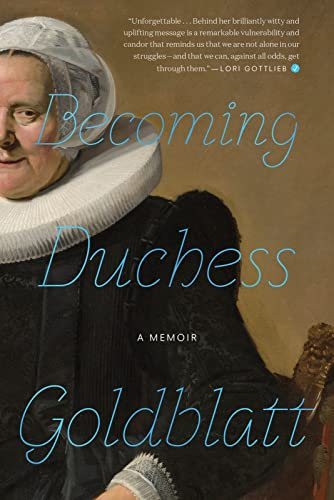
Becoming Duchess Goldblatt by Anonymous. This memoir of a real-life author and Twitter personality is a surprisingly touching and sometimes funny work about dealing with grief and depression. I don’t know who Duchess Goldblatt is, but that really, really doesn’t matter.

Funny Farm: My Unexpected Life with 600 Rescue Animals by Laurie Zaleski. I picked this up on whim at the library, expecting that it would mostly be about rescuing animals. There’s some of that, but it’s woven around Zaleski’s tale of her rocky childhood and it all blends together in a very pleasing way.

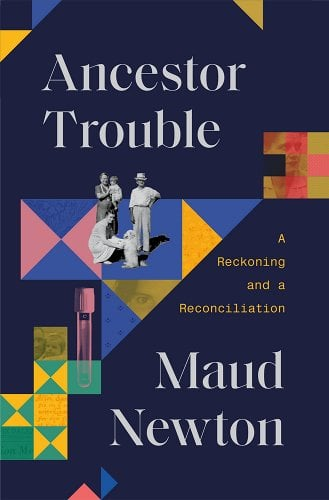
Ancestor Trouble: A Reckoning and a Reconciliation by Maude Newton. In this multi-generational story, Newton tracks down the truth behind the tales told by and about various family members over the years. It’s an eye-opening account of the power of genealogy.

Half in Shadow: The Life and Legacy of Nellie Y. McKay by Shanna Greene Benjamin. A fabulous exploration of the public and private lives of McKay, a writer and literary scholar who helped create the academic field of African American literature.  

What do you think? Have you read any of these? What are you looking forward to in 2023?

My 2019 Nonfiction Reading

For my final installment of reviewing my 2019 reading, I turn to nonfiction. I don’t keep a tally of how many nonfiction books I read in a given year because there are simply too many of them.

(photo via LitHub)

Between research for my own writing and all the books I’m assigned to review for a national book publishing magazine, I think my study always looks like that photo above. It’s a real treat when I get to read a work of nonfiction just because I want to.

From 2019, three really stand out–so much that I find myself thinking about them from time to time.

Saidiya Hartman’s lovely prose, flawless research, and imaginative approach make this history of the lives of young black women unforgettable.

If you’re inclined to write this off as another rehash of the Jack the Ripper story, don’t. Hallie Rubenhold’s focus on the five murdered women makes for a fascinating look at the lives of English women in the late 19th century and a compelling  examination of the city of London.

Stephanie Jones-Rogers’s revelation of white women’s participation in the institution of slavery is stunning.

If nonfiction is your thing, consider joining the Nonfiction Fans discussion group on Facebook. I’m one of the co-moderators.

Here’s hoping 2020 is a great reading year for everyone!


Women’s History Month New Book Recommendations

For those of you interested in women’s history in book form, I have four recommendations of new releases, two nonfiction and two novels.

First, the nonfiction.

I’ve been talking about this book for a while now, so it’s probably no surprise that I’m leading with Pamela Toler’s Women Warriors: An Unexpected History. It’s smart and funny and very much worth your time.

The other, released today, is She the People by Jen Deaderick. It’s an illustrated history of the women’s rights movement, and it, too, is very smart.

Now the novels.

Also released today is Greer Macallister’s Woman 99, described as a historical thriller, about a woman determined to rescue her sister from an asylum.

Finally, for anyone interested in women’s rights history, there’s Finding Dorothy by Elizabeth Letts. The story focuses on Maud Gage Baum, who married the man who would write The Wizard of Oz, and whose mother was the famous women’s rights activist Matilda Gage.

Next up, the life of an African American artist.


Coming Soon to My Bookshelf

This may be the first time I’ve ever pre-ordered a book. (And the whole “pre-order” thing still confuses me. If you put something in your cart, pay for it, and arrange for it to be shipped, haven’t you, in fact, ordered it?)

I wanted to make sure I was among the very first to get a copy of Pamela Toler’s latest:

The cover alone makes me want to read it. The image is stunning and the title is strong. This book is about women–not girls or wives or daughters. And the “Unexpected History” points out that women have been left out of so much history.

In about two weeks this will be added to my bookshelf. I hope you consider adding it to yours. You can find it on Amazon, Beacon Press, IndieBound, and Barnes & Noble.