My 2024 Reading, Part One: Fiction

Welcome to my annual reading round-up, in which I share my favorite books, both fiction (in this post) and nonfiction (in the next post). I prefer to stay away from the term “best” because of how subjective that is. These are the books I enjoyed in 2024, though a few may have been published earlier. Sometimes I don’t get around quickly to ones I want to read because of lengthy hold lists at the public library. Sometimes I’m interested in a book and know I’m not in the right mood to read it. So, reasons.

According to Goodreads, where I keep track of such things, I read five more books in 2024 than I did in 2023—from 46 to 51. (Yet for some reason it seems like I did not read much. I’m not sure why—it may have to do with the time I have been spending on my new book project.)

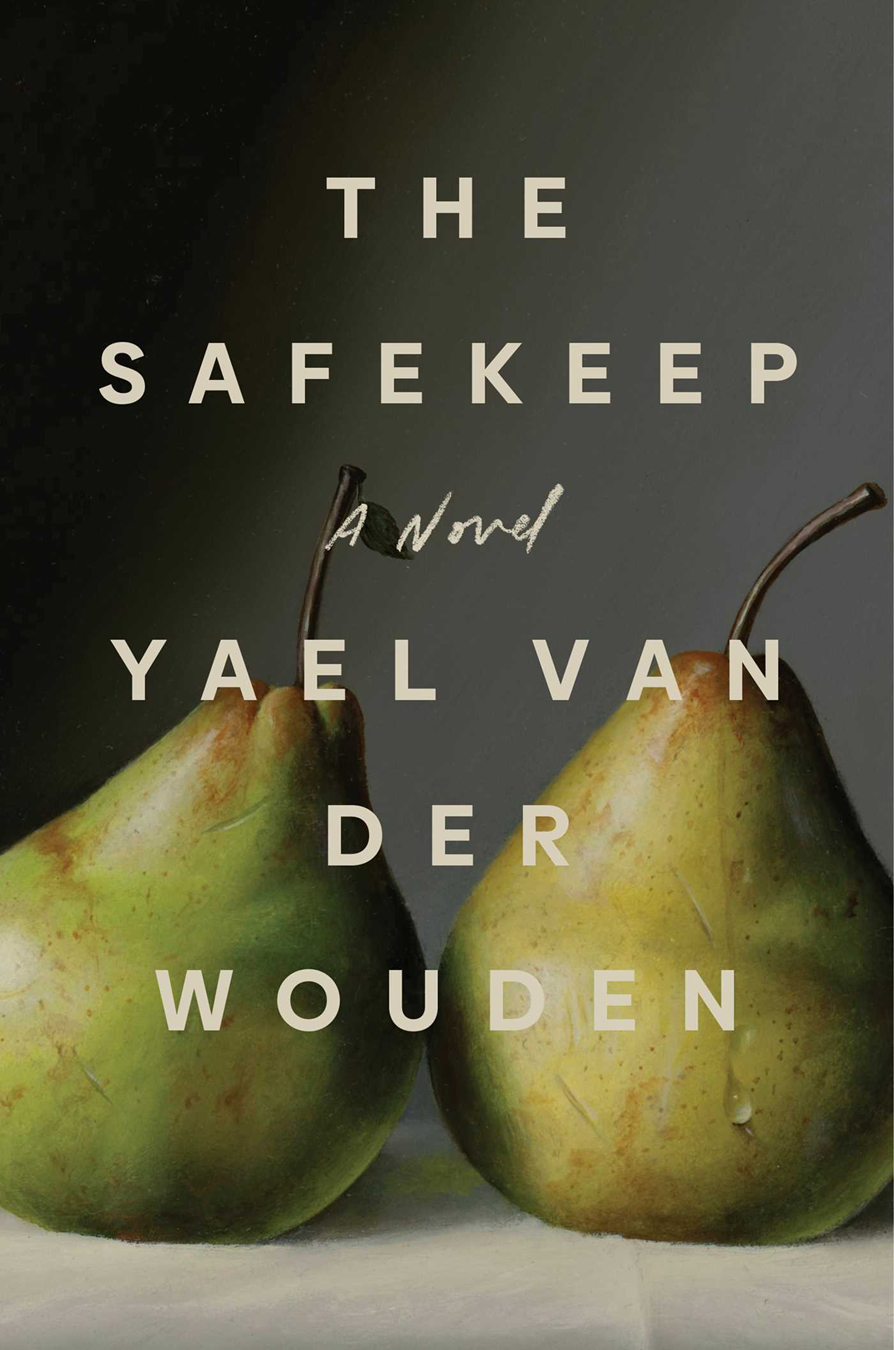
Of the novels I read in 2024, I marked five with five stars. Because there are so few, I find it impossible to rank them. Instead, these are listed in roughly the chronological order I read them. (Not surprisingly, they are all historical.)

1. The Storm We Made by Vanessa Chan. Set in World War II Malaya, this riveting historical drama depicts the heartbreaking choices people make during an enemy occupation. Cecily Alcantara, a devoted wife and mother, finds herself in increasingly impossible situations.

2. The Wren, the Wren by Anne Enright. Nell McDaragh, granddaughter of a famous Irish poet, and her mother Carmel, the poet’s daughter, both struggle with his legacy. Sensitive and beautifully written.

3. The Vaster Wilds by Lauren Groff. This novel is utterly and admirably void of any romancing of the early years of the English colonization of North America. Propelled by a pervasive sense of dread and entranced by the brutal beauty of the story, I could not stop reading.

4. The Road from Belhaven by Margot Livesey. Character and setting are pitch perfect in this historical drama set in rural Scotland during the nineteenth century. A young woman can see some glimpses of the future but has to figure out what to make of the information.

5. Whale Fall by Elizabeth O’Connor. Just before the beginning of World War II, a young woman living on a small Welsh island is unexpectedly confronted with the opportunity to change the anticipated course of her future. Delicate and lovely.

Additional recommendations (very close to five stars):

Two of my favorite mystery writers published new additions to their long-running series. Jacqueline Winspear drew her excellent Maisie Dobbs series to a close with The Comfort of Ghosts, which provided a satisfying ending. With Pay Dirt, Sara Paretsky delivered another powerful installment of her V.I. Warshawski investigations.

Alice McDermott’s Absolution depicts U.S. involvement in Vietnam in the 1960s from the perspective of white American women living there with their husbands. Very thought-provoking.

The God of the Woods by Liz Moore is a well-crafted mystery that made me glad I never went away to summer camp.

And the biggest surprise of my 2024 reading was Elizabeth Crook’s The Madstone, which I pulled off the library’s Westerns shelf on a whim and got helplessly drawn into the story.

Up next: My favorite nonfiction books of 2024.

My 2023 Reading, Part Two: Nonfiction (Plus a Bonus)

The best narrative nonfiction books I read in 2023 comprise an unusually short list. I think there was something about my reading mood last year that affected my reactions to books. “Best” and “favorite” are subjective, anyway, so I’m sticking to that as an explanation.

All of these books deal with the past, and all but one are biographies. The outlier of the group, though, could be described as a collection of mini-biographies. Here they are, roughly in the order of my admiration.

In Master Slave Husband Wife, Ilyon Woo traces the perilous journey from enslavement to freedom of Ellen and William Craft. The Crafts fled Georgia with Ellen disguised as an invalided white man and William posing as her “servant.” Their life in the “free” North was dangerous because of the Fugitive Slave Law, yet the couple became part of the great abolitionist movement in the years prior to the Civil War. It’s an unforgettable story of moral and physical courage.

Catherine McNeur introduces readers to Margaretta and Elizabeth Morris in the dual biography Mischievous Creatures. The historian makes a convincing case that the largely self-taught sisters, one an entomologist, the other a botanist, made significant contributions to scientific knowledge in the decades before the Civil War. Margaretta and Elizabeth are fascinating women, and McNeur expertly weaves in the science without slowing down the story of the women’s accomplishments and the barriers they faced because of their gender.

Leaning heavily on literary analysis and historical context, David Waldstreicher recreates the life of an eighteenth-century Black poet in The Odyssey of Phillis Wheatley. Kidnapped and enslaved as a child, Wheatley learned how to read and write while living in Boston and began turning out poetry as a teenager. This is a finely detailed story that took me some time to read, but I thought it was wonderful.

I learned a lot about South Africa from Jonny Steinberg’s dual biography, Winnie and Nelson. Steinberg traces apartheid through the lens of the Mandela marriage, focusing on Nelson’s long imprisonment and Winnie’s increasing political influence. It’s a riveting and important book.

Emma Southon’s lively voice adds an extra layer of enjoyment to A Rome of One’s Own, which reveals the history of the Roman empire through the lives of twenty-one mostly-forgotten women. This serves as a nice reminder that there was more to Rome than gladiators and pontificating politicians.

There were also a couple of other books I liked, both biographies. I appreciated learning more about the Queen of Crime in Agatha Christie: An Elusive Woman by Lucy Worsley, and it was interesting to find out about the intrepid twentieth-century journalist Elsie Robinson through Julia Sheeres and Allison Gilbert’s Listen, World!

Now for the bonus: memoirs. Last year, I included them in with the other nonfiction I read, but this time I decided it was more appropriate to give them their own category. While it’s true they are nonfiction, memoirs are very different from the historical, fact-based nonfiction that I usually read.

There are three memoirs I read in 2023 that I keep thinking about.

I’m certainly not the first person to rave about poet Maggie Smith’s You Could Make This Place Beautiful, but I may be among the last to have never run across her poem “Good Bones.” Its last line was turned into the title of her lyrical story of the unraveling of her marriage and her enduring love for her children.

Love for her children is a strong undercurrent in Life B, author and book critic (known in online circles as The Book Maven) Bethanne Patrick’s clear-eyed account of her decades-long struggle with double depression. She hits and maintains a sweet spot of narrative voice that is neither too bleak nor too Pollyanna-ish. I rooted for her all the way through.

Marsha Jacobson rounds out this trio of devoted mothers. In The Wrong Calamity she describes how she survived an abusive marriage, established herself as a successful businesswoman (even earning a Harvard MBA) and as a role model to her daughters, then suffered a shattering disappointment with her second marriage. Like both Smith and Patrick, Jacobson shows restraint in parceling out the gritty, personal details of these relationships, giving readers just what they need but never tipping into a salacious tell-all.

That’s it for my 2023 reading recap. I’m delighted (and slightly relieved) to report that 2024 is off to a blazing start. I could hardly bear to put down Vanessa Chan’s The Storm We Made and Anne Enright’s The Wren, the Wren, plus I’m swiftly moving through Mott Street by Ava Chin.

Up next: some pieces that are more or less connected to my new book project.

My 2019 Nonfiction Reading

For my final installment of reviewing my 2019 reading, I turn to nonfiction. I don’t keep a tally of how many nonfiction books I read in a given year because there are simply too many of them.

(photo via LitHub)

Between research for my own writing and all the books I’m assigned to review for a national book publishing magazine, I think my study always looks like that photo above. It’s a real treat when I get to read a work of nonfiction just because I want to.

From 2019, three really stand out–so much that I find myself thinking about them from time to time.

Saidiya Hartman’s lovely prose, flawless research, and imaginative approach make this history of the lives of young black women unforgettable.

If you’re inclined to write this off as another rehash of the Jack the Ripper story, don’t. Hallie Rubenhold’s focus on the five murdered women makes for a fascinating look at the lives of English women in the late 19th century and a compelling  examination of the city of London.

Stephanie Jones-Rogers’s revelation of white women’s participation in the institution of slavery is stunning.

If nonfiction is your thing, consider joining the Nonfiction Fans discussion group on Facebook. I’m one of the co-moderators.

Here’s hoping 2020 is a great reading year for everyone!


2019 Reading Continued: Mystery Series

When I looked back on my 2019 reading, I was a bit surprised to see how many mystery series I keep up with.

Image result for jessica fletcher

For me, the best of them demonstrate interesting character development over time and have vivid settings. These were my favorites.

I’ve sung the praises of the Maisie Dobbs series before, especially with Winspear’s willingness to throw lots of changes at Maisie and make them all work out.

The American Agent: A Maisie Dobbs Novel by [Winspear, Jacqueline]

Confession: I haven’t read all the Harry Potter books. But I’ve never missed an installment of “Robert Galbraith”‘s Cormoran Strike series.

Lethal White (Cormoran Strike Book 4) by [Galbraith, Robert]

Another confession. I can take or leave Jack Reacher (who has been compared to Petrie’s main character, though I’ll read one of Lee Child’s books if I happen across it at the library and usually enjoy it), but I always make sure to pick up Petrie’s latest about Iraq war veteran Peter Ash.

Oh, how I will miss Bernie Gunther. The late Philip Kerr created a truly memorable character.

Next, I’ll wrap up with a look at nonfiction.


Novels I Liked in 2019

In addition to the six favorites from yesterday’s post, there were six novels I liked. All were written by women, though not all were necessarily published in 2019.

Image result for sally field you like me

I admired the interweaving of women’s rights history and Hollywood history.

On the evils of slavery.

A compelling tale of how the bonds of friendship stretch during trying times.

What happens to children when their mother goes away?

Sharp rather than laugh-out-loud funny, this is a clever portrayal of modern marriage.

Fleishman Is in Trouble: A Novel by [Brodesser-Akner, Taffy]

So many people love this book, and I found it intriguing.

Coming tomorrow, novels from my favorite mystery series.