
I finished revisions on chapter two. Finally, progress.
The challenge was to take two rough chapters and combine them into one. I find it difficult to jettison material (though I safely store it in a scrap file, just in case), whether it’s from primary or secondary sources, because it interested me enough to include it in the first draft.
But what interests me doesn’t always serve the story. The story I need to tell in this chapter is about Jane Grant’s first years of working at the New York Times. She was in her 20s and still harbored hopes of a singing career. Jane viewed the job at the Times as a means to an end, a way to support herself while she went out on auditions and took on performing gigs. Key to the chapter is how and why Jane became a journalist.
Now that I have that all set up, I’m getting ready to move on to the third chapter, which highlights another pivotal point in Jane’s life: working overseas for the YMCA during World War I. A lot of revisions will go into this, too, because I also spread these events over two draft chapters. Does the story require all of that material, all of those pages? That’s what I’m going to be working through. Luckily, I’ve had a lot of recent practice.
What I’m Reading
Many of the books on my library hold list come from reading Nancy Bekofske’s blog The Literate Quilter. She reviews a variety of fiction and nonfiction, even poetry. It’s a great way to keep up with forthcoming and recent publications.
I finished Palace of Deception: Museum Men and the Rise of Scientific Racism by Darrin Lunde and liked it well enough, especially the behind-the-scenes stories of how museums acquire collections. Lunde is also very good at delving into the characters of these museum men. But because of my own particular interests, I found myself more drawn to the women who, in this telling, existed on the periphery of these events.
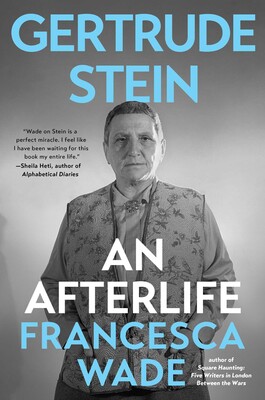
I started Gertrude Stein: An Afterlife by Francesca Wade. The first sentences of the prologue are stunning: “She came to Paris, she said, to kill the nineteenth century. Her weapons were a pencil and a supply of softcover notebooks, her targets dullness and cliché. She chopped off her long coils of hair and dispensed with punctuation….” There is Stein, fully alive, confident in her importance. Moreover, a casual look at the notes section of the book reveals an impressive amount of archival sources and ample citations for quotes and other information found in the text. Wade also discusses some of the process of her research in her acknowledgements. These are the kinds of things I regularly look at in nonfiction books.
I continue to read Lorissa Rinehart’s Winning the Earthquake: How Jeannette Rankin Defied All Odds to Become the First Woman in Congress. Consider these first sentences: “Her water broke. Mary, the family cook, helped her into bed. Besides Mary, Olive Rankin was alone on the ranch situated in Grant Creek Valley, some six thousand feet above Missoula, Montana.” And the beginning of the third paragraph: “Between contractions, Olive tried to focus on the wildflowers painting the mountainsides. White yarrow and purple lupine.” It’s all very evocative, but my first thought was, “How do we know?” The notes section doesn’t provide an answer. The information may have come from a previous biography of Rankin written by the late Norma Smith and published in 2002. Or Rinehart may have imagined the scene, leaning into creative nonfiction. I always prefer a sharp delineation between fact and imagination.
I’m still reading Vanity Fair. Still. But I’m closing in on the end.
What I’m Watching
The final episodes of Shetland and Bookish were both good, though I like the Shetland series more than Bookish. Maybe it’s because of a familiarity with the characters. But Bookish seemed a bit tentative about where it was going and what it wants to be. Still, I’m willing to watch the next season.
My ambivalence about Starfleet Academy continues. All Creatures Great and Small remains a good comfort watch, though I wish the female characters had better storylines.
New seasons of Grace (BritBox) and The Lincoln Lawyer (Netflix) have moved into my rotation. I appreciate that Grace solves one crime per 90-minute episode. The Lincoln Lawyer is going to be a tense season, with Mickey Haller in jail awaiting his murder trial.
I also saw Agatha and the Truth of Murder (Prime), a re-imagining of what happened during Agatha Christie’s disappearance in the 1920s. I liked it.
What Else I’ve Been Doing
I was asked by an academic press to review a book proposal, and I need to finish that before the end of February. This is not the kind of deadline that can be elastic. It’s not fair to keep a hopeful author waiting any longer than necessary.
Happy Super Bowl Sunday to all who celebrate. May your favorite team win. And happy Olympics viewing, too.
Thanks for reading. Find out next week how chapter three is coming along.


 Theresa Kaminski
You must be logged in to post a comment.