Dispatches from the Writing Life #5: Incremental Progress (again)

This week I realized that to properly revise chapter three, I needed to make some additions to chapter two. So, I’ve been reading more about the role of the YMCA in World War I to more fully explain what was expected of Jane Grant during her overseas posting and how she delivered on those expectations. That means I’ve been toggling between those two chapters to add context and additional details to sharpen the descriptions of Jane’s experiences.

I’ve made progress that seems incremental, especially when I look at how much—or little, really—the word count in each of the chapters has increased. Keeping an eye on the word count is important because I don’t want the manuscript to get bloated. Telling Jane’s story doesn’t require a Big Book in terms of the number of words and pages.

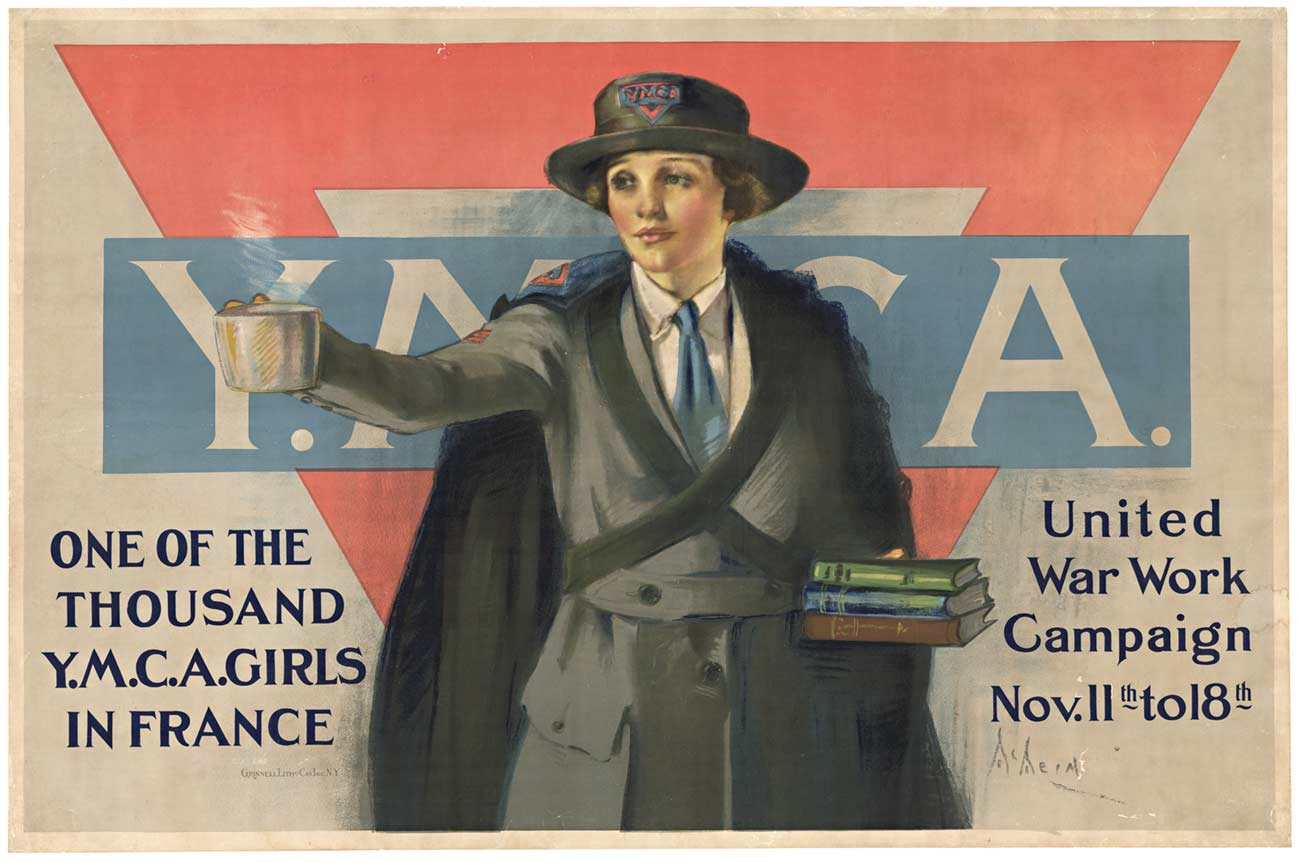
The 1918 poster below features the artwork of Neysa McMein, who also went overseas during the war to entertain the troops. She and Jane were friends.
What I’m Reading

I’m more than halfway through Angela Flournoy’s The Wilderness. It had a strong start, but now I find it very uneven. I’m looking forward to seeing how it all wraps up.

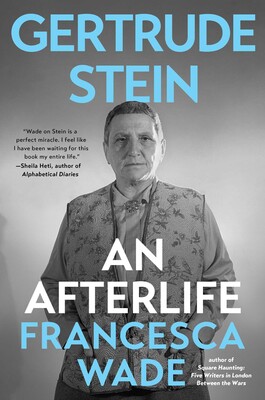
I’m almost done with Gertrude Stein: An Afterlife by Francesca Wade. Stein has died and Toklas, in her grief, is trying to carry out her wishes for her unpublished work and trying to protect her reputation as a pathbreaking author. I really like this book.

Wednesday night’s Vanity Fair Zoom book discussion was fascinating. I can’t wait to find out what the 2027 novel will be.

What I’m Watching

Nothing new in the rotation of Starfleet Academy (Paramount+), Grace and The Game (BritBox), All Creatures (PBS), and The Lincoln Lawyer (Netflix). Down to one episode left of both The Game and All Creatures. It kind of seems like The Lincoln Lawyer may never end, but I’m only at the halfway point. Last week’s Starfleet was one of the better episodes, and I hope this week’s can at least match it.

What Else I’ve Been Doing

I finished my review of the book proposal for an academic press and submitted it before the deadline. So yay me, and yay for the press that will be getting a good book—if that’s how the rest of the process works out.

The weekly bowling took place, the usual two games. Once again it was two pretty mediocre games for me. But this week’s bright spot was that twice in one game I picked up a spare from a split. That was quite astonishing.

A couple of days after I switched out my winter walking boots for regular sneakers (thanks to warmer temperatures and nearly snow-free streets) to take my daily walks, winter sent about 6 inches of snow as a reminder that it’s still, well, winter. Not that I actually packed away the boots for the season….

Thanks for reading. Stay tuned for next week: Are chapters two and three finally revised? Are the winter walking boots still out?
Dispatches from the Writing Life #4: Valentine’s Day Edition

Today is Valentine’s Day, so it’s perhaps fitting that in chapter three of my book about Jane Grant, she meets Harold Ross. He becomes her first husband, and together they create The New Yorker. But that comes later.

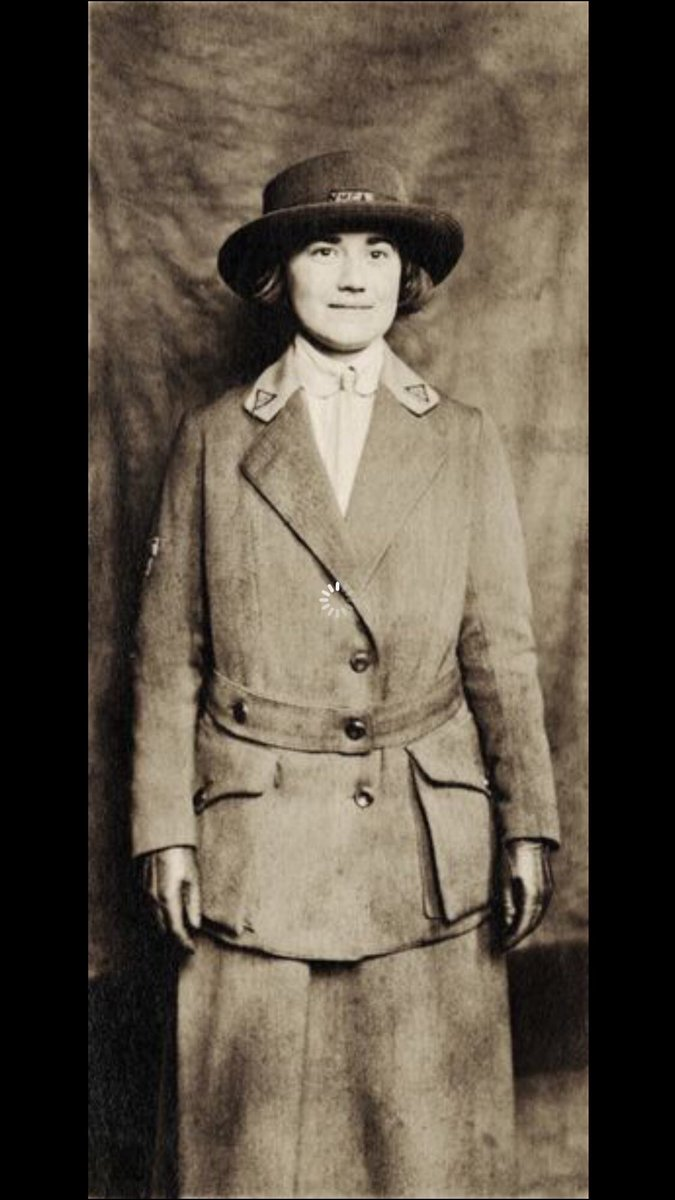
In this chapter, Jane is overseas with the YMCA in 1918-1919 doing war work. Both adventurous and practical, she couldn’t wait to get to France. She knew that a few female journalists had managed, despite military restrictions, to get across the Atlantic and file stories about World War I. But the New York Times wouldn’t send her as a reporter, so she applied to one of the government-sanctioned service organizations that hired women for clerical work, nursing, and entertainment. Jane figured she was qualified for two out of those three, and she believed that whatever her posting entailed, it would somehow further her career.

[Jane Grant, c. 1918-1919, Jane Grant papers, University of Oregon]

The Y sent Jane to Tours, France, but her friend and colleague from the Times, Alexander Woollcott, pulled strings to get her to Paris. He had been in the army since 1917, and now, as a sergeant, he worked in Paris on the staff of the American Expeditionary Forces’ Stars and Stripes. Jane easily fell in with that newspaper crowd, and it was Woollcott who introduced her to Ross, editor of the publication. It was not love at first sight, but the attraction was strong enough to induce Ross to take a job in New York City after the war to be near Jane.

This chapter revision is ongoing. There is less to weed out, and more to weave in.

What I’m Reading

I started a novel, The Wilderness, by Angela Flournoy. Good so far. I read her first, The Turner House, back in 2016, and I noted this on Goodreads: This is a lovely, lovely novel. Set in contemporary Detroit, it tells the tale of a large family still dealing with the death of the patriarch and with the rapid decline of the matriarch. The fate of the family home, which has fallen into considerable disrepair, is a point of contention among the 13 siblings. And there’s a haint. Wonderful.

I’m continuing with Gertrude Stein: An Afterlife by Francesca Wade and Lorissa Rinehart’s Winning the Earthquake. I can’t renew the Stein biography, so I have to make sure that takes precedence during my reading time. I’m pretty sure the only thing of Stein’s I’ve read is The Autobiography of Alice B. Toklas, and probably only selections from it, a long, long time ago. I doubt that I would have much patience for her modern, experimental work.

I finally finished Vanity Fair, and I’m very glad. I’m participating in a Zoom book discussion this coming Wednesday night.

What I’m Watching

Starfleet Academy (Paramount+), Grace (BritBox), All Creatures (PBS), and The Lincoln Lawyer (Netflix) remain in rotation. I still like Grace the best—good storylines and an efficient use of the 90-minute format. I also started The Game, also on BritBox, which has more thriller elements than I like, but the acting is good and there are only four episodes, so I think I can see it through.

What Else I’ve Been Doing

I made progress on my review of a book proposal for an academic press, so I remain on track to meet the deadline.

The weekly bowling took place, the usual two games. Overall, I rolled pretty mediocre. But there was a bright spot: I made three spares in a row, which I kind thought might be referred to as a chicken. It made sense to me since three strikes in a row is a turkey, and I figured a chicken was the next bird down, size-wise. When I finally remembered to look it up, I learned to my absolute delight that three spares in a row are called a sparrow. Perfection!

Happy Valentine’s Day! (to those who celebrate)

Thanks for reading. Check back next week to see how far the chapter three revisions have progressed.

Dispatches from the Writing Life #3: In Which There is Progress

I finished revisions on chapter two. Finally, progress.

The challenge was to take two rough chapters and combine them into one. I find it difficult to jettison material (though I safely store it in a scrap file, just in case), whether it’s from primary or secondary sources, because it interested me enough to include it in the first draft.

But what interests me doesn’t always serve the story. The story I need to tell in this chapter is about Jane Grant’s first years of working at the New York Times. She was in her 20s and still harbored hopes of a singing career. Jane viewed the job at the Times as a means to an end, a way to support herself while she went out on auditions and took on performing gigs. Key to the chapter is how and why Jane became a journalist.

Now that I have that all set up, I’m getting ready to move on to the third chapter, which highlights another pivotal point in Jane’s life: working overseas for the YMCA during World War I. A lot of revisions will go into this, too, because I also spread these events over two draft chapters. Does the story require all of that material, all of those pages? That’s what I’m going to be working through. Luckily, I’ve had a lot of recent practice.

What I’m Reading

Many of the books on my library hold list come from reading Nancy Bekofske’s blog The Literate Quilter. She reviews a variety of fiction and nonfiction, even poetry. It’s a great way to keep up with forthcoming and recent publications.

I finished Palace of Deception: Museum Men and the Rise of Scientific Racism by Darrin Lunde and liked it well enough, especially the behind-the-scenes stories of how museums acquire collections. Lunde is also very good at delving into the characters of these museum men. But because of my own particular interests, I found myself more drawn to the women who, in this telling, existed on the periphery of these events.

I started Gertrude Stein: An Afterlife by Francesca Wade. The first sentences of the prologue are stunning: “She came to Paris, she said, to kill the nineteenth century. Her weapons were a pencil and a supply of softcover notebooks, her targets dullness and cliché. She chopped off her long coils of hair and dispensed with punctuation….” There is Stein, fully alive, confident in her importance. Moreover, a casual look at the notes section of the book reveals an impressive amount of archival sources and ample citations for quotes and other information found in the text. Wade also discusses some of the process of her research in her acknowledgements. These are the kinds of things I regularly look at in nonfiction books.

I continue to read Lorissa Rinehart’s Winning the Earthquake: How Jeannette Rankin Defied All Odds to Become the First Woman in Congress. Consider these first sentences: “Her water broke. Mary, the family cook, helped her into bed. Besides Mary, Olive Rankin was alone on the ranch situated in Grant Creek Valley, some six thousand feet above Missoula, Montana.” And the beginning of the third paragraph: “Between contractions, Olive tried to focus on the wildflowers painting the mountainsides. White yarrow and purple lupine.” It’s all very evocative, but my first thought was, “How do we know?” The notes section doesn’t provide an answer. The information may have come from a previous biography of Rankin written by the late Norma Smith and published in 2002. Or Rinehart may have imagined the scene, leaning into creative nonfiction. I always prefer a sharp delineation between fact and imagination.

I’m still reading Vanity Fair. Still. But I’m closing in on the end.

What I’m Watching

The final episodes of Shetland and Bookish were both good, though I like the Shetland series more than Bookish. Maybe it’s because of a familiarity with the characters. But Bookish seemed a bit tentative about where it was going and what it wants to be. Still, I’m willing to watch the next season.

My ambivalence about Starfleet Academy continues. All Creatures Great and Small remains a good comfort watch, though I wish the female characters had better storylines.

New seasons of Grace (BritBox) and The Lincoln Lawyer (Netflix) have moved into my rotation. I appreciate that Grace solves one crime per 90-minute episode. The Lincoln Lawyer is going to be a tense season, with Mickey Haller in jail awaiting his murder trial.

I also saw Agatha and the Truth of Murder (Prime), a re-imagining of what happened during Agatha Christie’s disappearance in the 1920s. I liked it.

What Else I’ve Been Doing

I was asked by an academic press to review a book proposal, and I need to finish that before the end of February. This is not the kind of deadline that can be elastic. It’s not fair to keep a hopeful author waiting any longer than necessary.

Happy Super Bowl Sunday to all who celebrate. May your favorite team win. And happy Olympics viewing, too.

Thanks for reading. Find out next week how chapter three is coming along.

Welcome 2024! (What I’ve got coming up.)

I look forward to the beginning of each new year so I can round up and reflect on the reading I’ve done over the preceding year. Pulling together my own “favorites” lists of fiction and nonfiction will take me a bit longer than usual because I’ve got a big thing happening starting next week.

I’ll be in New York City (for the first time ever) to complete a Short-Term Research Fellowship at the New York Public Library. For two weeks I get to comb through the records of The New Yorker magazine, which was co-founded in 1925 by Jane Grant, the subject of my next biography. I’m thrilled and honored to receive this support from the NYPL.

(Audrey Hepburn in Breakfast at Tiffany’s. Nothing remotely like what I’ll be doing in New York.)

(Library of Congress photo. Where I’ll actually spend most of my time.)

This will be the second major research trip for my new book project, which is tentatively titled The Jazz-Age Feminism of Jane Grant. Back in October, I traveled to the University of Oregon to research Grant’s papers, housed in the archives of the Knight Library.

I started to write a blog post about that experience, which turned into quite a different piece that’s still unfinished but not abandoned. So, after I post my 2023 reading lists in late January, I’ll polish the unfinished piece and get that up, then, in time for Women’s History Month, there will be a couple of articles about these research trips and an update on the status of my book project.

Until then, here’s a link to a post I wrote for Shepherd, a reading recommendation site, about my three favorite novels that I read before October 2023. It’ll give you a sneak peek at what will be in my full list.

https://shepherd.com/bboy/2023/f/theresa-kaminski

And here’s the link to the list of the 2023-2024 recipients of the Short-Term Research Fellowships at the New York Public Library:

https://www.nypl.org/help/about-nypl/fellowships-institutes/short-term-fellowship-recipients

I hope everyone finds joy in 2024!

Five Best Books (and other news)

A new website for readers called Shepherd (“Like browsing the best bookstore in the world.”) asked me to contribute to its best books series. Authors get to recommend their favorites on a particular subject, and to keep my recommendations down to five, I had to come up with a very narrow topic!

I titled mine “The best books on 19th-century women’s rights activists who weren’t Susan B. Anthony.” https://shepherd.com/best-books/19th-century-womens-rights-activists

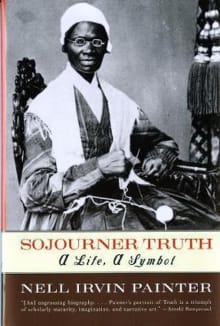
The list highlights works on lesser-known women like Julia Ward Howe and Lucy Stone who were devoted to a variety of gender equality issues, including suffrage. I’ve also included one of my all-time favorites, historian Nell Irvin Painter’s brilliant biography of Sojourner Truth.

Sojourner Truth: A Life, a Symbol

If you have the time, take a look through the other recommendation lists on the Shepherd site–it’s a great resource for nonfiction readers.

In other news, my forthcoming biography of singer and actor Dale Evans (the first one ever written about this mega-celebrity of the 20th century), Queen of the West: The Life and Times of Dale Evans, has just gone through the copyedit stage. Next come the page proofs, when I get to see how the manuscript actually looks as a printed book. The cover design, which is quite snappy already, is still undergoing a bit of tweaking, but I’ll debut it here when it’s officially finalized. So far, the book is due to be released in March 2022.

Now that the Dale Evans book is essentially done, it’s time to move on to a new project. After a couple of conversations (one very long, the other pretty short) with my agent, we settled on one of the several ideas I pitched. It’s at the very, very beginning of the proposal process and much too soon to reveal particulars, but I can share that it’s in keeping with my penchant for writing about scrappy women in American history. 

Until my next post, happy reading!