Dispatches from the Writing Life #9: A Blizzard and Its Aftermath

Two things from this week:

1. In revisionland, it was another week of digging into primary sources. This time I was examining a pair of letters that Alexander Woollcott sent to Jane Grant while he was in France during World War I. They were colleagues at the New York Times where he worked as a drama critic before he enlisted, and they exchanged gossip about co-workers and other people they knew in New York.

I fell down a bit of a research rabbit hole trying to fill in the details about one of the subjects of their gossip whose important position with the newspaper was tied directly to the war. And I kept coming up with almost nothing. I searched through the Times as well as the Newspapers.com database, both of which returned scant information. Ancestry returned to many hits that sorting through them would have taken much more time than I wanted to devote to a short scene. But I had to know something more about this person.

Turns out I had been misspelling the name. It all came down to the placement of one “e,” which actually belonged someplace else. That threw everything off in the searches. Once I corrected that I found what I needed, finished writing the section, and moved on.

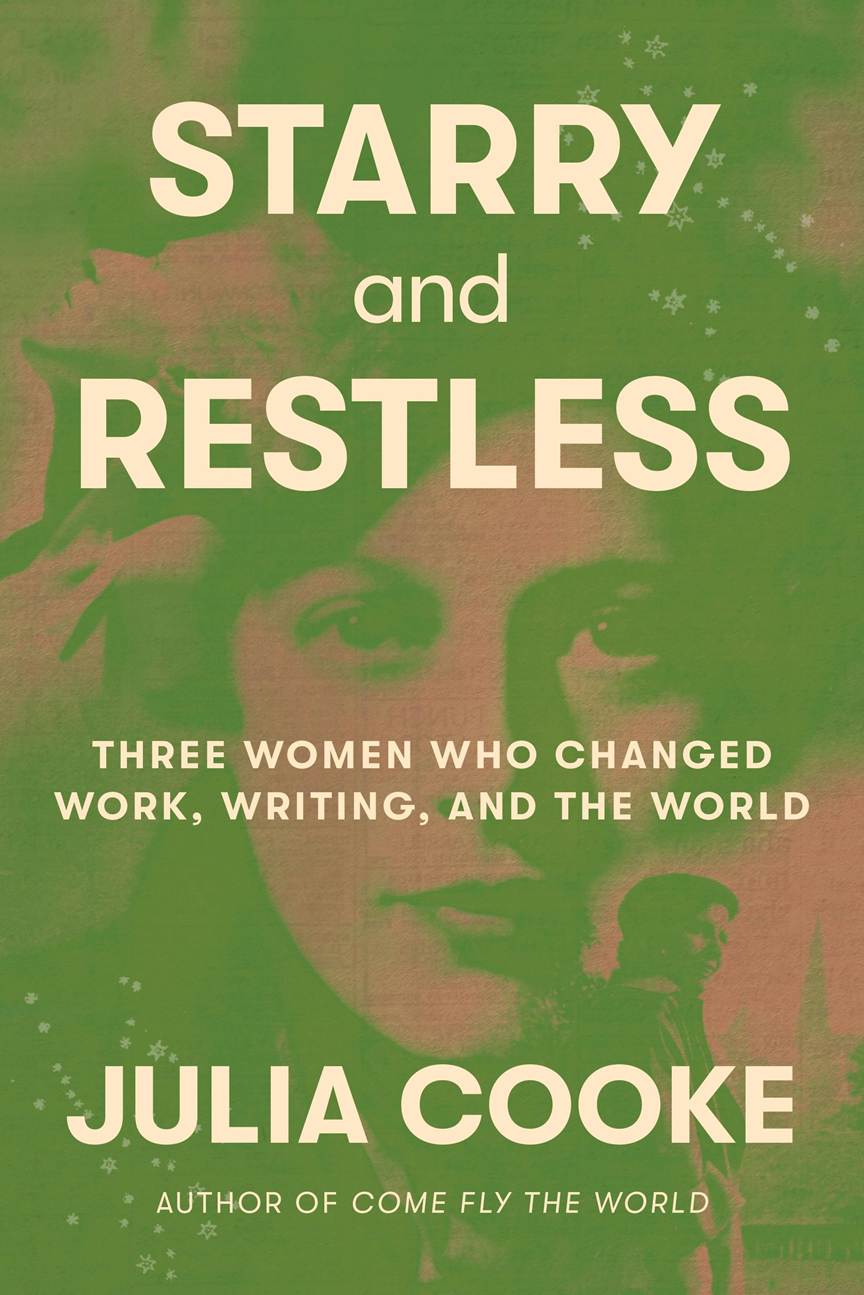
2. I’ve been thinking a lot about Jennifer Szalai’s review of Julia Cooke’s Starry and Restless: Three Women Who Changed Work, Writing, and the World in the March 15 issue of the New York Times Book Review. It is a positive review. Szalai pronounces the book “a vibrant triple biography” of the writers Rebecca West, Martha Gellhorn, and Emily Hahn, appreciating how Cooke writes with “verve and expansiveness.” Although I haven’t finished reading Starry and Restless yet, I agree. Cooke is a wonderful writer, and I get totally immersed in these women’s lives whenever I sit down with the book.

Then there is Szalai’s final paragraph:

“Apparently the cultural imperative to wrest salutary lessons, even from the most audacious and defiant women is strong: ‘Maybe they offer a new compass by which a person may orient herself within her own choices.’ Maybe. Or maybe the idiosyncratic lives of these peregrinating writers invite a simpler, but no less significant, proposal: Read this book and be enthralled.”

That’s the part that has stuck with me all week as I think about the subject of my book and the very different worlds of writing (i.e. Toni Morrison’s advice: “If there’s a book that you want to read, but it hasn’t been written yet, then you must write it.”) and publishing (i.e. who is going to read and buy this book?)

And how many times do you think I checked the spelling of Szalai’s name?

Women’s History Month

Final reminder that I will appear live on John Heckman’s YouTube channel on March 24 at 2:00 p.m. Central to talk about Dr. Mary Walker. The installment bears the bold title, “She Defied Them All.” You can find The Tattooed Historian’s page on Facebook, follow him on Instagram, listen to his podcast, read him on Substack, and/or watch his YouTube channel.

Pamela Toler’s annual WHM blog series on History in the Margins is still posting new Q&As. Be sure to take a look.

What I’m Reading

As mentioned above, I’m still reading Starry and Restless: Three Women Who Changed Work, Writing, and the World by Julia Cooke. I’ve found Emily Hahn’s life particularly fascinating, plus it’s been interesting to see Alexander Woollcott make an appearance. He was one of Jane Grant’s first friends when she joined the New York Times.

Finished Dinner at the Night Library, a novel by Hika Harada, translated by Philip Gabriel, which was lovely.

Kind of hurriedly finished Mike Pitts’s Island at the Edge of the World: The Forgotten History of Easter Island because it was due back at the library and was non-renewable.

What I’m Watching

Finished How to Get to Heaven from Belfast (Netflix) and liked it. Not sure what will come next.

Sticking with Mudtown (BritBox), a crime series set in Wales, featuring a female magistrate, with episodes that drop once a week. That’s okay. We’ve never done binge-watching.

Also continuing Young Sherlock (Prime) but haven’t been back to Hope Street (BritBox) yet because of its unevenness and soapiness. And haven’t felt at all compelled to return to Scarpetta (Prime) after that first episode.

What Else I’ve Been Doing

This was the first time in over three weeks that bowling went very well, this despite a bigger crowd because of spring break, one lane that stopped properly resetting the pins, and another lane that only periodically returned the balls. Yet one of us had their highest lifetime score and the other one had no trouble breaking 100 in each game. Then we went for ice cream.

I finally hemmed a pair of black jeans, just in time to get a few more wears out of them before I do my seasonal closet changeover.

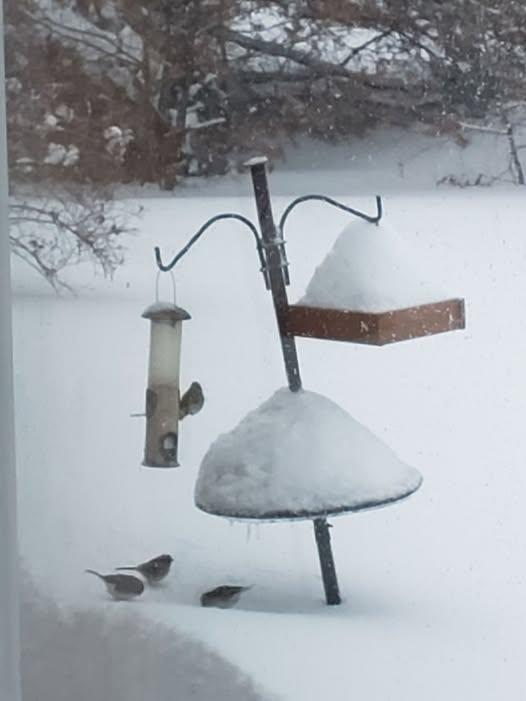
We got through an actual blizzard. More than 20 inches fell here at Southfork over last weekend. But thanks to prompt and excellent snow removal (especially by the foreman) plus moderate to mild temperatures, right now it looks like only an average amount of snow on the ground for early spring.

So, happy spring and thanks for reading. See you next week.

Dispatches from the Writing Life #8: Jane Grant in Love?

I became totally engrossed with archival sources when I decided to look more closely at Jane’s pre-World War I romances. I spent the whole week not only piecing together her love life but also thinking about how and why people choose which documents to keep with them throughout their lives and how those items end up in boxes in archives for researchers to later scrutinize.

The papers in this particular box of Jane’s papers that are held at the University of Oregon comprise her correspondence from 1911-1918, but it is one-sided, made up of letters she received. Sometimes they provide clues about what Jane had written to prompt a response, sometimes they don’t. It’s up to the historian to figure out what was going on.

For example, one letter, undated (which adds another layer of difficulty), was addressed to “My Dear Little Jeanette” (Jane’s legal first name) and signed “Geo.” Someone had penciled in a date range of 1912-1915 at the top of the first page, which confirmed a year referred to by “Geo” within the letter.

The letterhead was printed with “Newton Farm, Los Gatos, California.” It was easy to conclude that the letter was written by George Newton. Supplied with a date range, location, and name, I turned to Ancestry and Newspapers.com, two online library databases. A few hours of searching enabled me to make some informed assumptions.

George F. Newton, born in Iowa and in the mid-1910s somewhere in his middling forties, owned the eponymous farm, but used it as a country getaway. He and his new wife Avis, some twelve years his junior, lived most of the year in the San Francisco/Oakland area where he ran a fireworks company.

Newton wrote to Jane to thank her for her “sweet little birthday letter.” Because he told her he couldn’t spend much time on the farm until after the Fourth of July (a big day for fireworks) and because he encouraged her to come visit in 1915, I think the letter was written in the spring or early summer of 1914.

But it’s not clear how Jane knew Newton. At one point, when he was young, his family lived in Kansas, so it’s possible he was an old family friend or even a relative. In the opening salutation, he called her Jeanette, the name she tried to put behind her when she moved to New York.

I’m still trying to figure out if this sentence provides a clue about their relationship: “I have the limousine in the city and think of you every time I ride in it.” Did Newton know about Jane’s career ambitions, and did he pick up on her desire to have fine things?

Newton wasn’t angling for an affair, though. Twice in the letter he mentioned his wife, and he explained the reason behind his invitation to visit. “I am sure you could get along better here than in that big cold city of N.Y. Mrs. Newton says for you to come out here and call us Father and Mother and see how you like this country. If I can find you a position in advance will you come?” Newton understood that Jane’s career was important to her.

And here’s the connection to Jane’s love life. Newton tried to sweeten the offer in his P.S.: “I have a dandy handsome fellow picked out here for you his name is Billie.” Apparently, he knew about how she socialized with young men and wanted to assure her that she would have plenty of options in California. But maybe Jane worried that Newton’s main purpose was to get her married and settled. That was not what she wanted.

It’s not surprising that Jane didn’t take Newton up on his offer. His letter only indirectly refers to Jane’s dating. There are no other letters in the collection from Newton, but there are some from men that provide more evidence about her relationships. These men were involved with her, and thought they knew her and knew how she felt about them. But it seemed they were very wrong.

For some reason, these letters ended up with all of Jane’s other papers at the University of Oregon. It’s hard to know if she kept them on purpose because they brought back particular memories, or if they just got stuck in a folder somewhere and never got tossed out. This may all become clearer after I conduct another round of research. Or it may not.

Women’s History Month

A reminder that I will appear live on John Heckman’s YouTube channel on March 24 at 2:00 p.m. Central to talk about Dr. Mary Walker. The installment bears the bold title, “She Defied Them All.” You can find The Tattooed Historian’s page on Facebook, follow him on Instagram, listen to his podcast, read him on Substack, and/or watch his YouTube channel.

Also remember to check out Pamela Toler’s annual WHM series on her blog, History in the Margins. She runs the best Q&As with people who write women’s history.

What I’m Reading

I picked up my library copy of Starry and Restless: Three Women Who Changed Work, Writing, and the World by Julia Cooke. I’ve been particularly interested to read about Emily Hahn, one of the women I wrote about in my very first book, Prisoners in Paradise. I’m pleased to see that Jane Grant’s name pops up a few times in Starry and Restless, and the book had got me thinking about some of the choices Jane made during the 1930s, after she’d been shut out of The New Yorker and she left her job at the New York Times. Jane was restless then, but not, I think, starry.

I’m continuing with Mike Pitts’s Island at the Edge of the World: The Forgotten History of Easter Island. It still holds my interest.

For pure leisure reading, I’ve been enjoying Dinner at the Night Library, a novel by Hika Harada, translated by Philip Gabriel.

What I’m Watching

Started Mudtown (BritBox), a crime series set in Wales, featuring a female magistrate, and it’s good so far. Better though—at least based on the first two episodes—is Young Sherlock (Prime). I always like a good reimagining of Sherlock Holmes.

I’m much more on the fence after watching the first episode of Scarpetta (Prime). I don’t mind the dual timeline, but the portion that takes place in the present day (with Nicole Kidman as Kay Scarpetta) reminds me of why I stopped reading the novels by Patricia Cornwell that the series is based on.

Hope Street (BritBox) has been a bit uneven, but I’ve been enjoying How to Get to Heaven from Belfast (Netflix).

Finished Starfleet Academy (Paramount+) and The Lincoln Lawyer (Netflix). The season finale of Starfleet displayed the qualities I’d hoped to see in all of the episodes but didn’t.

What Else I’ve Been Doing

Weekly bowling, two games. The first was abysmal, the second mediocre. So, progress, I guess.

Almost finished another very small sewing project: hemming a pair of jeans, something I’ve been meaning to do ever since I bought them two or three years ago. No matter how much I measure and pin and try them on, I keep thinking I’m going to make them too short.

Thanks for reading. I’m not sure what’s more ferocious than a March lion, but whatever it is, it’s barreling into the upper Midwest. Between Saturday night and Monday morning there might be at least twenty inches of snow, accompanied by high winds. Here at Southfork, we’re under a blizzard warning, and there is ample gasoline for the snowblower and a fully stocked refrigerator, both courtesy of the foreman (who is also my bowling partner and my partner in everything, especially life).

See you next week.

Dispatches from the Writing Life #1

Welcome to the first in a weekly (I hope) series that charts the progress of my current writing project, Invisible Me: Jane Grant and The New Yorker.

Since I have no deadline for finishing this book, the pace of progress is up to me. I’ve set goals throughout and meeting them has been greatly aided by three very supportive online writing communities. I envision this weekly series as adding another layer of accountability and cultivating another community (all of you).

I’ve been working on Invisible Me for a few years. Writing nonfiction history requires lots of time-consuming research and lots of writing, through multiple drafts. For this project, I’ve already made two major research trips, tracked down digitized online collections, and read dozens of published sources. Then I wrote an extremely bloated and somewhat blurry first draft.

After I finished, I wrote a book proposal so I could query literary agents for representation. The proposal, basically a sales pitch for the book, forced me to focus on the contours of the story, to make sure that Jane comes across as a multi-faceted person with plans and dreams, failures and successes, who has historical importance. During this past week, the last queries went out, and now I’m waiting to hear back from the agents. Or not. Many agents now don’t have the time to even send a rejection email, so if I don’t receive a response in a few weeks or a few months, it means they’ve passed. Or not. It’s fair game to nudge them once or twice before giving up.

While in agent-waiting mode, I’ll read through those first draft chapters to assess the scope of writing work ahead, to start a second, bloat-free draft. I may set an initial goal of completing one chapter per month.

Writing occupies part, but certainly not all, of my day. It’s the work part of my day. Luckily, since I’ve retired from academia, I set my own hours. I also read a lot and watch shows on various streaming services.

What I’m Reading

I recently finished a couple of nonfiction books about spies: The Art Spy: The Extraordinary Untold Tale of WWII Resistance Hero Rose Valland by Michelle Young and Family of Spies: A World War II Story of Nazi Espionage, Betrayal, and the Secret History Behind Pearl Harbor by Christine Kuehn. Both are good, and Kuehn’s book especially packs a lot of yikes moments.

In two blissful sittings I read Maddie Ballard’s compact memoir, Patchwork: A Sewist’s Diary. I recently returned to sewing after a thirty-some year hiatus, and I loved how Ballard wrote about garment construction and identity and relationships. It’s beautiful.

And now I’m a few chapters into Palace of Deception: Museum Men and the Rise of Scientific Racism by Darrin Lunde, not at all the usual kind of book I pick up. But I’m a big fan of museums, and he presents an interesting story.

On the fiction front, I recently read Ann Cleeve’s The Killing Stone, a new Jimmy Perez story. I’m a big fan of Shetland (see below) and was happy that Cleeve brought back one of my favorite detectives, even if he’s not on Shetland anymore. I absolutely loved Sacrament, Susan Straight’s marvelous novel about nurses at a California hospital during Covid. And I continue reading (or sometimes plodding through) Vanity Fair, the 19th century classic by William Makepeace Thackeray. I’m sticking with it for an online book discussion next month. In previous years, this group has read Anna Karenina and Middlemarch, so there’s a definite vibe to these selections.

What I’m Watching

BritBox recently debuted Season 10 of Shetland, and I’m eagerly keeping up with all the episodes. Perez has moved on, but his replacement, Ruth Calder, has great chemistry with Alison “Tosh” McIntosh. I’m already looking forward to Season 11.

On PBS, there’s a new season of All Creatures Great and Small and a new mystery series called Bookish. And Paramount+ launched Starfleet Academy, the latest addition to the Star Trek universe, and it’s okay so far.

I keep meaning to watch the final episode of Stranger Things on Netflix but haven’t been in the right mood yet. I find Young Sheldon and Mom (neither of which I watched on network t.v.) reliably good, and I revisit The West Wing and The Closer from time to time.

What Else I’m Doing

Daily exercising (a portable elliptical machine is essential during winter), sewing (very sporadically lately), thrifting (one of my favorite pastimes that sometimes is related to what I’m sewing), bowling (once a week as extra exercise that’s also a fun outing).

That’s it for now. Thanks for reading. Hope you check back next week to see what kind of progress I’ve made.

My 2025 Reading, Part Two: Nonfiction

This may be a first for my annual list of nonfiction favorites, but it’s certainly not surprising. All fifteen of the books listed below, plus a bonus title, were written by women. And all fifteen are about women. Unusual and a bit surprising: I read several memoirs.

In my last post I mentioned that I sometimes forget to log my books on Goodreads, which makes tallying up a year’s worth of reading inexact. I’m leading the 2025 list with my most embarrassing omission from last year because I can’t bear for everyone not to know that it’s one of my favorite works of nonfiction. The rest are listed roughly in the order in which I read them.

1. The Dragon from Chicago: The Untold Story of an American Reporter in Nazi Germany by Pamela D. Toler. This is an excellent and much needed biography of Sigrid Schultz, the Chicago Tribune’s bureau chief and foreign correspondent in Central Europe who warned about the dangers of Adolf Hitler and Nazism. The book received starred reviews from Publishers Weekly and Kirkus Reviews, and it was a finalist for the Los Angeles Times’s 2024 Book Prize in Biography.

2. The Icon and the Idealist: Margaret Sanger, Mary Ware Dennett, and the Rivalry That Brought Birth Control to America by Stephanie Gorton. A first-rate dual biography of two of the most important birth control activists in United States history. Sanger’s name is the more familiar of the two, but Gorton convincingly demonstrates that Dennett deserves just as much attention. I’ve long been a huge fan of Dennett so was particularly pleased to see her in the limelight. And she’s the subject of an Ogden Nash poem, probably the only verse I know by heart.

I for one
Think the country would be better run,
If Mary Ware Dennett
Explained things to the Senate.

3. The Many Lives of Anne Frank by Ruth Franklin. I first read The Diary of a Young Girl in a grade school English class. Over the years, I’ve read the expanded versions as well as books about Frank, her family, and the people who made the Secret Annex possible. Franklin combines a well-written biography of Anne Frank with investigations into the various forms of the diary, the ways in which it has been dramatized for stage and screen, and how Frank has become a fictional character in the works of other authors. Fascinating all the way through.

4. Tell Me a Story Where the Bad Girl Wins: The Life and Art of Barbara Shermund by Caitlin McGurk. This biography wins Best Title of the Year, at least as far as me and my list are concerned. Who wouldn’t want to hear that story? And McGurk has done a marvelous job of situating artist Shermund in her proper place in the history of American illustrators and cartoonists. I was especially intrigued with Shermund’s work for The New Yorker during its early years, when Jane Grant was still around. The two women probably had a lot in common.

5. After Lives: On Biography and the Mysteries of the Human Heart by Megan Marshall. These essays, by a genius biographer, blend memoir with craft advice. It’s all beautifully written and inspiring.

6. Wifedom: Mrs. Orwell’s Invisible Life by Anna Funder. Wow, wow, wow. An insightful, incisive biography of Eileen O’Shaughnessy, who married George Orwell. Funder shows exactly what O’Shaughnessy contributed to the artistic success of Orwell and explores how and why she was pretty much written out of the biographies of the author. The book has made a huge impact on how I view Jane Grant.

7. Dust and Light: On the Art of Fact in Fiction by Andrea Barrett. I adore Barrett’s fiction, and I loved her take on novelists’ use of history in their (and her own) work. Beautiful.

8. The Trouble of Color: An American Family Memoir by Martha S. Jones. Jones is a brilliant historian, and she has deployed her formidable skills to answer a personal question for herself: “Who do you think you are?” Her search takes her through her family’s history, which included enslavement, as she grapples with the meaning of color in the lives of her ancestors—and herself.  

9. The Last American Road Trip: A Memoir by Sarah Kendzior. A family memoir of a different kind, Kendzior looks at politics and society in America, past and present, through road trips she takes with her family during the pandemic years. I admired the gorgeous writing, the strong sense of place, and the whiffs of nostalgia infused with a bit of hopefulness.

10. Marion Greenwood: Portrait and Self-Portrait—A Biography by Joanne B. Mulcahy. This biography focuses on all the things I’m drawn to in this genre: a once well-known woman, incredibly smart and talented, whose political beliefs led her to live an unconventional life, who somehow disappears from history. Greenwood, a devotee of social realism, painted some of the most stunning murals and portraits in the first half of the twentieth century. Mulcahy, with her usual elegant prose, reminds us why it’s still important to know about her.

11. Birding to Change the World: A Memoir by Trish O’Kane. Originally an investigative journalist, O’Kane switched careers after Hurricane Katrina upended her life. She developed an interest in birds, enrolled in an environmental studies Ph.D. program, and embarked on a social justice campaign to save a local park from over-development. O’Kane’s passion and dedication shine through—for her academic work and love of learning, her community and its people, and the many species of birds she encounters.

12. Foreign Fruit: A Personal History of the Orange by Katie Goh. Goh traces the history of the orange as she untangles the strands of her multi-cultural heritage. She travels from Ireland to China and Malaysia to connect with far flung family members, seeking answers about her identity. The orange, with its own complicated history, gives her grounding and perspective. I liked this unique approach to memoir.

13. The Girl in the Middle: A Recovered History of the American West by Martha A. Sandweiss. The presence of a Native American girl, Sophie Mousseau, in an 1868 photograph taken at Fort Laramie is Sandweiss’s jumping off point for this meticulous work of history about post-Civil War America and westward expansion. It’s a densely packed story, and Sandweiss’s other real-life characters, including photographer Alexander Gardner and Union general William S. Harney, occupy much of the narrative. But Mousseau is a constant, almost haunting presence, at the heart of the story.

14. Sisters of Influence: A Biography of Zina, Amy, and Rose Fay by Andrea Friederici Ross. During the Victorian era, known for its constraints on women’s behavior, these three sisters pushed at the boundaries of those expectations to make names for themselves in music, writing, and domestic reform. It’s an absorbing family biography, and Ross calmly and ably juggles all the different personalities.

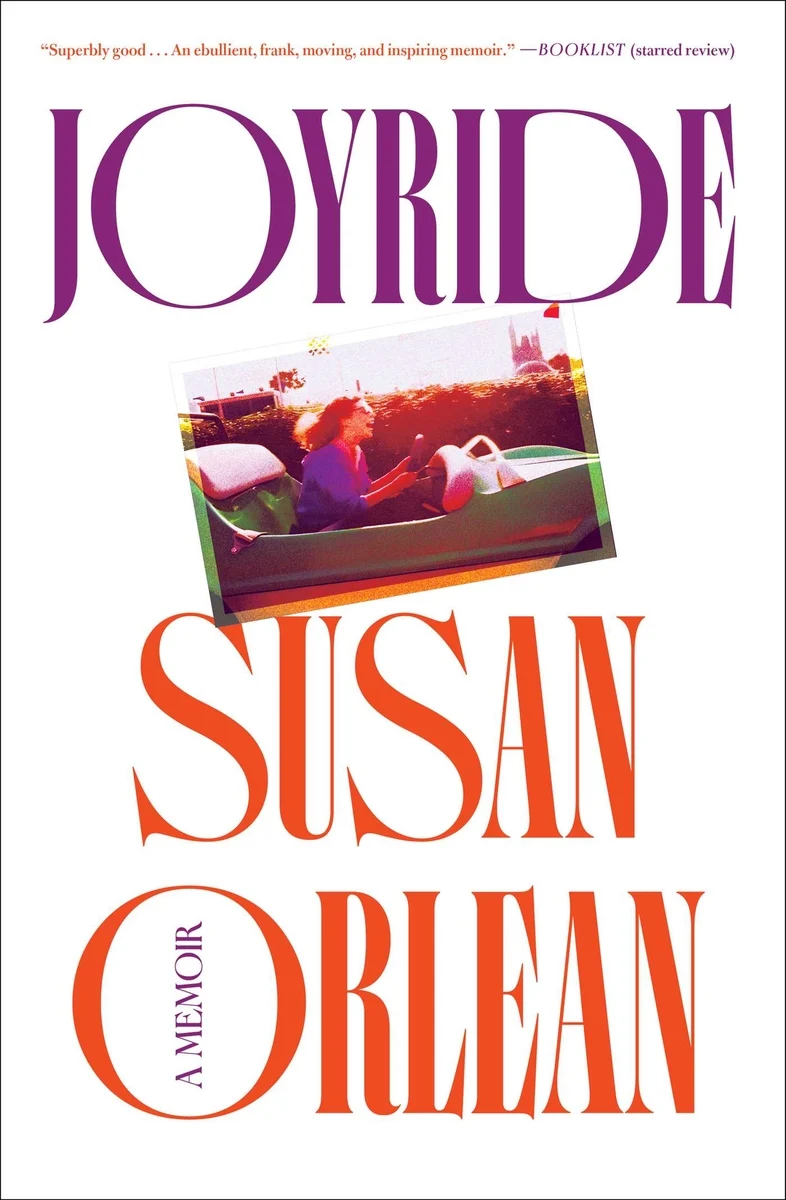
15. Joyride: A Memoir by Susan Orlean. I’m a fan of Orlean but not a super fan. I haven’t read everything she’s written but I liked The Library Book and many of her articles. Reading this memoir provides the sense of exhilaration portrayed on the book’s cover. I was fascinated by how Orlean carved out a career as a writer and enjoyed the snippets of her personal life that she included.

Bonus book:

How to Write a Bestseller: An Insider’s Guide to Writing Narrative Nonfiction for General Audiences by Tilar J. Mazzeo. A former academic who has written bestsellers, and Mazzeo provides practical advice to narrative nonfiction writers, especially those who want to move away from scholarly writing. It’s one of the most helpful how-to writing books I’ve read in a long time.

And one final kind of quirky thing about my 2025 reading. In a previous post I wrote about how much I liked Debby Applegate’s Madam: The Biography of Polly Adler, Icon of the Jazz Age, but had to stop reading it because it invaded too much of my head space while I was drafting my book about Jane Grant. Well, that happened again. This time I set aside The Aviator and the Showman: Amelia Earhart, George Putnam, and the Marriage that Made an American Icon, Laurie Gwen Shapiro’s latest book. It’s terrific, but Shapiro’s voice is so strong that the book is now sitting on the shelf next to Madam, where they will stay until I’m much further along with Jane. (At least I didn’t put them in the freezer, which was Joey Tribianni’s solution to troublesome books.)

To all of you who made it this far, thanks for reading. I hope you encounter loads of good books in 2026 that take you on your own joyride.

The Year of Jane Grant: On Marcia Davenport and Archival Absences

Way back in the spring of this year I traveled to Washington, D.C. It was a multi-purpose trip. I wanted to attend the annual conference of the Biographers International Organization (BIO). I have been a member for several years and have met, mostly online, many wonderful and talented writers. This would be a chance to see some of them in person and to learn new things about writing biography.

And while in D.C., I could do some research at the Library of Congress in two collections that I thought might have some useful information about Jane Grant: the papers of author Marcia Davenport and the records of the Writers’ War Board (WWB).

The third reason was just as important: sightseeing. Charles and I hadn’t been to D.C. in a very long time and it’s one of our favorite cities. I hesitated a bit because of the presence of the current administration but then worried that because of the current administration, the things we enjoy seeing might not be accessible for much longer. (I was right to be concerned. The recent government shutdown caused the Smithsonian to close its doors.) So off we went.

It was a marvelous trip. We visited many of the Smithsonian museums and various monuments, we ate at very good restaurants—our favorite was probably Immigrant Food at the White House on Pennsylvania Avenue. The BIO conference was illuminating, and I enjoyed meeting other biographers. I hope to attend another soon, especially when it’s back in its usual New York City location, because then I can add some more Jane Grant research to my itinerary.

(Immigrant Food at the White House, 1701 Pennsylvania Ave. NW, via Tripadvisor)

About the second reason for the D.C. trip: archival research. I ended up not needing all the time for it that I blocked off. On the one hand—yay! More time for museums. On the other—rats! Nothing new about Jane. I knew it was a gamble going in, but a historian always hopes to get her eyes on something stunning. Or at least interesting. Mostly, though, the visit to the Library of Congress served as a sharp reminder of archival absences, what gets saved and preserved and what gets, for one reason or another, tossed.

(Library of Congress, Main Entrance of the Thomas Jefferson building, Billy Wilson, Flickr, 2022, NPS.gov)

During World War II, Jane served as the editor of the WWB’s newsletter. The board was a volunteer organization that helped the government produce well-written propaganda in support of the war effort by matching writers with issues the government and military wanted to highlight. The WWB’s records provided a lot of information on how this worked, but nothing about Jane’s role that I didn’t already know from the documents she saved and are with her papers at the University of Oregon.

I knew from the collection description of Marcia Davenport’s papers that they focused on her writing career—that there would be a lot about her public life and maybe nothing about her private life. The second part proved true. Since she and Jane were friends for many years, I’d hoped that some of their personal correspondence might have sneaked in. But Jane is as absent in the collection as she is in Marcia’s 1967 memoir Too Strong for Fantasy. (To be fair, Marcia does not appear in Jane’s memoir, either. But Marcia’s book covers the time period during which their friendship was the most active, and Jane’s does not.)

Jane first knew Marcia Davenport as Marcia Clarke. Before that, she was Abigail Marcia Glick, born in New York City in 1903 to Reba Feinsohn Glick and Bernard Glick, who worked in insurance. The Romanian-born Reba, twelve years younger than her husband, began formal singing lessons as an adult, taking her young daughter with her to Europe for her summer studies. Within a few years Reba was performing at the Metropolitan Opera under her stage name, Alma Gluck. Marcia’s parents divorced in 1911, and she started using the name Gluck instead of Glick, so throughout her life she was known, at different times, as Glick, Gluck, Clarke, and finally Davenport. Three years after the divorce, Alma Gluck married Ephrem Zimbalist, a concert violinist. (Alma then gave birth to Marcia’s half-brother, Ephrem Zimbalist, Jr., who went on to become an actor, probably most known as the lead in the 1960s television show The F.B.I., and the father of Stephanie Zimbalist, who in the 1980s co-starred in the marvelous Remington Steele with Pierce Brosnan.)

(Alma Gluck and daughter Marcia, c. 1915, Library of Congress)

Growing up, Marcia was surrounded by classical music and classical musicians. She had also become, by her own admission, a “spoilt brat.” Her mother sent her to live with the Earl Barnes family, friends of friends, in Philadelphia where she attended a Quaker day school. From there, Marcia enrolled at Wellesley College in 1921 but failed to graduate. During the summer of 1922, while taking some courses at the University of Grenoble in France, she met Frank Delmas Clarke, who was from New Orleans and a student at Yale University’s Sheffield Scientific School in New Haven, Connecticut.

They fell in love. Both returned to their respective colleges in the fall but hated being apart. Marcia, who had not done well during her freshman year, knew she was in danger of flunking out. Clarke was not happy with his program, so they decided to get engaged. Clarke dropped out of school, and a relative secured a position for him in the coal business in Pittsburgh. Marcia and Clarke married on April 22, 1923, in Port Chester, New York, before moving to the Steel City.

The next year, Marcia gave birth to a daughter. Clarke relocated the family to Philadelphia, where he had taken a new job, then walked out on them after a few weeks. Suddenly a single mother, Marcia scrambled to land a job as a copywriter for a local retail store. She enjoyed the work and thrived on it, appreciating the independence it afforded her. In 1927, she returned to New York City to pursue a job as a writer.

Vanity Fair editor and friend of the family Frank Crowninshield arranged an introduction to John Hanrahan, business manager at The New Yorker. Since Marcia lacked any real journalism experience, Crowninshield thought Hanrahan would be more likely to see the potential in her advertising copy portfolio. It would at least get her a foot in the door at the magazine.

The strategy worked. Hanrahan put in a word for Marcia with Harold Ross, and she was asked to write an article, on speculation, about a new apartment house that was going up. “The assignment was like handing a porterhouse steak to a hungry hound,” Marcia recalled in her memoir. “I was hired immediately as a general staff writer. My basic work was as a reporter for ‘The Talk of the Town.’ My job was leg-work, gathering at its sources the material which the rewrite geniuses turned into the front-of-the-book.”

Soon, in addition to her “Talk of the Town” work, Marcia was writing five columns under different pseudonyms. She later remembered that this frenetic activity was not unique to her. “We all worked as hard. We thought nothing of working from early morning until nine or ten at night, with a sandwich for lunch at our desks. Then after a dinner break the proofs would start coming in. They had to be corrected and rewritten in whole or in part after Ross got his hooks into them, so it was the rule rather than the exception to work from eleven or twelve at night until dawn.”

It’s not clear exactly when Jane Grant met Marcia, but it was likely not long after she started at The New Yorker. If the two women didn’t run into each other during one of Jane’s rare visits to the magazine’s office, Ross might have made a point of mentioning Marcia to his wife. The women had a lot in common: music, opera, journalism. It is likely that Jane invited Marcia to the brownstone for dinner at least once, maybe more often.

In 1929, the year Jane and Ross divorced, Marcia remarried. Russell Davenport was a Yale graduate and an aspiring novelist and poet from an influential Philadelphia family. Marcia Davenport left The New Yorker about a year later to focus on writing a biography of Mozart, which was published in 1932 by Charles Scribner’s Sons and remained in print for decades.

During the 1930s, when Jane traveled extensively through Europe, she and Marcia joined up for at least part of her journey. They got along so well that once, after they parted from their travels in the summer of 1937, Marcia wrote to Jane, “I can tell you with the utmost truth that the best part of the summer for me was our trip, even with the trials of Albania, and that Athens remains the high point of my experiences for a long time past.”

Their friendship may have continued beyond the late 1930s, after Jane stopped taking European vacations. Fascism had been on the rise and World War II was about to break out. William Harris, the man Jane was seeing in the 1930s and would later marry, took a job at Fortune in 1937, the same year Russell Davenport became the magazine’s managing editor, so the two women had that connection as well.

Marcia Davenport’s writing career took off in the 1930s. She worked for a few years as the music critic for Stage magazine, which had a financial connection to The New Yorker. She penned two best-selling novels in the 1940s: The Valley of Decision, a multi-generational family drama, and East Side, West Side, a story of the unraveling of the marriage of a New York City couple. Both became big-budget MGM movies; the first starred Greer Garson and Gregory Peck, the second James Mason and Barbara Stanwick.

(Marcia Davenport at NBC radio, 1936)

So far, I have found no evidence that Jane read either of the novels or saw the movie versions. But I will be making another research trip to the University of Oregon for another look through Jane’s papers. I did not have enough time to turn over every page during my first trip, but one of the things I want to keep an eye out for on my next visit is additional information about the Jane/Marcia friendship. It may exist. It may not. That’s all part of the research life—finding the conversations and confronting the silences.

Now that December is here, it’s time to draw to a close The Year of Jane Grant. My work on the Jane Grant book will continue into 2026, so stay tuned for updates on its progress. The first posts of 2026 will likely be my annual roundup of my favorite books from the past year, something I love to share.

Until then, happy holidays!