Dispatches from the Writing Life #1

Welcome to the first in a weekly (I hope) series that charts the progress of my current writing project, Invisible Me: Jane Grant and The New Yorker.

Since I have no deadline for finishing this book, the pace of progress is up to me. I’ve set goals throughout and meeting them has been greatly aided by three very supportive online writing communities. I envision this weekly series as adding another layer of accountability and cultivating another community (all of you).

I’ve been working on Invisible Me for a few years. Writing nonfiction history requires lots of time-consuming research and lots of writing, through multiple drafts. For this project, I’ve already made two major research trips, tracked down digitized online collections, and read dozens of published sources. Then I wrote an extremely bloated and somewhat blurry first draft.

After I finished, I wrote a book proposal so I could query literary agents for representation. The proposal, basically a sales pitch for the book, forced me to focus on the contours of the story, to make sure that Jane comes across as a multi-faceted person with plans and dreams, failures and successes, who has historical importance. During this past week, the last queries went out, and now I’m waiting to hear back from the agents. Or not. Many agents now don’t have the time to even send a rejection email, so if I don’t receive a response in a few weeks or a few months, it means they’ve passed. Or not. It’s fair game to nudge them once or twice before giving up.

While in agent-waiting mode, I’ll read through those first draft chapters to assess the scope of writing work ahead, to start a second, bloat-free draft. I may set an initial goal of completing one chapter per month.

Writing occupies part, but certainly not all, of my day. It’s the work part of my day. Luckily, since I’ve retired from academia, I set my own hours. I also read a lot and watch shows on various streaming services.

What I’m Reading

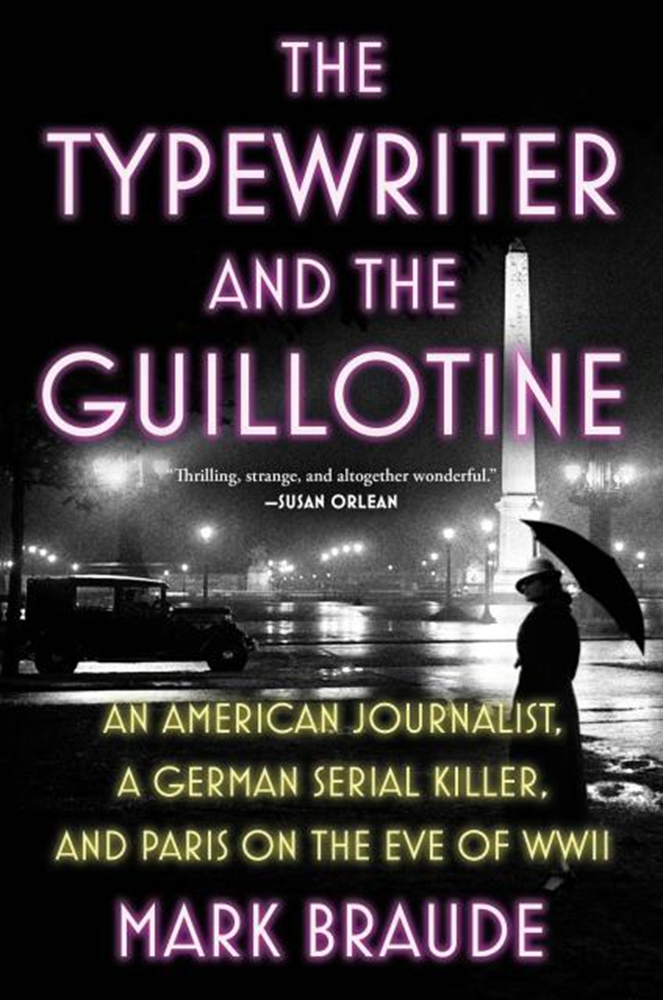
I recently finished a couple of nonfiction books about spies: The Art Spy: The Extraordinary Untold Tale of WWII Resistance Hero Rose Valland by Michelle Young and Family of Spies: A World War II Story of Nazi Espionage, Betrayal, and the Secret History Behind Pearl Harbor by Christine Kuehn. Both are good, and Kuehn’s book especially packs a lot of yikes moments.

In two blissful sittings I read Maddie Ballard’s compact memoir, Patchwork: A Sewist’s Diary. I recently returned to sewing after a thirty-some year hiatus, and I loved how Ballard wrote about garment construction and identity and relationships. It’s beautiful.

And now I’m a few chapters into Palace of Deception: Museum Men and the Rise of Scientific Racism by Darrin Lunde, not at all the usual kind of book I pick up. But I’m a big fan of museums, and he presents an interesting story.

On the fiction front, I recently read Ann Cleeve’s The Killing Stone, a new Jimmy Perez story. I’m a big fan of Shetland (see below) and was happy that Cleeve brought back one of my favorite detectives, even if he’s not on Shetland anymore. I absolutely loved Sacrament, Susan Straight’s marvelous novel about nurses at a California hospital during Covid. And I continue reading (or sometimes plodding through) Vanity Fair, the 19th century classic by William Makepeace Thackeray. I’m sticking with it for an online book discussion next month. In previous years, this group has read Anna Karenina and Middlemarch, so there’s a definite vibe to these selections.

What I’m Watching

BritBox recently debuted Season 10 of Shetland, and I’m eagerly keeping up with all the episodes. Perez has moved on, but his replacement, Ruth Calder, has great chemistry with Alison “Tosh” McIntosh. I’m already looking forward to Season 11.

On PBS, there’s a new season of All Creatures Great and Small and a new mystery series called Bookish. And Paramount+ launched Starfleet Academy, the latest addition to the Star Trek universe, and it’s okay so far.

I keep meaning to watch the final episode of Stranger Things on Netflix but haven’t been in the right mood yet. I find Young Sheldon and Mom (neither of which I watched on network t.v.) reliably good, and I revisit The West Wing and The Closer from time to time.

What Else I’m Doing

Daily exercising (a portable elliptical machine is essential during winter), sewing (very sporadically lately), thrifting (one of my favorite pastimes that sometimes is related to what I’m sewing), bowling (once a week as extra exercise that’s also a fun outing).

That’s it for now. Thanks for reading. Hope you check back next week to see what kind of progress I’ve made.

On This Day in 1925: “There would be no New Yorker today if it were not for her.”

One hundred years ago today, February 17, 1925, the premiere issue of The New Yorker magazine appeared on newsstands in New York City. The 15,000-copy print run, dated February 21, cost 15 cents, the equivalent of about $2.70 today.

The publication was the culmination of nearly five years of planning by Jane Grant and Harold Ross, two journalists (and husband and wife) determined to create a magazine unlike any other.  

(Jane Grant and Harold Ross in the mid-1920s. Jane Grant papers, University of Oregon)

As Jane later explained, “Our magazine would fill the metropolitan gap. It would be so attractive, gay and informative, that it would be an asset on any library table. It could be read for the entire week, or more, for there would be articles for leisurely reading in addition to those of timely interest. It would be a new medium for local advertisers. The ads would be individual, sophisticated and lively—a new departure in that field.”

The first issue contained several paragraphs of “Of All Things,” many of which referenced The New Yorker, some fiction, short pieces on current books, plays, and movies, and a profile of Giulio Gatti-Casazza, manager of the Metropolitan Opera. Despite Harold Ross’s preference for anonymous articles, some were attributed—or as Jane put it, some writers were “brave enough to sign their names”—including Franklin P. Adams, Corey Ford, and Fairfax Downey.

Overall, however, the premiere lacked the coherent vision that Ross and Jane had so carefully crafted. The only thing Ross liked about the February 21st issue was its cover. Designed by The New Yorker’s art editor, Rea Irving, it depicted a fashionable, cavalier socialite (later named Eustace Tilley) inspecting a butterfly through his monocle. It complemented the magazine’s title, reflected its content and style, and was eye-catching enough to entice newsstand browsers—exactly what Ross had in mind.

Despite advanced publicity, some of it orchestrated by the public relations giant Edward Bernays, including two articles in the New York Times (Jane, one of its reporters, may have also played a role in their placement), The New Yorker fell flat.

 During the first week of the launch, as Jane moved about the city for her Times reporting duties, she checked hotel newsstands to see how many New Yorkers she could find. There they sat. Ross joined her at night to investigate other locations, and they found the same. “The piles of unsold The New Yorkers were staggering,” she later remembered. “We had hoped it would be an immediate triumph as well as a literary one. Failure hung all about us.”

That fear of failure involved more than their careers. Jane and Ross sunk their personal savings into the magazine. Failure would mean a double ruin for them.

But The New Yorker survived and has been publishing now for one hundred years. It is a remarkable achievement. And as Harold Ross admitted of Jane Grant’s role, “There would be no New Yorker today if it were not for her.”

(Jane Grant and Harold Ross, NYPL Digital Collections)

2025: The Year of Jane Grant

Here on the blog, I have designated 2025 as the year of Jane Grant, mostly because it marks the centennial of The New Yorker, the magazine Jane co-founded with her first husband, Harold Ross.

(Jane Grant, c. 1917. Jane Grant Photograph Collection, PH141, University of Oregon Libraries Special Collections)

Also, because for more than a year, I have been engrossed with writing the (very) rough draft of a book about her. I hope this is the year I finish the draft and start reworking it into a less messy version, with a clearer shape, sharper writing, and more vivid story arcs.

My Jane Grant book is not a cradle-to-grave biography. It focuses instead on how Jane got The New Yorker off the ground in 1925 and kept it going. To accomplish this, I explore her journalism career in New York City in the 1910s and 1920s, plus her marriage and subsequent divorce from Harold Ross. All bolstered by an unwavering dedication to the pursuit of gender equality.

Other books have told The New Yorker’s story, but they have been, predictably, male centered. Jane Grant’s presence is sidelined in them, her role largely subsumed under that of “wife.”

As Amy Reading points out in The World She Edited, her marvelous 2024 biography of the magazine’s long-time fiction editor Katharine White:

“But there’s another way to tell the magazine’s origin story: by traveling along the networks forged by the women who were there from the beginning and who have been barely mentioned in histories of the magazine.” Reading’s book traces how White’s tenure at The New Yorker (like Jane Grant’s involvement, as I will demonstrate) “shows quite simply that so many of The New Yorker’s early successes were due to the efforts of feminist women who interpreted the magazine’s obsession with sophistication in a way guaranteed to appeal to readers like themselves—educated, active participants in the city’s cultural life.”

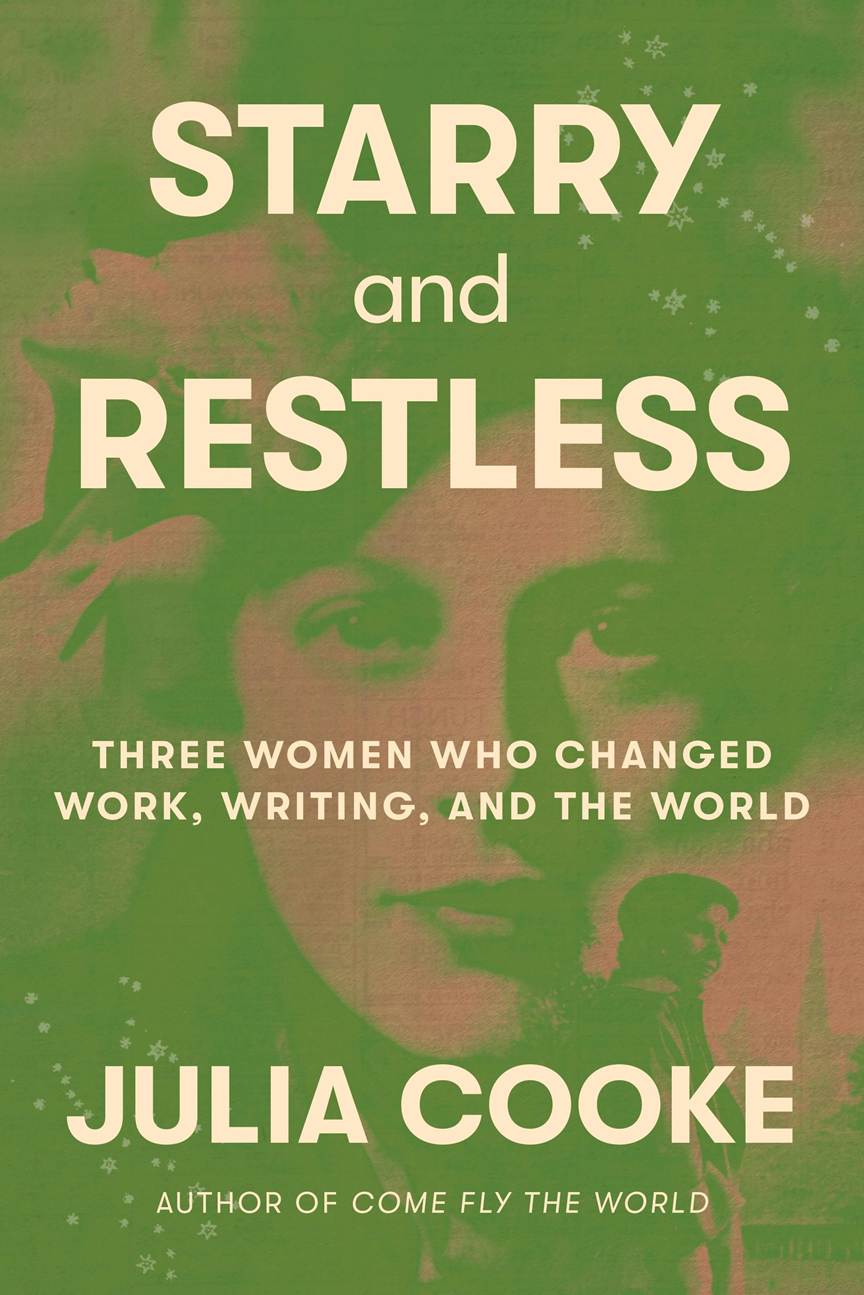
Reading’s book has proved a good resource for my project. It is also an inspirational model of writing, as is Debby Applegate’s biography Madam, about Polly Adler. I anticipate that Laurie Gwen Shapiro’s forthcoming book, The Aviator and the Showman, about Amelia Earhart, will form the third point of that inspirational model triangle.

I will be touching on these books (and others) plus exploring fascinating primary sources as I write my way through 2025 and the year of Jane Grant. Some of the more interesting findings will appear on the blog during the year, most likely at irregular intervals (Writing history is challenging, and, for me, writing about writing history is even more so.) Hope you will follow along.

On Reading (and not yet finishing) Madam: The Biography of Polly Adler, Icon of the Jazz Age By Debby Applegate

Back in the summer of 2024, I started reading Debby Applegate’s biography of Polly Adler, the (in)famous Manhattan madam of the 1920s. It was an obvious choice for me: a story about a little-known woman—today, not back then—written by a woman who turned what she learned in graduate school into a Pulitzer Prize winning writing career. Applegate won that award for her first book, The Most Famous Man in America, a biography of the nineteenth-century minister Henry Ward Beecher.

(That book also serves as the sample proposal in the extraordinarily useful Thinking Like Your Editor: How to Write Great Serious Nonfiction—and Get It Published by Susan Rabiner (Applegate’s literary agent) and Alfred Fortunato. My copy is dog-eared now. It is the resource I turn to when I need to write a book proposal. Now I am reading Tilar Mazzeo’s How to Write a Bestseller: An Insider’s Guide to Writing Narrative Nonfiction for General Audiences, which may prove to be equally valuable.)

Madam is Applegate’s second book. (I admire an author who takes their time to conduct quality research.) I knew going in that it would be good. My interest in Madam extended beyond character to setting. Right now I want to read as much as I can about New York City in the 1920s to get background information for my current book-in-progress about Jane Grant, co-founder of The New Yorker.

Polly Adler was born around 1900; Jane in 1891. When Polly arrived in New York City from Russia in 1913, Jane had already been there (from Kansas) for five years. Both changed their first names to make a break with their pasts. The two young women struggled to gain a foothold in the city so they could live the life of their dreams. Each got what she wanted, mostly, in some way.

It is not unreasonable to think their paths may have crossed in New York in the 1920s, though trying to imagine that encounter makes my head spin. Polly opened her first brothel at the beginning of that decade that was known for its roar. By 1924, as Applegate writes, “her house had become an after-hours clubhouse for the adventurous Broadway bohemians who gathered at the Algonquin Hotel for lunch.” Jane Grant was a member of the legendary Round Table that met at the Algonquin. As was her husband, the talented editor Harold Ross. Their home was another “after-hours clubhouse” for the Round Tablers, though the entertainment they provided did not include Polly’s specialty.

(I have come to think of Jane as the anti-Polly.)

With some trepidation, I looked for Harold Ross’s name in the index of Madam and found it. (Jane’s is not there.) I could hardly bring myself to read what was on the corresponding page—would he turn out to be a rat or a super rat? But according to Applegate, Ross was “one of the few who failed to fall for Polly’s charms.” The lone time friends dragged him to her brothel, he carried along a stack of manuscripts, which he read “while the fun eddied around him.” This left me with a lot to think about.

I read about a quarter of Madam before I set it aside. It had nothing to do with the quality of the biography, which is as excellent as I anticipated, but rather because I started to consider it an ideal model for my book on Jane Grant. Too ideal. I am still very much at the beginning of my project, and I started to worry that I would imitate Applegate’s style. I do not want to cross the line between modeling and imitating. I need space, considerable space right now, to identify that boundary, to develop my own style and voice based on how I think Jane’s story needs to be told.

This is not the way I typically respond to the secondary (or published) sources I read for my book research. Every so often, though, I encounter a book—whether during leisure reading or work reading—I admire so much that I am overwhelmed by a sense of futility. (Also known, perhaps, as imposter syndrome.) As in, why should I continue to do what I do when someone has already published the perfect gem of a book. (Rebecca Donner’s All the Frequent Troubles of Our Days, about Mildred Harnack, was the last book to strike me like that.)

The feeling eventually passes, and, of course, I go on to do what I do, because what I write ends up different than what anyone else writes. And maybe it is as good, maybe not. But that is what happens. I write the best book I can.

When I’m ready for my first round of revisions on the (still in progress) rough draft, I might pick up Debby Applegate’s book again. Or maybe I will wait for the second round. But I know I will finish reading that biography. I need to find out what happened to Polly Adler. And I need to pay close attention to how Applegate makes me care.

Up next: more on this year of Jane Grant.

A 2912 Tale of Photographs, Memories, and Momories, Part I: Gaston, Evelyn, and Irene

In October 2023, on my way out West for a research trip, I spent a couple of days with my siblings in the Chicago suburbs, which is always a treat. And it gave me the time to help my sister Kathi go through the last few boxes of photos from our childhood home at 2912.

Kathi set all the boxes on her big dining room table, which once belonged to our mom’s mother and served as the grownup table for holiday dinners. Many of the photos in those boxes depicted our parents, Mike and Irene, at various stages of their younger lives, with their extended family members.

Most snapshots lacked identifying information that would have provided the who, where, and when. With some regret, we threw them away. Kathi kept saying, as we pitched photo after photo, these were our parents’ memories, not ours.

But I couldn’t help holding on to some of their memories, because they have seeped into mine. That’s because our mom, the great storyteller of the family, loved to relate tales about her relatives. I think of these handed-down memories as momories.

Uncle Gaston is one of them. These days, when we four siblings are together and reminiscing, just a mention of Uncle Gaston will trigger a lot of laughs. That’s because we remember our mom talking about this relative of hers who died before any of us were born. We were impatient with those stories when she told them because they had nothing to do with us. Sometimes we teased her that she made him up—we couldn’t imagine anyone with the name Gaston. So the momories I have of Uncle Gaston are limited to his World War I service in the navy that never took him further away from home than Lake Michigan.*

That day with my sister I was delighted to find a black and white picture of three people, their names written in full on the back: Uncle Gaston along with his wife Evelyn, and Evelyn’s sister, Irene. That Irene—later called Nana by us—was the paternal grandmother of our mom, which means Gaston was our mom’s grand uncle by marriage. There’s no location or date noted on the snapshot, though Evelyn’s peep-toed, ankle-strap shoes suggest the picture was taken in the late 1940s or early 1950s.

Irene senior, already widowed by the time she posed for that photo, stands next to Gaston. She wears a fashionably tilted hat and a slight smile. She looks jaunty. Another photo from that box shows Irene on a street on the Isle of Capri in 1953, the year she turned seventy, sitting on a donkey. She appears remarkably capable, though not totally at ease, as she holds the reins. The man standing to her left looks at her, impressed.

I have my own memories of Irene senior because I knew her for the first several years of my life. As a child, I wouldn’t have recognized her as the woman in those two photos. I knew her as the Nana who wore housedresses and, at Thanksgiving and Christmas, baked pumpkin pies (with lard crusts) in the kitchen of her Berwyn bungalow. If we great-grandchildren behaved while visiting, she let us go into the pantry and coax a cookie—iced oatmeal or an almond-studded Windmill—from its crackling plastic package. (Holiday pies were homemade; cookies were not.) But only if we behaved. Nana wasn’t indulgent.

I learned from census records that Irene was born in 1883 and grew up in Chicago, the eldest of five siblings (including Evelyn) whose father was a cabinet maker from Germany. She worked for a time as a clerk in a pickling factory before, at age nineteen, she married Edward, a salesman for a plumbing supply business.** During the 1910s, the company transferred Edward to Kansas

City, Missouri. He, Irene, and their two sons remained there through part of the 1920s but returned to Illinois before the end of the decade, settling in a new two-bedroom brick bungalow in Berwyn.

What follows is a momory, a story our mom, Irene junior, told often. Sometime after 1930, when the economic reversals of the Great Depression had sunk in, Edward and Irene’s son George, his wife Martha, and their two children, George, Jr. and Irene junior, came to live with them in their Berwyn home. George and Martha had recently bought their own brick bungalow in nearby Elmwood Park, but because of the Depression, there was only enough money across two households to save one home. So our mom ended up growing up in the Berwyn bungalow, surrounded by extended family members.***

(Irene senior is at the top right, Irene junior is on the floor with her dog Jerry, in the living room of the Berwyn bungalow, December 1950.)

Our mom would not like me referring to her as Irene junior. She always said she hated her name, but I don’t think that’s because she hated her grandmother. Resented, maybe, on some level because Irene junior also did not like having extended family members around. The Berwyn bungalow belonged to Irene senior, yet even after the Depression ended, George and Martha remained there with their two children. Irene junior never had her parents all to herself. She spent the rest of her life determined never to live with any of her children, and she never did.

But I think a lot about the relationship between the two Irenes. I’ll get into that next time in A 2912 Tale of Photographs, Memories, and Momories, Part II: Irene senior and Irene junior

Additional asides about the family:

* Gaston served in the Navy Auxiliary Reserve in 1918, then married Evelyn the following year. In civilian life he mostly worked in the milk industry, first as a driver, then as a salesman for Bowman Dairy. Evelyn stayed at home, which was a rented apartment in Chicago, and raised their daughter, Aline, who was likely named for Gaston’s younger sister, Aline, who died in 1914 at age twenty.

Through the decades, after the deaths of her aunt and uncle, our mom kept in touch with her cousin Aline, even when Aline settled with her husband way out in California. (Irene junior didn’t approve of people moving away from where they grew up. To her, no place was better than the Chicago suburbs.) As teenagers, Kathi and I accompanied our dad on a business trip to California. We stayed at Aline’s house, which had a swimming pool in the backyard and was located within an easy driving distance of Disney Land. We even took a day trip to Tijuana where I bought a very hip brown suede jacket with fringe. I still have the jacket.

** Edward had a younger sister named Albina who became a statistician, and our mom sometimes told stories about her, none of which I remember in detail. But we had two such great names in the extended family.

***Our mom never shared the details of that decision. Did Edward, as patriarch, pull rank? Did the size of the house factor in? (The Berwyn place had more square footage.) Was the mortgage payment on that house lower, making it more affordable? Edward and George, both salesmen, would have realized that their jobs were always in jeopardy. Did they both manage to hold on to full-time positions or did they find their hours and salaries cut? Did they have to move on to different sales jobs? Was there ever a discussion of Irene senior and/or Martha looking for work? How did Martha and her mother-in-law get along, especially with young children in the house to raise? I think of all these things now, but of course they never occurred to me to ask such questions when I was a child listening to our mom.