Women’s History Month Wednesday: Harriot Stanton Blatch

In today’s language, Harriot Stanton Blatch was a suffragist nepo baby.

She was born in 1856 in Seneca Falls, New York, the sixth of Elizabeth Cady Stanton’s seven children. Throughout her childhood, reform occupied center stage in the household. Her mother was one of the organizers of the 1848 Women’s Rights Convention in Seneca Falls, which helped launch a movement that in some shape or form continues to this day. Harriot’s father, Henry, was an abolitionist, journalist, and politician.

Harriot received an undergraduate degree from Vassar College in 1878 and a master’s degree in 1894. In between, she joined the suffrage cause and helped her mother and her mother’s political partner, Susan B. Anthony, write their History of Woman Suffrage. Harriot also married a British businessman, William Henry Blatch, in 1882, and spent the next twenty years living in England with him and raising their two daughters, one of whom died young. By the 1890s, she’d become a proponent of “voluntary motherhood,” encouraging married women to choose when and how often to become pregnant, thus deciding when to have intercourse with their husbands.

(left to right: Nora Blatch, Elizabeth Cady Stanton, Harriot Stanton Blatch)

The Blatch family moved to New York City in 1902, following the death of Elizabeth Cady Stanton, and Harriot immersed herself in reform causes that highlighted the intersection of workers’ rights and women’s suffrage. After joining the Women’s Trade Union League, she founded, in 1907, what would come to be known as the Women’s Political Union. This brought some 20,000 New York City working women into the suffrage movement. Harriot further revitalized the movement by organizing public parades at a time when “proper” women didn’t flaunt themselves in such a way.

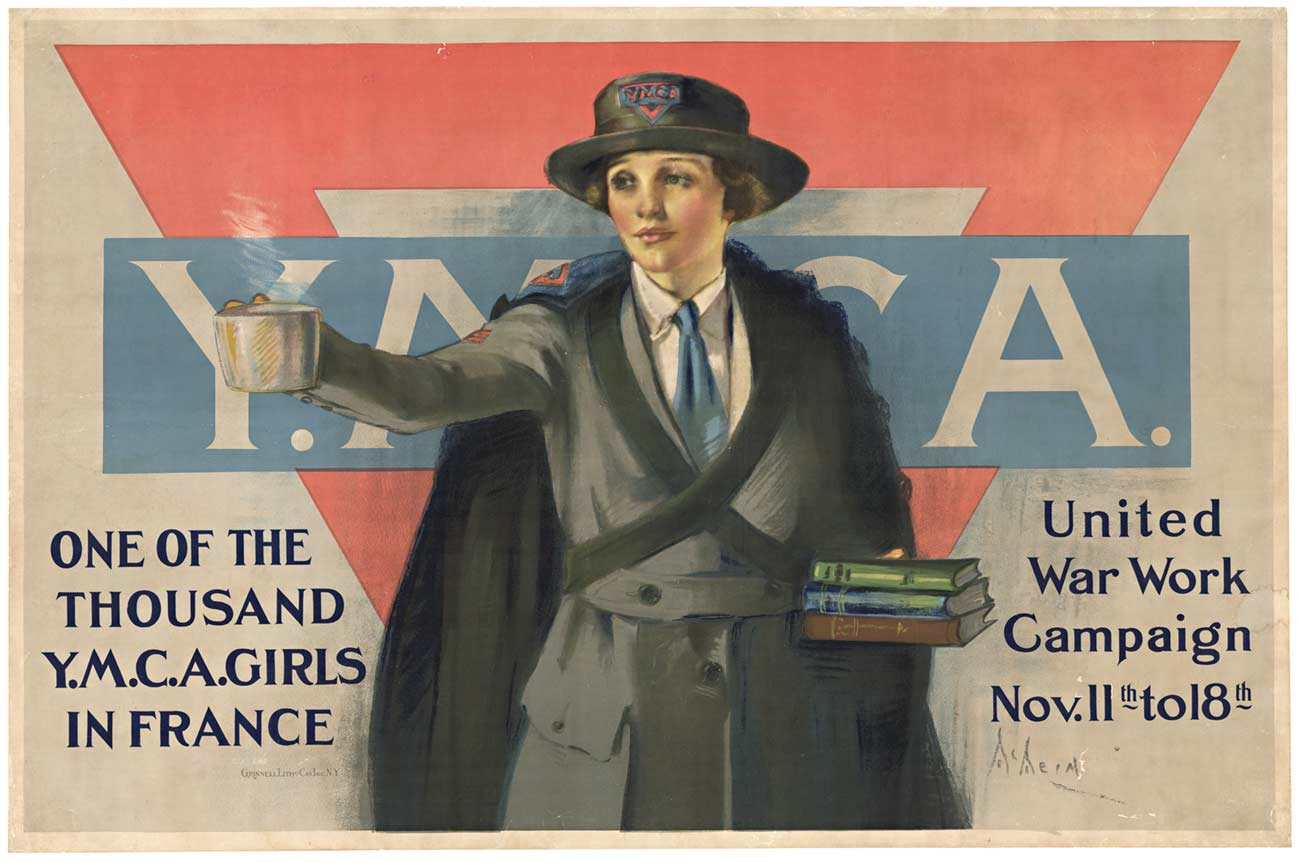
Harriot Stanton Blatch’s tactics and ideology overlapped with those of feminist Alice Paul; in 1915 she merged her Women’s Political Union with Paul’s Congressional Union, which became the National Woman’s Party. When the United States entered World War I, Harriot took on the directorship of the Woman’s Land Army, an organization that guaranteed farm labor would continue as American men joined the military.

After the war, she published two books: Mobilizing Woman-Power, a celebration of women’s contributions to the war effort and a brisk reminder of their duties as citizens, and A Woman’s Point of View: Some Roads to Peace, which focused on the affects of war on women and children and the role of women in shaping peace.

The Nineteenth Amendment passed in 1920, guaranteeing most American women the right to vote. Harriot became a proponent of the Equal Rights Amendment, viewing it as the next necessary step to securing women’s rights. In 1922, she published a co-edited collection of her mother’s papers, Elizabeth Cady Stanton as revealed in her letters, diary, and reminiscences. Shortly before Harriot’s death in 1940, she finished (with the help of feminist Alma Lutz) her own autobiography, Challenging Years: The Memoirs of Harriot Stanton Blatch.

Historian Ellen Carol DuBois brought Harriot Stanton Blatch’s career to life in the 1997 prize-winning biography, Harriot Stanton Blatch and the Winning of Woman Suffrage. DuBois, now retired as a professor of history and gender studies at the University of California, Los Angeles, is considered a pioneer in the field of women’s history. As a graduate student at Northwestern University, DuBois became involved with the Chicago Women’s Liberation Union, the radical wing of the 1960s women’s rights movement. Her 1978 book, Feminism and Suffrage: The Emergence of an Independent Women’s Movement in America, 1848-1869, was considered for many years as the best book on the suffrage movement, inspiring many other historians to explore its multiple facets.

The Writing Life

As a writer, I spend lots of time researching, writing, and telling people that I’m researching and writing.

c20da-grace2ba692(author Grace Metalious, not me)

After a very long time, usually years, I have something to show for it in the form of a book. This time, though, I did not take a long time. I was skeptical that I could research and write quickly, but I did. I’m retired. I’m not in the classroom or grading papers nine months out of the year. So what else am I going to do?

Coming in June 2020 is Dr. Mary Walker’s Civil War. (Just click on the link if you want to preorder.) Beginning this November with the anniversary of Walker’s birth, I’ll be posting snippets of her life and times.


Into the Research Rabbit Hole with Samuel J. May, Abolitionist and Women’s Rights Advocate

Today launches the first in a series of occasional posts about something most writers of history are familiar with: falling down the research rabbit hole.

Image result for down the research rabbit hole

While I’ve gotten better at making sure it doesn’t become a bottomless pit, I always look forward to these jaunts that reveal something intriguing about my main subject. Today I’ve been working on a chapter of my book about Dr. Mary Walker, a 19th-century reformer and the only woman to receive the Congressional Medal of Honor.

Image result for dr. mary edwards walker

One of the many people she interacted with was a Unitarian minister named Samuel J. May. An 1820 graduate of the Harvard Divinity School, May fully embraced the new Unitarian theology, which emphasized the moral teachings of Jesus Christ. He was committed to putting this ideology into action and actively participated in a variety of antebellum reforms, including temperance, education, labor, and abolition. In 1830, May met William Lloyd Garrison and went on to serve as a lecturer for the New England Anti-Slavery Society. May eventually accepted a position at the Unitarian Church of the Messiah in Syracuse, New York, about forty miles south of Mary Walker’s hometown of Oswego. There, May’s abolition work expanded to assisting the underground railroad.

Image result for Samuel J. May

The Reverend Samuel May began promoting women’s rights with his November 1845 sermon, The Rights and Condition of Women, which was subsequently printed and widely circulated. Beginning with quotes from Genesis (“In the day that God created man, in the likeness of God made he him, male and female created he them; and blessed them, and called their name Adam.”) and Galatians (“There is neither male nor female, for ye are all one in Christ Jesus.”), he called for gender equality and women’s suffrage.

Image result for Samuel J. May the rights and condition of women

Exactly how and why Mary Walker and Samuel May knew each other will be explained in my book. And for those of you who think the surname May sounds familiar, the reforming reverend’s other claim to fame is that he was the uncle of Louisa May Alcott.


Happy Holidays/Looking Forward to 2019


Image result for happy holidays

I hope everyone has been enjoying the holiday season.

2018 was a big year: retirement, selling a house and moving, signing two book contracts.

TWO book contracts?! It’s not something I ever thought would happen, but it did.

The first contract was the result of long-term planning. I’d started on a biography of mega-star Dale Evans about ten years ago, then set it aside to work on Angels of the Underground. About a year or so ago, I began working with my agent to draft a proposal for the Evans book, which was picked up by Lyons Press. Right now it has the working title of Queen of the West.

Dale Evans 5

The second contract was a matter of serendipity. A book editor had an idea and approached my agent about having me take on the project. This book is about Dr. Mary Edwards Walker, the only woman to receive the Congressional Medal of Honor. She was a physician with the Union army during the Civil War and spent some time as a prisoner of the Confederacy. Plus she was a major figure in the women’s rights movement, but other prominent women like Elizabeth Cady Stanton tried to erase her from the movement’s history because of her radical views.

Image result for mary edwards walker

I love both of these book projects. Through the first half of 2019, there will be more here about Mary Walker and her exploits, as well as about my own writing and publishing journey. Then Walker will gradually be replaced by updates about Dale Evans.

First, though, I will be posting about my favorite books from 2018, both fiction and nonfiction. Look for those entries over the next week or so.

And a reminder for those of you who can’t get enough of narrative nonfiction, I co-administer a great group on Facebook called Nonfiction Fans. Come join us. You can also follow the group on Twitter @nonfictionfans.


Learning to Write in Scene

This past week I attended the Write-by-the-Lake writers’ workshop and retreat, run by UW-Madison’s Continuing Studies. It’s the second time I’ve attended the workshop, and I’m convinced that it’s worth the investment. A nice view of an actual lake is part of the experience, though there was so much learning going on, I didn’t pay much attention to the scenery.

WBTL 2018

I signed up for Ann Garvin’s session on plotting with urgency. If you don’t already know Ann, she’s the author of three novels, the genius behind Tall Poppy Writers, and the founder of The Fifth Semester writing program. She has a day job, too, as a professor of health at UW-Whitewater.

The workshop was populated mostly by fiction writers–and two of us nonfiction writers. I’m still working on my writing style, trying to get my stories to appeal to a broader readership, so I thought learning about urgent plots would be just the thing.

And it was. Every day when I left the workshop, my head was stuffed with new information and ideas. One of the most valuable lessons I learned was the necessity of writing in scene, which is the current way of saying show, don’t tell. That sounds so easy, but it’s a challenging thing to pull off. Each scene not only has to immerse the reader in that particular moment, but it also has to crackle with tension, which usually has to do with a character not getting what they want. And it has to have an integral connection with the plot. We learned about all those things.

I find writing in scene especially difficult with the kind of nonfiction I write. Because of my training as a historian, I feel an obligation to stay true to the historical record. The scenes I write have to be factual. If I interject anything that can’t be verified by historical documents, I need to be clear between speculation and fact. Historian Simon Schama wrote a fascinating book about this boundary:

My task going forward is to make sure I write about dead certainties in a compelling way. That will be my summer.