The wait for copyedits is over.

Files for the copyedits and for the book’s illustrations/captions arrived today. Good thing I’m all caught up with this kind of work:

Washer-Woman

From now until June 24, I’ll be pretty much like this:

typewriter

And I still haven’t decided on my author photo.

The beat goes on…..

While I wait for copyedits, I obsess over the author photo.

I managed to avoid including an author photo with my first two books, but I can’t do it this time around. I’ve decided against a basic head shot because it seems too gruesome to have that much focus on my face. I’m at that age where I need strategic posing or a mask or some serious photo shopping. But I also don’t want anything that’s too artsy. I do want to have it reflective of the time period of the book, which is the 1940s.

Maybe a writer-at-work scenario will be just the thing.

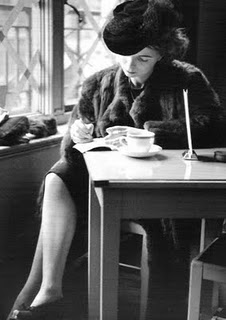
Here are some of my favorites, starting with the cafe woman. I like the way she is looking intently at her paper, but I don’t think I can pull off the hat and fur coat.
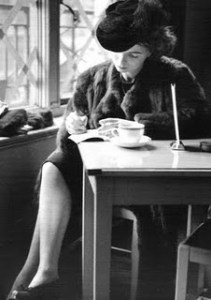
cafe woman

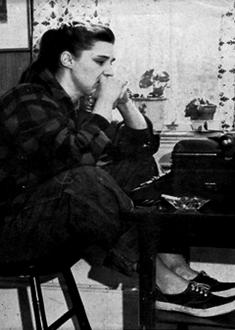
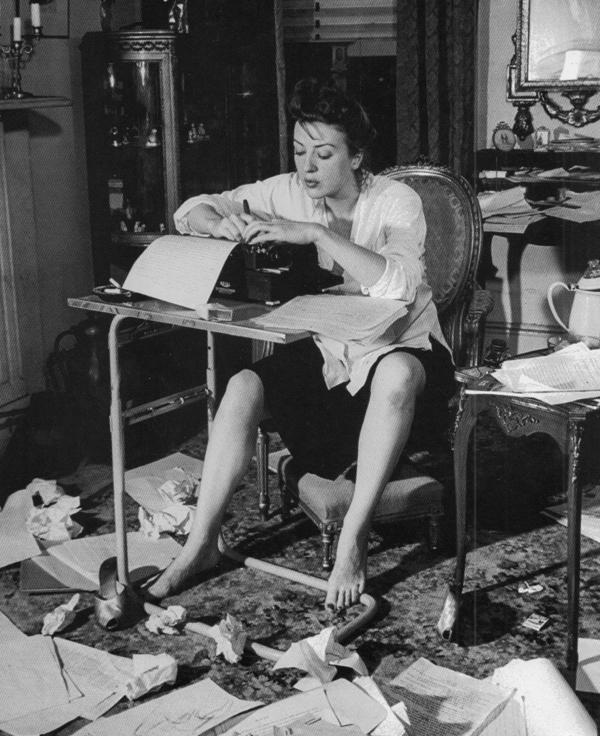
This one might be a tad too messy, but I like the spirit:

writer messy

This one is less messy, but Grace Metalious’s fashion sense is a bit too northwoods for my taste:

Grace

And here’s Martha Gellhorn, looking very smart, except for that cigarette:

Gellhorn

Finally, there’s…well, I could NEVER wear this outfit:

wonder woman

So stay tuned. See what develops.
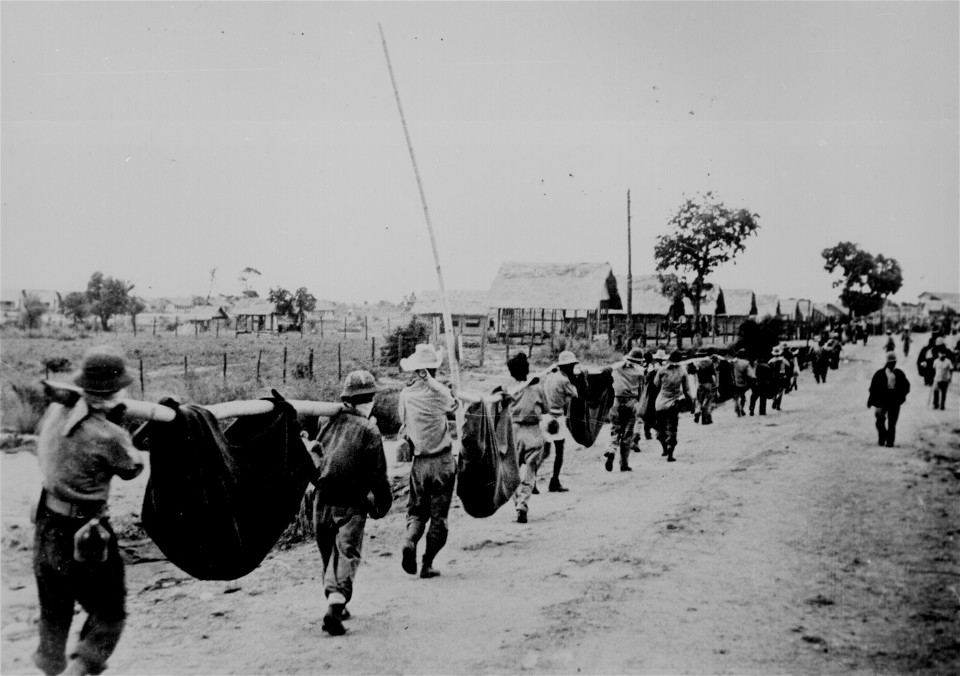
On this Memorial Day, I’m remembering the men who gave their lives in the Philippines.

In April 1942, after the surrender of U.S. and Filipino forces on the Bataan peninsula, the Japanese moved their already debilitated prisoners to a prison camp north of the capital city of Manila. Most of those POWs were forced to walk more than 60 miles, a brutal event known as the Bataan Death March. Thousands died. Survivors went on to face a hell on earth in Camp O’Donnell, a former Philippine Army post, now used by the Japanese to house military prisoners.

O'DONNELL

Conditions were appalling, food and medicine were scarce, beatings common. More than 1500 American POWs died there. At least one courageous American woman tried to help the men in O’Donnell. Her story is at the heart of my forthcoming book, Angels of the Underground.

Living Under an Enemy Occupation

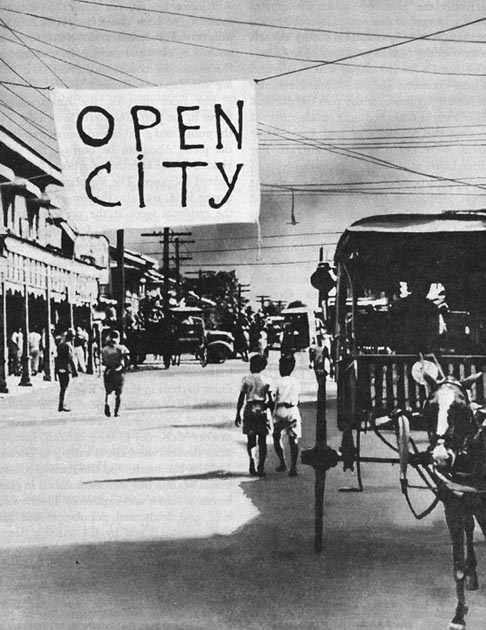
This is how 1941 drew to a close in Manila, the capital city of the Philippines:

Manila_declared_open_city

The Japanese had been bombing the Philippines since December 8, a prelude to invasion. When it became clear enemy forces could not be held off, General Douglas MacArthur, head of the United States Army Forces Far East, declared Manila an open city to spare it from total destruction. After Christmas 1941, civilians in the city, including the four women at the heart of my forthcoming book, Angels of the Underground, braced for an enemy occupation. Each one of these women had to decide what she would do when the Japanese marched into Manila. Their stories are dramatic, surprising, and, at times, heart breaking.

Awash with Historical Images

Since I’ve met my revision deadline (still recovering from that), I’ve been awash in historical images, busily pulling together the ones that will be included in the book. That’s not as easy as it sounds, between jpeg, tiff, pixel counts, dpi, not to mention tracking down copyright holders and securing the proper permissions. If it wasn’t for all that, Angels of the Underground would be lavishly illustrated with dozens of great photos and maps I’ve collected over the years I’ve spent researching the book.

Bataan to Cabanatuan

Instead, it will be sufficiently illustrated with about 20 great images. Several of them are public domain, and a few I actually had to pay to secure the rights. But two were provided by an extended family member of one of the Angels in my book. Right now, those two photos really bring the whole story alive again. I can’t post them here (they’re for the book only), but one of them in particular really reminded me of how those Angels‘ lives changed so dramatically when the Japanese attacked Manila in 1941. Peggy Utinsky, who had been living in the Philippines since the 1920s, traveled to the U.S. for a vacation in the summer of 1940. During a visit with her husband’s relatives, a photo was snapped, preserving a beaming Peggy, happy and carefree. Later that year she returned to her husband in the Philippines. The next year the Japanese attacked, and Peggy’s smile never looked the same again.