Another Television Tale From 2912

Last month, I talked about my Saturday morning television viewing when I was a child in the 1960s. My siblings and I almost always opted for cartoons, but occasionally we would watch reruns of The Roy Rogers Show, which was how I first discovered Dale Evans.

Roy Rogers and Dale Evans in The Roy Rogers Show

(From the episode “Desert Fugitives,” via RoyRogersWorld.com.)

And then there were Sunday afternoons. For those of us growing up in the Chicago area in the 1960s and 1970s, this meant Family Classics, hosted by Frazier Thomas, who also delighted us weekday afternoons with his Garfield Goose show. Family Classics aired on WGN, back when it was a local television station, channel 9.

Craigs Lost Chicago | Chicago history, Chicago, Chicago pictures

(craigslostchicago.com)

Family Classics was all about movies. Thomas selected one from the WGN library that he considered family friendly, then edited it to remove portions he believed might frighten young children. Mostly I remember watching these movies in the winter, when it was too dark and too cold to do much of anything else in the late afternoon. Our mother would be cooking dinner in the kitchen, and I think what worried us most is that she would call us to the table before the movie was over. But that rarely happened. Our parents trusted Thomas’s choices, considered these good movies, and once started, usually allowed us to watch to the end.

(TV Guide ad)

Yes, I remember watching Sink the Bismarck, and for a while we could all sing its theme song, too. I first saw Boys Town and Heidi on Family Classics, both of which gave me glimpses of childhoods totally different from mine. The show introduced me to science fiction: The Day the Earth Stood Still, Journey to the Center of the Earth, and The Time Machine. (Because of Thomas’s editing, it was many years before I learned what those Morlocks were up to.) At Christmas time, we turned on Family Classics to watch A Christmas Carol, Miracle on 34th Street, and Hans Christian Anderson.
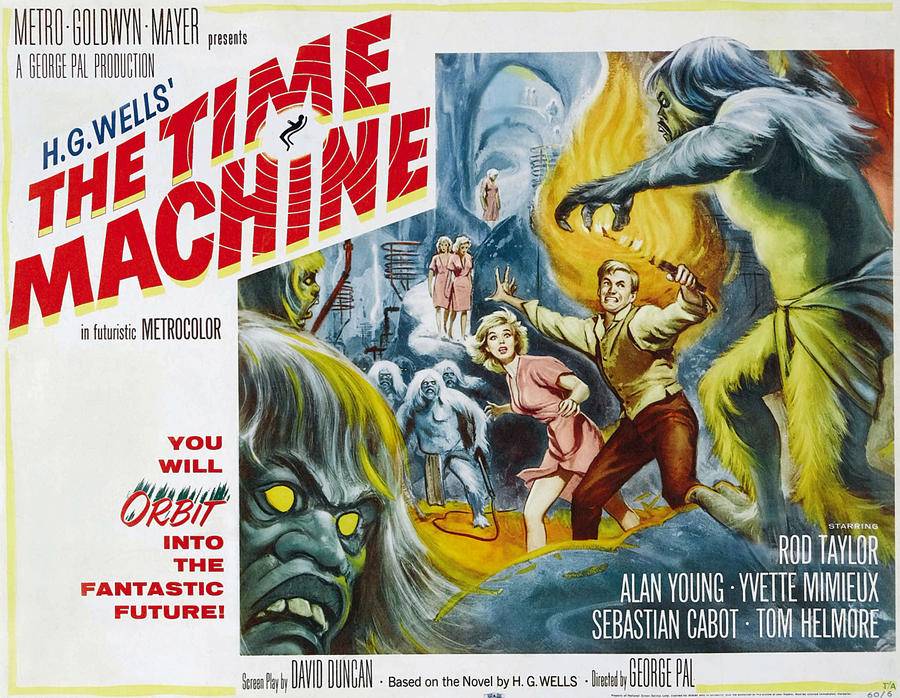
Poster for the 1960 film The Time Machine.jpg

And there was Lassie Come Home. I didn’t like this as much as the Lassie television show, especially the seasons with young Timmy and his kind mother, played by June Lockhart. My mother told me that when I was very young, I cried when the credits rolled at the end. That theme music always sounded so mournful to me, and Lassie looked so sad, sitting there all alone. The animal movie I really looked forward to was Snowfire, about a girl who lives on a ranch and tells everyone she has befriended a wild white stallion that locals believe is dangerous. It was great family drama, complete with a beautiful horse.

Snowfire (1957) - IMDb

(IMDb)

Frazier Thomas and his Family Classics introduced me to movies, and I’ve been a fan ever since. (I prefer them uncut and uncensored now.) Cold, dark, winter afternoons remind me of the warmth Family Classics brought into our house. And I’ve spent a lifetime dreaming of having the same kind of cozy library Thomas had for his books.
Queen of the West Wednesday, Chapter Five

Chapter Five. The Cowboy and the Senorita: Rising Star at Republic Pictures

In a fit of pique, Dale Evans severed her relationship with Art Rush and signed with Danny Winkler, a friend of Joe Rivkin and an agent long associated with Myron Selznick’s firm.

Dale Evans - ca.1942
Pic Source: @cjubarrington (Twitter)

(Dale Evans c. 1942)

Dale had not even been in Hollywood for a year and a half, and she was already on her third agent. Losing Joe Rivkin, who brought her out there in the first place, had been out of her control. With the United States at war, Rivkin signed up for military service. He recommended that Dale talk to Art Rush about representation. Rush had worked for RCA Victor Records before opening his own talent agency in 1939, with some high-profile singers/actors signing on.

Front entrance to the Hollywood Canteen, Vine St., Hollywood, 1942

(Hollywood Canteen on Vine Street, 1942)

Though Dale Evans and Art Rush initially worked well together, it only took a few months for her to conclude that he was not paying adequate attention to her career. She accused him of spending all his time promoting his favorite client, his rising star, the singing cowboy Roy Rogers. Dale had nothing against Roy. Rush had introduced the two of them when they both appeared at an Army air base in California to perform for the troops. Dale liked Roy, found him “a very real person.” But she had no intention of playing second fiddle to him with Art Rush. So Dale fired Rush and moved on to her third agent.

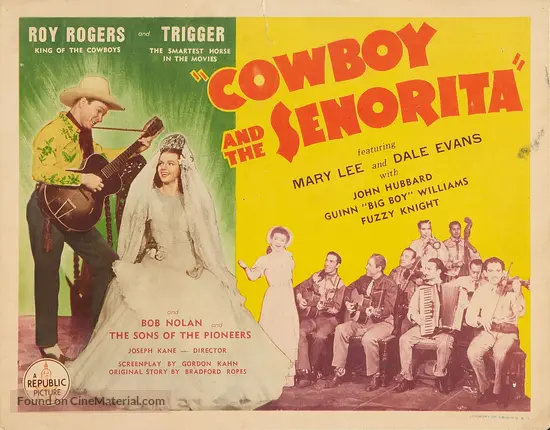
In early 1943, Danny Winkler arranged an audition at Republic Pictures. Dale Evans wowed everyone at the small studio, and she was hired. Ironically, Roy Rogers was also under contract there, one of the studio’s biggest “B”-movie stars. And in another twist, Dale’s career at Republic did not really take off until she was featured in 1944’s The Cowboy and the Senorita–with Roy Rogers.

Cowboy and the Senorita (1944) movie poster

This was not what Dale Evans envisioned for her Hollywood stardom. She had to figure out what to do about it.

Women’s History Month 2022

My favorite  “rabbit rabbit” of the year is the first day of March, not just because of the good luck wishes, but because it’s the start of Women’s History Month.

On the 1st of the Month: Don't Forget To Say "Rabbit Rabbit"! - Farmers'  Almanac

This year, the National Women’s History Alliance has selected “Providing Healing, Promoting Hope” as the annual theme. It’s both timely and historical. We are still dealing with Covid, and many women earn wages in the health care field. Many more, as mothers and/or family care givers, are the front line health providers in their homes.

2022 Theme Products

Historically, women have always done the latter. And it’s taken generations of struggle for them to break into the professions to become doctors and nurses. Janice Nimura recently wrote about sisters Elizabeth and Emily Blackwell who broke the male-students-only medical school barrier in the 1800s. Olivia Campbell, in Women in White Coats, focused her book on Elizabeth Blackwell, Elizabeth Garrett Anderson, and Sophia Jex-Blake. And my 2020 biography told the story of Dr. Mary Walker and her determination to serve with the U.S. Army as a physician during the Civil War.

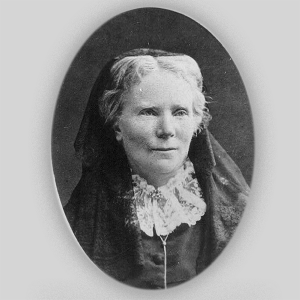
Elizabeth Blackwell

(Dr. Elizabeth Blackwell)

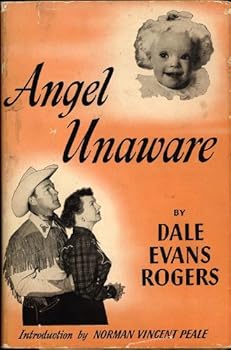
My most recent book, Queen of the West: The Life and Times of Dale Evans, also relates to this year’s Women’s History Month Theme. Dale experienced a lot of heartache in her life. Most of it had to do with her children. To cope with it, and to try to help others in similar situations, Dale turned to prose writing. In 1953, she published Angel Unaware, her best selling book that has gone through multiple printings and editions. If you follow along with my Queen of the West Wednesdays here on this blog, you’ll probably learn more about that episode of Dale’s life. (Of course, the book tells the whole story!)

Hardcover Angel Unaware: A Touching Story of Love and Loss Book

I wish you all a happy, safe, and book-filled Women’s History Month.

Queen of the West Wednesday, Chapter Four

Chapter Four. “I’m in Love with a Guy Who Flies in the Sky”: The Path to Hollywood Stardom

On August 24, 1941, the Chicago Tribune announced that Dale Evans, “the Chicago girl who has had considerable success in both radio and night clubs,” would make a guest appearance on one of WGN’s evening shows to sing “More Than You Know.”

(WGN Radio headquarters, 1935.)

A lot changed in Dale Evans’s life between the mid-1930s and the beginning of the 1940s. While she once identified with the sentiment of “I Can’t Get Started,” she finally moved ahead with her career, moving from Dallas to Chicago. Dale became so well-known in the Windy City that locals embraced her as one of their own, a “Chicago girl.” She sang on WGN and WBBM, appeared at swanky nightclubs with popular bands, and even toured for a while with a nationally known big band. All of these performances laid the foundation for the next step in Dale’s career, which she assumed would be Broadway.

But the next big opportunity came knocking from the other coast: Hollywood, California. Dale Evans arrived there in the late summer of 1941, with a one-year film studio contract. Instead of becoming a theater star, she would become a movie star.

The backlot at 20th Century Fox, circa 1940s

(Twentieth Century-Fox back lot, c. 1940s.)

As Dale prepared for her screen debut, the film project was put on hold. The Japanese bombed Pearl Harbor, drawing the United States into World War II. Over the next months, Dale scrambled to make sure her big break didn’t fall to pieces.

Queen of the West Wednesday, Chapter Three (with a nod to Gilmore Girls)

Chapter Three. “I Can’t Get Started”: Struggling for Singing Stardom

The late 1936 move to Texas, where Frances’s parents lived in Ellis County, near the town of Italy, proved the right thing for nine-year-old Tommy Fox.

Dale Evans Dr.

(A more recent image of a street in Italy named for Dale Evans.)

At the end of 1936, Frances Fox/Dale Evans was still chasing stardom, was still determined to have it all: a fabulous career and a happy home life. But every time she thought she found true love, something went wrong and the relationship failed. Dale’s decision to move from Memphis back to her home state of Texas reflected her sense of responsibility to her son. She believed Tommy would thrive on her parents’ farm, and she was right.

Career-wise, Ellis County offered nothing for Dale Evans. Her parents agreed to take care of their grandson while she moved forty miles north to Dallas, where radio station WFAA hired her as a singer. It was a good job in a sizeable market. Dale also regularly appeared as a featured vocalist with two local orchestras.

Sometime in 1939, Dale Evans probably made her first recording, the Vernon Duke/Ira Gershwin tune “I Can’t Get Started.” Her career had picked up, she was well-known locally, but there was no sign yet of the stardom she longed for.

I Can't Get Started

The song has been recorded by numerous artists over the decades, though it’s most closely connected to Bunny Berigan and his orchestra (it was their theme song in the 1930s) and jazz singers Billie Holiday and Ella Fitzgerald.

It’s Fitzgerald’s recording that is heard in the season two finale of the television show Gilmore Girls, which aired in May 2002. The episode is also called “I Can’t Get Started.” Sookie St. James, the fabulous chef and best friend of Lorelai Gilmore, is planning her wedding and contemplating playing the song at the beginning of the ceremony.

Lorelai tries to convince Sookie that it might not be the best choice, that the lyrics are depressing and morbid. It’s “about a woman who can’t make her relationship work, whose life is filled with emptiness, regret, and pain.” Sookie’s response? “Who listens to the lyrics?” And “I Can’t Get Started” plays at her wedding.

Sookie cared for the music more than the lyrics, and she also may have picked up on the underlying message of the song. (Luckily she also understood that Lorelai almost always gives bad advice.) After getting stuck, no matter for how long, you get unstuck and start to move again. Dale Evans knew that. Even when she became impatient, when she thought it was taking too long to achieve her goal, she moved forward. Closer to stardom.

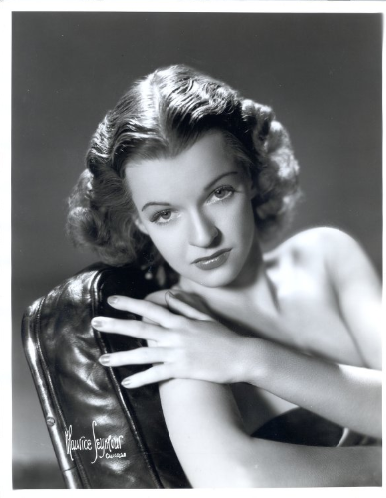
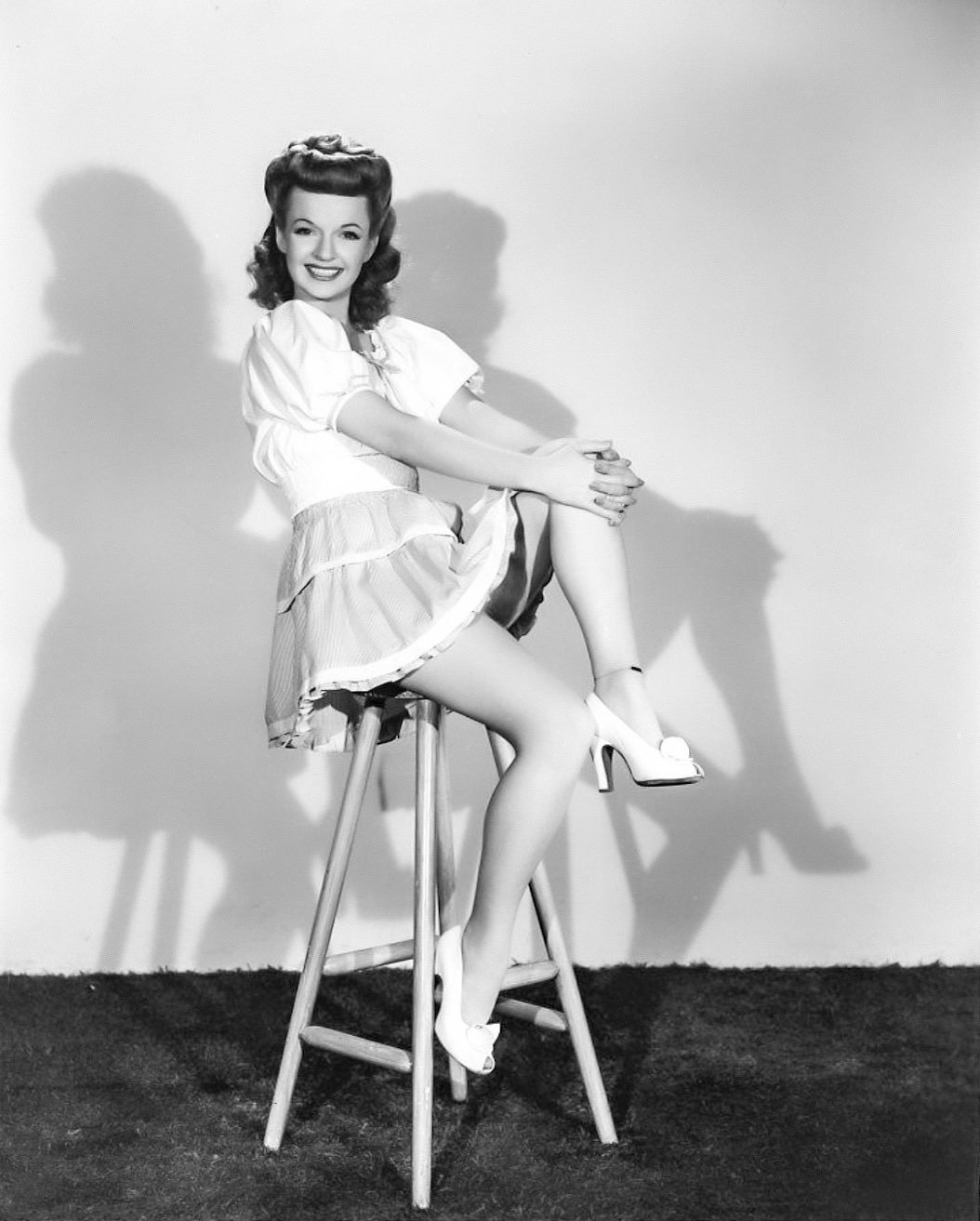
dowwnload28129

(Dale Evans, before she was Queen of the West.)