Dispatches from the Writing Life #1

Welcome to the first in a weekly (I hope) series that charts the progress of my current writing project, Invisible Me: Jane Grant and The New Yorker.

Since I have no deadline for finishing this book, the pace of progress is up to me. I’ve set goals throughout and meeting them has been greatly aided by three very supportive online writing communities. I envision this weekly series as adding another layer of accountability and cultivating another community (all of you).

I’ve been working on Invisible Me for a few years. Writing nonfiction history requires lots of time-consuming research and lots of writing, through multiple drafts. For this project, I’ve already made two major research trips, tracked down digitized online collections, and read dozens of published sources. Then I wrote an extremely bloated and somewhat blurry first draft.

After I finished, I wrote a book proposal so I could query literary agents for representation. The proposal, basically a sales pitch for the book, forced me to focus on the contours of the story, to make sure that Jane comes across as a multi-faceted person with plans and dreams, failures and successes, who has historical importance. During this past week, the last queries went out, and now I’m waiting to hear back from the agents. Or not. Many agents now don’t have the time to even send a rejection email, so if I don’t receive a response in a few weeks or a few months, it means they’ve passed. Or not. It’s fair game to nudge them once or twice before giving up.

While in agent-waiting mode, I’ll read through those first draft chapters to assess the scope of writing work ahead, to start a second, bloat-free draft. I may set an initial goal of completing one chapter per month.

Writing occupies part, but certainly not all, of my day. It’s the work part of my day. Luckily, since I’ve retired from academia, I set my own hours. I also read a lot and watch shows on various streaming services.

What I’m Reading

I recently finished a couple of nonfiction books about spies: The Art Spy: The Extraordinary Untold Tale of WWII Resistance Hero Rose Valland by Michelle Young and Family of Spies: A World War II Story of Nazi Espionage, Betrayal, and the Secret History Behind Pearl Harbor by Christine Kuehn. Both are good, and Kuehn’s book especially packs a lot of yikes moments.

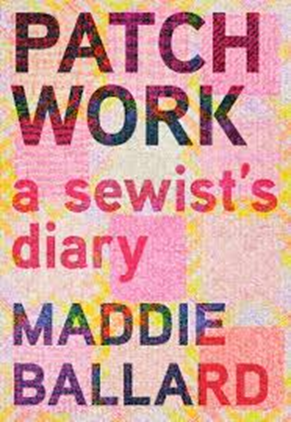
In two blissful sittings I read Maddie Ballard’s compact memoir, Patchwork: A Sewist’s Diary. I recently returned to sewing after a thirty-some year hiatus, and I loved how Ballard wrote about garment construction and identity and relationships. It’s beautiful.

And now I’m a few chapters into Palace of Deception: Museum Men and the Rise of Scientific Racism by Darrin Lunde, not at all the usual kind of book I pick up. But I’m a big fan of museums, and he presents an interesting story.

On the fiction front, I recently read Ann Cleeve’s The Killing Stone, a new Jimmy Perez story. I’m a big fan of Shetland (see below) and was happy that Cleeve brought back one of my favorite detectives, even if he’s not on Shetland anymore. I absolutely loved Sacrament, Susan Straight’s marvelous novel about nurses at a California hospital during Covid. And I continue reading (or sometimes plodding through) Vanity Fair, the 19th century classic by William Makepeace Thackeray. I’m sticking with it for an online book discussion next month. In previous years, this group has read Anna Karenina and Middlemarch, so there’s a definite vibe to these selections.

What I’m Watching

BritBox recently debuted Season 10 of Shetland, and I’m eagerly keeping up with all the episodes. Perez has moved on, but his replacement, Ruth Calder, has great chemistry with Alison “Tosh” McIntosh. I’m already looking forward to Season 11.

On PBS, there’s a new season of All Creatures Great and Small and a new mystery series called Bookish. And Paramount+ launched Starfleet Academy, the latest addition to the Star Trek universe, and it’s okay so far.

I keep meaning to watch the final episode of Stranger Things on Netflix but haven’t been in the right mood yet. I find Young Sheldon and Mom (neither of which I watched on network t.v.) reliably good, and I revisit The West Wing and The Closer from time to time.

What Else I’m Doing

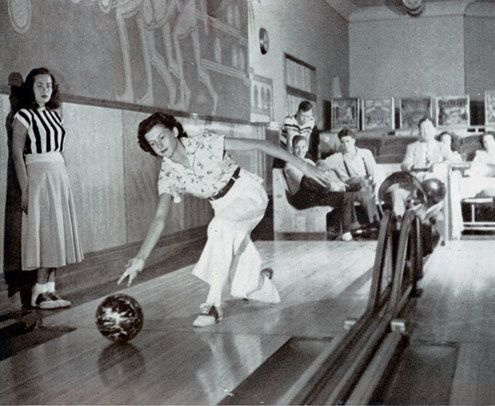
Daily exercising (a portable elliptical machine is essential during winter), sewing (very sporadically lately), thrifting (one of my favorite pastimes that sometimes is related to what I’m sewing), bowling (once a week as extra exercise that’s also a fun outing).

That’s it for now. Thanks for reading. Hope you check back next week to see what kind of progress I’ve made.

My 2024 Reading, Part Two: Nonfiction

This year’s list of my favorite nonfiction contains two more books than last year. (I gave seven nonfiction books five stars on Good Reads in 2024 and five in 2023.) But like last year, I am also including a bonus section of books that I liked.

Biographies dominated these seven favorites of 2024. (Unlike last year, I read very few memoirs in 2024.) Most of the biographies were about women, though one, a family biography, features both men and women. Another, which also was not a biography (or at least a traditional biography), centers on a man but has a couple of strong female secondary characters. Its author is the only man to appear on this list of seven. Make of this what you will. (Mostly that there are a lot of women’s stories out there to explore and lots of women writers to do so.) Here are the books, roughly in the order in which I read them.

1. Mott Street: A Chinese American Family’s Story of Exclusion and Homecoming by Ava Chin. I remember being totally drawn into this book at the beginning of 2024, as I was getting ready to make my first trip to New York City. It is wonderfully written, with a delicate balance of history and family stories. Chin has produced an emotional yet not overly sentimental family biography.

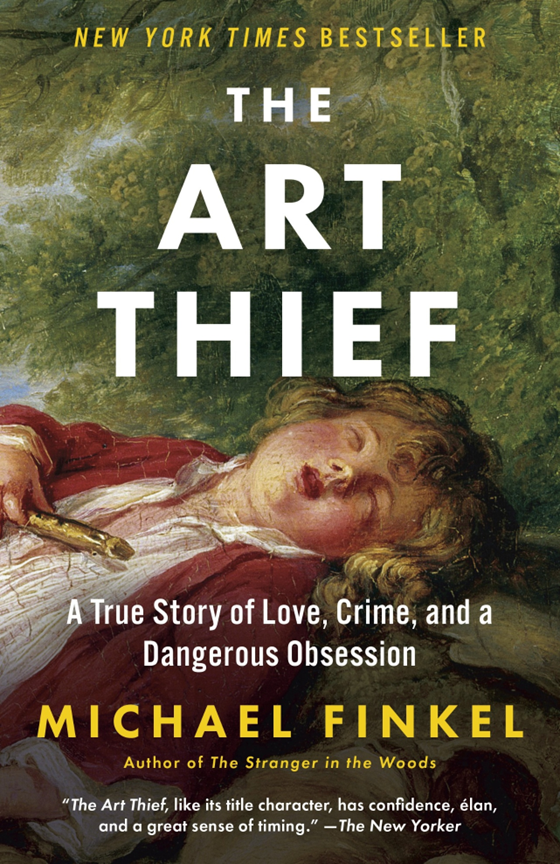
2. The Art Thief: A True Story of Love, Crime, and a Dangerous Obsession by Michael Finkel. I was a bit late to this book mostly because it is not the kind of thing I usually read. But I was convinced by the title and the cover design to pick it up from the library and never regretted the decision. Finkel briskly tells the wild story of Stéphane Bréitwieser, who stole about $2 billion worth of art from various European museums. Then there is the revelation of what happened to some of the pieces. Yikes.

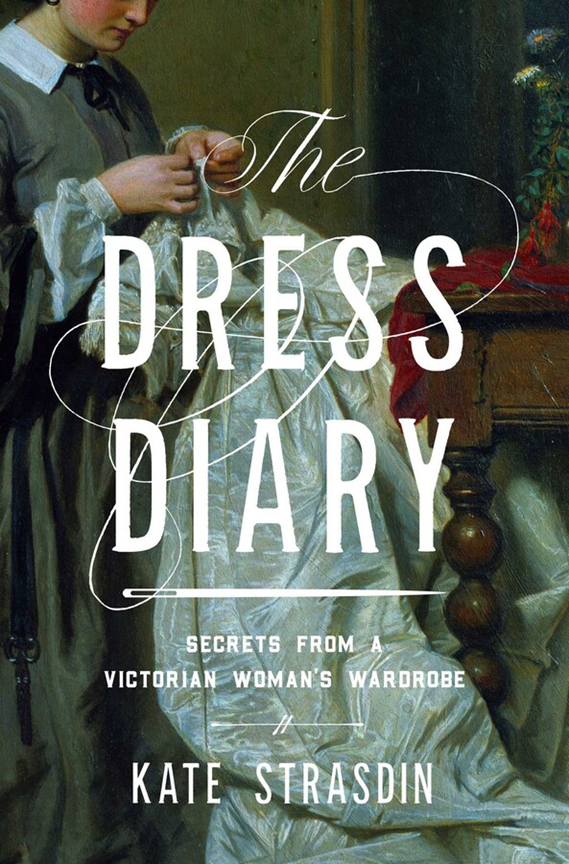
3. The Dress Diary: Secrets From a Victorian Woman’s Wardrobe by Kate Strasdin. Using surviving clothing fragments belonging to Anne Sykes, Strasdin skillfully recreates the world of this nineteenth-century Englishwoman. The author’s expertise as a fashion historian and museum curator really shines through in this creative history.

4. The Silenced Muse: Emily Hale, T.S. Eliot, and the Role of a Lifetime by Sara Fitzgerald. Emily Hale has appeared as a minor character in previous books about the poet Eliot, but Fitzgerald flips the relationship, investigating it from Hale’s perspective. (This does not end well for Eliot’s reputation as a human being.) Hale emerges as a fully formed character with a fascinating life.

5. Portrait of a Woman:Art, Rivalry, and Revolution in the Life of Adélaïde Labille-Guiard by Bridget Quinn. Adélaïde Labille-Guiard was a well-known and well-regarded painter in France during the 1700s, at least up until the French Revolution. Quinn makes good use of the scant information available on the artist’s life to restore her to her proper place in the historical record. And Quinn’s breezy writing style makes this biography a delight to read.

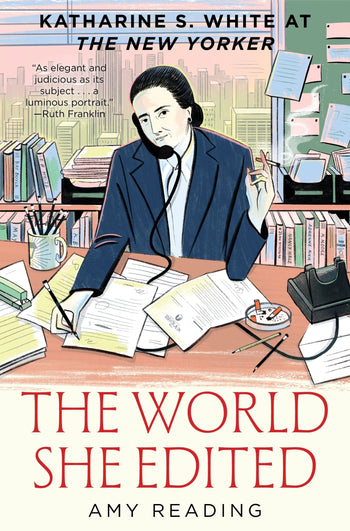
6. The World She Edited: Katharine S. White at The New Yorker by Amy Reading. The long-time fiction editor of The New Yorker magazine, which celebrates its 100th anniversary this year, receives a well-deserved biography that focuses on White’s ability to recognize talented writers and get their work published in the magazine. It is a fascinating portrait of an important literary life.

7. Loving Sylvia Plath: A Reclamation by Emily Van Duyne. Ted Hughes (like T.S. Eliot above) does not come off well in Van Duyne’s trenchant probing of not just Plath’s life, but how others have written about that life. Van Duyne makes a convincing—and haunting—case for Hughes as the ultimate in unreliable narrators. Reclamation, indeed.

Of the two bonus books from my 2024 reading, one is very much in line with most of the favorites listed above. Drew Gilpin Faust’s memoir, Necessary Trouble: Growing Up at Midcentury is an engaging account of the prominent historian’s involvement with the various social and political movements of the 1960s.

The other, Leave While the Party’s Good: The Life and Legacy of Baseball Executive Harry Dalton by Lee Kluck, is a book that anyone who knows me would not believe that I ever picked up. I am not a sports person. I don’t watch games or watch movies or shows about sports. (Well, okay, I did like Bend It Like Beckham and Bull Durham, and I have watched Field of Dreams. But otherwise, no.) (And actually, growing up at 2912, baseball was ubiquitous during the spring and summer. I knew spring had arrived when my mom set up her ironing board in front of the television in the family room so she could watch the Cubs while she ironed. I still know a lot about baseball.)

Lee Kluck was, many years ago, a student of mine, and I followed his writing journey with great interest. He has produced a nicely researched and crisply written biography of an important figure in major league baseball. The University of Nebraska Press, known for its sports series, published his book. So, yay for Lee and for Harry Dalton. If you or anyone you know is into sports biographies, do not miss this one.

That is a wrap on my favorites of 2024. Up next: some thoughts on a very good book I started reading in 2024 but have yet to finish.

May all the books you read in 2025 be good ones.

Reading History of the Hidden Corners

It’s that time of year for the deluge of “best” book lists.

Image result for piles of booksLitHub photo (2015)

Many of these lists separate fiction and nonfiction. (In a few weeks I’ll be posting my own fiction favorites here.) Smithsonian.com, however, compiles a list of history books! This year it includes a few of the “big men” biographies (Richard Nixon, Ulysses S. Grant, Muhammad Ali) that remain so popular with many readers. But is also includes several that illuminate hidden corners of history.

Marjorie Spruill’s Divided We Stand is about the 1977 National Women’s Conference in Houston that provoked a counter-conference organized by Phyllis Schlafly. Anyone interested in women’s rights issues should read this book.

Preview thumbnail for 'Divided We Stand: The Battle Over Women's Rights and Family Values That Polarized American Politics

In The Jersey Brothers, Sally Mott Freeman delves into her own family history to tell the story of the Pacific theater in World War II. While there are lots of books about World War II, I think the Pacific is still a neglected area.

Preview thumbnail for 'The Jersey Brothers: A Missing Naval Officer in the Pacific and His Family's Quest to Bring Him Home

And of course, Killers of the Flower Moon, David Grann’s gripping tale of the murder of Osage Indians in the 1920s is on many “best” lists, and deservedly so.

Preview thumbnail for 'Killers of the Flower Moon: The Osage Murders and the Birth of the FBI

If you’ve missed these 2017 books, take some time over the holidays to get caught up on your reading. (Hint: put them on your holiday gift wish list and/or buy them as gifts for the favorite people in your life.)


How to Find Good Books

Much of my life is focused on reading and writing. I’m always reading two or three books at a time, usually one that I’m reviewing and a couple others for leisure. Then there are the ones I read for my own research and for preparing lectures. Books, books, books.

... embroidery Cute book shelf ...(Painting by Jorge Cruz)

How can you find books that you might like? One way is to look on one of the big book websites like Amazon. If you plug in a title or a subject, Amazon will make recommendations.

You can ask a librarian. Some of them, like Becky Spratford, are specially training to give readers advice.

You can read book industry publications. Publishers Weekly includes a Books of the Week feature that highlights a variety of genres.

You can follow editors, publishers, and writers at online places like Facebook and Twitter. There you can specifically tailor your followings to your reading interests. For those of you who like to read about early American history, for instance, there is a gold mine of reading suggestions in The Junto’s version of March Madness.

So fill your bookshelves. There’s lots to choose from.


My First Bookstore Event

It’s happening on Thursday, at 7:00 p.m. on June 16 at

mysterytome

This wonderful Madison bookstore was one of many independents that showcased my book during the winter after it had been chosen as a January Midwest Connections Pick by the Midwest Independent Booksellers Association.

Angels Madison

I hope you can come out and listen to journalist Doug Moe interview me about the book, and take part in the conversation.