I grew up in the Chicago suburbs in the house my parents bought when they got married in 1956.
(2912, sixty years after it was built.)
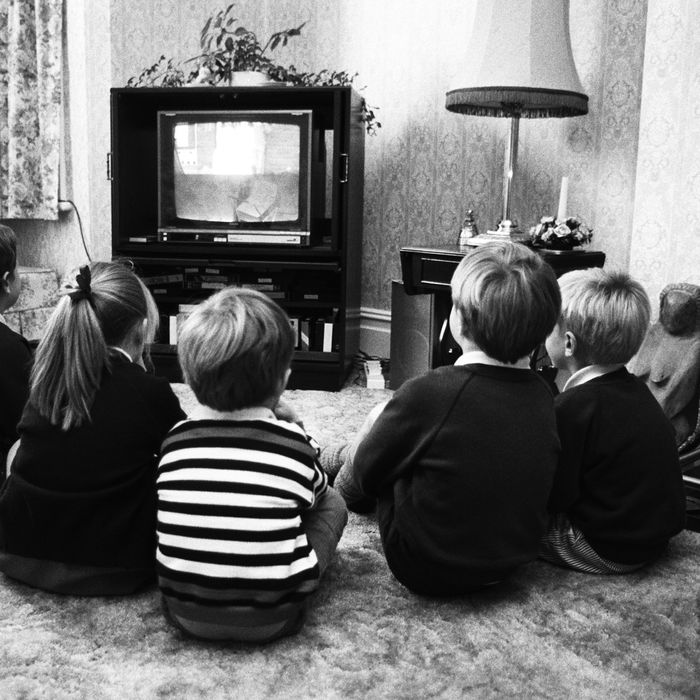
On Saturday mornings, when we were young, my siblings and I got up early, sprawled out on the family room floor, and turned on the television. It was cartoon time. How long we got to watch depended on when my parents woke up and if they decided there was something more productive we could or should be doing with that time. Still, we could usually count on an hour or more before we might get pulled away.
(This isn’t us. It’s a Getty image. We were two girls, two boys, and almost always in pajamas.)
It was hard to get four children to agree on what to watch. Most of the time, though, it was probably three, because our youngest brother wasn’t born until 1963 so he didn’t get much of a say. Our sister, the eldest, probably had the most authority over the channel dial.
There was so much to choose from in those years that stretched from the mid-1960s to the end of the decade: Mighty Mouse, Casper (the friendly ghost), Underdog, The Jetsons, and even The Beatles. We could all usually agree on Batman, The Archies, Scooby Doo, Where Are You?, and of course, Jonny Quest.
(Mighty Mouse–here he comes to save the day.)
We loved the commercials, too, because that’s where we got the scoop on the latest toys and breakfast cereals. Sometimes we would dash into the kitchen and get bowls of cereal to eat while we watched the rest of the cartoons. My favorite was Cap’n Crunch. But cereal could cause a problem, especially if we poured milk into the bowl, because of the spill factor. It could create a mess.
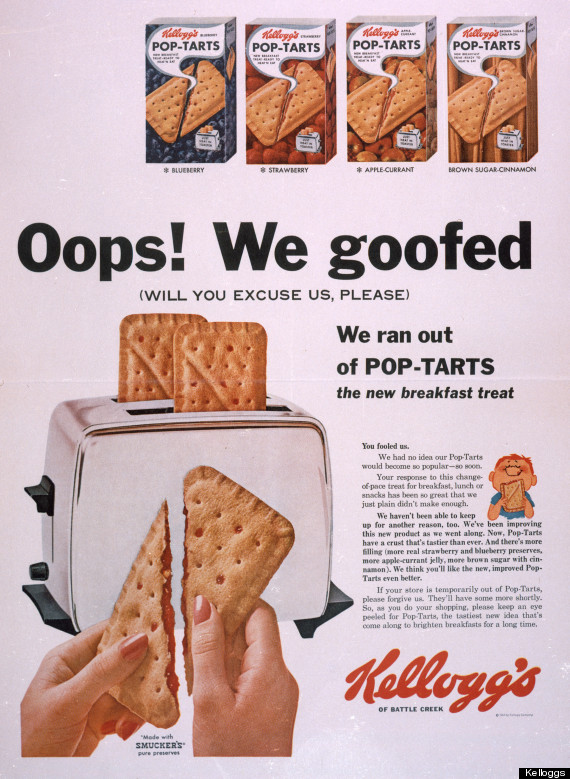
So the best Saturday cartoon mornings were the ones when we had Pop-Tarts. These deliciously sweet breakfast pastries came out in 1964, though I can’t remember when my mother first bought them. But the brown sugar cinnamon ones were the best, first the unfrosted kind, one of the original flavors, then the frosted after 1967.
(Yes, they really were so popular that Kellogg’s initially couldn’t keep up with the demand. And I remember that diagonal crease for breaking them in half.)
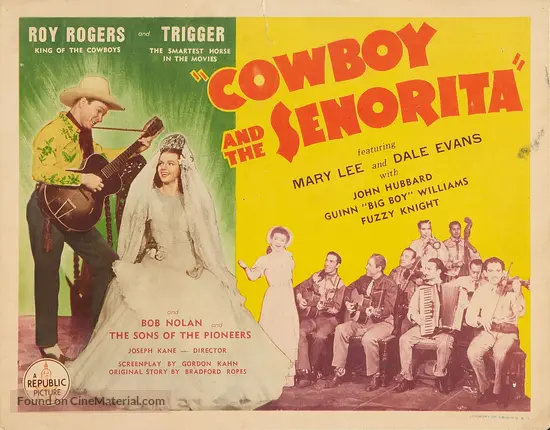
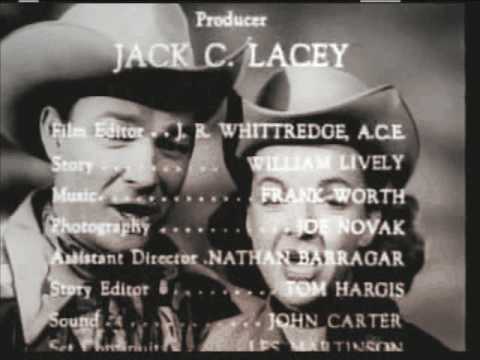
Cartoons and Pop-Tarts. That’s how I remember those Saturday mornings. But every once in a while, we broke the cartoon tradition and turned on a live-action program, usually at my suggestion. And the show I wanted to watch? The Roy Rogers Show, which co-starred a woman I never forgot, not even long after those blissful Saturday mornings in front of the tv with my siblings ended. Dale Evans.
Queen of the West: The Life and Times of Dale Evans is due out on April 15, 2022. Every Wednesday until then, I will post the first sentence from a chapter (or two) of the book, to provide just a taste of what’s in this first-ever biography of this twentieth-century entertainer.
So, here we go: Chapter One. “My Heart is Down Texas Way”: Young Frances
In the bright April spring of 1928, fifteen-year-old Frances Fox set out on a sixty-mile trip from Blytheville, Arkansas, south to Memphis, Tennessee.
She was not Dale Evans yet, but a teenager originally from a small town in Texas trying to figure out how to get everything she wanted from life. Frances thought Memphis held the key. With a population near 250,000, this modern city offered railway lines, trolleys, indoor electricity and plumbing, and a vibrant nightlife focused on music, one of her passions. Would Memphis be the place where Frances would start her singing career?
My preference for nonfiction continues to be driven by my academic training as a historian (with a specialization in American women’s history). I gravitate toward serious narrative nonfiction written by women about women–and I’m especially interested if those female subjects are not well-known historical figures. My nine top nonfiction books of 2021 (read in that year, but not necessarily published in it) reflected that. All nine were by women about women, including two memoirs. As a bonus, because I hate to present fewer than ten, I also included two others that I liked very much.
(Portrait of a woman by Adelaide Labille-Guiard c. 1787)
These four were especially wonderful:
Rebecca Donner, All the Frequent Troubles of Our Days: The True Story of the American Woman at the Heart of the German Resistance to Hitler. The unforgettable, haunting story of Milwaukee native Mildred Harnack.
Tiya Miles, All That She Carried: The Journey of Ashley’s Sack, a Black Family Keepsake. A National Book Award winner.
Julie Flavell, The Howe Dynasty: The Untold Story of a Military Family and the Women Behind Britain’s Wars for America. Provides a much-needed, different perspective on conventional military and political history.
Martha S. Jones, Vanguard: How Black Women Broke Barriers, Won the Vote, and Insisted on Equality for All. An insightful and incisive reminder of the limitations of the Nineteenth Amendment.
This book went back to the roots of the women’s rights movement:
Dorothy Wickenden, The Agitators: Three Friends Who Fought for Abolition and Women’s Rights.
Two books that will keep you on the edge of your seats:
Catherine Prendergast, The Gilded Edge: Two Audacious Women and the Cyanide Love Triangle That Shook America.
Judy Batalion, The Light of Days: The Untold Story of Women Resistance Fighters in Hitler’s Ghettos.
Two thought-provoking memoirs:
Rebecca Carroll, Surviving the White Gaze.
Jacqueline Winspear, This Time Next Year We’ll Be Laughing.
Also not to be missed, especially because they recover important people and events largely forgotten:
Scott Borchert, Republic of Detours: How the New Deal Paid Broke Writers to Rediscover America.
Marcia Biederman, A Mighty Force: Dr. Elizabeth Hayes and Her War for Public Health.
Now, for my announcement!
My latest book, Queen of the West: The Life and Times of Dale Evans, is due out in April. To encourage you all to think about reading the book (and recommending it to your friends, family, mail carrier, etc., and maybe even pre-ordering it), I will be launching Queen of the West Wednesdays on February 2. Every Wednesday, I will post the opening sentence of a chapter (or chapters–I’ve got to fit them all in by mid-April!) and explain just a little bit of what was happening in Dale’s life.
So pull on your favorite boots over these next Wednesdays and join me!
(Pink rhinestone cowboy boots, worn by Dale Evans, from the collections of the University of Pennsylvania.)
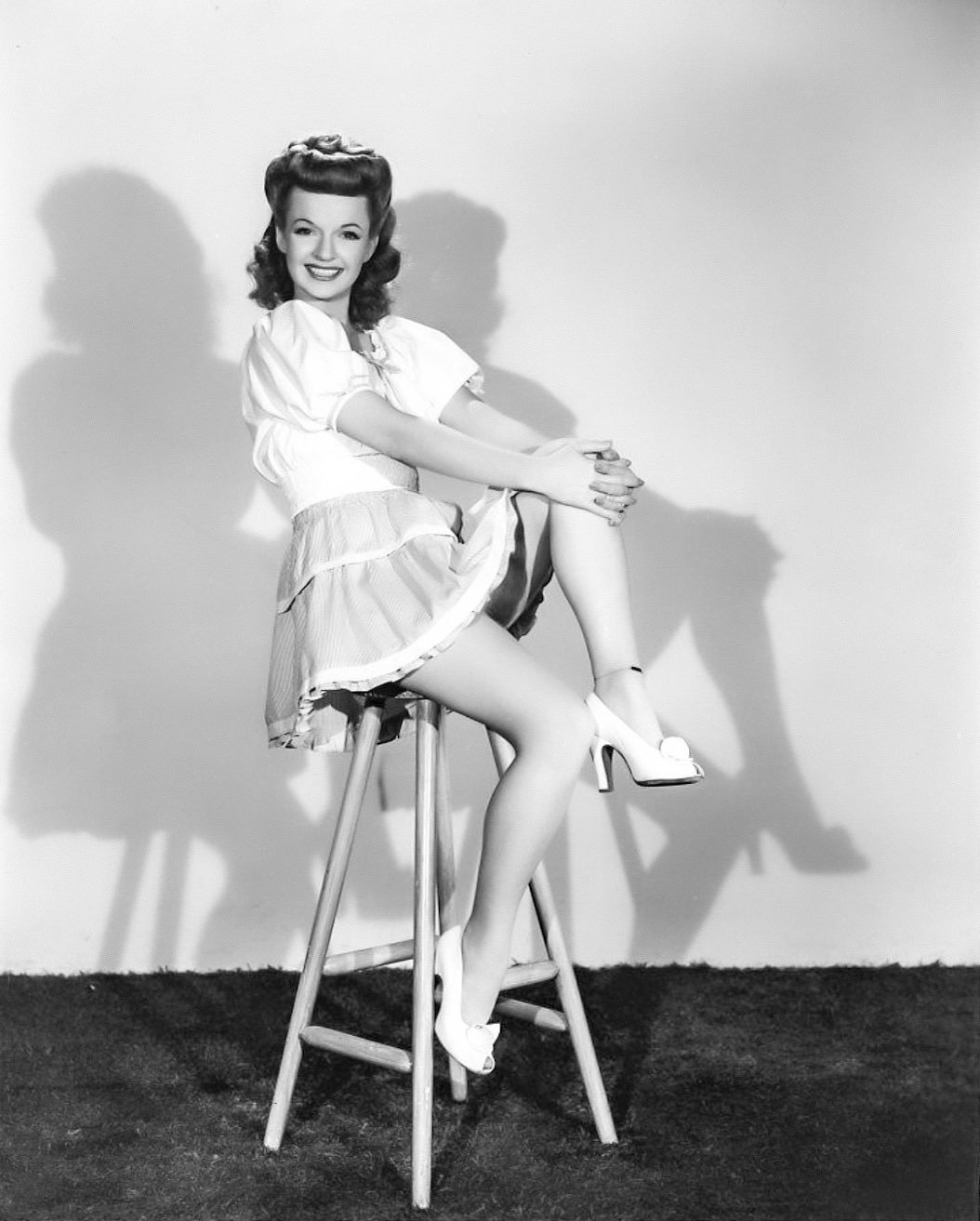
Born on this day, October 31, in Texas in 1912, Frances Octavia Smith. By the 1920s, she was singing on the radio. During the next decade, she adopted a new name, Dale Evans, and performed with big bands and in nightclubs.
By the 1940s, Dale Evans had moved on to Hollywood where she became a well-known movie actor, reaching the height of her popularity when she co-starred in a string of western films with the singing cowboy, Roy Rogers.
During the 1950s, the couple (by then, married in real life) starred in a weekly 30-minute western television program, The Roy Rogers Show. Throughout the country, Dale Evans was known as the Queen of the West.
I’m marking Dale’s birthday (and Halloween) by wearing my favorite western boots.
This story of fashion and politics could start in at least two different places.
One is in southwestern Wisconsin, where my husband and I lived for a few years as we both transitioned from the final years of our careers into retirement. Not far from our house was one of my favorite places, The Shoe Box, which advertises itself as the “Midwest’s Largest Shoe Store.”
I tried not to spend all my free time there.
On one shopping excursion, I spotted a pair of Western boots by Dingo in a lovely shade of red. I already owned a pair in a more sedate brown color. I already owned a pair of cold weather boots in red. But I had nothing in this wonderful combination.
Still, I didn’t need them. I was teaching then and knew they didn’t fit with the rest of my work wardrobe. They were a luxury. But my husband saw me looking at them. On my next birthday, he handed me a big box. I pulled out the boots.
They became my special occasion boots. I also wore them whenever I needed a psychological boost, whether at work or elsewhere. For some people, it’s a suit or a certain shade of lipstick that makes a statement, that gives them the extra oomph. For me, it’s footwear.
The other place this story could start is in Japan in 2003, long before I owned the boots. I had the incredible good fortune of participating in the Japan Residencies Program, sponsored by the Japan-United States Friendship Commission, the Organization of American Historians, and the Japanese Association for American Studies. I spent two weeks giving lectures on American women’s history at Chiba University and another week presenting public talks.
One of the questions that came up a lot concerned Hillary Clinton, former First Lady and, in 2003, senator from New York. Did I think she would run for president?
I said I believed she would. But she wouldn’t win. Not that I didn’t want to see Clinton in the White House, but because enough other American voters would cast their ballots against her. I said I didn’t think there would be a woman president of the United States in my lifetime. Misogyny runs too deep.
In 2008, Hillary Clinton made her first run for the presidency but ultimately failed to secure the nomination from the Democratic Party. It went to Barack Obama, who became the country’s first black president and served two terms. Clinton supported Obama during his campaign and his presidency. She served as his secretary of state from 2009 to 2013.
Three years later, the Democratic Party chose Hillary Clinton as its candidate for president. She was eminently qualified, by virtue of her law degree and legal career and her long years of public service. On the campaign trail, she demonstrated a preference for slacks and matching blazers, a sartorial choice that launched a Pantsuit Nation of activist, liberal women.
The Republican Party selected a businessman and television reality program host who never held office. He claimed early in his campaign, “I could stand in the middle of 5th Avenue and shoot somebody and I wouldn’t lose voters.”
For me, the choice was clear from the beginning. As election day 2016 came closer, though, I grew uneasy. Misogyny has deep roots. It’s tenacious. I wasn’t sure Hillary Clinton could overcome that, despite her accomplishments. I tried to take comfort from the many pollsters who predicted a clear victory for her. I tried to hope just a little bit.
On election morning, I pulled on my red Western boots. I decided it was a day for hope and power. “I’m With Her” and “Stronger Together” were my slogans for the day. I started to imagine walking into my women’s history class the next morning, once again wearing the red boots, to talk with students about this history-making moment.
As more of the election results came in that night, I thought back to those discussions in Japan. I realized my initial beliefs had been correct. I took off my boots, tucked them in the back of the closet, and went to bed.
The next morning, I learned I’d been right–and wrong. Hillary Clinton won nearly 66 million votes, almost 3 million more than her opponent. So I’d been wrong about the popular vote, which clearly went to Clinton. But the electoral college swung the other way, and the election went to her Republican challenger.
Hillary Clinton delivered her concession speech the day after the election. “Our campaign was never about one person or even one election, it was about the country we love and about building an America that’s hopeful, inclusive and big-hearted,” she said. “Donald Trump is going to be our president. We owe him an open mind and the chance to lead.”
The red Western boots were not exiled for the next four years. I took them out of the closet many time to wear on special occasions, including elections.
In 2020, because of the pandemic, I opted to vote by mail rather than in person. I wore my slippers instead of the red boots when I filled out the ballot. There was a bright spot. This time, finally, a woman’s name was on it once again: Kamala Harris, senator from California. It was groundbreaking not because the Democratic presidential candidate, Joe Biden, chose a woman as his vice presidential running mate, but because Harris is a woman of color.
Again, I allowed myself a bit of optimism but prepared for a difficult election season.
What followed was unprecedented. The Biden-Harris ticket won a clear victory, and the sitting president encouraged his supporters to contest the election results. A deadly, failed insurrection occurred at the Capitol. But today, two weeks later, the inauguration took place on schedule. Supreme Court associate justice Sonia Sotomayor, the first Latina to sit on the court, swore in Kamala Harris as vice president.
Harris’s stunning purple dress and coat ensemble came from black designers Christopher John Rogers and Sergio Hudson. The color choice signals bipartisan support–a blending of Republican red and Democratic blue. It also has historical significance. It is a nod to women’s suffragists who adopted purple as one of their official colors more than a hundred years ago, and it’s an homage to Shirley Chisholm, the first black woman to run for president. The outfit looks like power.
It was a historic day. A great day for the red boots, even if I could only wear them around the house.
You must be logged in to post a comment.