I hope everyone has been enjoying the holiday season.
2018 was a big year: retirement, selling a house and moving, signing two book contracts.
TWO book contracts?! It’s not something I ever thought would happen, but it did.
The first contract was the result of long-term planning. I’d started on a biography of mega-star Dale Evans about ten years ago, then set it aside to work on Angels of the Underground. About a year or so ago, I began working with my agent to draft a proposal for the Evans book, which was picked up by Lyons Press. Right now it has the working title of Queen of the West.
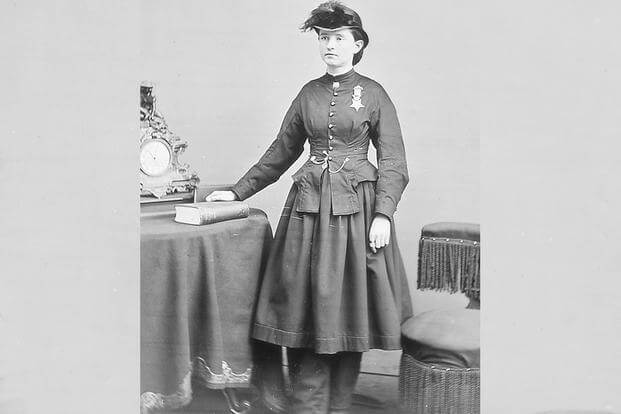
The second contract was a matter of serendipity. A book editor had an idea and approached my agent about having me take on the project. This book is about Dr. Mary Edwards Walker, the only woman to receive the Congressional Medal of Honor. She was a physician with the Union army during the Civil War and spent some time as a prisoner of the Confederacy. Plus she was a major figure in the women’s rights movement, but other prominent women like Elizabeth Cady Stanton tried to erase her from the movement’s history because of her radical views.
I love both of these book projects. Through the first half of 2019, there will be more here about Mary Walker and her exploits, as well as about my own writing and publishing journey. Then Walker will gradually be replaced by updates about Dale Evans.
First, though, I will be posting about my favorite books from 2018, both fiction and nonfiction. Look for those entries over the next week or so.
And a reminder for those of you who can’t get enough of narrative nonfiction, I co-administer a great group on Facebook called Nonfiction Fans. Come join us. You can also follow the group on Twitter @nonfictionfans.
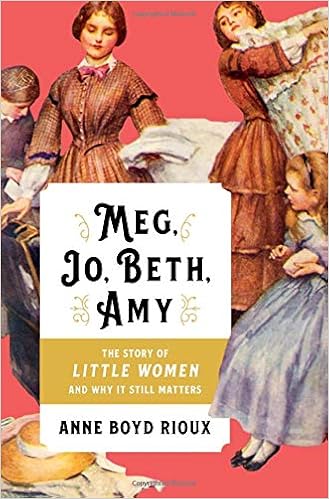
One hundred fifty years ago, Louisa May Alcott published a charming, heartfelt story about four sisters growing up in the mid-1800s.
Alcott was one of dozens, maybe even hundreds, of women who put pen to paper in an attempt to earn a living. In 1855, Nathaniel Hawthorne referred to them as a “damned mob of scribbling women.” He worried about the competition from popular female novelists like Harriet Beecher Stowe, Fanny Fern, Catharine Sedgwick, and E.D.E.N. Southworth.
Yet, with the possible exception of Stowe’s Uncle Tom’s Cabin, none of the works of these authors remains as relevant or as well known as Little Women.
Literary scholar Anne Boyd Rioux’s new book explains, in clear and accessible prose, exactly why.
Published earlier this month by W.W. Norton in advance of the anniversary, it has been widely reviewed and highly praised, and deservedly so. Rioux begins with the history of Little Women, explaining how Alcott came to write it and how readers reacted to it in 1868. (Spoiler alert: it was extremely popular.) In the second part of the book, Rioux discusses the various stage and screen (both large and small) adaptations. It was also dramatized several times on radio. The third part covers Little Women‘s continuing importance today. Two of my favorite chapters in the book come from this section, where Rioux examines girlhood and character types, then compares the novel to contemporary stories aimed at girls, like Gilmore Girls.
So treat yourself. Reread (or experience for the first time) Alcott’s classic. But don’t forget to pair it with Anne Boyd Rioux’s thoughtful and entertaining analysis of 150 years of Little Women.
In December 1976, Warner Brothers released the third film version of A Star is Born. This time the story was set in the world of rock music instead of Hollywood. The movie starred Kris Kristofferson as John Norman Howard, the rocker headed for a flame-out and Barbra Streisand as Esther Hoffman, the struggling songstress on her way up. Ahead of yet another music-industry based version due out later this year with Bradley Cooper and Lady Gaga, the 1976 film is now streaming on Netflix.
The movie itself didn’t receive much critical acclaim when it was released. Roger Ebert gave it a reluctant two-and-a-half star review. He didn’t buy–not for a single minute–Streisand as a struggling singer, but he loved her voice. Movie-goers flocked to see it, though. A Star is Borngrossed $80 million at the box office, which made it the third highest earner of 1976. The movie’s theme song, “Evergreen,” topped the pop charts, and won an Oscar for best original song.
I watched the movie last night on Netflix, probably the first time I’ve seen it in 20 or 30 years. I saw the movie in the theater at least once when it came out, maybe more. I bought a cassette of the soundtrack, and I still have it (and play it). I’ve probably seen the movie on video, too.
I’ve never been sure why I like the movie so much. I’d never been a huge fan of the music of Kristofferson or Streisand. I think it has much more to do with that particular time–the mid-1970s–and the movie roles Streisand chose. I’d enjoyed her foray into screwball comedies with What’s Up, Doc? and For Pete’s Sake. (Of course, there was The Way We Were, but I found the heavy drama annoying.) I liked Streisand’s quirky characters, the strong women who knew their own minds.
As Esther Hoffman in A Star is Born, Barbra Streisand portrayed a very modern woman, talented and driven, who assumed she could have both a great career and a satisfying personal life. She didn’t intend to compromise on either. The best thing: she was totally confident in her abilities. She knew who she was, with or without John Norman Howard.
Esther Hoffman personified the goals of 1970s feminism. During that decade, gender equality seemed achievable. The National Organization for Women, founded in 1966, provided support for challenging legal inequalities. Women’s liberation groups offered consciousness raising and other tools for addressing more personal concerns. And after decades of languishing in various congressional committees, the Equal Rights Amendment finally passed through both houses of Congress and was sent on to the states for ratification in 1972. By 1977, the year after A Star is Born was released, 35 of the required 38 states ratified it.
In the first musical number featuring Streisand in A Star is Born, she sang “Queen Bee,” a song that blatantly trumpets women’s sexual desire as it calls for new ways of looking at women. And it includes some pretty great lines:
The queen bee, no way, and even tho’ they think they’re the kings
(escatological things)
Who are they foolin’? Playin’ at rulin’
It’s the queen behind the scene who pulls the strings
So, in conclusion, it’s an optical illusion
If you think that we’re the weaker race
Men got the muscle, but the ladies got the hustle
And the truth is staring in your face.
And tucked in near the end: “Write me a sequel; Give me an equal.”
The feminist/equality theme of the movie continued with Streisand’s next big number, “The Woman in the Moon.”
Those opening lines:
I was warned as a child of thirteen
Not to act too strong
Try to look like you belong but don’t push girl
Save your time and trouble
Don’t misbehave
I was raised in a “no you don’t world”
Overrun with rules
Memorize your lines and move as directed
And notice Streisand’s wardrobe choice for that scene. The suit. The power suit. As more and more women headed into careers in the 1970s and 1980s, suits were their work uniforms of choice, signalling their insistence on an equal footing with men in the workplace.
What A Star is Born signals to me, then, is all the promise of 1970s feminism. It was a heady time of possibilities for women, with gender equality within reach. I’m reminded of that each time I watch the movie, every time I hear one of its songs (well, maybe except for “Evergreen,” which quickly turns into an ear worm).
And the movie’s ending is a stark reminder that big change doesn’t come easily. There are setbacks and tragedies. But maybe, in the end, “they can hold back the tide, but they can never hold the woman in the moon.”
Natalie Crouter, a forty-six-year-old American wife and mother living in the Philippine Islands, sat down at the end of an evening in late October 1942 to write in her diary. She recounted a school pageant, which her two children, Fred and June, participated in, celebrating both Halloween and Thanksgiving. Natalie was especially moved by the Thanksgiving portion of the show, which retold the familiar story of the first Thanksgiving feast at Plymouth Rock. This year in particular, she felt a personal connection to the tale of people in a strange land worrying about food, getting along with an alien population, and just surviving.
Natalie ended her diary entry that evening lamenting that “we are waiting for America.” Her contemporaries may have regarded those five words as an opening phrase that would end “to win this war.” In the fall of 1942, Americans waited, hoped, and prayed for the United States to win its arduous battle against the Axis powers of Germany, Japan, and Italy. But American women did not wait in idleness. They expressed their patriotism and support for the war through action, taking up a variety of work ranging from riveting in airplane factories to enlisting in the armed forces to serving donuts and lemonade at USO socials.
In many ways, Natalie Crouter waited for victory just like other American wives and mothers. She kept a close eye on the activities of her two children, monitoring their progress in school, keeping track of their health, and discussing the war and its possible implications for their future.
A smart and resourceful woman, Natalie adjusted to doing without materials and foodstuffs, substituting new items into her family’s wardrobe and diet to replace the unattainable ones. She generally expressed optimism for a decisive Allied victory, but at times she despaired because it was taking so long.
The longer the delay, Natalie knew, the more likely she and her children, confined to a concentration camp, would die.
Coinciding with their attack on Pearl Harbor on December 7, 1941, the Japanese struck at other American territories, including the Philippine Islands. The Americans living there were trapped. When the Japanese invaded and occupied the islands in January 1942, the Crouters became enemy aliens. To prevent sabotage and humiliate the Allies, the Japanese rounded up all Allied civilians, including women and children. The Japanese viewed them as hostages, valuable bargaining chips.
Natalie, her husband Jerry, and their two children were interned along with about five hundred other civilians in Baguio, a mountain resort city north of Manila on the island of Luzon. Altogether, close to fourteen thousand American civilians spent about three years as prisoners of the Japanese.
The Crouter family was relatively lucky, since they managed to stay in the same camp. But to frighten and demoralize their captives, the Japanese decreed “no commingling” and forbade families to live together. Natalie and the children lived in one barrack, with Jerry housed separately. Visits were allowed, but touching was limited. Family life was altered, strained, with the children struggling to adjust and make sense of their new reality. Fear was a daily companion.
The Japanese understood what they were doing. They not only had hostages, they had compliant hostages. The adults in the camps proved reluctant to overtly resist Japanese authority. Parents like Natalie and Jerry did not want to risk any retaliation that might be taken out on the children.
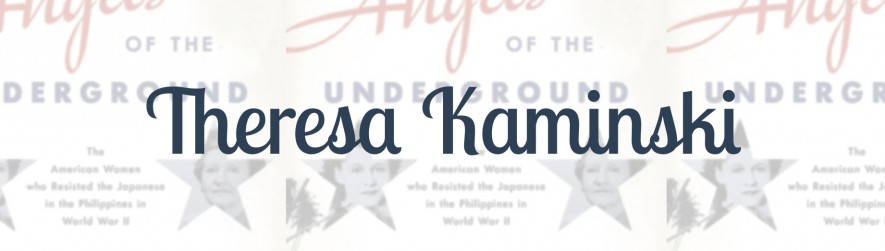
To find out what happened to the Crouters and other Americans, you can read
or my own,
which opens with Natalie’s story. The cover photo was taken in the Baguio camp, before the worst of the wartime deprivations took hold.
An edited version of Natalie’s diary was published in the 1980s:
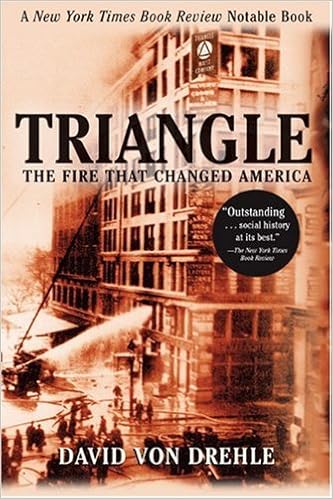
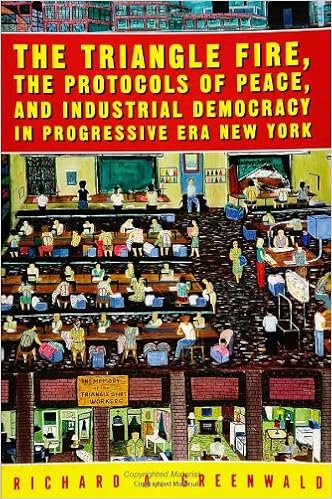
On Saturday, March 25, 1911, just before closing time, a fire started in the upper floors of the Asch building at 23-29 Washington Place in Manhattan.
The Triangle Shirtwaist Company’s non-union shop employed about 500 workers, mostly young immigrant women from Italy and Eastern Europe.
HBO photo
They worked long hours under unpleasant conditions for minimal wages making shirtwaists, a popular clothing item of the New Woman of the early twentieth century.
The fire, caused by a carelessly tossed match or cigarette, spread quickly through the various combustible materials on site. Many workers had no easy avenue of escape. Windows didn’t open properly, doors were locked, fire escapes didn’t function. In less than twenty minutes, 146 people died; all but 17 were women.
The best online resource about the Triangle Fire is the one maintained by the ILR School at Cornell University. It provides an informative historical overview and contains numerous primary sources, including photographs, oral histories, and a transcript of the criminal trial of the factory’s owners.
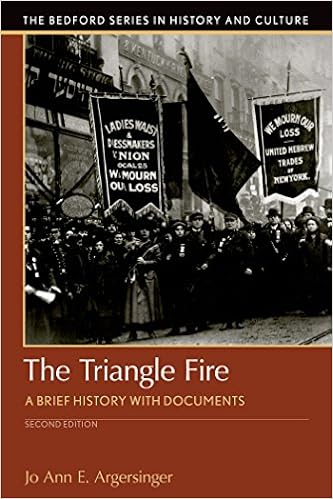
There are several good nonfiction books about the fire, including:
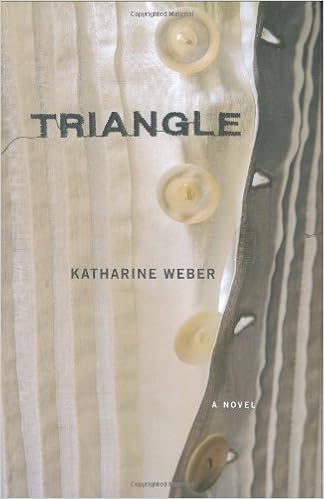
And there is one fine work of historical fiction about the fire:
In fact, Weber’s book is on my list of all-time favorite novels. It’s the very model of historical fiction for the way in which it evokes time and place while delivering memorable characters.
So pick up any one of these books to learn more about the fire. I recommend starting with Weber’s.





 HBO photo



You must be logged in to post a comment.