Mothering in Wartime

Motherhood brings a series of rewards and challenges. And that’s under normal circumstances.

Image result for painting of mother with children

There have been times when mothering has been made even more challenging because of uncontrollable external forces. In January 1942, weeks after the United States entered World War II, Japanese troops occupied Manila, the capital city of the Philippine Islands, an American colony.

Japanese head into Manila 1942

Within days, they rounded up and interned thousands of Americans living in and around Manila, including women and children. For the most part, the internees fended for themselves. This put an additional strain on the women who had children to mother: separated from their husbands, deprived of servants, forced into communal living arrangements, scrounging for food. Read more about their experiences here:

PIP cover

This Mother’s Day, Give the Gift of History

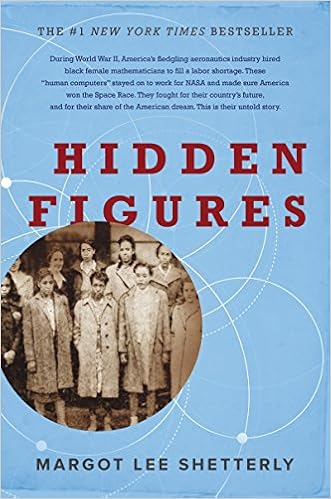
If you’ve always given flowers and candy on Mother’s Day, why not start a new tradition this year? Books. Specifically books about women in the past who’ve done spectacular things. There’s so much to choose from. A recent release that’s already been made into a Hollywood blockbuster:

Image result for hidden figures book

Or to go along with the queen-for-a-day theme often associated with Mother’s Day:

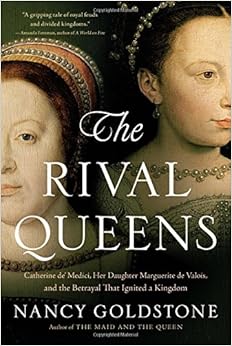
Image result for rival queens nancy goldstone

How about a nun’s story?

Image result for esther wheelwright

Or the story of the woman who founded the Girl Scouts?

Image result for juliette gordon low biography stacy cordery

Or an under-appreciated writer:

Image result for constance fenimore woolson biography

And of course, there’s always the unusual war stories:

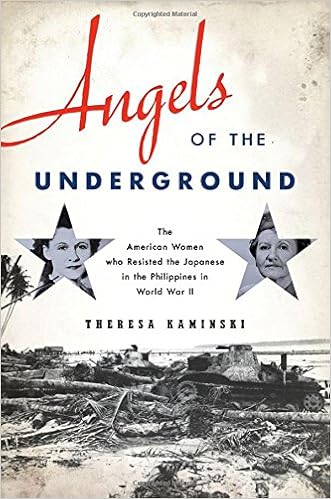
Image result for angels of the underground

Happy Mother’s Day 2017.


An Unsung Hero

Florence Finch has died. More than 75 years after her heroic actions in the Philippine Islands during World War II, she has received national recognition: The New York Times published her obituary two days ago.

I ran across Florence’s story when I was researching anti-Japanese activity in the Philippines. Her name came up in connection with Claire Phillips, one of the “angels” in my recent book. For a time, the two women were jailed together, having been arrested, questioned, and tortured by the Japanese occupation authorities in Manila.

Florence Ebersole Smith Finch was born in the Philippines to an American father and Filipina mother. In early 1942, she worked for the Philippine Liquid Fuel Distributing Union, which was run by the Japanese. She used her position to divert fuel to the resistance, and in her spare time she helped smuggle desperately needed supplies to American military POWs. For these actions, the Japanese sentenced her to three years of hard labor.

Florence, along with Claire Phillips, was rescued by American troops in February 1945. After joining her father’s relatives stateside, Florence joined the Coast Guard. Later, she received the Medal of Freedom for her resistance work in the Philippines.

Why isn’t Florence Finch more widely known? As her daughter Betty Murphy put it, “Women don’t tell war stories like men do.”

Of course, you can read more about Florence in Angels of the Underground. Learn more about women’s war stories.


It’s Women’s History Month

In my line of work as a women’s historian, every month is women’s history month. Still, it’s nice to have a month designated for a special observation of the history of those who make up more than half of the population.

2017 Poster

This year’s theme is trailblazing women in labor and business. One of the women being honored by the National Women’s History Project is Kate Mullany, who in 1864 started what is considered to be the first all-women union in the United States, the Collar Laundry Union of Troy, New York. After a five-day strike, laundry owners began to capitulate to the workers’ demands and implemented a 25% pay hike. Women continue to be an indispensable part of working-class activism into the 21st century.


Alice Paul’s Early Birthday Present

Alice Paul, creator of the Equal Rights Amendment, was born on this day, January 11, 1885.

(Alice Paul Institute)

She was raised as a Quaker on a small farm in Mount Laurel, New Jersey. She graduated from Swarthmore in 1905, then went to England to continue her studies. While there, Paul became involved with the British women’s suffrage movement. Inspired by its political strategies and use of public demonstrations, she returned to the United States and began working on securing a constitutional amendment for women’s suffrage.

Yesterday marked the 100th anniversary of the launch of the perpetual delegation at the White House gates. Considering the timing, I’ve always thought of that as Alice Paul’s early birthday present to herself. She heated up the public drama of the suffrage movement at the beginning of a new year, probably hoping that by its close, her goal would be achieved.

It wasn’t. But the perpetual delegation ensured that the topic of women’s suffrage was never out of the public eye. President Wilson and members of Congress had to confront it, and eventually they embraced it.

As much as I admire Alice Paul–and I do, very much, especially for her willingness to endure force feedings–I have to remember her spectacular fail on racial equality. Paul didn’t treat white and African American suffrage supporters equally. She viewed the fight for racial equality as one for African Americans. Like many reformers of her time, race limited her vision.