Queen of the West Wednesday, Chapters Eleven and Twelve

We’re at the penultimate installment of this weekly series that reveals the first sentence of each chapter in Queen of the West: The Life and Times of Dale Evans. The book’s official launch date is April 15, but if you order it online now, chances are good that you’ll receive your copy before then!

Chapter Eleven. “The Bible Tells Me So”: Creating Christian Celebrity

Dale Evans resumed work almost immediately when she and Roy Rogers returned from Great Britain in late March 1954. 

That overseas trip had not been a vacation. During February and March, the couple performed in England and Scotland, attracting huge audiences, then appeared with the Billy Graham Crusade in London. The Roy Rogers Show, about midway through its run, remained popular with television viewers, but Dale, now back stateside, was increasingly attracted to projects that carried a more overt Christian message. In 1955, she demonstrated that interest by writing the song “The Bible Tells Me So” for an episode of The Roy Rogers Show. The song caught on, and two versions of it hit the Billboard charts. Children would sing it in Sunday school classes for decades to come.
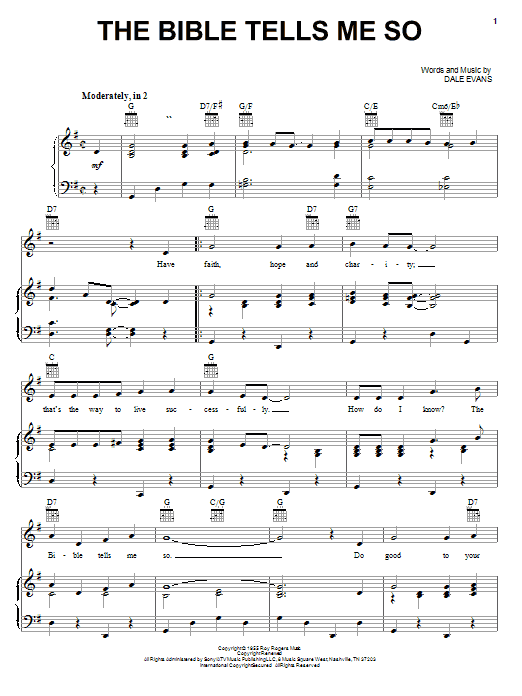
Dale Evans "The Bible Tells Me So" Sheet Music PDF Notes, Chords | Children  Score Lead Sheet / Fake Book Download Printable. SKU: 196020

Chapter Twelve. “I’d Rather Have Jesus”: Professional and Personal Struggles During the 1960s

Frustrated with trying to create an adult, family-friendly western, Dale Evans and Roy Rogers turned to another small-screen genre: musical variety.

The Roy Rogers Show ended in 1957. Despite the couple’s continuing popularity, they had difficulty landing another network show. It wasn’t until 1962 that they signed a deal with ABC for a prime time musical variety program called The Roy Rogers and Dale Evans Show. After working with Roy for almost twenty years, Dale finally received equal billing.

The Roy Rogers & Dale Evans Show (TV Series 1962– ) - IMDb

Thanks for sticking with this series. See you next week for the wrap-up!
Queen of the West Wednesday Doubleheader, Chapters Nine and Ten

Chapter Nine. “Happy Trails”: Becoming a Television Star

After Dale Evans gave birth to her daughter Robin, attendants wheeled her out of the delivery room.

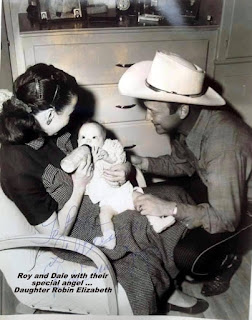
It was August 26, 1950, and the Queen of the West and the King of the Cowboys had a new baby girl. But the joy the parents felt was soon overshadowed by concern. Robin Elizabeth Rogers–Dale and Roy planned to nickname her Stormy–was diagnosed with Down syndrome and with an inoperable heart problem. Doctors were not optimistic about Robin’s future, but the loving parents took their baby home, determined to prove the medical experts wrong.

As Dale Evans worried about her daughter’s health, she and Roy embarked on another project together: a televised version of The Roy Rogers Show, a thirty-minute contemporary Western that ran on NBC from 1951-1957. The song Dale had written for their radio show, “Happy Trails,” now became the theme song for their small-screen show.

Chapter Ten. Angel Unaware: Faith and Celebrity

Dale grieved over Robin’s death but had no time to wallow.

Robin Rogers died two days before her second birthday. Dale Evans held herself together through work. She and Roy were scheduled to appear at the World’s Championship Rodeo at Madison Square Garden in about four weeks, a major event they could not afford to cancel.

https://dygtyjqp7pi0m.cloudfront.net/i/23208/21367945_3.jpg?v=8D1F8D91EF2C950

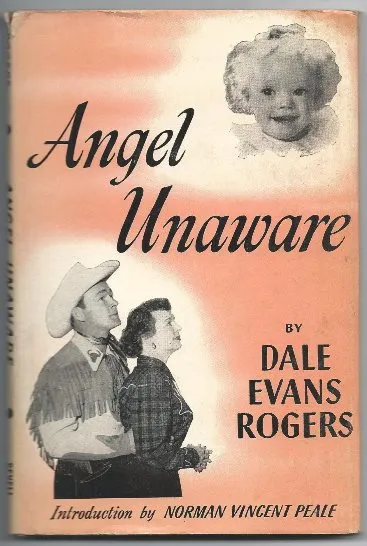
Despite their hectic schedule in New York City, Dale found time to write about Robin. She penned her first book, Angel Unaware, published by the Fleming H. Revell Company in 1953. It quickly became a bestseller, and Dale donated the proceeds to charity.

And another bonus on this double edition of Queen of the West Wednesday, historian and writer Pamela Toler has featured me in her Women’s History Month blog series called Talking About Women’s History. I answered three questions about Queen of the West and asked Pamela a question about women’s history.

Queen of the West Wednesday, Chapter Seven

Chapter Seven. “It’s Not the First Love”: Romance with Roy Rogers

Dale Evans attended Arline Rogers’s funeral on November 6, 1946, one of six hundred mourners at the Church of the Recessional at Forest Lawn Memorial Park in Glendale.

Roy and wife Arline at home with nine week old Linda Lou and 3 year old Cheryl. Note the painting of Trigger (or is it Little Trigger?) on the wall done by famous Danish western painter Olaf Wieghorst. It was painted by Wieghorst before he became famous. He'd been a policeman in New York City which is where Roy met the artist during one of his early Madison Square Garden appearances. The painting was sold after Roy and Dale's deaths at a High Noon auction in Mesa, Arizona for $25,000. (Thanks to Bobby Copeland, Mike Johnson, Leo Pando.)

(Roy Rogers, Arline Rogers, and their two daughters, baby Linda Lou and three-year-old Cheryl, 1943)

Days after giving birth to their son, Roy Rogers, Jr., thirty-one-year-old Arline died from a blood clot in her brain. Roy found himself a widower with three young children to care for. He spent some time at home with them and hired staff to watch over them when he returned to work by the end of the month.

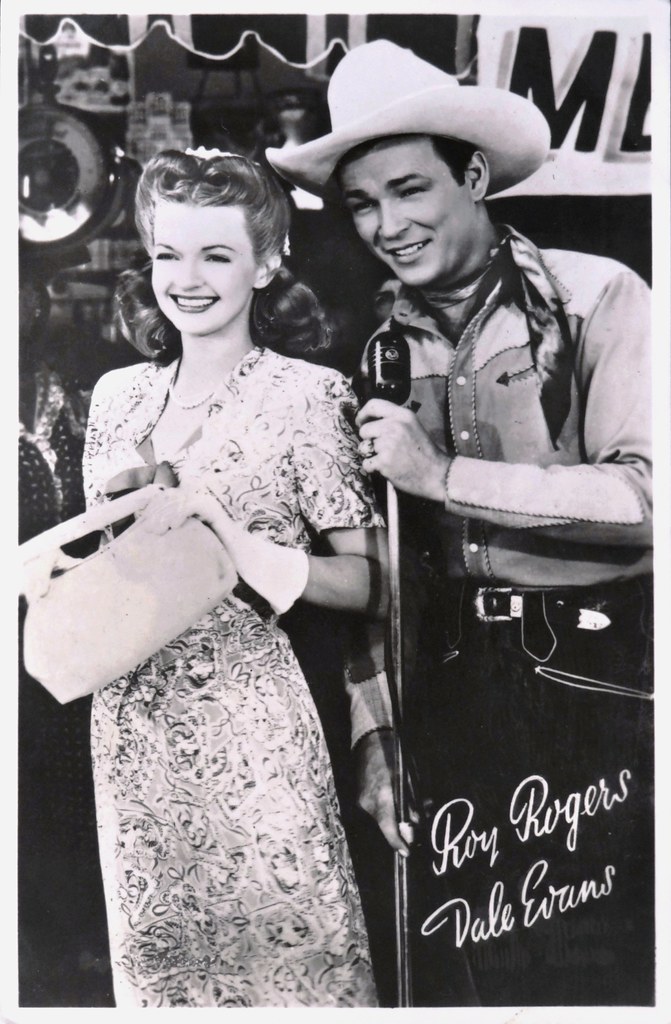
Dale Evans and Roy Rogers performed together on a radio show, the Saturday Night Roundup, and in live performances in and around Los Angeles during the late fall and early winter. “Once more, Roy and I were together most of our waking hours,” Dale later recalled.

Roy Rogers and Dale Evans" (ca. 1947). Postcard F-112, po… | Flickr

(Dale Evans and Roy Rogers at a public appearance, 1947)

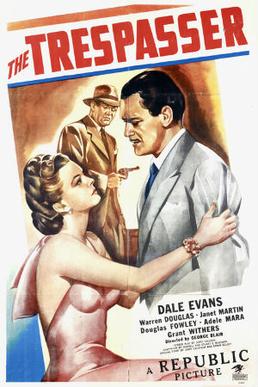
Now, they were both unattached, and rumors of romance began almost immediately. It was a tricky public relations situation for Republic Pictures, which supported the professional pairing of Dale Evans and Roy Rogers but not a personal one. This provided Dale with the unexpected (and longed-for) opportunity to return to non-Western films.

The Trespasser poster.jpg(Republic Pictures)

But also unexpected: Dale’s feelings for Roy. 1947 would bring major changes to her life.


Queen of the West Wednesday, Chapter Five

Chapter Five. The Cowboy and the Senorita: Rising Star at Republic Pictures

In a fit of pique, Dale Evans severed her relationship with Art Rush and signed with Danny Winkler, a friend of Joe Rivkin and an agent long associated with Myron Selznick’s firm.

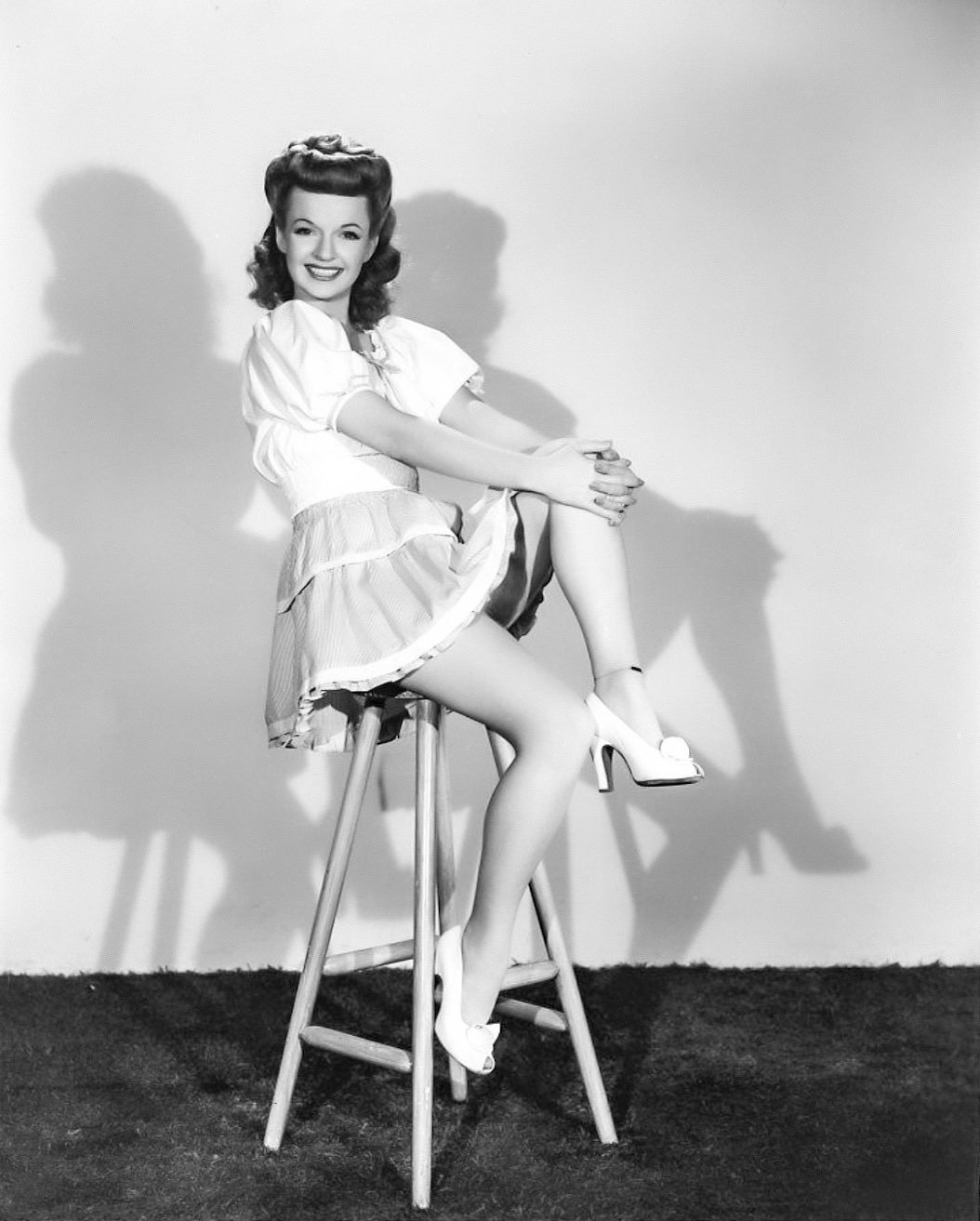
Dale Evans - ca.1942
Pic Source: @cjubarrington (Twitter)

(Dale Evans c. 1942)

Dale had not even been in Hollywood for a year and a half, and she was already on her third agent. Losing Joe Rivkin, who brought her out there in the first place, had been out of her control. With the United States at war, Rivkin signed up for military service. He recommended that Dale talk to Art Rush about representation. Rush had worked for RCA Victor Records before opening his own talent agency in 1939, with some high-profile singers/actors signing on.

Front entrance to the Hollywood Canteen, Vine St., Hollywood, 1942

(Hollywood Canteen on Vine Street, 1942)

Though Dale Evans and Art Rush initially worked well together, it only took a few months for her to conclude that he was not paying adequate attention to her career. She accused him of spending all his time promoting his favorite client, his rising star, the singing cowboy Roy Rogers. Dale had nothing against Roy. Rush had introduced the two of them when they both appeared at an Army air base in California to perform for the troops. Dale liked Roy, found him “a very real person.” But she had no intention of playing second fiddle to him with Art Rush. So Dale fired Rush and moved on to her third agent.

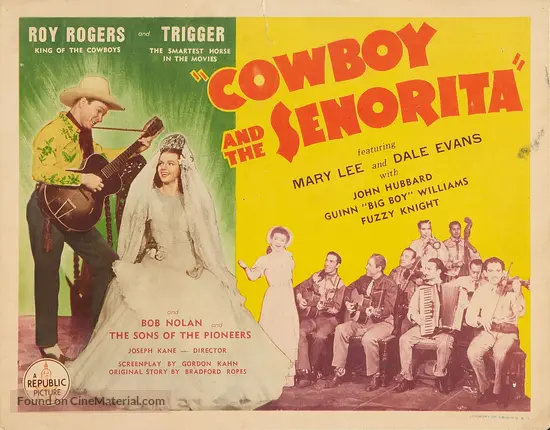
In early 1943, Danny Winkler arranged an audition at Republic Pictures. Dale Evans wowed everyone at the small studio, and she was hired. Ironically, Roy Rogers was also under contract there, one of the studio’s biggest “B”-movie stars. And in another twist, Dale’s career at Republic did not really take off until she was featured in 1944’s The Cowboy and the Senorita–with Roy Rogers.

Cowboy and the Senorita (1944) movie poster

This was not what Dale Evans envisioned for her Hollywood stardom. She had to figure out what to do about it.

Queen of the West Wednesday, Chapter Four

Chapter Four. “I’m in Love with a Guy Who Flies in the Sky”: The Path to Hollywood Stardom

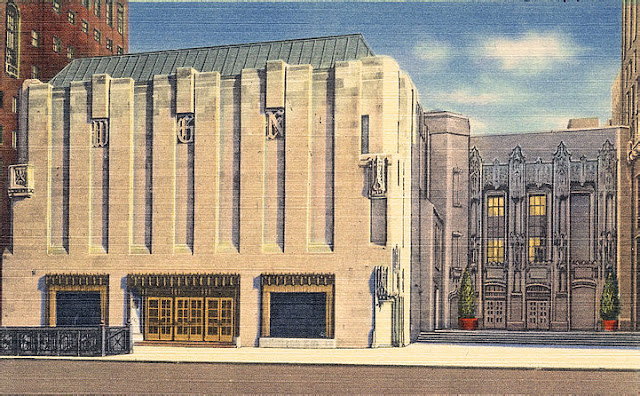
On August 24, 1941, the Chicago Tribune announced that Dale Evans, “the Chicago girl who has had considerable success in both radio and night clubs,” would make a guest appearance on one of WGN’s evening shows to sing “More Than You Know.”

(WGN Radio headquarters, 1935.)

A lot changed in Dale Evans’s life between the mid-1930s and the beginning of the 1940s. While she once identified with the sentiment of “I Can’t Get Started,” she finally moved ahead with her career, moving from Dallas to Chicago. Dale became so well-known in the Windy City that locals embraced her as one of their own, a “Chicago girl.” She sang on WGN and WBBM, appeared at swanky nightclubs with popular bands, and even toured for a while with a nationally known big band. All of these performances laid the foundation for the next step in Dale’s career, which she assumed would be Broadway.

But the next big opportunity came knocking from the other coast: Hollywood, California. Dale Evans arrived there in the late summer of 1941, with a one-year film studio contract. Instead of becoming a theater star, she would become a movie star.

The backlot at 20th Century Fox, circa 1940s

(Twentieth Century-Fox back lot, c. 1940s.)

As Dale prepared for her screen debut, the film project was put on hold. The Japanese bombed Pearl Harbor, drawing the United States into World War II. Over the next months, Dale scrambled to make sure her big break didn’t fall to pieces.