Women’s March 2018

Today marks the second time since the beginning of this presidential administration that thousands–tens or even hundreds of thousands–of women have taken to the streets to demonstrate their political views. My Twitter feed has been full of glorious photos from across the country.

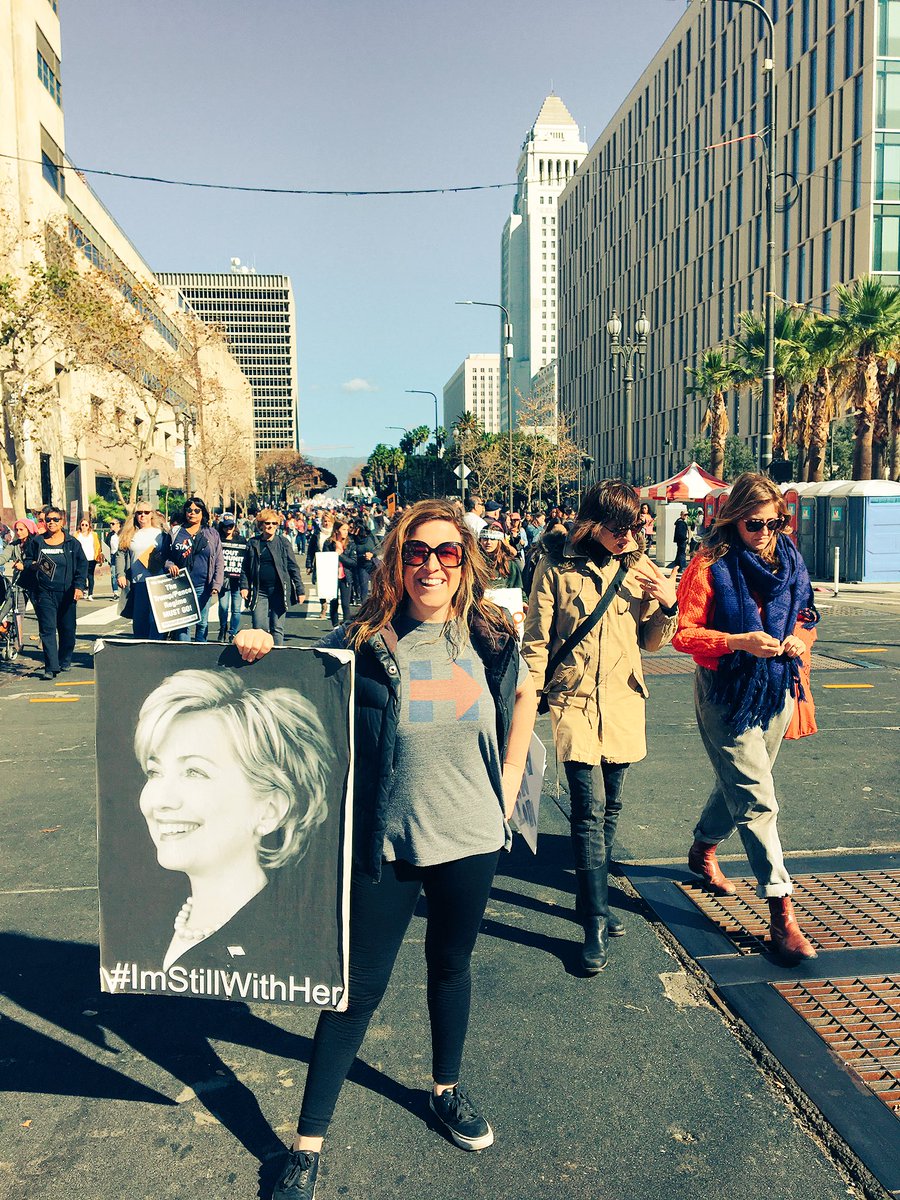
This participant’s sign harkens back to the very recent past:

(@DocGiani)

There is a lot of emphasis on women’s voting power:

(Chicago, @KarenLeick)

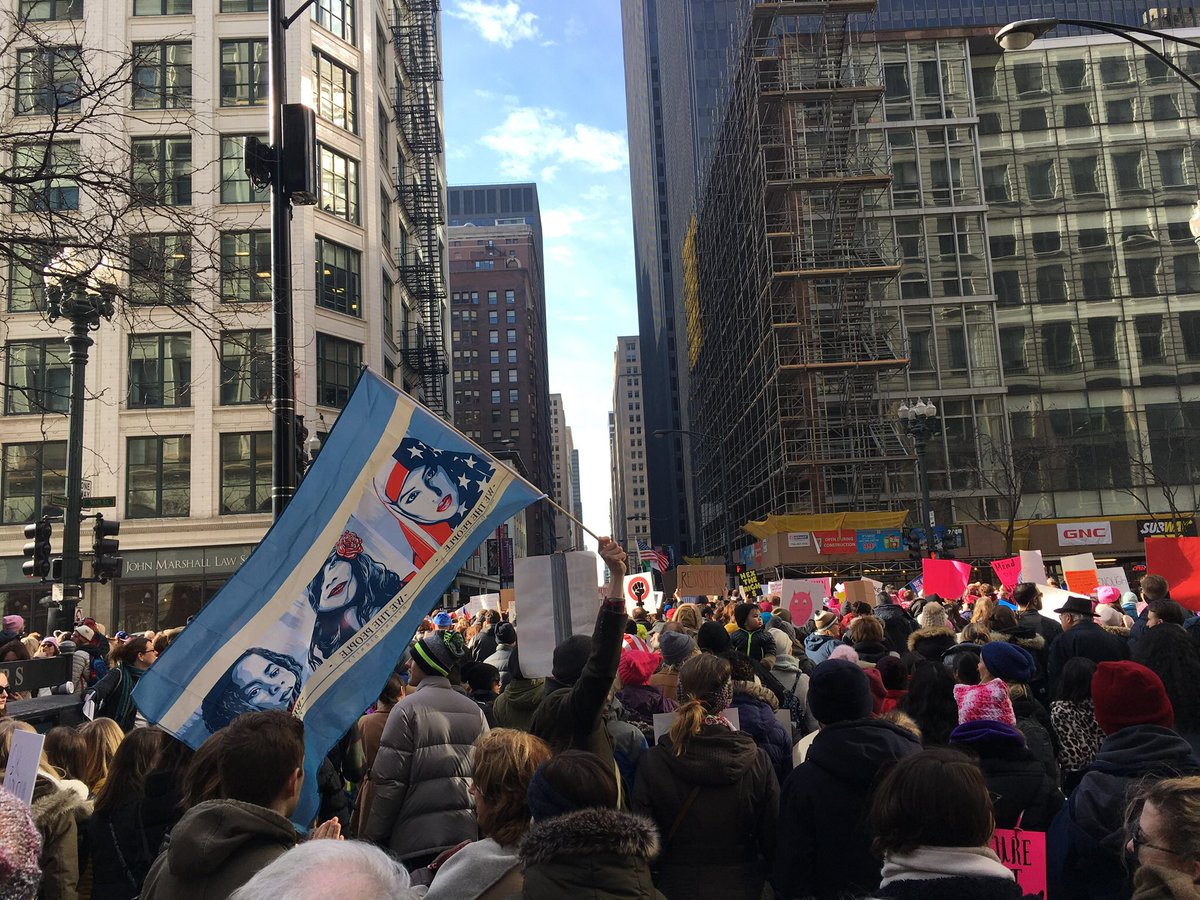
These Chicago marchers call attention to diversity:

(@WritesofMurph)

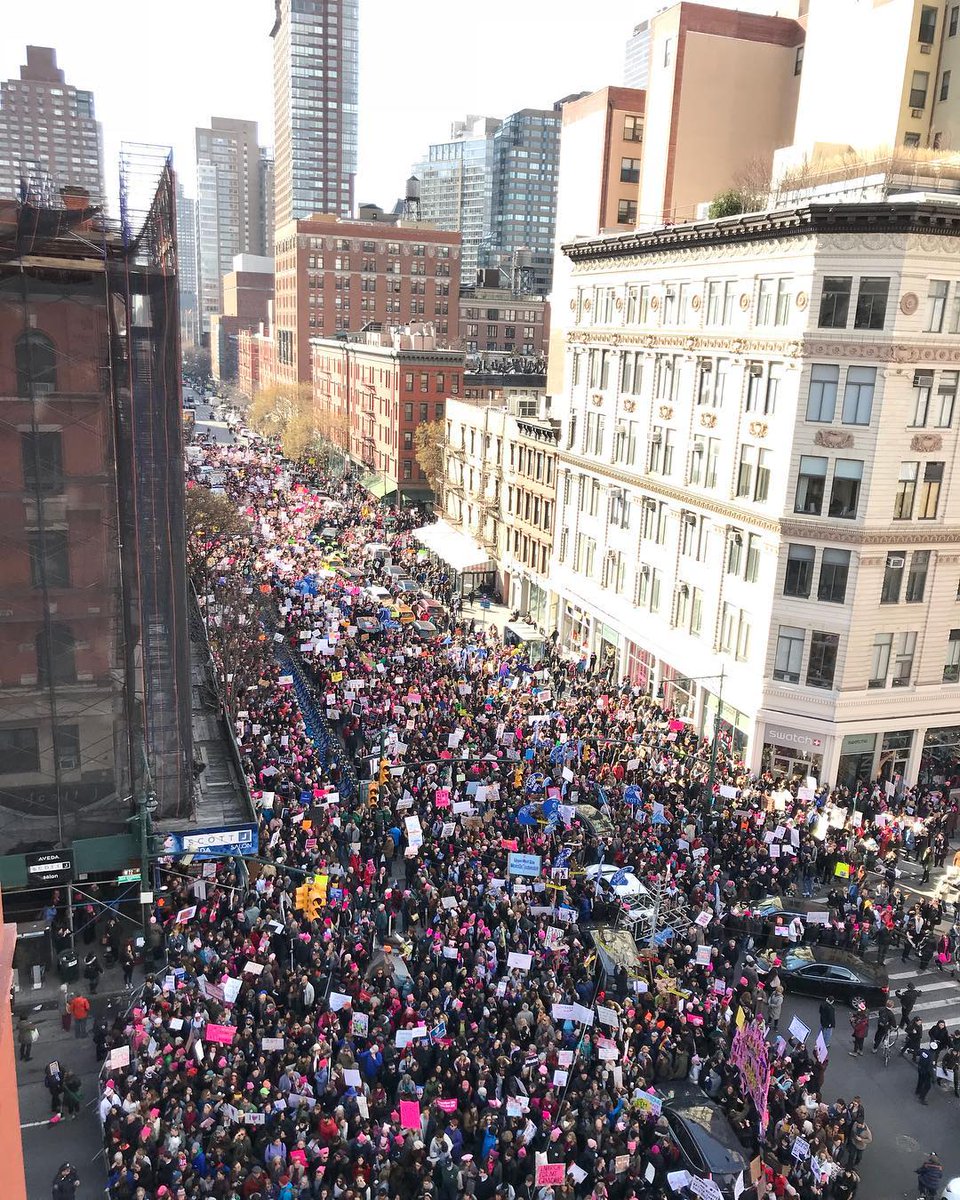
And here, well, here is an impressive crowd in New York:

(@kdqd3)

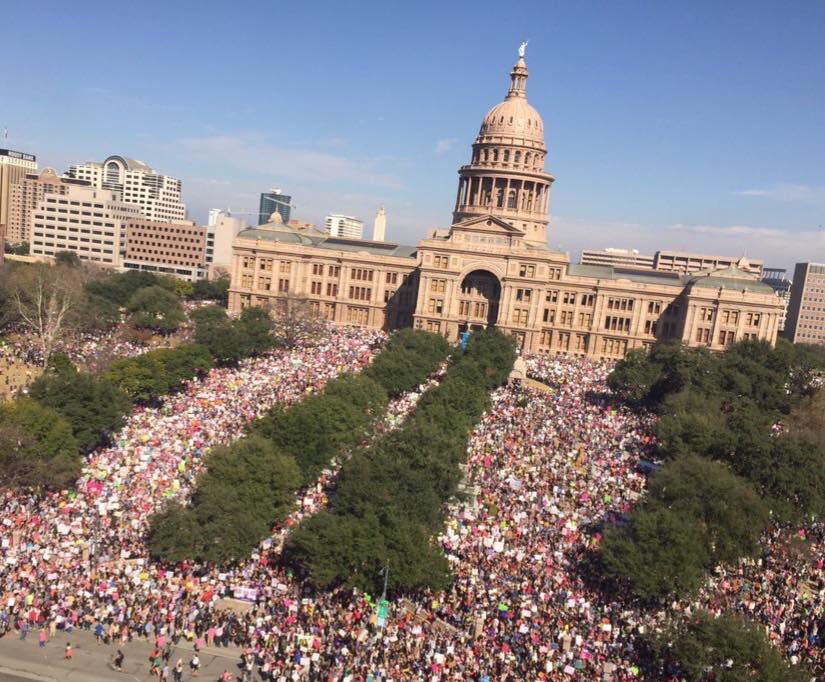
Right now, this is being reported as the largest public gathering ever in Texas:

(@AustinTX_NOW)

This young marcher in D.C. is promoting a political goal that is almost 100 years old. Alice Paul, head of the National Woman’s Party, conceived of the Equal Rights Amendment after women won the right to vote in 1920. The ERA was thisclose to ratification in the early 1980s before it failed.

(@Thoreaus_Horse)

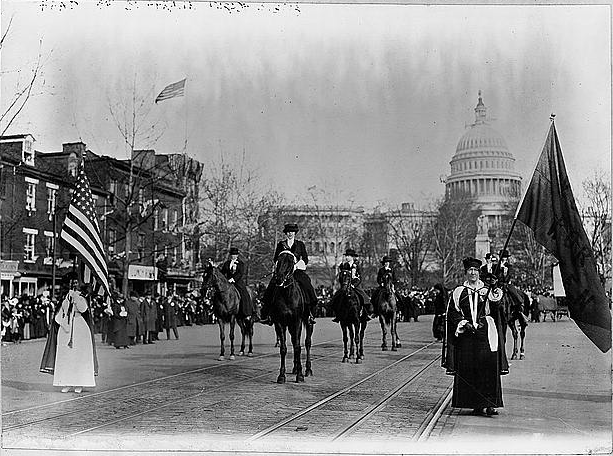
American women know that taking their concerns public is a good way to get attention for their causes. In 1913, suffragists organized a massive parade in Washington, D.C., right before Woodrow Wilson’s inauguration.

Image result for 1913 suffrage parade (LOC)

In 1970, women marched to mark the 50th anniversary of the 19th Amendment and to show their support for the ERA.

Image result for women's strike for equality 1970

(Getty Images)

A new semester starts on Monday, and I will be teaching a course on the history of women’s rights and feminism in the United States. Seems to be a particularly good time for that.

Image may contain: 5 people, crowd, hat and outdoor

(Molly Adams, 2017)

Reading Nonfiction in 2017

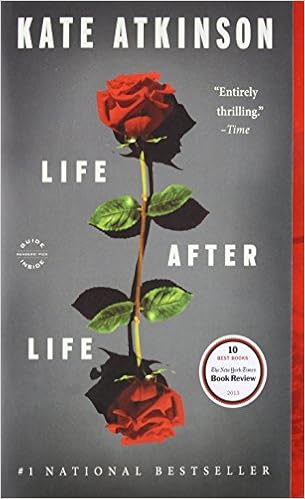
I read fiction for pleasure and relaxation. Even if the stories are dark and twisty, I can sink into them and remove myself from life’s realities for awhile. Case in point, one of my all-time favorite novels that I still can’t resist recommending:

Whenever I pick up a work of nonfiction, though, I feel caught in a kind of hyper-reality, always aware of the time and place of its narrative. I read a lot of history for work: research, course prep, book reviewing. I can’t set aside my training as a historian even when I pick up a nonfiction book for leisure reading. My critical senses are always tingling.

Of the many nonfiction books that crossed my desk and/or found their way into my book bag in 2017, there are a couple–one old, one new–that stand out.

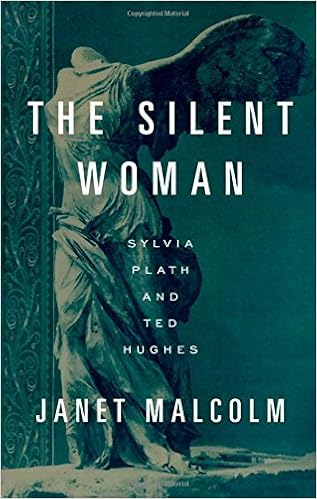
Malcolm’s book is a modern classic, a fascinating analysis of the life of Sylvia Plath told through an examination of the various biographies written about Plath. It’s a near perfect meditation on the struggle to control the meaning of a life.

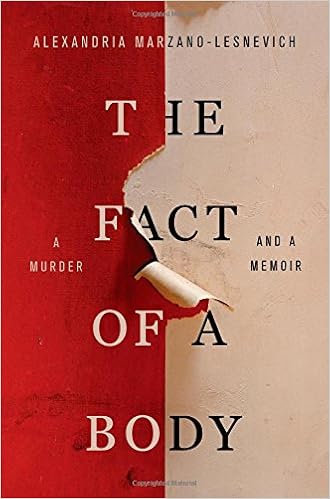
I rarely read memoirs or true crime stories, but I was intrigued that Marzano-Lesnevich chose to combine both in this inventive hybrid. She is such a talented writer that both parts of the story are almost equally strong, with the whole book a compulsive page-turner.

On Facebook and Twitter, I co-moderate Nonfiction Fans, a discussion group that launched in early 2017. (Join up and/or follow to get some of the best nonfiction recommendations, especially ones by and/or about women.) Because of that group, I’ve read some wonderful books, including:

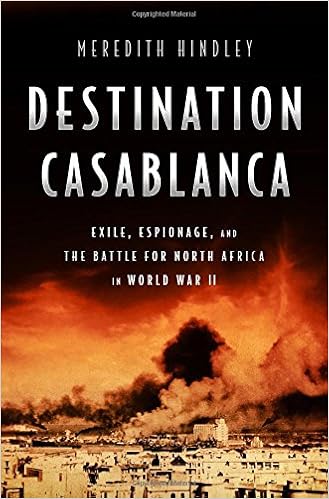
Hindley has written a terrific story and a stellar work of history.

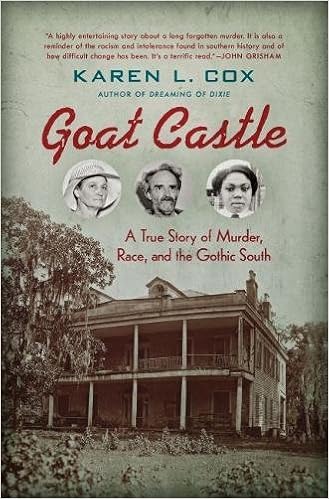
Though I rarely read true crime stories, if they are set in the past, I can’t resist. Cox’s book is especially valuable for its emphasis on race.

Finally, a few other works of history I liked in 2017:

American Heiress: The Wild Saga of the Kidnapping, Crimes and Trial of Patty Hearst

I have memories of this event, and Toobin recounts it with compelling precision.

Last Hope Island: Britain, Occupied Europe, and the Brotherhood That Helped Turn the Tide of War

Most of my World War II reading (and writing) focuses on the Pacific theater, so I enjoyed expanding my knowledge of the European theater with Olson’s book.

Ties That Bound: Founding First Ladies and Slaves

An absolutely fascinating slice of early American history.

The Electrifying Fall of Rainbow City: Spectacle and Assassination at the 1901 World's Fair

Anyone who loved The Devil in the White City should definitely read Creighton’s tale of the 1901 Pan American Exposition in Buffalo, New York.

The Rival Queens: Catherine de' Medici, Her Daughter Marguerite de Valois, and the Betrayal that Ignited a Kingdom

Renaissance rivalry among French queens. A great examination of the monarchy through the experiences of women.

And that’s a wrap of my 2017 reading.


Favorite Fiction of 2017

This year’s list is, as usual, as heavy on historical fiction as it is on women writers.

Image result for grace metalious

How I made my selections: I went through the books I read in 2017 and collected the ones I awarded five stars. This is the way I evaluate books. Favorites get five stars; everything else I consider some variation of good. Eight of those made yesterday’s list.

In 2017, nine books of the fifty-five I read received five stars. Here they are, in alphabetical order by the author’s last name:

Homegoing

This multi-generational family saga tells the story of both Ghana and the United States, revealing the pervasive, pernicious effects of slavery. A real triumph for Gyasi and well-deserving of all the literary awards.

The Velveteen Daughter

Based on the lives of Margery Williams Bianco, author of The Velveteen Rabbit, and her equally talented but troubled daughter, Pamela, this is a gorgeously written work of historical fiction. I especially loved the alternating points of view.

Pachinko

Another multi-generation family story, this one is set in Korea and Japan in the 20th century. Each character is finely drawn, each setting brims with life. It was very hard to put this book down.

Little Fires Everywhere

Ng once again demonstrates her mastery of the psychology of her characters. Set in suburban Shaker Heights in the recent past, the arrival of a single mother with her teenage daughter reveals the racial fault lines of the placid community.

Commonwealth

Trust Patchett to take what appears at the start as a conventional story about the trials and tribulations of a modern blended family and fashion it into a rumination on the power of connections and stories.

The Second Mrs. Hockaday

A fine work of historical fiction from first-time novelist Rivers. This is a page-turning story of a young woman who navigates her way through the tumult of the Civil War, confronting the tentacled evils of the institution of slavery.

Lillian Boxfish Takes a Walk

Pick it up for the oddly charming title and read it cover to cover for a historical sweep of twentieth-century America through the eyes of a pioneering female advertising executive. In Rooney’s capable hands, charming is never superficial.

Anything Is Possible

A fine collection of linked stories about the people of Amgash, Illinois. Strout’s writing is so, so beautiful. Any year in which she publishes a book is a good reading year.

A Gentleman in Moscow

Totally absorbing tale of Russia in the twentieth century told through the experiences of a man confined to house arrest in a Moscow hotel. It deserves all the rave reviews.

Coming up next, reflections on my 2017 nonfiction reading.

Reading Roundup of 2017

It’s time for my annual reading roundup.

Image result for cowgirl with lasso

Today’s list represents the good fiction I read in 2017 (though not necessarily published in 2017). There are no magic numbers–no top ten, no specific number of stars. Instead, a rather subjective distinction between good and, coming next, favorite.

Half of the good list is made up of new installments of mystery series. In a sad coincidence, I was pulling together this year’s roundup when I read about Sue Grafton’s untimely death. 2017 saw the publication Y is for Yesterday, what was supposed to be the penultimate volume of her long running alphabet series featuring the ground-breaking female detective, Kinsey Millhone. I really liked the book, with its solid mystery plot and its attention to Kinsey’s complex character. Through twenty-five books, Kinsey never lost her edge.

Neither has V.I. Warshawski, Sara Paretsky’s female detective who made her debut the same year as Kinsey Millhone. I’ve always been drawn more to Paretsky’s series for its emphasis on political issues, both contemporary and historical, and its Chicago setting. In her 18th V.I. Warshawski story, Fallout, Paretsky moves seamlessly between past and present as V.I. works a case that takes her from Chicago to rural Kansas.

Nicholas Petrie begins Burning Bright, the second volume of his Peter Ash series, in rural California, among the redwoods. Ash is a veteran, troubled, but determined to take control of his life. Lots of reviews compare him to Jack Reacher, but I think Petrie has something different in mind for his character, and I’m eager to continue the series.

Maisie Dobbs remains one of the most distinctive detectives in a historical series. In This Grave Hour, the 13th book of Jacqueline Winspear’s to feature the investigator and psychologist, brings Maisie’s adventures to the opening days of World War II. Over more than a dozen plots, Winspear has efficiently and effectively moved Maisie through the early 20th century, forcing her to deal with both personal and professional challenges.

Now for the good stand alone works of fiction. I really enjoyed Greer Macallister’s Girl in Disguise, based on the real-life Kate Warne, the first woman hired by the famed Pinkerton Detective Agency.

Moody and atmospheric describe The History of Wolves by Emily Fridlund and Idaho by Emily Ruskovich. Both are family stories, tinged with mystery, and are beautifully written.

Beautiful writing permeates all of Roxane Gay’s books. Difficult Women, a collection of short stories, is aptly titled. The characters are “difficult” and the plots are often uncomfortable, but I couldn’t stop reading.

Those were all the good works of fiction I read in 2017. Up next, my nine favorites.


Y is for Yesterday: How Sue Grafton Redefined the Alphabet

Novelist Sue Grafton, a New York Times bestselling author, died last night. She had been sick for a couple of years yet managed to finish the penultimate volume in her long-running Kinsey Millhone series, Y is for Yesterday. I don’t remember when I started reading Grafton’s books–probably some time in the 1990s–but I know I was always eager to pick up the latest, including this one. Whenever I think of the alphabet, I don’t only think of letters. I think of Kinsey and crime.

Image result for y is for yesterday

Kinsey Millhone made her debut in 1982. It’s not that she was the first female detective, but she was a long, long way from Miss Marple. Kinsey was very much a woman of her time, making her way in a male-dominated profession, a tough and savvy businesswoman who cultivated a variety of close relationships. She was a complex character. Smart, without being a know-it-all, and sympathetic, without being a pushover. As a Newsweek reviewer pointed out early on: “Grafton has created a woman we feel we know, a tough cookie with a soft center, a gregarious loner…smart, well paced, and very funny.”

Grafton began the series with A is for Alibi. As she told a reporter in 2008, she figured it would take three or four novels before she got the formula down, then the books would flow easily. Instead, Grafton found it difficult to come up with fresh plot ideas. Writing didn’t come easily. Yet once she started with the letter A, she knew she was in for a total of 26 books, publishing one about every two years. It would take the full length of the alphabet to tell all of Kinsey’s story. In that 2008 interview, Grafton predicted she would finish when she turned 80.

Sue Grafton was 77 when she died. She had the title for the final book, Z is for Zero, but nothing more than that.

Y is where the alphabet ends.

Image result for sue grafton cancer