Women’s History Month 2018

This year’s theme is wonderful, both timely and historical:
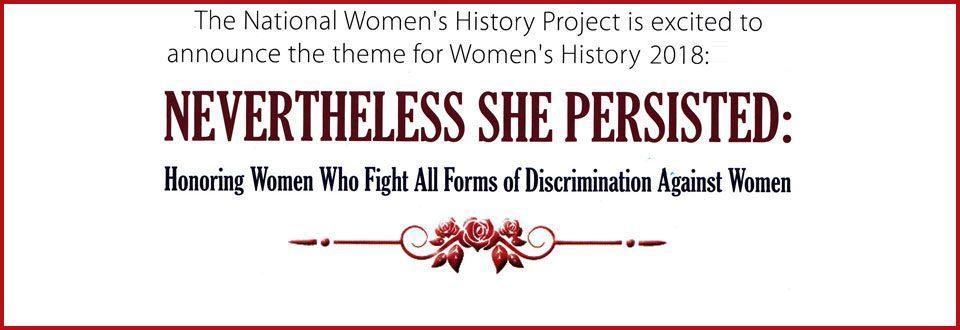
Image result for women's history month 2018

One of the 2018 honorees is a woman I admire very much, the lawyer/activist Pauli Murray. Here’s what the National Women’s History Project website has to say about her:

Pauli Murray was a civil rights and women’s rights activist decades ahead of her time. Facing lifelong discrimination based on her race and sex, she persisted and become an accomplished attorney, author, activist, academic, and spiritual leader.

Pauli Murray was extremely bright as a child, she finished first in her class at Howard Law School where she was the only female student. Despite her academic prowess, she was denied admission to UNC graduate school in 1938 due to her race and denied a fellowship to Harvard Law in 1944 due to her sex. She went on to be the first African-American awarded a law doctorate from Yale (1965) and later became the first African-American woman to be ordained an Episcopal priest (1977).

Murray was a critical figure in both the civil rights and women’s rights movements. In 1940, fifteen years before Rosa Parks, Murray was arrested for sitting in the whites only section of a Virginia bus. She coined the term “Jane Crow” referring to the intersecting discrimination faced by African American women and was highly critical of sexism within the civil rights movement. JFK appointed her to the Presidential Commission on the Status of Women (1961) and she was a co-founder of the National Organization for Women (NOW) in 1966. Many of Murray’s legal theories were decades ahead of their time and she is considered a pioneer of women’s employment rights. Her papers while a Howard law student arguing against segregation were used over a decade later in the landmark Brown v. Board of Education case (1955). Similarly, in the early 60s she argued that the 14th amendment forbade sex discrimination, a full ten years before the U.S. Supreme Court came to the same finding in Reed v. Reed (1971).

Pauli Murray died in 1985. The Episcopal Church honored her as one of its Holy Women in 2012. In 2016 Yale University announced it would name a residential college after Murray, and that same year her family home in Durham, NC was designated a National Historic Landmark by the National Park Service.

To learn more about Pauli Murray, I recommend:
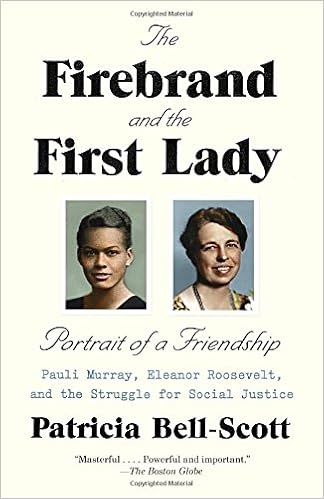
and
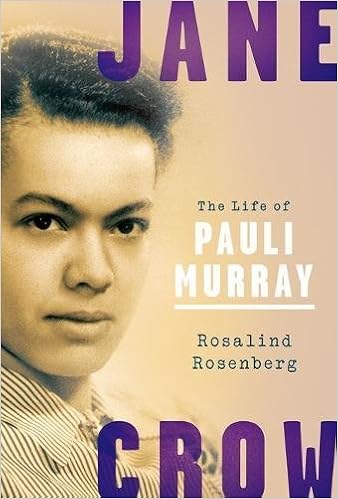
 

The Final Semester

At the end of the fall semester, I showed this photo in my American women’s history survey to start a discussion about how women’s roles in the work place have changed over time:

Peggy Olson

Many of you probably recognize the character of Peggy Olson from the AMC show Mad Men. (A bit more about Peggy is in this blog post.) She started off the series like this, so you just know a whole lot happened over a few short years:

Image result for peggy olson season 1

I don’t have any photos that document my first day as a tenure-track assistant professor of history. And no one will take a picture on my last day in the classroom, which will happen sometime this May.

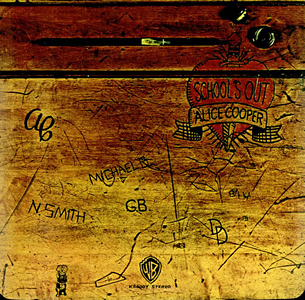
I’m pretty sure I know the last song I’ll play for my students. Here are a couple of hints:

Well we got no class
And we got no principals
And we got no innocence
We can’t even think of a word that rhymes
School’s out for summer
School’s out forever

Image result for alice cooper school's out

It hasn’t been a big secret, but I haven’t talked publicly about it much. I decided to retire.

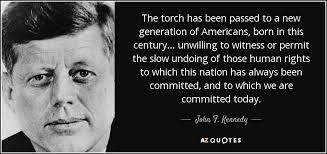
This comes several years earlier than I had planned because of changes taking place at the university where I have worked ever since I earned my Ph.D. I always thought that when I did retire, a bright, energetic scholar would take my place. The torch would be passed.

torch passed

But my retirement won’t open up a job for someone else. At best, it will temporarily delay the non-retention of one of my junior colleagues as the department is downsized. On the campus where I teach, administrators have decided that a history major is not a priority. Increasingly scarce resources will be allocated to programs bearing that distinction.

Think about it. Considering what’s been happening in this country and throughout the world, history as a field of study on a college campus is not considered important.

There are good things about retirement.  For the first time in more than six years, I’ll cohabitate full time with my spouse. I’ll have all the time I want to write. I can take piano lessons again.

Image result for piano at carnegie hall

In the meantime, I’ve set that top photo of Peggy Olson as my computer wallpaper. It will provide daily inspiration for all the possibilities to come in retirement.


Women’s March 2018

Today marks the second time since the beginning of this presidential administration that thousands–tens or even hundreds of thousands–of women have taken to the streets to demonstrate their political views. My Twitter feed has been full of glorious photos from across the country.

This participant’s sign harkens back to the very recent past:

(@DocGiani)

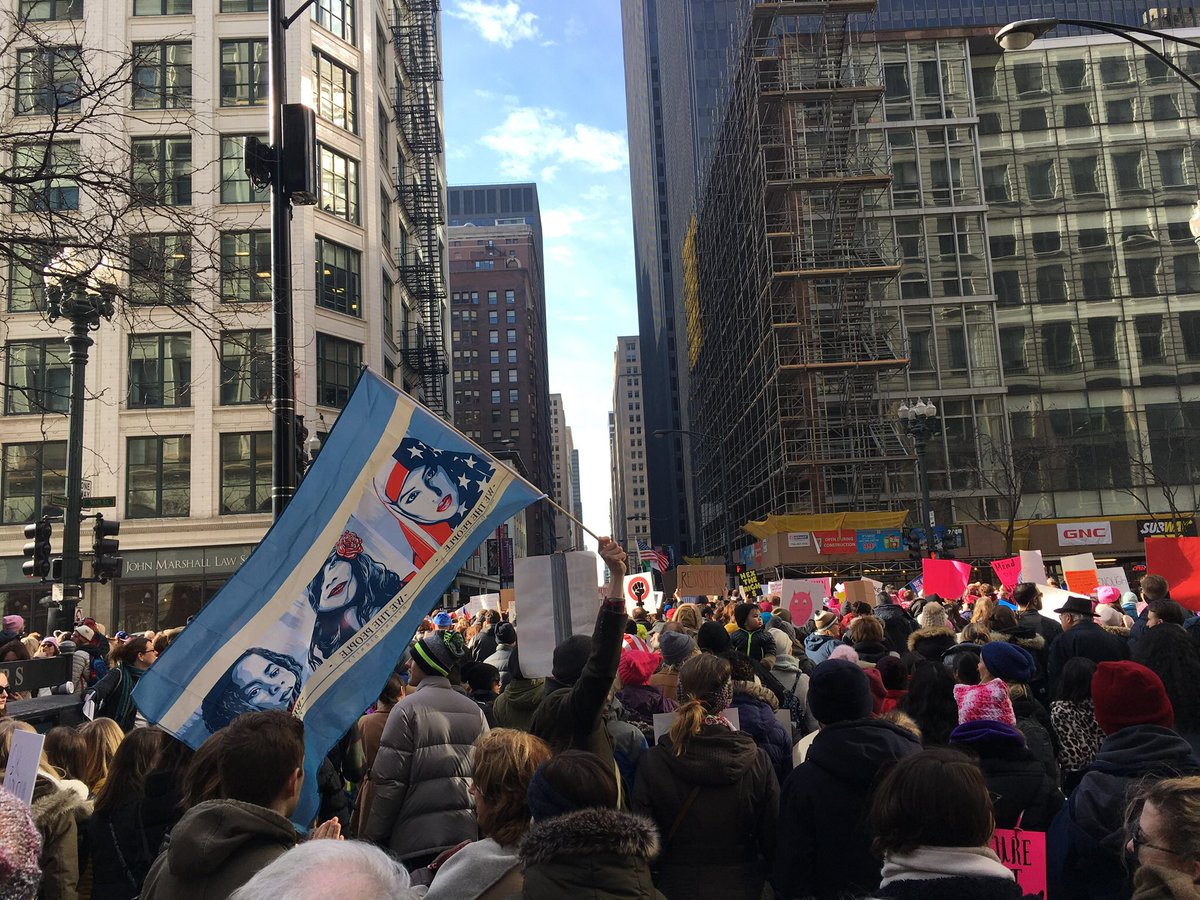
There is a lot of emphasis on women’s voting power:

(Chicago, @KarenLeick)

These Chicago marchers call attention to diversity:

(@WritesofMurph)

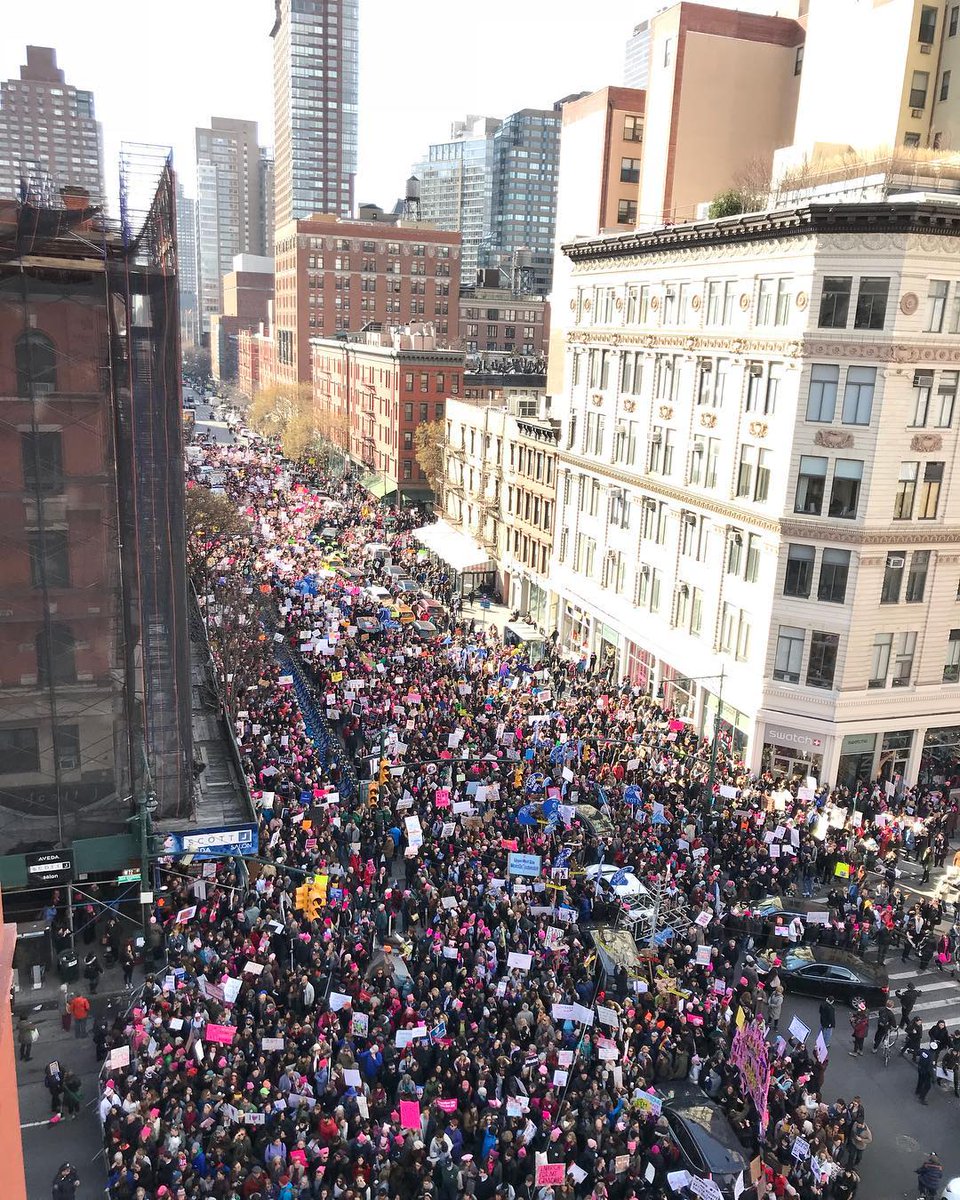
And here, well, here is an impressive crowd in New York:

(@kdqd3)

Right now, this is being reported as the largest public gathering ever in Texas:

(@AustinTX_NOW)

This young marcher in D.C. is promoting a political goal that is almost 100 years old. Alice Paul, head of the National Woman’s Party, conceived of the Equal Rights Amendment after women won the right to vote in 1920. The ERA was thisclose to ratification in the early 1980s before it failed.

(@Thoreaus_Horse)

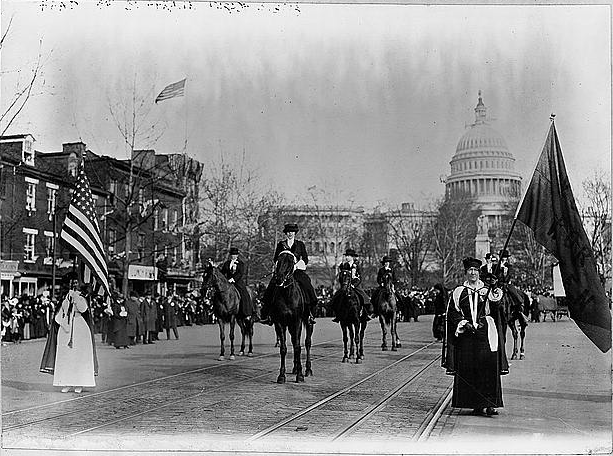
American women know that taking their concerns public is a good way to get attention for their causes. In 1913, suffragists organized a massive parade in Washington, D.C., right before Woodrow Wilson’s inauguration.

Image result for 1913 suffrage parade (LOC)

In 1970, women marched to mark the 50th anniversary of the 19th Amendment and to show their support for the ERA.

Image result for women's strike for equality 1970

(Getty Images)

A new semester starts on Monday, and I will be teaching a course on the history of women’s rights and feminism in the United States. Seems to be a particularly good time for that.

Image may contain: 5 people, crowd, hat and outdoor

(Molly Adams, 2017)

Reading Nonfiction in 2017

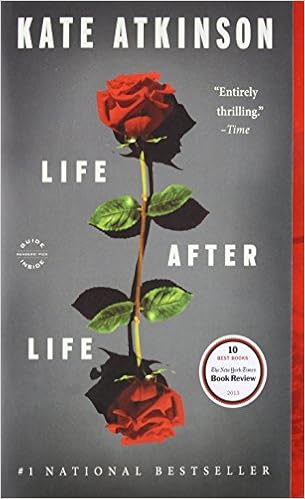
I read fiction for pleasure and relaxation. Even if the stories are dark and twisty, I can sink into them and remove myself from life’s realities for awhile. Case in point, one of my all-time favorite novels that I still can’t resist recommending:

Whenever I pick up a work of nonfiction, though, I feel caught in a kind of hyper-reality, always aware of the time and place of its narrative. I read a lot of history for work: research, course prep, book reviewing. I can’t set aside my training as a historian even when I pick up a nonfiction book for leisure reading. My critical senses are always tingling.

Of the many nonfiction books that crossed my desk and/or found their way into my book bag in 2017, there are a couple–one old, one new–that stand out.

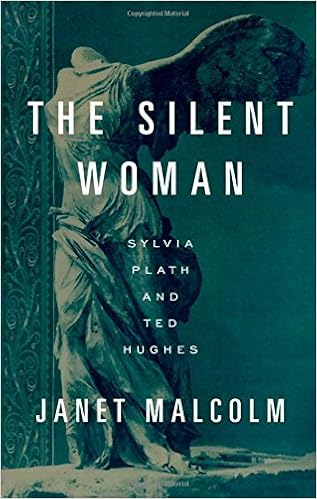
Malcolm’s book is a modern classic, a fascinating analysis of the life of Sylvia Plath told through an examination of the various biographies written about Plath. It’s a near perfect meditation on the struggle to control the meaning of a life.

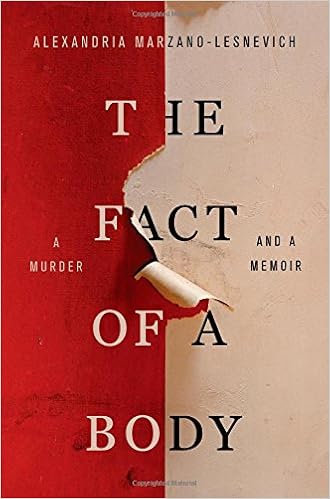
I rarely read memoirs or true crime stories, but I was intrigued that Marzano-Lesnevich chose to combine both in this inventive hybrid. She is such a talented writer that both parts of the story are almost equally strong, with the whole book a compulsive page-turner.

On Facebook and Twitter, I co-moderate Nonfiction Fans, a discussion group that launched in early 2017. (Join up and/or follow to get some of the best nonfiction recommendations, especially ones by and/or about women.) Because of that group, I’ve read some wonderful books, including:

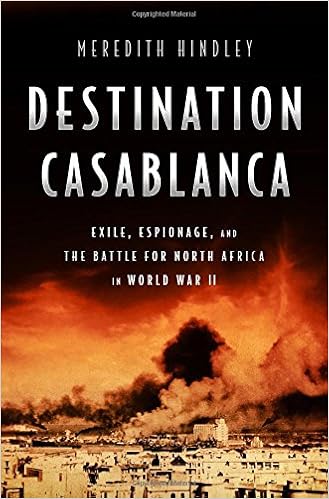
Hindley has written a terrific story and a stellar work of history.

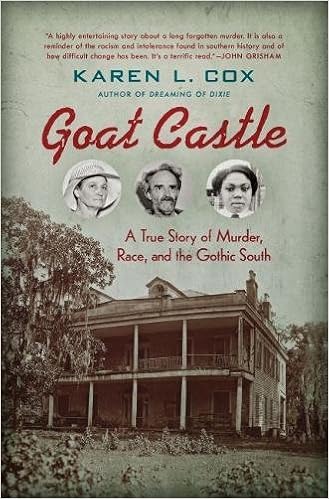
Though I rarely read true crime stories, if they are set in the past, I can’t resist. Cox’s book is especially valuable for its emphasis on race.

Finally, a few other works of history I liked in 2017:

American Heiress: The Wild Saga of the Kidnapping, Crimes and Trial of Patty Hearst

I have memories of this event, and Toobin recounts it with compelling precision.

Last Hope Island: Britain, Occupied Europe, and the Brotherhood That Helped Turn the Tide of War

Most of my World War II reading (and writing) focuses on the Pacific theater, so I enjoyed expanding my knowledge of the European theater with Olson’s book.

Ties That Bound: Founding First Ladies and Slaves

An absolutely fascinating slice of early American history.

The Electrifying Fall of Rainbow City: Spectacle and Assassination at the 1901 World's Fair

Anyone who loved The Devil in the White City should definitely read Creighton’s tale of the 1901 Pan American Exposition in Buffalo, New York.

The Rival Queens: Catherine de' Medici, Her Daughter Marguerite de Valois, and the Betrayal that Ignited a Kingdom

Renaissance rivalry among French queens. A great examination of the monarchy through the experiences of women.

And that’s a wrap of my 2017 reading.


Halt and Catch Fire: A Smart Series

Four seasons, forty episodes. That’s all this fine series, helmed by Christopher Cantwell and Christopher C. Rogers, needed to tell its story about smart people and their dreams. That two of those smart people are women, makes Halt and Catch Fire a riveting chronicle of the lives of working women in the recent past.

Image result for halt and catch fire

The story stretches from the early 1980s into the 1990s, documenting the rise of the personal computing industry and providing a glimpse of what it was like to be a woman working in that field. Cameron Howe (played by Mackenzie Davis) is the brilliant programmer, lured away from college to help launch risky new projects. Donna Clark (played by Kerry Bishé) is a computer engineer bored with her job at Texas Instruments. She and her husband Gordon (Scoot McNairy), also an engineer, had tried and failed to build their own PC, but Gordon hasn’t given up. Joe MacMillan (Lee Pace) is the brash young entrepreneur who brings them all together. Four main characters: two male, two female.

The key to Halt and Catch Fire‘s success was the relationship between Cameron and Donna, two strong women intelligent in different ways. They accomplish great things individually; together they are like a supernova. The writers didn’t relegate them to supporting characters. Cameron and Donna had personal lives every bit as complicated as their professional lives. They weren’t on screen simply as love interests or to prop up the male leads.

The respect for the show’s female characters extended beyond Donna and Cameron. In the fourth season, Donna and Gordon’s daughter Haley (Susanna Skaggs) reveals her own computer genius, and she becomes an integral part of the plot. Even more stellar is Anna Chlumsky’s Dr. Katie Herman, a librarian with a Ph.D. hired by Gordon and Joe’s company, Comet, as its chief ontologist. Without her, Comet cannot succeed. (She eventually has an affair with Gordon, but that’s not her main purpose as a character.)

Image result for Dr. Katie Herman halt and catch fire

At its core, this is a brainy series. During the fourth season, Cameron finishes a new computer game, something unique and personal. She is bemused by the negative responses from beta testers who simply don’t get it. They want games with bright graphics and fast-moving parts that allow them to shoot and blow up things. Cameron has created a masterpiece for people who are challenged by thinking. She knows the audience she wants to reach. And so did the creators of Halt and Catch Fire.